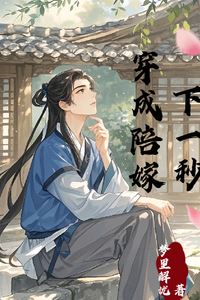
The next second after being dressed as a dowry
Novel Info

Summary

... Read More

TL NOTE: Update Schedule – {at least} 3 Chapters on Thursday only


  After surviving a fire, Meng Wan transmigrated to a dynasty he had never heard of, finding himself the ge’er—a male carrier—accompanying a young lady from a noble household as part of her dowry. Before he could even figure out where he was, the young lady had his hands and feet bound and sold him off.

  Meng Wan: “?”

  …Ughhhhhh!!!

  Song Tingzhou lost his father at a young age, and his mother raised him single-handedly. Despite opposition, she sent him to school, and after he failed the exam for the third time, she finally relented and agreed to let him get married first.

  As a result, his fiancée ran off with someone else. Fearing that he would be depressed, his mother actually bought someone from the street for him!

  Song Tingzhou: “I have been well-versed in the classics since childhood, and I absolutely cannot marry a wife without a matchmaker or betrothal!”

  Meng Wan stayed at his house and just lazed around: “Oh.”

  Do you really think he’d want to marry a mama’s boy like him?

  An orphan and a widow, living in abject poverty, a scholar who failed the imperial examinations for three years… Good heavens!

  Just thinking about it makes me suffocate. Maybe I should just die. Maybe I can even go back to life. He’s willing to be a corporate slave. Two thousand two hundred isn’t a small amount of money!

Novel Items

More
Money
The price Chang Jinhua paid to the slave trader for buying Meng Wan. She carefully weighed it three times with a small scale at home before tucking it into her bosom.
Document
The legal document transferred from the slave trader to Chang Jinhua upon payment, establishing Meng Wan's status as her property.
Item
A traditional heated brick bed planned for construction. Two kangs will cost five hundred wen plus two wooden beams for edges. Liu Grandpa from Hanzhou provided information about the construction process, which should take a few days.
Item
A string bean-like object found next to the tub that produces foam when rubbed on hands. Meng Wan used it for bathing and was pleasantly surprised that it actually cleaned him.
Item
A item that Xia Xing'er left for the vicious woman, showing she was still kind-hearted despite her revenge.
Clothing
Clothes given to Meng Wan by Chang Jinhua. The outer robe was too loose with long sleeves that he had to roll up twice.
Latest Release
DateGroupRelease
2026-08-11shanghai fantasy c6
2026-08-11shanghai fantasy c5
2026-08-11shanghai fantasy c4
2026-08-11shanghai fantasy c3
2026-08-11shanghai fantasy c2
2026-08-11shanghai fantasy c1

Community Reviews

Rating(0 / 5.0, 23votes)
5 stars
0(0%)
4 stars
0(0%)
3 stars
0(0%)
2 stars
0(0%)
1 stars
0(0%)

Popular reviews

... Read More
I've been thinking about this passage for a while now, and I keep coming back to one question: what is tofu in this story really? On the surface, it's just a business. Meng Wan and Chang Jinhua are making money, solving their immediate survival problem. But if you look deeper, the tofu-making process is basically a metaphor for everything that's happening in this narrative. Think about it. Soybeans are cheap, humble, almost worthless on their own. But through Meng Wan's knowledge—through the right technique, the right brine, the right pressure—they transform into something valuable. Something that people will travel to buy. Something that changes the power dynamics in an entire village. And the brine! Meng Wan specifically warns Chang Jinhua that it's poisonous and must be kept hidden. The same substance that can destroy can also create. Knowledge is both a weapon and a gift in this world, and Meng Wan holds both. Then there's the stone. A smooth stone from the river, scalded with boiling water, placed on top of the tofu to press it into shape. Without pressure, there's no form. Without the stone, the tofu would remain loose and undefined. Isn't that exactly what's happening with these characters? The pressure of their circumstances—the slave trade Meng Wan escaped, the poverty, the social hierarchy—is what's shaping them into who they're becoming. The bean curd skin that Meng Wan saves for his cousin... that's the extra layer of care, the nourishment he wants to provide even when resources are scarce. It's small, but it says everything about his character. I keep wondering if the author is also commenting on how knowledge transforms the ordinary into the extraordinary. The soybeans were always there. The village was always there. But without Meng Wan's understanding, none of this would exist...
... Read More
"The rich aroma of soybeans wafted out of the room, and Chang Jinhua hurried in, 'Wan-ge'er, is it done?'" I literally could smell this through the page. The author doesn't just describe the kitchen—they build an entire sensory world. The wooden bucket, the burlap cloth, the stone Meng Wan cleaned by the river, the thin hemp rope for drying bean curd skin. Every object has a purpose, every detail grounds us in this specific time and place. This isn't a generic ancient Chinese setting; it's a lived-in, breathing world where people make do with what they have. And the market scene! Two tofu stalls side by side, the mother-in-law hiding behind her daughter-in-law like a nervous child, the young men and women with covered faces. The author paints this picture of a bustling winter market where vegetables are scarce and tofu is a luxury. I love how the setting reinforces the stakes—of course people are buying tofu in bulk, of course they're willing to pay, of course this business can actually sustain a family. The village scene when Song Tingzhou returns is equally vivid. The willow tree where people gather to gossip, the stone at the Song family entrance where Chang Jinhua displays the tofu, the whole courtyard transformed into an impromptu shop. Even the alcohol on Second Uncle's breath tells us something about the social dynamics. This world feels real because every detail serves a purpose. There's no filler description—everything either builds atmosphere or advances the story.
... Read More
I need to talk about Song Tingzhou because this boy is EVERYTHING and I am already obsessed. When he first appears, he's all sharp angles and cold dismissal. 'Send them away.' Those three words and you can feel the entire tension in the room. He's a scholar-in-training, raised by a widowed mother, carrying the weight of his family's hopes on his shoulders. And he clearly doesn't want this arrangement. I get it—he's probably been preparing for this moment his whole life, and now his mother has gone and bought him a husband without even consulting him. But then—THEN—he sees Meng Wan. And oh my god, the shift is so subtle but so powerful. The text says his tone was 'somehow much gentler than before' when he tells Meng Wan there's no surplus grain to support servants. Is he being cruel? Is he actually trying to protect him by pushing him away? Or is he just... flustered? And Meng Wan! This boy is playing the long game so hard. He lowers his posture, speaks with 'heartfelt sincerity,' and basically says 'I'll be your servant if you'll have me.' But reading between the lines, I think he's also testing the waters. He's smart—really smart. He knows his situation is precarious, and he's making calculated moves to survive. The mother-son dynamic is also fascinating. Chang Jinhua clearly loves her son deeply, and you can see her regret creeping in when she realizes she should have told him before buying Meng Wan. But she also has her own reasons—she spent everything on his education, and now she wants him to have a family, a legacy.
... Read More
The tension in this chapter is absolutely suffocating and I love it. Let's talk about what's at stake here. Meng Wan is a slave. If he runs away, he gets caught and sent to the army—where he'll probably die. If he stays, he's trapped in an arrangement with a man he's never met, in a house where his future husband might not want him. The text makes it clear: 'Even if the Song family returned his indenture, he would at most be considered a free slave and still would not be able to open an account to buy land.' He's trapped either way. But the real conflict isn't just external—it's internal. Meng Wan has spent his whole life being powerless. First his second uncle stole his inheritance. Then the slave trader sold him. Now he's in this widow's house, trying to survive by being obedient, by reading every room, by waiting for permission to eat. The question is: can he break this pattern? Can he stop being the boy who takes whatever he's given and start being the man who takes what he wants? The author builds this tension masterfully through small details. The gate being locked during the day. Zhang Xiaoyu peeking over the wall. Meng Wan overhearing the gossip and quietly retreating. The ten days that have passed since Chang Jinhua went to town. Every moment feels like a countdown to something inevitable. And then Song Tingzhou comes home. The son who 'has had some bad luck these past two years and hasn't passed the imperial examination yet.' What happens when this scholar-in-training meets the slave his mother bought? The text ends on this note: 'My family has no surplus grain to support our servants.' Is that cruelty? Is that protection? Or is it something else entirely? I need to know what happens next. I need to know NOW.
... Read More
Let me just say this once: Meng Wan's dialogue in this chapter is PEAK. The way he handles Zhang Xiaoyu is absolutely legendary. When Zhang Xiaoyu comes charging in with his cart, Meng Wan doesn't flinch. He says: 'Second Aunt, I'm really sorry. We were so engrossed in our conversation that we only saw a huge cart of grain and no one. I thought it was haunted and the grain had grown legs and come running over!' I WAS SCREAMING. The audacity. The creativity. The absolute disrespect. And then when Zhang Xiaoyu gets mad about being called short, Meng Wan turns to Xiaomei and goes: 'Xiao Mei, did you hear me say that Second Aunt looks like a short, stout person?' Xiaomei stammering 'I...I didn't hear it' is the perfect witness testimony. This man is playing 4D chess while everyone else is still learning the rules. The dialogue between Meng Wan and Xiaomei earlier is also so natural — her gossiping about Tian Xing beating his husband, him being distracted because he's thinking about tofu. It feels like real people talking, not characters delivering exposition. Chang Jinhua's voice is distinct too. When she's with her mother, she's soft and careful. When she's threatening Zhang Xiaoyu, her dialogue is sharp, fast, and brutal. 'Let's go and argue with your in-laws. Let's see if your husband doesn't beat your foul-mouth half to death!' The irony of using the abuser's own weapon against him is chef's kiss. The narrative voice itself is also doing a lot of work — it has this wry, knowing quality that comments on the world without being preachy. Like when it notes that even in poor farming families, reputation could cost you your life if you were from a wealthy family in the capital.
... Read More
I just finished these chapters and I'm still buzzing. The pacing is absolutely perfect. Let me tell you why. The chapter opens with Meng Wan waking up before dawn, already in motion. No slow buildup, no 'it was a dark and stormy night' nonsense. He's up, he's working, he's making tofu. The author doesn't waste a single sentence on exposition—we learn about their situation through action. Meng Wan instructing Chang Jinhua about the poisonous brine, the careful filtering process, the first successful batch. It's all shown, not told. Then the market scene hits and the pace quickens. They're rushing, setting up, dealing with the rival seller, selling out. The author uses short, punchy dialogue and quick scene transitions to create this sense of urgency and momentum. And then—bam—Song Tingzhou returns and the whole rhythm shifts. The gossiping villagers, the drunk uncle, the busy Chang Jinhua who doesn't even notice her nephew. It's like the camera pulls back and we see the bigger picture. The structure here is basically: creation → competition → consequence. Three acts compressed into what feels like a single day, but the weight of it stretches across the whole narrative. The author knows exactly when to slow down (the tofu-making process) and when to speed up (the market, the village reaction). There's no dragging, no rushed sections. Every scene earns its place.
See all reviews

Characters

See all characters

Custom lists

Oops…There is nothing here.