The next second after being dressed as a dowry - Reviews

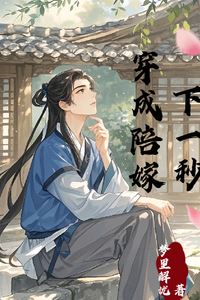
The next second after being dressed as a dowry
+Add to Custom List
Sort
Add review
... Read More
I've been thinking about this passage for a while now, and I keep coming back to one question: what is tofu in this story really? On the surface, it's just a business. Meng Wan and Chang Jinhua are making money, solving their immediate survival problem. But if you look deeper, the tofu-making process is basically a metaphor for everything that's happening in this narrative. Think about it. Soybeans are cheap, humble, almost worthless on their own. But through Meng Wan's knowledge—through the right technique, the right brine, the right pressure—they transform into something valuable. Something that people will travel to buy. Something that changes the power dynamics in an entire village. And the brine! Meng Wan specifically warns Chang Jinhua that it's poisonous and must be kept hidden. The same substance that can destroy can also create. Knowledge is both a weapon and a gift in this world, and Meng Wan holds both. Then there's the stone. A smooth stone from the river, scalded with boiling water, placed on top of the tofu to press it into shape. Without pressure, there's no form. Without the stone, the tofu would remain loose and undefined. Isn't that exactly what's happening with these characters? The pressure of their circumstances—the slave trade Meng Wan escaped, the poverty, the social hierarchy—is what's shaping them into who they're becoming. The bean curd skin that Meng Wan saves for his cousin... that's the extra layer of care, the nourishment he wants to provide even when resources are scarce. It's small, but it says everything about his character. I keep wondering if the author is also commenting on how knowledge transforms the ordinary into the extraordinary. The soybeans were always there. The village was always there. But without Meng Wan's understanding, none of this would exist...
... Read More
"The rich aroma of soybeans wafted out of the room, and Chang Jinhua hurried in, 'Wan-ge'er, is it done?'" I literally could smell this through the page. The author doesn't just describe the kitchen—they build an entire sensory world. The wooden bucket, the burlap cloth, the stone Meng Wan cleaned by the river, the thin hemp rope for drying bean curd skin. Every object has a purpose, every detail grounds us in this specific time and place. This isn't a generic ancient Chinese setting; it's a lived-in, breathing world where people make do with what they have. And the market scene! Two tofu stalls side by side, the mother-in-law hiding behind her daughter-in-law like a nervous child, the young men and women with covered faces. The author paints this picture of a bustling winter market where vegetables are scarce and tofu is a luxury. I love how the setting reinforces the stakes—of course people are buying tofu in bulk, of course they're willing to pay, of course this business can actually sustain a family. The village scene when Song Tingzhou returns is equally vivid. The willow tree where people gather to gossip, the stone at the Song family entrance where Chang Jinhua displays the tofu, the whole courtyard transformed into an impromptu shop. Even the alcohol on Second Uncle's breath tells us something about the social dynamics. This world feels real because every detail serves a purpose. There's no filler description—everything either builds atmosphere or advances the story.
... Read More
I need to talk about Song Tingzhou because this boy is EVERYTHING and I am already obsessed. When he first appears, he's all sharp angles and cold dismissal. 'Send them away.' Those three words and you can feel the entire tension in the room. He's a scholar-in-training, raised by a widowed mother, carrying the weight of his family's hopes on his shoulders. And he clearly doesn't want this arrangement. I get it—he's probably been preparing for this moment his whole life, and now his mother has gone and bought him a husband without even consulting him. But then—THEN—he sees Meng Wan. And oh my god, the shift is so subtle but so powerful. The text says his tone was 'somehow much gentler than before' when he tells Meng Wan there's no surplus grain to support servants. Is he being cruel? Is he actually trying to protect him by pushing him away? Or is he just... flustered? And Meng Wan! This boy is playing the long game so hard. He lowers his posture, speaks with 'heartfelt sincerity,' and basically says 'I'll be your servant if you'll have me.' But reading between the lines, I think he's also testing the waters. He's smart—really smart. He knows his situation is precarious, and he's making calculated moves to survive. The mother-son dynamic is also fascinating. Chang Jinhua clearly loves her son deeply, and you can see her regret creeping in when she realizes she should have told him before buying Meng Wan. But she also has her own reasons—she spent everything on his education, and now she wants him to have a family, a legacy.
... Read More
The tension in this chapter is absolutely suffocating and I love it. Let's talk about what's at stake here. Meng Wan is a slave. If he runs away, he gets caught and sent to the army—where he'll probably die. If he stays, he's trapped in an arrangement with a man he's never met, in a house where his future husband might not want him. The text makes it clear: 'Even if the Song family returned his indenture, he would at most be considered a free slave and still would not be able to open an account to buy land.' He's trapped either way. But the real conflict isn't just external—it's internal. Meng Wan has spent his whole life being powerless. First his second uncle stole his inheritance. Then the slave trader sold him. Now he's in this widow's house, trying to survive by being obedient, by reading every room, by waiting for permission to eat. The question is: can he break this pattern? Can he stop being the boy who takes whatever he's given and start being the man who takes what he wants? The author builds this tension masterfully through small details. The gate being locked during the day. Zhang Xiaoyu peeking over the wall. Meng Wan overhearing the gossip and quietly retreating. The ten days that have passed since Chang Jinhua went to town. Every moment feels like a countdown to something inevitable. And then Song Tingzhou comes home. The son who 'has had some bad luck these past two years and hasn't passed the imperial examination yet.' What happens when this scholar-in-training meets the slave his mother bought? The text ends on this note: 'My family has no surplus grain to support our servants.' Is that cruelty? Is that protection? Or is it something else entirely? I need to know what happens next. I need to know NOW.
... Read More
Let me just say this once: Meng Wan's dialogue in this chapter is PEAK. The way he handles Zhang Xiaoyu is absolutely legendary. When Zhang Xiaoyu comes charging in with his cart, Meng Wan doesn't flinch. He says: 'Second Aunt, I'm really sorry. We were so engrossed in our conversation that we only saw a huge cart of grain and no one. I thought it was haunted and the grain had grown legs and come running over!' I WAS SCREAMING. The audacity. The creativity. The absolute disrespect. And then when Zhang Xiaoyu gets mad about being called short, Meng Wan turns to Xiaomei and goes: 'Xiao Mei, did you hear me say that Second Aunt looks like a short, stout person?' Xiaomei stammering 'I...I didn't hear it' is the perfect witness testimony. This man is playing 4D chess while everyone else is still learning the rules. The dialogue between Meng Wan and Xiaomei earlier is also so natural — her gossiping about Tian Xing beating his husband, him being distracted because he's thinking about tofu. It feels like real people talking, not characters delivering exposition. Chang Jinhua's voice is distinct too. When she's with her mother, she's soft and careful. When she's threatening Zhang Xiaoyu, her dialogue is sharp, fast, and brutal. 'Let's go and argue with your in-laws. Let's see if your husband doesn't beat your foul-mouth half to death!' The irony of using the abuser's own weapon against him is chef's kiss. The narrative voice itself is also doing a lot of work — it has this wry, knowing quality that comments on the world without being preachy. Like when it notes that even in poor farming families, reputation could cost you your life if you were from a wealthy family in the capital.
... Read More
I just finished these chapters and I'm still buzzing. The pacing is absolutely perfect. Let me tell you why. The chapter opens with Meng Wan waking up before dawn, already in motion. No slow buildup, no 'it was a dark and stormy night' nonsense. He's up, he's working, he's making tofu. The author doesn't waste a single sentence on exposition—we learn about their situation through action. Meng Wan instructing Chang Jinhua about the poisonous brine, the careful filtering process, the first successful batch. It's all shown, not told. Then the market scene hits and the pace quickens. They're rushing, setting up, dealing with the rival seller, selling out. The author uses short, punchy dialogue and quick scene transitions to create this sense of urgency and momentum. And then—bam—Song Tingzhou returns and the whole rhythm shifts. The gossiping villagers, the drunk uncle, the busy Chang Jinhua who doesn't even notice her nephew. It's like the camera pulls back and we see the bigger picture. The structure here is basically: creation → competition → consequence. Three acts compressed into what feels like a single day, but the weight of it stretches across the whole narrative. The author knows exactly when to slow down (the tofu-making process) and when to speed up (the market, the village reaction). There's no dragging, no rushed sections. Every scene earns its place.
... Read More
I keep coming back to the food imagery in this chapter because I think it's carrying so much more weight than just 'characters eating dinner.' The porridge, the fine rice, the celery, the cucumbers—these aren't just meal descriptions. They're symbols of dignity, of survival, of the difference between being treated like a human being and being treated like property. Meng Wan's backstory about his second uncle is crucial here. He inherited 600,000 yuan and his uncle just... took it. 'He picked up a few of his clothes and left the home where he had lived for more than ten years.' The uncle fulfilled his 'responsibilities' and then kicked him out. This is a man who had everything—family, education, inheritance—and lost it all because he was powerless against someone who held the power. Now Meng Wan is in an even worse position. He's not just poor; he's a SLAVE. The text explicitly tells us: 'Slaves were not allowed to do business or trade. If they were discovered, they would be arrested and sent to the army.' This is a system designed to keep people like him trapped, to make sure they can never rise above their station. But here's the thing that gives me hope—Meng Wan's response. 'My fate is in my own hands, not in the hands of heaven!' He clenches his fist. This boy has been through hell and he's STILL fighting. The fine rice Chang Jinhua gives him isn't just food; it's a small act of resistance against a world that wants to keep him hungry and obedient. And the birthmark under his eye—the text specifically mentions it: 'a bright red one, bigger than a sesame seed but smaller than a grain of rice, clearly set under the corner of his eye, a few millimeters away from the tear mole.' A tear mole and a red birthmark. The symbolism is almost too on-the-nose, but it works. This is a character who will cry, who will suffer, but who is also marked by something vivid and alive.
... Read More
"This stuff is poisonous and must be kept in a hidden place to prevent people from accidentally eating it." Right from the opening lines, the author establishes that knowledge is dangerous. The brine can kill, but it can also create tofu. This duality runs through every conflict in these chapters. Let me break down the layers of tension here, because there are so many. First, the internal conflict: Meng Wan has this knowledge from his past life (or his dream, or whatever the source is), and he's carefully deciding how much to reveal and how to use it. He's not just making tofu—he's building a livelihood from scratch, and every step is a calculated risk. What if the tofu fails? What if the market is saturated? What if someone steals his method? Then there's the external conflict with the rival tofu seller. She's hostile, suspicious, and clearly threatened by Meng Wan's presence. But here's the thing—the author makes this conflict feel real because both sides have valid reasons. The woman has an established business, a family depending on her, and this stranger shows up with better product and smoother talk. Of course she's defensive. And Meng Wan's response—polite, calculated, subtly asserting his status as a scholar's family—is a masterclass in social combat. But the biggest conflict, the one that's building underneath everything, is the tension with Song Tingzhou. Chang Jinhua is thriving, becoming shrewd and confident, and Song Tingzhou is returning to find that the household has moved on without him. The villagers are gossiping about Widow Song 'feeding someone for nothing' and now they're eating their words. The power has shifted, and Song Tingzhou is standing at the edge of it, watching, his emotions unreadable. What are the stakes here? Survival, yes. But also dignity, autonomy, and the right to shape your own destiny. Meng Wan isn't just selling tofu—he's proving that he can provide, that he's not a burden, that he belongs in this household on his own terms. And that's what makes every scene feel charged with meaning.
... Read More
Let me be honest with you—on paper this should be the slowest possible read. People make tofu. A boy goes pick mushrooms. A wedding is planned. That's it. But I read through these chapters in one sitting and I don't even know how that happened. The secret is how the author layers the pacing. Every scene has a different rhythm. The morning tofu-making scene is quick and efficient—short sentences, practical details, the sound of the grinder, the steam rising. Then you cut to the Snake Gully sequence and suddenly the pace slows down, the prose opens up, you're walking uphill with Zhu Ge'er, noticing the tree roots, the dry grass, the way the mountain blocks the path. It's a completely different breathing pattern. And then back to the village with the wedding news dropping like a stone—suddenly everything speeds up again. The author also does something really smart with information release. We don't find out Xiao Mei is pregnant until Aunt Tian is already boasting about it. We don't learn about the family split between Song Youmin and Song Youcai until Chang Jinhua is casually mentioning it at dinner. This isn't information hoarding—it's trust in the reader. The author knows we'll connect the dots. And the chapter endings? Chef's kiss. Each one leaves you with a question or a shift: Will Song Tingzhou keep making tofu secretly? What will happen at the wedding? Who is this fourth sister-in-law really? The structure feels almost musical—there's a cadence to how scenes build and release that I've rarely experienced in this genre. It's not about cliffhangers with explosions; it's about emotional cliffhangers.
... Read More
The sensory details in this chapter are absolutely incredible. Let me just start with the kitchen scene—the way the author describes Chang Jinhua cooking. She dips a corner of a wooden spatula into the oil jar, cuts celery into long sections, washes it twice. The 'strange aroma of the vegetables burst forth.' You can literally SMELL this scene. And the fine rice that she secretly uses for Meng Wan instead of the coarse rice she normally eats? That detail tells you everything about her character without her saying a word. Then there's the vegetable garden—'Stones and yellow mud were piled up to knee height, and half-meter-long brambles were stuck on top.' This is such a specific, grounded detail. It's not just 'a garden.' It's a fortified little plot of land that this widow has carved out for herself in a world that probably wants to crush her. And the moonlight scene! 'In the middle of the night, Chang Jinhua tiptoed through a crack in the door and peeked inside by the moonlight. Meng Wan was already fast asleep, wrapped in a thin blanket.' This is so intimate and so quiet. The cool summer breeze, the open window, the moonlight filtering through the door crack. It's a moment of pure tenderness between two people who barely know each other, and it's captured in just a few sentences. The author also does an amazing job with the village atmosphere—the gossiping neighbors, the closed gate, the way everyone knows everyone's business but nobody actually says anything directly. Zhang Xiaoyu 'wished he could walk around the village entrance three times to talk about Widow Song's son' but was too afraid of her. This is a world where reputation is everything, and being a widow who buys a slave is VERY interesting gossip.
... Read More
Okay so let me just say—this chapter hit me like a truck. The whole setup of Meng Wan being bought as a slave and then forced into a marriage arrangement is absolutely wild. I mean, the author really doesn't waste time with exposition dumps. We just get dropped into this world where slavery is legal, where people are registered in government household registers like livestock, and where a widow can spend her late husband's savings to buy a young boy as a bride for her son. The pacing here is actually really clever. It starts with the arrival scene—Chang Jinhua's reaction to seeing Meng Wan is hilarious, like she genuinely didn't expect to get something this pretty. Then it moves into domestic scenes, the cooking, the eating, the small details of daily life. And right when you think it's settling into a cozy slice-of-life rhythm, BAM—Song Tingzhou comes home and the whole dynamic shifts. The moment that really got me was when Meng Wan overhears Zhang Xiaoyu gossiping outside and realizes it's been ten days. He just quietly retreats inside, and I could feel his panic. He's been living on the edge this whole time, and now the person he's supposed to marry is finally home. The author also drops this incredible worldbuilding through Meng Wan's internal monologue about the slave class system—how slaves can't do business, can't buy land, and if discovered doing so, get sent to the army where they'd probably die. It's not just backstory; it's a ticking clock that raises the stakes for every scene that follows.
... Read More
Okay so this whole tofu business subplot is honestly the backbone of everything happening here. Meng Wan comes into this household basically as a guest, and within a few chapters he's running the whole operation—soaking beans, grinding, making tofu, even explaining pricing strategy to Chang Jinhua. That's not just a side detail, that's the plot engine. And then on top of it you've got the wedding thread with Song Dali's marriage, the Xiao Mei pregnancy reveal, Zhu Ge'er asking to tag along to Snake Gully—all these little storylines are braiding together. What I found really clever is how the author uses the tofu money to shift the power dynamic. Before, Chang Jinhua and her son were struggling, barely getting by. Now they're comfortable, they're turning away extra customers because “making more would be greedy and wasteful.” That single line tells you everything about how their whole world has changed. And then the wedding request comes in and suddenly Meng Wan is being pulled into the extended family network too. The plot isn't about grand battles or dramatic reversals—it's about this slow, steady accumulation of small victories and shifting relationships. I keep coming back to the moment when Song Tingzhou quotes “a gentleman keeps away from the kitchen” and Meng Wan realizes he's been fooled. That's a tiny plot beat but it does so much work—it shows Song Tingzhou isn't just a bookish loner, he's got wit, he's playful. The author doesn't need fireworks; the tension comes from whether these people can hold onto what they've built.

Leave a comment

You must be logged in to leave comments. or
