Transmigration: Picking Up a Foolish Husband Who Turns Out to Be a Regent
Novel Info

Summary

... Read More

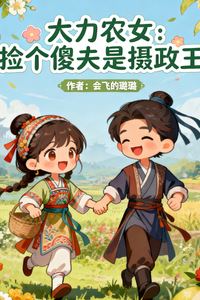
Reincarnated as a peasant girl, Chen Zhiwei beat up the arrogant rich kids and stylishly split from her family with her frail little brother. She planned to farm the land and raise her brother to a comfortable life.

.

But in the Dayong Dynasty, girls who didn’t marry by fourteen were forcibly matched by the authorities. When she saw she was about to be paired with a cripple from the neighboring village, she decided to take matters into her own hands—so she went up the mountain and picked up a bloodied, clueless man as a “stand-in husband.”

.

The simpleton husband was obedient and strong, though his appetite was terrifying.

.

Chen Zhiwei rolled up her sleeves. “No problem, Sister has the space spring; we can handle it!”

.

Life began to flourish. Even as the simpleton devoured her spirit-spring vegetables, his eyes grew clearer day by day.

.

Until one day, a troop of black-armored cavalry stormed into the village. They knelt in unison before her “simpleton husband.”

.

“Greetings, the Regent!”

.

Chen Zhiwei’s spatula slipped from her hand with a clang.

Novel Items

More
Document
The legal document written on the spot under the witness of Village Chief Chen Fugen and clan elders, formally dividing the Chen family. It allocated two mu of mid-grade paddy land in the west of the village and an abandoned thatched hut near the village entrance to Chen Zhiwei and Chen Zhiyi, along with a small amount of grain and crude farming tools.
Arcane Treasure
A mystical dimension with green mountains, clear waters, surrounding peaks, and sweet air. Originally the female lead's golden cheat in the storybook, it was transferred to Song Yunlan when her blood stained the engagement pendant. She was pulled into this space after the pendant activated.
Materials
Several waterproof packages wrapped in oil paper found beside the spiritual spring in Chen Zhiwei's transmigration space. Their contents were not yet revealed in the text.
Cultivation Method
A transmigration cheat ability that Chen Zhiwei discovered when she effortlessly lifted Madam Wang, who was more than twice her size. The power surged from within her when she focused on moving a heavy wooden plank, suggesting her transmigration brought enhanced physical abilities.
Item
Zhao Xiuye grabbed a broom from the side and hit Jiang Mingxia multiple times on the back after Li Shanshan called her a big bad guy. She was tired from hitting and dropped the broom.
Materials
High-yield crop samples from Chen Zhiwei's previous life laboratory. They appeared in her hand when she thought about them, confirming her lab space and research came with her after transmigration.
Latest Release
DateGroupRelease
2026-08-11shanghai fantasy c63
2026-08-11shanghai fantasy c62
2026-08-11shanghai fantasy c61
2026-08-11shanghai fantasy c60
2026-08-11shanghai fantasy c59
2026-08-11shanghai fantasy c58
2026-08-11shanghai fantasy c57
2026-08-11shanghai fantasy c56
2026-08-11shanghai fantasy c55
2026-08-11shanghai fantasy c54
2026-08-11shanghai fantasy c53
2026-08-11shanghai fantasy c52

Community Reviews

Rating(0 / 5.0, 14votes)
5 stars
0(0%)
4 stars
0(0%)
3 stars
0(0%)
2 stars
0(0%)
1 stars
0(0%)

Popular reviews

... Read More
I don't usually comment on dialogue, but this author has a genuine gift for making characters sound like actual human beings instead of plot devices wearing skin. Take Chen Zhiwei's line: 'If others don't provoke me, I won't provoke them. But they went too far, so I had no choice.' That's not something people say in real life—that's something people SAY when they're trying to sound reasonable while being absolutely done with someone. And it's perfect because it's exactly how Zhiwei operates: she's not aggressive by nature, but she's not naive either. The dialogue captures her moral compass without making her sound preachy. Then there's the village head: 'The riverbank land is poor and usually unwanted, but it's close to water—suitable for a workshop.' This is functional dialogue that also world-builds. We learn about the land, about priorities, about how decisions get made in this setting—all in one sentence that sounds like something a village elder would actually say. But the dialogue that really sold me was the villagers gossiping. 'Stubborn Madam Wang! If not for you, we might have signed up and gotten in.' 'Exactly! Chen Dashan, can't control your wife and can't shut your mouth yourself… truly bad luck for our village having you two around.' This is how people actually talk when they think no one important is listening. It's messy, it's petty, it's alive. And the author lets it breathe without moralizing. Zhiyi's voice is also distinct—his stammering 'R-Replying to Teacher… I… I don't know any characters… I can count… to ten…' with each word getting softer. You can hear a child's shame in those ellipses. And then later, 'Sis… I… I don't understand most of it…'—the repetition of 'I' shows he's still processing, still embarrassed, but trusting his sister enough to be vulnerable. The narrative voice itself is warm without being saccharine. It describes scenes with enough sensory detail to paint the picture but never so much that it slows you down. It's the kind of prose that gets out of the way and lets the characters do their thing.
... Read More
I literally had to put the book down after the village confrontation scene because my heart was pounding so hard. Let me just—how does the author do this? One minute you're watching this sweet moment of Wangyou drinking soy milk like a happy cat, and the next you're reading about a MOB forming outside someone's house because a gentle soul threw a clod of dirt in self-defense. The escalation is masterful. It starts so small—Tiedan calls Wangyou a dummy, throws a pebble, and Wangyou instinctively throws one back. But the moment Tiedan's nose starts bleeding, the author pulls back the camera and shows us how quickly a single incident can spiral into something catastrophic. Tiedan's mother doesn't just want justice—she wants blood. She's already screaming 'I'll fight you!' before anyone has even explained what happened. And then Liao Jinfeng and Wang Shi show up and it becomes something even worse. These two women don't care about the fight at all—they care about using this as ammunition against Chen Zhiwei. 'A girl with no self-respect, bringing all sorts of questionable men into her home!' Can you believe the speed at which they twist this? A child got hurt, and suddenly it's about moral corruption and the family's reputation? The author is showing us something terrifying here about how prejudice works—it doesn't need evidence, it just needs an excuse. What really gets me is the power dynamic. Wangyou is trapped. He runs inside and locks the door, and the crowd is pounding on it, throwing foul-smelling stuff at him. He's not a threat to anyone—he's a amnesiac with the mind of a child who just wants his 'Sis.' But the villagers see a monster because it's easier than seeing a victim. And Chen Zhiwei? She's just getting back from the town, exhausted from her own struggles with the soybean supply, and now she has to face THIS. The stakes have never been higher. If Wangyou stays, the village will destroy them both. If he leaves, he dies. And Chen Zhiwei knows this—that's why she's been so careful, why she's been building her business, why she has that secret space. She's trying to create a world where she can protect the people she loves, and now the world is coming for them.
... Read More
I've been turning over some of the imagery in this batch, and there's a lot more going on beneath the surface than a simple 'girl builds business and sends brother to school' story. The most obvious symbol is the home itself. After fleeing the old Chen household—where they were treated as disposable—Zhiwei builds a new house. Not just any house: three main rooms facing south, solid and spacious, with a workshop beside it. The south-facing orientation is significant. In Chinese culture, south-facing homes are associated with warmth, prosperity, and good fortune. She's not just building shelter; she's building a future that faces the light. Then there's the workshop. It has wide windows for good lighting, brick flooring for easy cleaning, and clearly designated areas for soaking, grinding, braising, and drying. This is a space designed for transformation—beans becoming something entirely different through patience and process. It's a metaphor for Zhiwei herself: taking what was given (soybeans, a difficult past, limited resources) and transforming it into something valuable. The food imagery throughout is also loaded. The New Year feast—braised pork head meat symbolizing good fortune, the whole red carp wishing abundance every year, the golden chicken soup. These aren't just meals; they're rituals of celebration and hope. When she later serves her vegetarian chicken and dried bean products to the villagers, she's sharing the fruits of her transformation. Food as community, food as proof of survival. And the school bag she sews by hand? That's perhaps the most intimate symbol. She makes his spring outfit, washes and presses it, sews the bag herself. Every stitch is an act of love and investment. Education in this context isn't just about learning characters—it's about breaking the cycle. Zhiyi will read and write, and that means he'll never be trapped the way his sister was. The firecrackers on New Year's Eve serve as another symbol—scaring away bad luck, welcoming the new. The red confetti outside their door, Zhiyi's flushed face, the smell of gunpowder in the cold air. It's a moment of pure, unguarded joy, and it's earned through everything that came before.
... Read More
Okay so I need to talk about Wangyou because this character is EVERYTHING and I am already obsessed. Let me back up though—Chen Zhiwei finds this guy half-dead in the woods, bleeding and poisoned, and despite every rational instinct screaming at her to walk away, she saves him. And then what does she do? She gives him a NAME. She looks into those completely empty, childlike eyes and says 'I'll call you Wangyou—Forget Worries.' Just like that, she's rewriting his entire existence. That moment hit me so hard because it's not just about giving someone a name, it's about giving someone a future free from whatever nightmare happened to him before. And then the sibling dynamics? Chen Zhiyi is such a complicated character. On one hand he's genuinely protective—remember how he clenched his bowl so hard he almost crushed it when his sister wasn't home? He's angry at his own helplessness but channels it into studying, into becoming someone who can actually support her. But then Wangyou shows up and suddenly Zhiyi is FUMING. Not because he's mean, but because this tall, handsome stranger is taking his sister's attention. The scene where he calls Wangyou a 'big dummy' and then storms off after getting a 'sweet bomb' from his sister? That's not jealousy, that's a kid who's been carrying too much responsibility for too long and just wants to be the center of his sister's world again. But the real gem here is Wangyou himself. He's not just a plot device—he's genuinely naive in a way that feels authentic. When the villagers surround him, calling him names and throwing dirt, he doesn't fight back aggressively. He curls up and cries 'Sis… scared…' That's not weakness, that's a person who has never had anyone to protect them until Chen Zhiwei. His dependence on her is almost shadow-like, following her everywhere like a loyal dog. And yet—there's something deeply moving about that trust. In a world that's been cruel to him, she became his entire universe. I'm also noticing how the author sets up this triangle of protection. Chen Zhiwei protects Wangyou, Zhiyi protects Chen Zhiwei (in his own awkward way), and the village women like Liao Jinfeng are trying to destroy both of them. It's a beautiful, tragic inversion of family bonds.
... Read More
There's so much going on beneath the surface of this chapter that I keep coming back to. Let me try to unpack some of it. The spirit spring and Chen Zhiwei's secret space—this isn't just a convenient plot device. It's a symbol of the hidden resources we all carry, the things we keep secret because the world isn't ready for them. She's been so focused on surviving publicly that she neglected contingency plans, and the space is her private act of rebellion against a world that wants her powerless. The fact that she plants mung beans, rice, wheat, AND medicinal herbs shows her instinct for self-sufficiency—she's building a world where she doesn't need anyone's permission to survive. But here's the thing: she can't use the space for everything. She still needs the ox cart, the cover story, the checkpoint. The space is her secret weapon, but the world outside it is still dangerous. That tension between the safe inner world and the hostile outer world mirrors her relationship with Wangyou—he's another kind of sanctuary, another person she's protecting in her hidden space, both literally and metaphorically. The soybeans are also symbolic. They represent everything Chen Zhiwei is fighting for—her independence, her livelihood, her right to exist without begging for permission. Fengyu Grain Store cutting off her supply is an attempt to make her dependent, to force her back into the position of the powerless girl. And Wangyou? He's the ultimate symbol of dependence. He has no past, no resources, no name. He is everything she's fighting against—vulnerable, exposed, at the mercy of others. But the most powerful symbol is the name 'Wangyou' itself. 'Forget Worries.' It's not just a name she gives him—it's a wish. She wants him to forget whatever trauma destroyed him. She wants him to be carefree. But the tragedy is that he CAN'T forget. The villagers will make sure of that. The name is a prayer that the world won't allow to come true. And then there's the blood. So much blood in this chapter—Wangyou's poisoned wound, Tiedan's broken nose, the dark red seeping through bandages. Blood is the great equalizer. It doesn't matter if you're a village girl running a tofu shop or a mob of righteous citizens—blood is just blood. But the author uses it differently for each character: for Wangyou it's the blood of survival, for Tiedan it's the blood of consequence, and for Chen Zhiwei it's the blood of responsibility. The locust tree where she finds him is also worth noting. Locust trees are tough—they grow in poor soil, they're resilient, they provide shade. A fitting place to find someone who has survived against the odds.
... Read More
Let me just say this — the stakes in this novel keep climbing and I am not ready for what's coming next. On the surface, Chen Zhiwei has everything going for her. The workshop is running smoothly. The county restaurants are buying. The harvest yielded six shi per mu — a number that made experienced farmers fall silent and village elders wipe tears. The magistrate personally came to commend her. She even secured his help against forced marriage. By all accounts, she should be breathing easy. But the author doesn't let us breathe. First, Fengyu Grain Company — a county-level operation that previously ignored small deals — suddenly wants exclusive supply. That's not a compliment. That's a predator circling. Manager Zhou showed up with twenty taels of silver and a smile that didn't reach his eyes, and Chen Zhiwei saw right through it. She rejected him, invoked the magistrate, and sent him away — but the threat is real. "The business world is unpredictable." Those words weren't empty. Then there's Chen Zhiyuan. His son came home flushed and trembling, clothes dusty, saying his brother and his friends blocked him and said "you're just lucky now, it'll soon be revealed." This isn't just petty bullying. This is someone who has watched his younger sister surpass him and his family's expectations, and he's lashing out. The fact that their father Chen Dahe had been funding Chen Zhiyuan's scholarly dreams while Chen Zhiwei was the one actually producing results? That dynamic is a powder keg. And let's not forget the magistrate conversation itself. Chen Zhiwei asked him to prevent forced marriage registration. He agreed — but laws and customs don't just disappear because a magistrate promised. Her family still exists. Their plans for her still exist. She's fourteen. The clock is ticking. The author is layering conflicts like a chess master. Business threats. Family sabotage. Social pressure. And Chen Zhiwei is facing all of it alone, calm as ever, wiping her brother's face with a cloth before planning her next move. What comes next? I need to know.
See all reviews

Characters

See all characters

Custom lists

Oops…There is nothing here.