Transmigration: Picking Up a Foolish Husband Who Turns Out to Be a Regent - Reviews

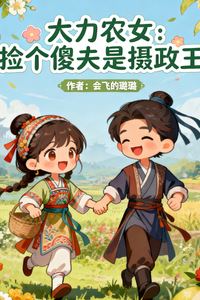
Transmigration: Picking Up a Foolish Husband Who Turns Out to Be a Regent
+Add to Custom List
Sort
Add review
... Read More
I don't usually comment on dialogue, but this author has a genuine gift for making characters sound like actual human beings instead of plot devices wearing skin. Take Chen Zhiwei's line: 'If others don't provoke me, I won't provoke them. But they went too far, so I had no choice.' That's not something people say in real life—that's something people SAY when they're trying to sound reasonable while being absolutely done with someone. And it's perfect because it's exactly how Zhiwei operates: she's not aggressive by nature, but she's not naive either. The dialogue captures her moral compass without making her sound preachy. Then there's the village head: 'The riverbank land is poor and usually unwanted, but it's close to water—suitable for a workshop.' This is functional dialogue that also world-builds. We learn about the land, about priorities, about how decisions get made in this setting—all in one sentence that sounds like something a village elder would actually say. But the dialogue that really sold me was the villagers gossiping. 'Stubborn Madam Wang! If not for you, we might have signed up and gotten in.' 'Exactly! Chen Dashan, can't control your wife and can't shut your mouth yourself… truly bad luck for our village having you two around.' This is how people actually talk when they think no one important is listening. It's messy, it's petty, it's alive. And the author lets it breathe without moralizing. Zhiyi's voice is also distinct—his stammering 'R-Replying to Teacher… I… I don't know any characters… I can count… to ten…' with each word getting softer. You can hear a child's shame in those ellipses. And then later, 'Sis… I… I don't understand most of it…'—the repetition of 'I' shows he's still processing, still embarrassed, but trusting his sister enough to be vulnerable. The narrative voice itself is warm without being saccharine. It describes scenes with enough sensory detail to paint the picture but never so much that it slows you down. It's the kind of prose that gets out of the way and lets the characters do their thing.
... Read More
I literally had to put the book down after the village confrontation scene because my heart was pounding so hard. Let me just—how does the author do this? One minute you're watching this sweet moment of Wangyou drinking soy milk like a happy cat, and the next you're reading about a MOB forming outside someone's house because a gentle soul threw a clod of dirt in self-defense. The escalation is masterful. It starts so small—Tiedan calls Wangyou a dummy, throws a pebble, and Wangyou instinctively throws one back. But the moment Tiedan's nose starts bleeding, the author pulls back the camera and shows us how quickly a single incident can spiral into something catastrophic. Tiedan's mother doesn't just want justice—she wants blood. She's already screaming 'I'll fight you!' before anyone has even explained what happened. And then Liao Jinfeng and Wang Shi show up and it becomes something even worse. These two women don't care about the fight at all—they care about using this as ammunition against Chen Zhiwei. 'A girl with no self-respect, bringing all sorts of questionable men into her home!' Can you believe the speed at which they twist this? A child got hurt, and suddenly it's about moral corruption and the family's reputation? The author is showing us something terrifying here about how prejudice works—it doesn't need evidence, it just needs an excuse. What really gets me is the power dynamic. Wangyou is trapped. He runs inside and locks the door, and the crowd is pounding on it, throwing foul-smelling stuff at him. He's not a threat to anyone—he's a amnesiac with the mind of a child who just wants his 'Sis.' But the villagers see a monster because it's easier than seeing a victim. And Chen Zhiwei? She's just getting back from the town, exhausted from her own struggles with the soybean supply, and now she has to face THIS. The stakes have never been higher. If Wangyou stays, the village will destroy them both. If he leaves, he dies. And Chen Zhiwei knows this—that's why she's been so careful, why she's been building her business, why she has that secret space. She's trying to create a world where she can protect the people she loves, and now the world is coming for them.
... Read More
I've been turning over some of the imagery in this batch, and there's a lot more going on beneath the surface than a simple 'girl builds business and sends brother to school' story. The most obvious symbol is the home itself. After fleeing the old Chen household—where they were treated as disposable—Zhiwei builds a new house. Not just any house: three main rooms facing south, solid and spacious, with a workshop beside it. The south-facing orientation is significant. In Chinese culture, south-facing homes are associated with warmth, prosperity, and good fortune. She's not just building shelter; she's building a future that faces the light. Then there's the workshop. It has wide windows for good lighting, brick flooring for easy cleaning, and clearly designated areas for soaking, grinding, braising, and drying. This is a space designed for transformation—beans becoming something entirely different through patience and process. It's a metaphor for Zhiwei herself: taking what was given (soybeans, a difficult past, limited resources) and transforming it into something valuable. The food imagery throughout is also loaded. The New Year feast—braised pork head meat symbolizing good fortune, the whole red carp wishing abundance every year, the golden chicken soup. These aren't just meals; they're rituals of celebration and hope. When she later serves her vegetarian chicken and dried bean products to the villagers, she's sharing the fruits of her transformation. Food as community, food as proof of survival. And the school bag she sews by hand? That's perhaps the most intimate symbol. She makes his spring outfit, washes and presses it, sews the bag herself. Every stitch is an act of love and investment. Education in this context isn't just about learning characters—it's about breaking the cycle. Zhiyi will read and write, and that means he'll never be trapped the way his sister was. The firecrackers on New Year's Eve serve as another symbol—scaring away bad luck, welcoming the new. The red confetti outside their door, Zhiyi's flushed face, the smell of gunpowder in the cold air. It's a moment of pure, unguarded joy, and it's earned through everything that came before.
... Read More
Okay so I need to talk about Wangyou because this character is EVERYTHING and I am already obsessed. Let me back up though—Chen Zhiwei finds this guy half-dead in the woods, bleeding and poisoned, and despite every rational instinct screaming at her to walk away, she saves him. And then what does she do? She gives him a NAME. She looks into those completely empty, childlike eyes and says 'I'll call you Wangyou—Forget Worries.' Just like that, she's rewriting his entire existence. That moment hit me so hard because it's not just about giving someone a name, it's about giving someone a future free from whatever nightmare happened to him before. And then the sibling dynamics? Chen Zhiyi is such a complicated character. On one hand he's genuinely protective—remember how he clenched his bowl so hard he almost crushed it when his sister wasn't home? He's angry at his own helplessness but channels it into studying, into becoming someone who can actually support her. But then Wangyou shows up and suddenly Zhiyi is FUMING. Not because he's mean, but because this tall, handsome stranger is taking his sister's attention. The scene where he calls Wangyou a 'big dummy' and then storms off after getting a 'sweet bomb' from his sister? That's not jealousy, that's a kid who's been carrying too much responsibility for too long and just wants to be the center of his sister's world again. But the real gem here is Wangyou himself. He's not just a plot device—he's genuinely naive in a way that feels authentic. When the villagers surround him, calling him names and throwing dirt, he doesn't fight back aggressively. He curls up and cries 'Sis… scared…' That's not weakness, that's a person who has never had anyone to protect them until Chen Zhiwei. His dependence on her is almost shadow-like, following her everywhere like a loyal dog. And yet—there's something deeply moving about that trust. In a world that's been cruel to him, she became his entire universe. I'm also noticing how the author sets up this triangle of protection. Chen Zhiwei protects Wangyou, Zhiyi protects Chen Zhiwei (in his own awkward way), and the village women like Liao Jinfeng are trying to destroy both of them. It's a beautiful, tragic inversion of family bonds.
... Read More
There's so much going on beneath the surface of this chapter that I keep coming back to. Let me try to unpack some of it. The spirit spring and Chen Zhiwei's secret space—this isn't just a convenient plot device. It's a symbol of the hidden resources we all carry, the things we keep secret because the world isn't ready for them. She's been so focused on surviving publicly that she neglected contingency plans, and the space is her private act of rebellion against a world that wants her powerless. The fact that she plants mung beans, rice, wheat, AND medicinal herbs shows her instinct for self-sufficiency—she's building a world where she doesn't need anyone's permission to survive. But here's the thing: she can't use the space for everything. She still needs the ox cart, the cover story, the checkpoint. The space is her secret weapon, but the world outside it is still dangerous. That tension between the safe inner world and the hostile outer world mirrors her relationship with Wangyou—he's another kind of sanctuary, another person she's protecting in her hidden space, both literally and metaphorically. The soybeans are also symbolic. They represent everything Chen Zhiwei is fighting for—her independence, her livelihood, her right to exist without begging for permission. Fengyu Grain Store cutting off her supply is an attempt to make her dependent, to force her back into the position of the powerless girl. And Wangyou? He's the ultimate symbol of dependence. He has no past, no resources, no name. He is everything she's fighting against—vulnerable, exposed, at the mercy of others. But the most powerful symbol is the name 'Wangyou' itself. 'Forget Worries.' It's not just a name she gives him—it's a wish. She wants him to forget whatever trauma destroyed him. She wants him to be carefree. But the tragedy is that he CAN'T forget. The villagers will make sure of that. The name is a prayer that the world won't allow to come true. And then there's the blood. So much blood in this chapter—Wangyou's poisoned wound, Tiedan's broken nose, the dark red seeping through bandages. Blood is the great equalizer. It doesn't matter if you're a village girl running a tofu shop or a mob of righteous citizens—blood is just blood. But the author uses it differently for each character: for Wangyou it's the blood of survival, for Tiedan it's the blood of consequence, and for Chen Zhiwei it's the blood of responsibility. The locust tree where she finds him is also worth noting. Locust trees are tough—they grow in poor soil, they're resilient, they provide shade. A fitting place to find someone who has survived against the odds.
... Read More
Let me just say this — the stakes in this novel keep climbing and I am not ready for what's coming next. On the surface, Chen Zhiwei has everything going for her. The workshop is running smoothly. The county restaurants are buying. The harvest yielded six shi per mu — a number that made experienced farmers fall silent and village elders wipe tears. The magistrate personally came to commend her. She even secured his help against forced marriage. By all accounts, she should be breathing easy. But the author doesn't let us breathe. First, Fengyu Grain Company — a county-level operation that previously ignored small deals — suddenly wants exclusive supply. That's not a compliment. That's a predator circling. Manager Zhou showed up with twenty taels of silver and a smile that didn't reach his eyes, and Chen Zhiwei saw right through it. She rejected him, invoked the magistrate, and sent him away — but the threat is real. "The business world is unpredictable." Those words weren't empty. Then there's Chen Zhiyuan. His son came home flushed and trembling, clothes dusty, saying his brother and his friends blocked him and said "you're just lucky now, it'll soon be revealed." This isn't just petty bullying. This is someone who has watched his younger sister surpass him and his family's expectations, and he's lashing out. The fact that their father Chen Dahe had been funding Chen Zhiyuan's scholarly dreams while Chen Zhiwei was the one actually producing results? That dynamic is a powder keg. And let's not forget the magistrate conversation itself. Chen Zhiwei asked him to prevent forced marriage registration. He agreed — but laws and customs don't just disappear because a magistrate promised. Her family still exists. Their plans for her still exist. She's fourteen. The clock is ticking. The author is layering conflicts like a chess master. Business threats. Family sabotage. Social pressure. And Chen Zhiwei is facing all of it alone, calm as ever, wiping her brother's face with a cloth before planning her next move. What comes next? I need to know.
... Read More
Can we just take a moment to appreciate how well-written the dialogue is in this section? Because I've read novels where every character sounds like the author wearing the same mask, and this is NOT that. Chen Zhiwei's voice is so distinct—she's direct, practical, but with this underlying warmth that never quite disappears. When she tells Wangyou 'Eat. Finish it—no wasting,' that's not cruelty, that's the voice of someone who knows what hunger feels like and won't let anyone in her care go without. And when she says 'Sister will always love Zhiyi the most'—that line is so casually devastating. She says it while ruffling his hair, almost offhand, but it's exactly what he needed to hear. Zhiyi's dialogue is full of that bratty-but-lovable energy. 'Sis, why'd you bring a stranger home? I already thought—we'd buy a husband if you didn't want one.' That's a kid trying to be funny to cover up his fear. And then 'You're short!' when Wangyou tells him to call him Brother—pure sibling rivalry energy, even though this 'brother' is twice his size. But the most interesting voice is Wangyou's. His dialogue is deliberately simple—'Sister… more…', 'Wangyou will be good!', 'Sis… scared…'—but it's never annoying because the author never lets him speak in a way that feels like a gimmick. Each line reveals something: his dependence, his desire to please, his terror. When he says 'Here… hurts… empty…' pointing to his head, that's not bad writing—that's someone whose memories are gone and only the pain remains. And then there's Liao Jinfeng, whose dialogue is almost theatrical in its villainy. 'Is this something a girl not even fourteen should be doing?' 'She's ruined the morals of Chen Village!' She speaks in declarations, not questions. She doesn't investigate—she accuses. And Wang Shi's 'What a sin! Our Chen family accumulated virtue for generations' is the kind of performative morality that makes my teeth grind. The author also uses silence brilliantly. When Wangyou just stares at Zhiyi after being told to call him Brother, that silence speaks volumes. It's not defiance—it's confusion. He doesn't understand the social game being played with him. One line that stuck with me: 'Anger was the act of the weak. He would study hard, earn an official title, and support his sister—rather than rage uselessly.' That's Chen Zhiyi's internal voice, and it's so different from his external dialogue. The gap between what he thinks and what he says tells us everything we need to know about this character.
... Read More
Let me just start by saying: the author knows how to pace a chapter like a damn professional. I went from 'OH SHE SMACKED CHEN DASHAN WITH A STICK' to 'aww look at them setting off firecrackers' to 'she's expanding her business empire' and somehow every transition felt natural, not rushed or dragged out. The opening of this batch is pure adrenaline. Chen Zhiwei confronting the Chen family with an axe embedded in a firewood block? That's a scene that grabs you by the throat and doesn't let go. The violence is controlled—she hits them hard enough to hurt but not seriously, which tells us everything about her character in one action. And then the crowd of villagers watching? Perfect staging. She's not just defending her home; she's performing justice in public, and the reputation she builds from that moment echoes through the entire rest of the batch. Then—bam—New Year's Eve. The firecrackers, the feast, the wish she makes. This is the calm after the storm, and it's earned. You feel the relief. The author doesn't rush this; they let you breathe with the characters. The wind howling outside while the hut is warm inside? That's atmosphere doing structural work. After that, the pacing shifts into a steady, purposeful rhythm. Business meetings, construction, enrolling Zhiyi in school, hiring workers, visiting the county seat. Each scene advances the plot while also developing character and world. There's no filler. Even the wage dispute with Madam Wang serves multiple purposes—it shows Zhiwei's business acumen, reinforces her boundaries, and gives the villagers a reason to rally behind her. The only thing I'd note is that the ending feels slightly truncated—the county market exploration cuts off mid-scene. But honestly, that cliffhanger works in its favor. I need to know what happens next. The Drunken Immortal Hall owner's reaction to her vegetarian chicken? I'm hooked.
... Read More
Okay, I need to talk about Chen Zhiwei and her brother Zhiyi because this sibling dynamic is honestly the emotional backbone of everything that's happening. Let me just say it straight: this is one of those relationships that makes you want to hug your own siblings through the screen. After they left the old Chen household, it's just the two of them against the world. And the way Zhiwei operates? She's not just surviving—she's building a life, and she's making sure Zhiyi gets everything she never had. The New Year scene where she cooks that feast—braised pork head meat, whole red carp, chicken soup made with spiritual spring water—this isn't just food. This is her saying, without words, 'We made it. We're safe now.' And Zhiyi's reaction, swallowing hard and saying 'I wish every day were New Year,' that's the kind of line that just wrecks you a little. But what really got me was the school scene. She spends all this time and money getting him into Chongwen Hall, and then he comes out crying because he doesn't understand anything. And her response? She doesn't scold him. She doesn't say 'I spent all that money and you're wasting it.' She just takes his cold little hand and says, 'Being able to sit in that classroom today is already the biggest step.' That's not just a sister—that's a mother, a protector, a person who has carried so much weight and still finds the tenderness to share it. And then there's the way she handles the old Chen household. When Madam Wang and Chen Dajiang come to apply for jobs at the workshop, she rejects them cold. No hesitation. No false politeness. She's learned her lesson—kindness to the wrong people gets you eaten alive. But she's not cruel either. She pays the idle villagers fairly, she gives opportunities to those who are diligent, and she even uses the village chief's son to handle the paperwork because she's thinking ahead about trust and transparency. The contrast between how she treats her brother versus how she treats everyone else? That's character depth right there. With Zhiyi, she's soft. With the world, she's steel. And honestly, that's the kind of character writing that makes you never want her to come to harm.
... Read More
The harvest scene. Just... the harvest scene. I read it and I could literally smell the grain. The author described it so vividly that I felt like I was standing on that field with them. "The sharp sickles sliced through the stalks, swish swish, and the golden rice toppled neatly onto the field. The rich scent of grains spread instantly." I'm not even being dramatic. That onomatopoeia — swish swish — it's so simple but it puts you right there. And then the threshing: "With every strike, golden grains burst forth like a sudden summer shower, scattering fine, sunlit dust into the air." Sunlit dust. That's the kind of detail that makes a scene live. Not just visual but atmospheric. You can feel the warmth, the golden light, the physicality of it all. But what really sold me was the weighing scene. The village chief overseeing the scale himself, elders judging, younger hands recording. The hushed crowd. The counting voices: "One shi! Two shi!" And then at six shi, gasps of astonishment. When the final tally hit six shi, one dou, five sheng — the crowd erupted like a disturbed hornet's nest. The emotional weight of that number though. For villagers who knew hunger, two shi per mu was already a blessing. Six shi? It wasn't just impressive agriculture — it was survival. Elder villagers wiping tears from their rough hands, murmuring "No more hunger for us." That line destroyed me a little. This isn't just about yield numbers. This is about people who have known starvation seeing real change. And before that, the spring planting section was equally immersive — the composting pits, the warm water soaking, the deep plowing breaking the hardpan. The author built this whole world where farming isn't just background decoration, it's the heartbeat of the story. Every detail — the crushed garlic powder, the mugwort ash, the string lines for row planting — made this world feel tangible and real. I could picture it all.
... Read More
Let me just be honest with you: this batch has some of the sharpest conflict I've read in a while, and the stakes are never boring because they're always personal. The opening confrontation with the Chen family is the kind of scene that makes your pulse quicken. Zhiwei has an axe. She embeds it in a firewood block next to Chen Dahe's ear. Her warning is clear: 'One step further, and don't blame me for this axe having no eyes.' The villagers are watching. This isn't just a family dispute—it's a public display of power, and the stakes are her right to exist in her own home without being consumed by the people who used to own her. But what I love is that the author doesn't let the conflict stay at the surface level. The real stakes are emotional, not physical. Zhiwei isn't just fighting for a courtyard—she's fighting for the life she's built with her brother. Every intrusion from the old Chen household is a threat to everything she's sacrificed to create. Then there's the hiring scene, which is conflict in a completely different register. Madam Wang and Chen Dajiang trying to get jobs at the workshop? That's not a physical threat—it's a social and economic one. They're testing whether Zhiwei will fold under pressure, whether she'll let guilt or manipulation override her judgment. And her response—putting fifty taels of silver with the village chief as a wage guarantee—is brilliant. She's not just saying no; she's removing the ammunition from their arguments. The county market exploration adds another layer of stakes. The Drunken Immortal Hall owner is shrewd, the competition is fierce, and Zhiwei has to negotiate from a position of relative weakness—she's a small producer entering a market dominated by established players. But she's not entering empty-handed. She has a product that's genuinely different, and she has the patience to observe before acting. What keeps me invested isn't just whether Zhiwei will succeed—it's whether she'll stay true to herself while doing so. The stakes are her integrity as much as her survival. And that's the kind of conflict that doesn't let go.
... Read More
The confrontation between Chen Zhiwei and Manager Zhou is honestly one of the best dialogue scenes I've read in this kind of novel. It's not loud or dramatic. It's quiet, polite, and absolutely lethal. Manager Zhou opens with the classic businessman flattery: "At such a young age, you've built up such a business and even grown an auspicious yield of six dan per mu. Truly, a heroine who rivals men." Polite smile, cupped-hand salute, but his eyes are doing the calculating. And Chen Zhiwei? She doesn't take the bait. "You flatter me, Manager Zhou. May I ask what brings you here today?" Straight to the point. No small talk. Then the box of silver appears. Twenty taels. A deposit for exclusive supply. The offer sounds generous on the surface but everyone in the room knows it's a trap. And the dialogue keeps getting sharper: "In business, one must follow certain rules. With backing, the road is smoother." — That's the threat wrapped in silk. And Chen Zhiwei's response? "The county magistrate recently commended me for my contributions to grain production and encouraged me to continue my work. I believe that in this county, as long as one does business lawfully, one won't go wrong." She didn't raise her voice. She didn't get angry. She just invoked the magistrate like it was nothing. And Manager Zhou's reaction? "Zhou's eyes sharpened as he reassessed the seemingly delicate village girl before him. He hadn't expected her to be so difficult." The narrative voice here is also doing a lot of work. It's observant but not over-explaining. When Chen Zhiwei sneered inwardly at the exclusive supply idea, the author just told us that and moved on. No need to dramatize it further. The dialogue carries everything. And the ending of that exchange — "But the business world is unpredictable. If you change your mind in the future, Fengyu Grain Store's doors will always be open." — That's not a door closing. That's a door being left slightly ajar as a threat. Manager Zhou's gaze turning "noticeably colder" says it all.

Leave a comment

You must be logged in to leave comments. or
