Little Demon Child of the Sword Sect, Three and a Half Years Old and Super Fierce - Reviews

Little Demon Child of the Sword Sect, Three and a Half Years Old and Super Fierce
+Add to Custom List
Sort
Add review
... Read More
I came in expecting a cute comedy about a demon princess and I stayed because this story is actually about something much deeper. Let me explain. The central symbol of the entire opening is poverty. Not just "they're broke" poverty — this is generational, systemic poverty that affects every aspect of life. The cracked throne represents the crumbling Demon Realm itself. The missing night-luminescent pearls represent how the family has to sell off their heritage just to survive. The three spirit stones represent a father's love that is genuine but inadequate — he gives everything he has and it's still not enough. There's also this fascinating theme of identity and belonging. Fu Pin is half-demon, half-immortal, and she literally cannot exist comfortably in either world. The shadows in the Nether Rift recognize her lineage and retreat. The ferryman mistakes her for a refugee. The sect guards assume she's a scammer. She doesn't fully belong anywhere — and that's the core emotional conflict that's going to drive the entire story. The contrast between the Demon Realm and the Cultivation Realm is also rich with symbolic meaning. The Demon Realm is dark, broken, poor — but it's home. The Cultivation Realm is bright, wealthy, powerful — but it's where her mother has built a new life without them. The question the story seems to be asking is: what does family owe each other, and what happens when the scales are uneven? And then there's the letter itself — the physical object that connects all three characters. Fu Xiao wrote it (or dictated it), Fu Yan transcribed it, and Fu Pin carries it. It's supposed to be a bridge between the family members but it reads like a loan request. That's the tragedy and the comedy in one object.
... Read More
Let me just say this: the pacing in these chapters is absolutely masterful and I need to talk about it. The author takes what could have been a boring 'training montage' and turns it into one of the most engaging sequences I've read in a cultivation novel. Here's how they do it. First, the reveal. Chapter 7 drops the Chaos Spiritual Root bomb and immediately pivots to the comedic crisis of 'we can't afford to raise her.' That's a brilliant structural choice—instead of letting the protagonist bask in glory, the author slaps her (and us) with reality. Genius means nothing without resources. The mood shifts from 'WOW SHE'S AMAZING' to 'OH NO WE'RE BROKE' in about three paragraphs, and it keeps you hooked because now there's a problem to solve. Then the training sequence. The author could have summarized a month of training in a paragraph. Instead, we get the horse stance (forty-five minutes, 'near death'), the sword thrusts (one hundred, then a thousand), and the medicinal bath (STINK). Each beat has its own rhythm—the horse stance is pure physical comedy with Gu Chenguang taking notes like 'Status: Near Death — Note: Can still hold on for a bit longer,' the sword practice has that devastating reveal that Shen Qingchen trained for ONE HUNDRED AND TEN YEARS, and the bath is just pure sensory horror. But here's what I love: after all that suffering, the breakthrough happens THREE DAYS LATER. Mid-stage Qi Refining. In three days. And then Shen Qingchen has to tell her to SLOW DOWN. The genius dilemma: not being allowed to cultivate too fast. That's such a clever reversal of the usual cultivation novel trope where the protagonist is always rushing forward. Here, the problem isn't that she's too slow—it's that she's too fast and they can't afford the spiritual energy consumption. The structure of the daily routine that follows—morning training, noon cultivation (strictly limited to four hours), afternoon baths and lessons, evening consolidation—creates a satisfying rhythm. It's repetitive in the way real training is repetitive, but the author varies it enough that it never drags. And the month-later check-in with Gu Chenguang's notebook summary ('The sect is about to go bankrupt') is the perfect comedic button on the whole arc. Then immediately—without a breath—the Shen Qingchen departure scene. He leaves on a dangerous mission, the brothers give him a ridiculous send-off, he forgets his food, and we're left with this quiet moment of her giving him back the candy. The pacing never lets you settle. Just when you think the training arc is over, the story pivots to the next emotional beat. I stayed up way too late reading this.
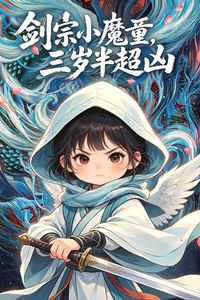
... Read More
There's a recurring motif in this text that I find absolutely fascinating—the smell. First Elder Wen Zhiya arrives carrying a massive sack of spirit beast dung that smells like 'fermented decaying leaves mixed with pickled spirit herbs,' and the narrative explicitly notes 'Behind him, he left a faint trail of... manure scent.' Then Second Elder Jing Yuan leaves 'a faint scent of burnt ash.' These smells aren't just comedic details—they're symbols of the elders' dedication. The dung represents First Elder's willingness to do the most humiliating, unpleasant work for his sect and his junior sister. The burnt ash represents Second Elder's humble position as a stoker, literally surrounded by fire and soot, yet somehow managing to save enough to help. And the protagonist's vow at the end transforms all of this—the manure and ash become symbols of love and sacrifice rather than mere gross details. The theme of poverty versus wealth runs throughout too. The Heavenly Sword Sect is comically broke ('we still have no money' is said multiple times), while the Qingyun Sect and Beast Taming Sect are implied to be wealthy. But the story flips this—true wealth isn't the spirit stones or the sect resources, it's the relationships these characters have built. Even the 'Money-Making Seminar' with its formal meeting structure (host, minutes, attendees) is ironic humor that highlights how desperate they are while also showing their resourcefulness. The chaos spirit roots themselves could be seen as a symbol—rare and powerful, but requiring enormous resources to cultivate, representing both a blessing and a burden.
... Read More
Okay I need to talk about this found family energy because it is EVERYTHING. Like, I went in expecting some generic cultivation adventure and instead I got a group of people who genuinely care about each other in the most wholesome ways. Watch how they move as a unit. Su Ning is always holding my hand, making sure I don't get lost. Yan Chuan clears the path with that massive saber. Murong Zhuo is scanning for threats on the flank. Gu Chenguang is behind everyone with his notebook, already calculating costs and risks. They have a formation. They have roles. They have each other's backs without anyone having to say it. And the moment with the fire fox — I literally melted. It was trembling in Su Ning's arms, burying itself in his chest, and he just... held it. Gentle. The way he described it as "still small, looks like it was just weaned" made me want to adopt it too. I was genuinely sad when I decided to sell it instead. Not because of the money, but because that little creature trusted him enough to hide in his arms. The candy trade scene with Haitang also made me laugh out loud. Three candies for magic robes — my inner merchant was screaming. But underneath the humor, there's something sweet about how I defended that fox. Not for profit. Just because I liked it. And then at the end, that roar. Everyone tenses up together. No panic, just shared alertness. That's the kind of bond you can't fake. I'm not crying, you're crying. This group is my whole personality now.
... Read More
Let's talk about stakes, because on the surface this is a comedy about a broke cultivation sect and a toddler. But the underlying tension is genuinely compelling. The central conflict is obvious: the Heavenly Sword Sect is number one in strength but also number one in poverty — from the bottom. That's a precarious position to be in, and the text makes it clear this isn't just a funny detail, it's a survival problem. They can't afford outer disciples. They can't afford alchemy furnaces or spirit herbs. Their Sect Leader has been gone fifty years and may never come back. One Elder is feeding poop at a Beast-Taming Sect. Another is a sweeping monk. The fourth Elder position doesn't even exist. But what makes the stakes feel real rather than comedic is the emotional undercurrent. Fu Pin herself was returned by her father, essentially discarded. She has no cultivation, no protection, no resources. She's three years old in a world where cultivation level determines everything. The fact that she's being taken in by the poorest sect in the cultivation world means she's joining a group that is barely surviving — and that raises the question: what happens when real danger arrives? Can this sect protect their new junior sister, or will their poverty become a death sentence? The Second Senior Brother subplot is particularly interesting from a stakes perspective. He's been gone three years searching for spirit stone mines, sending back messages that always say "soon." The senior brothers check in monthly. They even offered to mail him dry rations and he said he's eating dirt. This is both funny and genuinely concerning — he may be stranded, starving, or worse. And if he doesn't come back with resources, this sect has no path to sustainability. The tension here is that everything feels fragile. These people have chosen each other, they have love and loyalty, but they are one bad encounter away from complete destruction. And that's what makes me want to keep reading — I need to know if this ridiculous, patched-up family can actually survive in a world that clearly isn't built for them.
... Read More
This one sentence: 'When I grow strong, I will definitely make sure my senior brothers live a good life! So First Elder won't have to shovel dung anymore! So Second Elder won't have to secretly learn techniques anymore! So Third Elder won't have to save up for monk robes anymore!' I read this and just sat there staring at the page. The emotional journey from the spirit stone distribution scene all the way to this moment is incredible. Remember how the protagonist gave away the stones she had earned, not wanting to be the only one benefiting? That same selflessness is what motivates her vow now. She's three years old, already at Foundation Establishment, and her biggest concern isn't power or glory—it's making sure the people who sacrificed for her don't have to suffer anymore. The friendship bond between the junior sister and her five senior brothers is the emotional core of this entire story and it hits different every time. What really got me was the detail about the jade talisman feeling warm, 'like the candy Eldest Senior Brother stuffed into my hands.' That single comparison connects two separate moments of care across time and shows how deeply the protagonist internalizes every act of love she receives. And then the elders showing up one after another, each bringing gifts that represent months or years of saving from their humble jobs—it's overwhelming in the best way. This story understands that the deepest emotional moments don't need grand declarations. They just need someone to notice that the person who gave you everything is still going without.
... Read More
'The so-called mixed is merely a deceptive facade set up by the Heavenly Dao to protect the source of chaos!' This line isn't just worldbuilding—it's the thematic key to everything. The Chaos Spiritual Root looks like trash on the surface. Five elements, mixed up, disorderly. But it's actually the rarest, most powerful root in existence. The Heavenly Dao itself disguised it to protect it. What a gorgeous metaphor for potential, for talent, for anything that doesn't fit neatly into a system designed to categorize and rank everything. And then there's the sect itself. Heavenly Sword Sect. Sounds majestic, right? But they're wearing patched clothes, eating steamed buns, and their entire financial plan is 'body tempering because it costs zero.' They look like a failed sect from the outside. But inside? They're raising a genius together with nothing but stubborn love and cheap candy. The facade doesn't match the reality. Just like the Chaos Spiritual Root. The medicinal bath is another symbol I can't stop thinking about. It's horrible. It stinks. It makes you vomit. It contains suspicious tendrils and what looks like a scale and possibly scorpion tails. And yet—it works. After three sessions, she breaks through to mid-stage Qi Refining. The thing that looks and smells like punishment is actually transformation. The path to greatness isn't clean or pleasant; it's steeped in something foul, and you have to wade into it anyway. 'Poverty is the greatest barrier standing in front of a genius.' This line ties everything together. The protagonist has the ultimate talent, but talent without resources is just potential. The Heavenly Sword Sect has no resources, but they have something rarer: the willingness to pour everything they have into someone else's potential. They're poor in spirit stones but rich in devotion. The Chaos Spiritual Root is hidden beneath a deceptive facade; the sect's greatness is hidden beneath patched clothes and steamed buns. And that candy—cheap, hard enough to break a tooth, very sweet—becomes this recurring symbol of what the story values. It's not the Origin-Nourishing Pill worth 100 mid-grade spirit stones. It's not the spiritual herbs or the arrays. It's the tiny, almost worthless gesture that says 'I see you suffering, and I want to make it a little sweeter.' The story keeps telling us that what looks small and cheap and insignificant is actually the most valuable thing in the world.
... Read More
Okay so the plot does this amazing thing where it takes what should be a triumphant moment—the protagonist breaking through to Foundation Establishment—and immediately undercuts it with the most relatable problem ever: she spent thirty high-grade spirit stones and now they're broke again. I love this. It's like, sure, you achieved greatness, but can you pay the bills? The narrative structure here is brilliant because it creates a built-in driving force for the rest of the story. Every chapter from here on is going to have this tension of 'how do we fund this girl's cultivation?' and that's genuinely compelling. The Money-Making Seminar scene is peak comedy but also genuinely advances the plot—we learn that all the traditional money-making paths (alchemy, weapon refining, talisman crafting, array formation) require capital they don't have. The author even has them consider highway robbery before remembering that's illegal. The plot keeps raising stakes while simultaneously making me laugh out loud. And then the three elders show up with gifts, solving the immediate problem but also introducing new mysteries—what are they really doing at these other sects? How much are they secretly taking? The plot is setting up a whole web of connections that I'm dying to see resolve.
... Read More
Okay so let me just say this plot premise is absolutely unhinged and I am HERE for it. A three-year-old demon princess sent on a solo journey to find her wealthy mother because her dad is too broke to feed her? This is the kind of setup that could go so many directions and the author is somehow making it work on every level. What I love is how the story sets up this massive contrast right from the start. The Demon Realm isn't some terrifying dark kingdom — it's literally running on fumes. The throne has three cracks. The stone lion at the gate is so poorly maintained it looks like a charcoal sketch. The night-luminescent pearls are being secretly sold for food. This isn't a dark fantasy; it's a comedy about a family that's one step away from homelessness. And then there's the journey itself — the Nether Rift shadows literally retreat from her, the Black Wind Valley crawling scene (which I cannot stop visualizing), the ferryman who mistakes her for a refugee. Each obstacle is funny but also serves the plot: she's half-demon, half-immortal, so the world reacts to her differently than it would to a normal child. That's smart worldbuilding disguised as comedy. The cliffhanger at the end of Chapter 2 is perfect though. She finally reaches the Qingyun Sect, produces the letter, and gets laughed out of the gate because the letter literally says "lend us some spirit stones." The author has set up this whole journey only to slam the door in her face. I need to know what happens next. Does she just knock on the door again? Does she find another way in? Does she accidentally become a sect disciple and work her way up from the bottom? I'm already three chapters deep and completely hooked.
... Read More
Okay, I need to talk about this one moment because it genuinely wrecked me. When Shen Qingchen leaves for the escort mission, he soars off on his sword all majestic and cool—robes fluttering, total sword immortal energy—and then immediately lands halfway down the mountain because he FORGOT HIS DRY RATIONS. I literally laughed out loud. But then Su Ning stuffs him three steamed buns he'd been saving, and Shen Qingchen says earnestly 'I'll pay you back when I return,' and Su Ning replies 'No need to pay back, as long as you remember to add interest.' And then—AND THEN—he turns to me, and I stand on tiptoes and stuff the candy HE BOUGHT ME into HIS hand. The same candy he'd silently given me every time I was exhausted during training. The cheapest kind, hard enough to break a tooth but very sweet. That's it. That's the whole relationship dynamic of this sect right there. They're all broke, patched-clothes poor, running on fumes and steamed buns, but they give each other everything they have. Shen Qingchen himself took a 3-star difficulty escort mission—Nascent Soul level danger—just to earn 100 mid-grade spirit stones so he could buy ONE Origin-Nourishing Pill for me. One pill. He risked his life for a single pill because our sect is that poor. And the way each brother shows care is so distinct. Su Ning messes with my hair every day even though he always makes it look like a bird's nest. Yan Chuan makes steamed buns in bunny shapes. Murong Zhuo teaches me characters and his handwriting is handsome while mine looks like chicken scratch—he notices. Gu Chenguang throws flower petals into the stinky medicinal bath 'to make it smell a bit sweeter' and it just makes it worse. These people are trying so hard with what they have. The scene that haunts me most is when Shen Qingchen silently stuffs candy into my hand during the medicinal bath and then walks away without changing his expression. No words. Just candy. That's this entire group—actions over words, devotion disguised as casual indifference. And when I gave him back the candy? He 'froze for a moment, then smiled gently, reaching out to gently rub my hair.' That pause. That smile. After a hundred and ten years of cutthroat training, he still knows how to be soft. I keep thinking about what Gu Chenguang wrote in his notebook: 'Note: The sect is about to go bankrupt.' They're one bad mission away from total ruin, and yet they're raising a genius together. What kind of bond is that? I don't think I've ever read a found-family dynamic that feels this earned. These people chose each other, and they're choosing me, and they're doing it with nothing but steamed buns and cheap candy and stubborn love.
... Read More
I need to address the elephant in the room: Gu Chenguang is the funniest character and I don't care who knows it. The man carries a notebook everywhere. EVERYWHERE. While Yan Chuan is digging pits and Murong Zhuo is sharpening stakes, Gu Chenguang is over here taking field notes like he's writing a thesis. "Ticket: 0 (Free). Expected Profit: Unknown. Risk Level: ★★★☆☆. Note: Protect Junior Sister well." Bro is running a risk assessment on a FREE adventure. The dedication is inspiring. And his legal knowledge? "According to Article 237 of the Cultivation World Regulations, maliciously seizing a demon beast captured by another party shall result, at minimum, in three times the damages..." I SCREAMED. This man has MEMORIZED cultivation world law. He is a walking statute book and I am HERE for it. The dialogue between the senior brothers is also gold. Their reactions to the demon beasts running away from me: "We haven't even made a move yet." "Demon beasts are supposed to pounce on humans when they see them. Why are they running?" "Gu Chenguang, pinch me to see if I'm dreaming." Each voice is distinct. Su Ning is calm and measured. Yan Chuan is blunt and direct. Murong Zhuo is playful but sharp. And Gu Chenguang? Gu Chenguang is just... efficient. Even his silence speaks volumes when he's too scared to ask questions. My internal monologue as the protagonist is also perfectly pitched — self-deprecating, slightly chaotic, but warm. The voice feels consistent and alive.
... Read More
Okay so I need to talk about how this whole setup is genuinely brilliant storytelling disguised as comedy. On the surface, it's a ridiculous premise — a three-year-old girl gets adopted by a cultivation sect that is so broke they can't even afford a single elder, and the Sect Leader has been gone for FIFTY YEARS. But the way the plot unfolds is so tightly constructed. Every single detail about their poverty is revealed through dialogue and action, never through exposition dumps. The senior brothers just casually drop information like, oh yeah, our Elders work odd jobs at other sects, and one of them is literally a sweeping monk who hoards robes. It's hilarious but it also builds this incredibly coherent world. The plot twist that hit me hardest was the realization that this sect isn't poor because they're incompetent — they're poor because they're genuinely dedicated sword cultivators who spent every last spirit stone on their weapons. As Shen Qingchen says, "A sword cultivator can be poor, but their sword cannot." That single line recontextualizes everything. Their poverty is a choice, a statement of identity. And then the reveal about Second Senior Brother Fu Shao being out looking for spirit stone mines for three years, constantly replying "soon, soon" to their monthly check-in messages — that's not just a joke, that's a genuine plot thread that's been planted and I am genuinely invested in whether he finds anything. Also the bird's nest in the Sect Leader's cave abode? The fact that they've rationalized letting spiritual birds live there because the eggs can be sold for 100 low-grade spirit stones each? That's not just comedic worldbuilding — that's establishing the sect's survival mindset. They turn every disadvantage into a resource. I love this plot.

Leave a comment

You must be logged in to leave comments. or
