Little Demon Child of the Sword Sect, Three and a Half Years Old and Super Fierce - Reviews

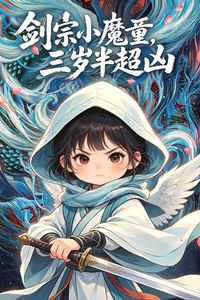
Little Demon Child of the Sword Sect, Three and a Half Years Old and Super Fierce
+Add to Custom List
Sort
Add review
... Read More
I need to just — I need a moment. The scene where Shen Qingchen picks her up and says "let's go home" absolutely destroyed me and I was not prepared for that from what I thought was a comedy. Let me back up. Fu Pin's dad returned her like defective goods. Her mom went into secluded cultivation and wouldn't even see her. She's three years old and has already learned that family is conditional and people leave. So when these six guys in patched clothes with ridiculously expensive swords look at her and say they'll take her home, the text says: "That single word made my nose tingle with a sudden sting." And I just — I felt that in my chest. What makes this work so well is that the senior brothers don't say anything profound. They're goofy, they're broke, they're wearing clothes with patches. But they mean it. Su Ning's explanation that "our Heavenly Sword Sect emphasizes fate and destiny — we don't force anything" is both genuinely touching and absolutely ridiculous, and that's exactly why it works. They've found each other through fate, and now they've found her. The detail about Gu Chenguang saying his second-hand sword was scored at a 30% discount but he "loves it dearly" — it's funny, yes, but it's also about finding value in what you have and loving it anyway. That's the emotional core of this whole sect. They have nothing materially, but they have each other, and they're extending that same belonging to this tiny girl who just got returned like a bad purchase. I'm not okay.
... Read More
I need to talk about this scene where the protagonist distributes the spirit stones to her senior brothers. She says: "You're all Golden Core cultivators, and you need good spirit stones for your cultivation too. Besides, to earn resources for me, you couldn't even bear to upgrade your own swords." And the way each brother reacts is so perfectly individualized. Su Ning's eyes reddening, Yan Chuan sniffling and calling her a silly child, Murong Zhuo turning away blaming the wind, Gu Chenguang silently wiping his eyes with a handkerchief while simultaneously logging everything in his notebook. These are people who have given everything for her and never asked for anything in return. And the elder brothers—First Elder Wen Zhiya shoveling spirit beast dung at the Beast Taming Sect, Second Elder Jing Yuan working as a stoker at Qingyun Sect and 'swiping' pill recipes on the side, Third Elder Wangji sweeping floors at the Zen Sect. They all came back just to see her, docking half a day's wages because it was 'totally worth it.' The relationship between these characters isn't just warm and fuzzy—it's built on sacrifice and quiet devotion. Every gift they bring is something they saved from their menial jobs. The dynamic here is so rich because nobody is performing generosity for credit. They just... give. And the protagonist's vow at the end—'When I grow strong, I will definitely make sure my senior brothers live a good life!'—is the emotional payoff that makes all their sacrifices feel meaningful.
... Read More
I want to talk about pacing because honestly this chapter is a masterclass in how to balance comedy with worldbuilding without ever letting the reader breathe too much or too little. The chapter opens with the introduction scene — six senior brothers introducing themselves one by one. This could have been a boring info-dump, right? Name, age, cultivation level, repeat. But the author gives each brother a distinct comedic beat through Fu Pin's internal monologue. Third Senior Brother's name sounds like a promotional sale. Fourth Senior Brother is definitely Fire attribute, probably good at cooking. Fifth Senior Brother's surname screams tragic male lead #2. Sixth Senior Brother is 98 and considers himself a child. By the time we get to Eldest Senior Brother, I'm already invested and laughing, and we haven't even left the testing site yet. Then the transition to sword-flight and her falling asleep is a perfect pacing valve — it gives the reader a breather after the information-heavy introduction, and the two-day time skip is handled in one sentence. No dragging. The tour of the sect is where the pacing really shines. Each location they visit or detail they explain builds on the last, escalating the absurdity of the sect's poverty while simultaneously making it feel more and more real. Cave abodes with rainwater collection platforms. Eating al fresco. The Dust-Cleansing Spell discussion. The Elders' odd jobs. The bird nest economy. Each beat is shorter than the last, creating a comedic rhythm that accelerates toward the reveal about the five major sects, which then lands like a perfect punchline: "Sword Sect: Good at fighting, no money. Qingyun Sect: Can craft artifacts, refine pills, and draw talismans — very rich." Simple. Clear. Memorable. The chapter ends on the note of them digging her a cave, which is both a literal and figurative foundation-laying for the story to come. The pacing never flags. Every scene earns its place.
... Read More
I'm not going to lie — the scene where Fu Xiao gives his daughter three low-grade spirit stones as travel money actually hit me harder than I expected. Here's this Demon Lord, ruler of the underworld, who is completely out of his depth as a parent, pulling out three dull gray stones with the solemnity of a man making the greatest sacrifice of his life. "These are three low-grade spirit stones! Buy whatever you want! If it's not enough... then spend it conservatively." He means well. He really does. But the tragedy is that he genuinely doesn't understand how little three spirit stones are. He thinks he's giving her a fortune. And Fu Pin — three years old, smart enough to understand the math — just takes them and says "Got it" because she loves her dad and doesn't want to hurt his feelings. That moment where she looks at the spirit stones in her hand, then at her dad's serious eyes, and internally narrates "A father's love is as heavy as a mountain — so heavy it chokes you" — that's the emotional core of the entire opening arc. It's funny, yes. But it's also genuinely tender. And the ferryman scene! This random demon who could have just turned her away instead says "You're fleeing from the Demon Realm too, aren't you?" with actual sympathy. And then accepts her Nether Iron Ore and lets her pass. The world is harsh but there are these small moments of kindness that keep the story from becoming purely comedic. I'm already emotionally invested in this family and we haven't even met the mom yet.
... Read More
The pacing in these first two chapters is genuinely impressive. Let me break down why this works so well. Chapter 1 opens with the inciting incident — the decision to send Fu Pin away — and then immediately launches into the journey. There's no lengthy exposition dump about the Demon Realm's history or the war with the Immortal Realm. We learn everything we need to know through comedy: the reparations were so heavy they "almost had to pawn our underpants," the guardian stone lion ran away, the throne catches rainwater. This is show-don't-tell at its finest. The journey itself is structured as a series of escalating comedic obstacles — the Nether Rift (scary but she's fine), Black Wind Valley (absurd physical comedy), the Forgotten River (the ferryman scene). Each one is brief, punchy, and serves both humor and worldbuilding. No filler. Then Chapter 2 shifts gears into a time-skip montage — "Day 1: ate all the food," "Day 3: map led to a cliff," "Day 5: shoes wore through," "Day 10: eating grass." This is a brilliant structural choice. Instead of dragging out twenty days of walking, the author compresses it into these vignettes that simultaneously show Fu Pin's resilience and maintain comedic momentum. The snake demon scene is particularly well-timed — right when you think she's just surviving, something happens. The ending of Chapter 2 is a perfect cliffhanger. She's spent twenty days getting there, endured all these obstacles, and the sect guards laugh her out of the gate. The pacing goes from comedic journey to sudden dramatic reversal in one beat. I immediately opened the next chapter.
... Read More
I need to talk about Fu Xiao because this man is a masterpiece of comedic characterization. The Demon Lord — ruler of the entire Demon Realm — who can't even read a blueprint, writes letters that sound like loan requests, and has apparently been chased by his wife with lightning before. And yet. And yet. He's genuinely trying. "Pin'er, your dad will miss you three hundred times a day!" — said the man who is literally sending his three-year-old daughter to leech off her mother. The guilt flash on his face? The tactical coughs? The way he rebrands begging as "financial mutual aid between loved ones"? This man is a SCAMMER but he loves his kids. You can see it in every awkward moment. Then there's Fu Yan, the older brother who is clearly the responsible one despite being the one rolling his eyes at everything. "I'd love to go. But if I leave, who's going to handle the construction of the Demon Realm?" — this guy is holding the entire realm together while his dad plays sympathy card. And his parting advice to Fu Pin: "If anyone picks on you, run as fast as you can! Don't try to be tough—our family can't afford medical bills right now." That's not sarcasm. That's love in the only language their family has. And Fu Pin herself — three years old, already calculating, already understanding that her father's love is "as heavy as a mountain — so heavy it chokes you." She's navigating this whole journey with this incredible mix of childlike innocence and demonic pragmatism. The way she negotiates with the ferryman, the way she reads the situation at the sect gate... she's going to be fine. She's going to be MORE than fine. I just know it.
... Read More
The pacing in these chapters is actually masterful and I need to talk about it. First, we spend three full days with the group setting traps, moving locations, catching low-tier beasts. It's methodical. It builds a rhythm. You get invested in the routine. Then — ROAR. The ground shakes. Birds scatter. The distant sky glows red. One moment you're counting spiritual stones, the next you're facing a mid-tier demon beast that has no business being in the outer perimeter. And the question hanging in the air: WHO LURED IT OUT? That's not just a cliffhanger. That's a threat. Something or someone deliberately pulled a mid-tier beast into an area where low-stage cultivators are operating. The stakes just went from "we might lose some spiritual stones" to "we might not leave this forest alive." But the conflict doesn't stop there. Before the beast appears, we already have the Qingyun Sect confrontation. And it's well-written because it's not just generic bullying — it's layered. The little girl Haitang is genuinely spoiled and entitled, but her senior brothers and sisters are enforcing that entitlement. And then the Eldest Senior Brother at Nascent Soul stage shows up and the whole dynamic shifts. He doesn't even need to fight. One cold command and his sect backs down. What's interesting is the power imbalance. Our group is clearly strong — Gu Chenguang notes their Eldest Senior Brother is twenty years behind ours — but they're still outnumbered and out-resourced. The Heavenly Sword Sect is poor. They're the paupers. And yet they stand their ground. The stakes are personal, not just survival. It's about dignity. About not being pushed around just because you're poor. And now a mid-tier demon beast is coming, and I need to know what happens next.
... Read More
The dialogue in this novel is absolutely stellar. Let me just start with Fu Xiao's voice because it's instantly recognizable: "This is called... a family visit!" / "Hitting is affection, scolding is love, and chasing me down with lightning is just another deep expression of romance!" / "This is normal financial mutual aid between loved ones! It's the warm transmission of cross-realm family affection!" This man has a vocabulary for everything except honesty. His dialogue is a masterclass in comedic deflection — he wraps every shameful act in increasingly elaborate euphemisms. And the fact that he's illiterate? The letter to his wife is described as having "crooked scrawl" and the handwriting looks like "dancing earthworms"? Perfect. Every detail reinforces the character. Fu Yan's voice is completely different — dry, sarcastic, brutally honest. "Just say straight out that we can't afford to keep little sister and want to send her to Mom's place to leech off her. Why bother with all this buildup?" He's the straight man to his father's chaos, and his one-liners land every time. But the real surprise is Fu Pin's narrative voice. She's three years old but her internal monologue is sharp, observant, and full of deadpan humor. "I suspected this letter was dictated by my dad and transcribed by my brother, because I knew my dad's handwriting looked like dancing earthworms." She's processing all of this adult nonsense through a child's eyes and the result is comedy gold. The ferryman's dialogue is also worth noting — his voice shifts from menacing to surprisingly gentle, which tells us everything we need to know about him in just a few lines.
... Read More
There's a line in here that I keep thinking about. After we caught five demon beasts and I described the last one as ugly, Gu Chenguang told me that even ugly ones like this could be sold, because some alchemists specifically bought them. And I thought: even ugly things have their value. That hit me harder than it probably should have. Because isn't that what this whole story is building toward? The protagonist — a demon realm princess hiding among low-tier cultivators — is literally the kind of thing that doesn't belong. She's not supposed to be here. She's dangerous. She's different. And yet, the demon beasts themselves recognize her aura and flee. She carries power she doesn't fully understand or want to reveal. The Phantom Beast Ruins themselves are symbolic too. A place that bars high-stage cultivators from entering — a forced equality, a protected space for the weak. The enchantment exists to prevent the strong from devouring the weak. That's a theme the story is clearly circling around. And the fire fox — trembling, scared, caught in a trap — represents everything vulnerable in this world. Things that could be exploited, but also things that deserve protection. I also can't ignore the dad angle. The protagonist keeps mentioning her father's aura, his scent of wild beasts, and the way low-tier demon beasts wouldn't dare mess with him. There's a whole lineage of power she's carrying but hiding. The question isn't just who she is — it's what happens when that identity can't stay hidden anymore. This story is about belonging. About finding your pack when you don't quite fit anywhere else.
... Read More
The dialogue in this passage is absolutely phenomenal. Let me just quote a few lines because they perfectly capture each character's voice. Gu Chenguang: 'Genius cultivation speed, bankrupting cultivation costs.' That's literally his personality—everything gets logged and quantified. Murong Zhuo: 'Thirty high-grade spirit stones... converted to low-grade spirit stones, that's three hundred thousand.' Of course he's the one doing the mental math on conversions. Yan Chuan: 'Bankrupt right after striking it rich—in less than three days.' Quick, punchy, exactly how he speaks. And then the elders bringing their gifts—First Elder Wen Zhiya's line 'This is called resource recycling!' after admitting he stole spirit beast dung, and Second Elder Jing Yuan's 'This is called resource redistribution! Qingyun Sect is so wealthy, what's wrong with sharing a bit with us?' These aren't just funny lines, they reveal entire worldviews in one sentence. The narrative voice itself is also doing something really clever—the protagonist's internal monologue has this childlike wonder mixed with surprising depth. When she thinks about Elder Jing Yuan calling the Qingyun Sect master 'girl' and then spirals into the generational age math ('My dad is over three thousand years old, my brother is a hundred and eight, and I'm only three years and three months old'), it's hilarious but also shows she's processing complex social dynamics. The author never lets any character sound like everyone else. Even the silent moments—Gu Chenguang silently pulling out a handkerchief—communicate personality through action rather than dialogue.
... Read More
This line hit me like a truck: 'Poverty is the greatest barrier standing in front of a genius.' I know it's supposed to be darkly comedic, but it's also devastatingly true. The protagonist's father didn't refuse to teach her because he didn't know how—he couldn't afford to. A Chaos Spiritual Root, the rarest top-tier root in ten thousand years, and the only thing standing between her and greatness is money. Not talent. Not willpower. Money. And then the senior brothers hear this and instead of running away, they convene the '1st Heavenly Sword Sect Seminar' with a proper chair and secretary and everything, and the entire agenda is just: where does the money come from? They're broke. They have 5,000 low-grade spirit stones total. Raising her will drain them dry. And they decide to do it anyway. What gets me is the emotional arc of the protagonist herself. She goes from thinking her dad lied to her—'So when dad said I was a genius, he wasn't lying to me after all'—to discovering that being a genius in this world is basically a curse unless someone's willing to pay the price. And then these six people, who can barely feed themselves, become her price. The medicinal bath scene is the perfect example of how this story balances comedy and genuine warmth. She's vomiting, tears and snot streaming, the stench so bad her 'soul almost left her body,' and what does Shen Qingchen do? He walks past, silently stuffs a piece of candy into her hand, and keeps walking. No words of comfort, no 'you'll get used to it.' Just candy. In that one gesture, you have the entire emotional truth of this story: suffering is real, but you don't suffer alone. And the ending of this section—her growing to love this place. 'I liked this dirt-poor yet warm and welcoming sect. I liked these senior brothers who, despite wearing shabby patched clothes, had bright and clear eyes.' She's not just accepting them; she's choosing them. The emotional payoff isn't in some grand declaration—it's in her realizing that a mountain cave with stinky baths and bunny-shaped buns feels more like home than anywhere else ever has. The candy motif keeps coming back like a heartbeat. Cheap, hard enough to break a tooth, very sweet. That's all they have to give, and it's everything.
... Read More
Let me just say — the author knows how to paint a scene. The entrance to the Phantom Beast Ruins alone gave me full sensory immersion. First, the marketplace outside: stalls hawking high-grade talismans, healing pills with buy-two-get-one-free deals, guides recruiting body cultivators. It felt like a real bazaar, not just a quest hub. You could hear the noise, see the chaos. Then the transition through that light gate — vision blurring, world changing — and suddenly you're in a forest where the trees are so tall you can't see their tops, vines choking everything, damp sweet-and-coppery scent in the air. That coppery note? Blood. The author didn't even need to say it outright. The contrast between outside (bright daylight, bustling commerce) and inside (dim, ancient, dangerous) was chef's kiss. It immediately told you: you've crossed a threshold. This place has its own rules. And the water source scene where we set traps — footprints everywhere, the careful camouflage, hiding in trees waiting. That tension of stillness before the fox appeared. I could feel the bark against my back, hear the rustling leaves. The ending with the red glow on the horizon and the ground shaking — cinematic. Absolute cinematic. I literally pictured a wide shot pulling back from our tiny figures against that massive approaching threat. This world feels lived-in. Not a sterile game board, but a place with ecology, economy, and danger at every turn.

Leave a comment

You must be logged in to leave comments. or
