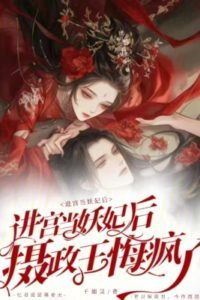
I keep thinking about that wedding veil. The very first image in the book is Xiao Mingyue "joyfully embroidering her wedding veil, fantasizing about the day she would marry the man she loved." And then by Chapter 3, that same veil — or rather, the wedding gown that was supposed to accompany it — becomes the instrument of her destruction.
The veil is such a perfect symbol because it represents both hope and performance. She's embroidering it with her own hands, stitch by stitch, while sitting in the capital believing that love and patience will be rewarded. But veils are also about concealment — about hiding the face, about transforming the woman into a bride, into a role. Xiao Mingyue has been playing the role of the faithful betrothed for twelve years. She's been waiting in the wings of her own life, preparing for a entrance that never comes.
Then there's the tea. Hot tea, spilled on her chest and thighs, burning through thin summer clothing. Tea is traditionally a symbol of hospitality, of welcome, of the mistress of the house serving her guests. But here it's weaponized. Hua Heng uses the ritual of tea-serving to expose Xiao Mingyue's lack of status — "She isn't the mistress of this house" — and then uses the physical burn as cover for her own scheme. The scalding liquid becomes a metaphor for the hot, corrosive nature of this betrayal. It burns on the surface but the deeper wound is invisible.
Pregnancy as a theme runs through all three chapters like a dark current. Hua Heng keeps touching her flat abdomen, caressing it while she taunts Xiao Mingyue. "On the grounds that I am already carrying his flesh and blood." The pregnancy is her weapon, her shield, her ticket to power in a world where a woman's value is measured by her ability to produce heirs. But it's also deeply ironic — Hua Heng claims the child as her advantage, but by Chapter 3 it's gone. The blood on the floor replaces the wedding gown's red. Life becomes death becomes evidence.
And Feng Buji's germaphobia! This detail keeps coming back to me because it's so specific and so meaningful. He won't share a carriage. He won't touch anyone. And yet he carries Hua Heng in his arms, holds her hand, lets her cling to his sleeve. The germaphobe who won't let anyone near him makes an exception for the woman who destroys his world. It's almost poetic in its cruelty — his cleanliness becomes her contamination, his purity becomes her corruption.
What I find most haunting is the letter motif. The correspondence that used to arrive every few days, then every fortnight, then stopped altogether. Letters are supposed to connect people, to bridge distance, to preserve love across space and time. But in this story, the letters become evidence of betrayal — Hua Heng has read them all, she knows every tender word, every promise. The intimate documents that were supposed to protect their relationship have instead become ammunition. And in Chapter 2, Hua Heng whispers into Xiao Mingyue's ear like a ghost, recounting the letters' contents as if performing a dark ritual.
The deeper question this story seems to be asking is: what happens to a woman whose entire identity is built on waiting? Xiao Mingyue didn't just wait for Feng Buji — she waited to become someone. A wife. A mistress of a house. A princess. Without that role, who is she? The novel hasn't answered this yet, but I have a feeling the answer is going to be devastating and beautiful in equal measure.