Summary

... Read More

Synopsis

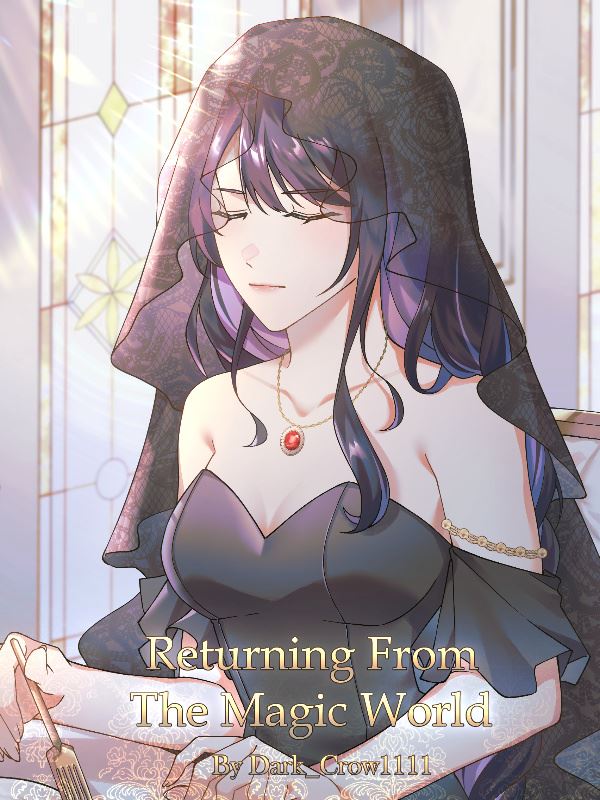
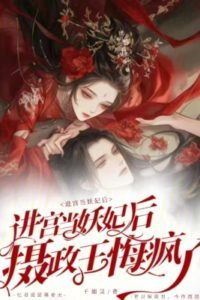
She was a country-ruining femme fatale, seducing the Emperor above and corrupting powerful ministers below—yet she refused to seduce only one man: the overwhelmingly powerful Prince Regent.

Everyone knew she was once destined to be the Prince Regent’s bride, until another woman brought back by the Regent stole his heart and snatched her place away.

From then on, she entered the imperial palace, becoming the Imperial Noble Consort who captivated and dominated the entire harem.

The Emperor doted on her and loved her deeply, even willing to offer her the empire itself just to see her smile.

Yet he eventually came to regret it. On the night of the palace coup, he held a sword against her neck, demanding with desperation: “Why refuse to charm only me? Have you truly fallen in love with him?”

Her jade-like fingers, stained with red nail lacquer, brushed gently across the sharp blade as she answered in a nonchalant tone: “Yes.”

Novel Items

More
Clothing
Placed on Song Yuejiao's head by Madam Lin. She later lifts it quickly after Pei Chi leaves, pulling it back with such force that her hairpin shifts.
Clothing
An intricately embroidered wedding dress that Xiao Changning had sewn herself, featuring twin lotus flowers. She had embroidered it with anticipation for ordinary days with Yuan Yanchen, but was forced to wear it to marry another man as part of a political marriage alliance.
Item
Gifts exchanged for the engagement between Su Xiaoyin and Lin Tianyang. Mother Lin mentioned they had already been returned to Yuan Songzhi.
Medicine
Ginseng soup served in a blue porcelain teacup, which had long lost its warmth and turned ice-cold.
Event
The Fourth Miss deliberately spilled tea all over Lu Yun's clothes at the front courtyard during the return visit, causing tension and leading to Jiang Lingyuan and Lu Yun leaving early.
Arcane_treasure
A star mecha that transformed into a small white kitten due to low energy. It communicates with Yun Shu, accumulates favor points, and serves as her companion. It can only meow to others but Yun Shu understands its words. It feeds on favor points rather than conventional food.
Latest Release
DateGroupRelease
2026-08-11shanghai fantasy c16
2026-08-11shanghai fantasy c15
2026-08-11shanghai fantasy c14
2026-08-11shanghai fantasy c13
2026-08-11shanghai fantasy c12
2026-08-11shanghai fantasy c11
2026-08-11shanghai fantasy c10
2026-08-11shanghai fantasy c9
2026-08-11shanghai fantasy c8
2026-08-11shanghai fantasy c7
2026-08-11shanghai fantasy c6
2026-08-11shanghai fantasy c5

Community Reviews

Rating(0 / 5.0, 15votes)
5 stars
0(0%)
4 stars
0(0%)
3 stars
0(0%)
2 stars
0(0%)
1 stars
0(0%)

Popular reviews

... Read More
I keep thinking about that wedding veil. The very first image in the book is Xiao Mingyue "joyfully embroidering her wedding veil, fantasizing about the day she would marry the man she loved." And then by Chapter 3, that same veil — or rather, the wedding gown that was supposed to accompany it — becomes the instrument of her destruction. The veil is such a perfect symbol because it represents both hope and performance. She's embroidering it with her own hands, stitch by stitch, while sitting in the capital believing that love and patience will be rewarded. But veils are also about concealment — about hiding the face, about transforming the woman into a bride, into a role. Xiao Mingyue has been playing the role of the faithful betrothed for twelve years. She's been waiting in the wings of her own life, preparing for a entrance that never comes. Then there's the tea. Hot tea, spilled on her chest and thighs, burning through thin summer clothing. Tea is traditionally a symbol of hospitality, of welcome, of the mistress of the house serving her guests. But here it's weaponized. Hua Heng uses the ritual of tea-serving to expose Xiao Mingyue's lack of status — "She isn't the mistress of this house" — and then uses the physical burn as cover for her own scheme. The scalding liquid becomes a metaphor for the hot, corrosive nature of this betrayal. It burns on the surface but the deeper wound is invisible. Pregnancy as a theme runs through all three chapters like a dark current. Hua Heng keeps touching her flat abdomen, caressing it while she taunts Xiao Mingyue. "On the grounds that I am already carrying his flesh and blood." The pregnancy is her weapon, her shield, her ticket to power in a world where a woman's value is measured by her ability to produce heirs. But it's also deeply ironic — Hua Heng claims the child as her advantage, but by Chapter 3 it's gone. The blood on the floor replaces the wedding gown's red. Life becomes death becomes evidence. And Feng Buji's germaphobia! This detail keeps coming back to me because it's so specific and so meaningful. He won't share a carriage. He won't touch anyone. And yet he carries Hua Heng in his arms, holds her hand, lets her cling to his sleeve. The germaphobe who won't let anyone near him makes an exception for the woman who destroys his world. It's almost poetic in its cruelty — his cleanliness becomes her contamination, his purity becomes her corruption. What I find most haunting is the letter motif. The correspondence that used to arrive every few days, then every fortnight, then stopped altogether. Letters are supposed to connect people, to bridge distance, to preserve love across space and time. But in this story, the letters become evidence of betrayal — Hua Heng has read them all, she knows every tender word, every promise. The intimate documents that were supposed to protect their relationship have instead become ammunition. And in Chapter 2, Hua Heng whispers into Xiao Mingyue's ear like a ghost, recounting the letters' contents as if performing a dark ritual. The deeper question this story seems to be asking is: what happens to a woman whose entire identity is built on waiting? Xiao Mingyue didn't just wait for Feng Buji — she waited to become someone. A wife. A mistress of a house. A princess. Without that role, who is she? The novel hasn't answered this yet, but I have a feeling the answer is going to be devastating and beautiful in equal measure.
... Read More
I need to talk about symbolism because this author is hiding so much meaning in plain sight. The jujube paste yam cakes. Let me just say that again: the jujube paste yam cakes. In the flashback, Feng Buji travels to the furthest district just to buy these cakes to make Xiao Mingyue stop crying. They're a symbol of his childhood devotion — small, sweet, accessible things given with genuine care. And now? Now those same cakes are gone. Replaced by kites flown by the river with another woman. Replaced by dungeon walls and blood-stained wedding gowns. The sweetness has been replaced by poison, and the cakes are the ghost of what used to be. The wedding gown blending into blood — that's the central symbol of these chapters. A garment meant for celebration, for union, for beginning, soaked in the evidence of violence and loss. It's the visual representation of everything that's been destroyed. But the biggest symbol is the System itself. A system — a mechanical, mathematical, game-like structure — controlling human relationships. Favorability ratings. Missions. Completion conditions. This is the novel's commentary on how love and relationships can be reduced to metrics and objectives. Hua Heng isn't just a villain; she's a symptom of a world where human connection has been gamified. Xiao Mingyue hearing the System when no one else can — that's symbolic too. She's the only one who can see the machinery behind the illusion. She's the only one who understands that this isn't fate, it's design. And that realization is both her curse and her power. The name 'Xiao Mingyue' itself — 'bright moon' — is interesting when contrasted with Hua Heng, whose name suggests 'flower' or 'splendor.' The moon is constant, eternal, distant. The flower is beautiful but temporary. The novel seems to be asking: which kind of love lasts?
... Read More
Let me just say this: the pacing in this section is absolutely ruthless and I respect it. Chapter 7 opens with Xiao Mingyue already betrayed, already whipped, already dead, and then—boom—system activation, resurrection choice, soul reintegration. That's a lot of plot to pack into a single chapter without it feeling rushed, and somehow it works because the emotional beats land. The moment where she's conscious but can't move her body, hearing her own servants discuss throwing her in a mass grave, is devastating. It's a three-day limbo where she's trapped in her own corpse, listening to the world move on without her. Then Chapter 8 pivots to Feng Buji's perspective—his unease, his vague regret, the hallucination of Xiao Mingyue on a swing set surrounded by peonies. That swing scene is pure cinematic writing. A flash of memory, a scent of flowers, a figure that dissolves before he can reach it. The author is using sensory triggers to show his guilt without any internal monologue about guilt. Then Chapter 9 brings us to Pei Yanli, who carries her back to his manor, and the chapter ends with a door bursting open. Cliffhanger. Perfect. The chapter transitions are clean—each one shifts perspective or location at a moment of maximum tension. The only slight drag is the system exposition dump in Chapter 7, where Xiao Wei explains what mission takers are and what the stakes are. It's necessary, but it reads a bit like a manual. Still, the author recovers quickly by having Xiao Mingyue immediately reject the original plan and choose the harder path. That character decision keeps the momentum going.
... Read More
Okay, I need to talk about this reveal because it genuinely made me sit up straight. Hua Heng is a mission taker from another world, right? She's not even from this universe—she's here to game the system, earn favorability points, and cash out in crypto or whatever. And the pregnancy? Fabricated by her own demon system. Xiao Mingyue literally bled herself out over a lie. That is some next-level villainy. The fact that Feng Buji fell for it so completely, then ordered a hundred lashes that actually killed her, is the kind of plot twist that makes you want to throw the book across the room. But here's what I found brilliant: the system didn't just resurrect Xiao Mingyue as a deus ex machina. It gave her a choice—target the original male lead or go for the emperor, Xie Changsu, who's described as scheming and deep, a five-star difficulty rating. That's not a happy ending setup; that's a survival horror setup. And then Pei Yanli shows up at the mass grave, crying over her dead body, and carries her back to his manor like some kind of dark fairy tale rescue. The plot is moving fast, sure, but every turn feels earned. The military tally subplot—Hua Heng wants it to boost Feng Buji's favorability, Xiao Mingyue's father has it, the whole Xiao family is in prison because of it—this is a web of connections that the author is weaving together. I'm curious whether the military tally will become the key to everything, or whether it's just a red herring. Either way, the story has locked me in.
... Read More
I want to talk about how the author structures these chapters because the pacing is absolutely relentless and I couldn't put it down. Chapter 4 starts with rumors — that's smart. We don't get the event, we get the AFTERMATH. The public perception. This immediately creates dramatic irony because we know the truth and everyone else has the wrong version. Then we cut to the soldiers surrounding the residence. Then the confrontation. Then Xiao Mingyue walking out. Then being dragged into the carriage. That's four major beats in one chapter and none of them drag. Chapter 5 starts with house arrest — a quiet, suffocating chapter — and then Wei Lin arrives with the news about her father. The transition from confinement to revelation is perfect. We go from 'how long has this been going on?' to 'your father is in prison' and the reader gets both the mystery and the answer simultaneously. Then the river scene. Then the slap. Then the kick. Then the flashback. Then the dungeon. That's a lot for one chapter, but it works because each beat escalates the emotional stakes. And Chapter 6 — the System reveal — comes at the perfect moment. Xiao Mingyue is at her lowest, bound to a pillar, and then BAM, the entire genre shifts. The pacing here is masterful because the reveal doesn't just surprise us; it recontextualizes everything we've read so far. The author also uses cliffhangers brilliantly. Each chapter ends on a note that demands the next: 'She was the legitimate daughter... Yet how could she possibly be a match for Feng Buji?' That line at the end of Chapter 5 is devastating because it's both a question and an answer — she can't win, not against this version of him. And the System chapter ends with Hua Heng asking 'You really heard it?' — a perfect hook that leaves us desperate to know what happens next.
... Read More
The stakes in this story just went from personal to existential and I am here for it. Xiao Mingyue's original mission was simple: win Feng Buji's heart and save her family. But she refused. She looked at the system and said no, I will not love the man who killed me. So the system offered Plan B—target the emperor, Xie Changsu, a man described as scheming and deep, someone who plays the fool to catch the wise. Five-star difficulty. And the consequence for failure isn't just death, it's slavery. She becomes Xiao Wei's servant, traveling across sub-worlds to target other protagonists. That is a terrifying secondary death sentence. But the external stakes are just as high. Her entire family is in prison. The military tally—the source of immense power in this world—is somewhere in their hands, and Hua Heng is desperate for it. So Xiao Mingyue is walking into the imperial palace as a fugitive, with three years to win over the most dangerous man in the empire, while her family's lives hang in the balance. And internally? She's carrying the trauma of being betrayed by the person she loved most, framed by a woman who literally isn't from this world, and abandoned by everyone around her. The line that hit me hardest: 'This time around, as long as the Xiao family remains safe, everything else can be treated as trash or stepping stones to climb upward. Seek only wealth and glory, not a single drop of true affection.' That's not just a character decision—that's a character transformation. She's choosing power over love, survival over sentiment. And the question that keeps me up at night: can she actually do it, or will her own heart betray her again?
See all reviews

Characters

See all characters

Custom lists

Oops…There is nothing here.