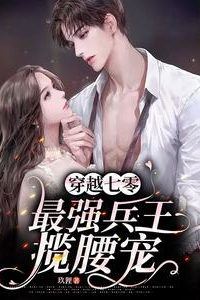
Transmigrating to the 1970s the Strongest Soldier King Pulls Me Into His Arms and Dotes on Me
+Add to Custom List
Genres:
Novel Info
  • Author:
  • 玖狸
  • Status:Ongoing

Summary

... Read More

[Era + Military Marriage + Space + System + Both Pure + Sweet Romance]

Mu Youyou, a 21st-century graduate student, was brought to the 1970s by a rookie system on its first mission — who not only chose the wrong host but also forgot the mission entirely.

Since she’s already here, she might as well make the best of it. With a spatial pocket and a system backing her, Mu Youyou has nothing to fear.

But what’s going on with this military king she’s contractually married to? Is it me trying to win him over, or him winning me over?

One day, Mu Youyou found herself cornered by the soldier king.

“Still want a divorce?”
“No… no, I don’t.”
“Good girl!”

Later, Gu Beiting held her close, whispering in her ear, “Wife, I protect the country, and I’ll protect you too!”

Novel Items

More
Treasure
An enhanced version of the spirit spring well water. It can strengthen the body and greatly benefit health, though it cannot bring people back to life. Only one drop is produced per month. When Mu Youyou bathed in it, the water turned pitch black and foul-smelling, but her skin became fairer and more delicate, and her body felt lighter and stronger.
Arcane Treasures
A system that allows Mu Youyou to buy anything from her previous world (2023) and sell items from this era back there. It has two balances: one showing money from her original world (30 million lottery winnings plus savings), and another for money earned from selling items. The conversion rate is 1 to 300 based on market value.
System
A system accessible by Su Ning that manages silkworms, ants, cocoons, moths, and mulberry leaves. It runs on automated management and helped Su Ning harvest cocoons and process mulberry leaves efficiently.
Materials
An iron box found inside a wardrobe trunk containing three bankbooks: one with over 9,000 yuan of parents' lifetime savings, one with 4,500 yuan in compensation payments (2,500 for father, 2,000 for mother), and one with 1,000 yuan from the Gu family as bride price. Also contained 270 yuan in cash and various ration coupons.
Materials
Coupons An Ruoyan needed for purchases but did not have, likely taken by Shi Meijiao for shopping. She bought some at the black market.
Materials
Traditional wedding items that the Gu family provided funds for Mu Youyou to purchase after joining the army. The specific items are not detailed in the text.
Latest Release
DateGroupRelease
2026-08-11shanghai fantasy c25
2026-08-11shanghai fantasy c24
2026-08-11shanghai fantasy c23
2026-08-11shanghai fantasy c22
2026-08-11shanghai fantasy c21
2026-08-11shanghai fantasy c20
2026-08-11shanghai fantasy c19
2026-08-11shanghai fantasy c18
2026-08-11shanghai fantasy c17
2026-08-11shanghai fantasy c16
2026-08-11shanghai fantasy c15
2026-08-11shanghai fantasy c14

Community Reviews

Rating(0 / 5.0, 31votes)
5 stars
0(0%)
4 stars
0(0%)
3 stars
0(0%)
2 stars
0(0%)
1 stars
0(0%)

Popular reviews

... Read More
Okay so I need to talk about this train scene because my heart actually skipped. Mu Youyou handing him that lunch box with braised pork and everything, and he goes to wash it himself? Like who does that in this era? And then the guy across from them asks if he's her brother and she just casually drops "he's my husband" while looking out the window like it's no big deal... but Gu Beiting hears it and smiles? I literally screamed into my pillow. The favorability system is interesting too. She's got 0 affection for him but 20 favorability because she thinks he's hot? That's so honest and funny. She's not even pretending to be some romantic heroine. Meanwhile he's over here getting all soft because she made him sugar water with spirit spring water in it. The warmth in his abdomen, the way he accepted the water when normally he wouldn't drink for 24 hours during missions... that's a man who's never had someone take care of him. And the family dinner with his grandparents? That hit different. She got emotional because they kept putting food on her plate and she said she missed her parents. I know she was making an excuse but it still made my chest tight. She's an orphan who grew up in an orphanage and here this man's family is treating her like she belongs. "From now on, we are your family." I'm not crying you're crying. The contract marriage setup is giving me all the right vibes though. Two years to see if they develop feelings? That's not a deadline, that's a promise. She's giving him an out but also giving them a chance. And the way she negotiated everything so calmly - separate beds, fifty-fifty expenses, the household registration clause - she's not naive at all. She's protecting herself while still being kind.
... Read More
There's a quiet theme running through this entire batch that I can't stop thinking about: the architecture of care. Everything these two do is about building something together, literally and metaphorically. Mu Youyou buys seeds and bamboo to make vegetable frames. She mends Gu Beiting's uniform pants—her first time in his room, folding them neatly and placing them on his bed. These aren't just chores. They're rituals of devotion. In a genre full of dramatic confessions and love triangles, this novel is saying: love is mending someone's pants. Love is putting mung bean soup in their water bottle because you noticed they work hard in the heat. Love is cutting bamboo for a vegetable frame so your husband's backyard can produce food. The rabbit is interesting too. She chases it, falls, loses it, and then Caicai just buys one from the system mall. The pursuit was pointless but the outcome was the same. Maybe that's a metaphor for how relationships work—you go through these little disasters and panics, but what matters is that you end up feeding each other at the end of the day. And the favorability counter—Caicai keeps tracking it, and it hits 100. But notice what it says: 'Favorability 100, Love 0.' She's the one who's fallen. Gu Beiting doesn't need a counter to tell him—he's already all in. He's the one carrying her up the mountain, leaving his room tidy, packing two sets of clothes for a mission, saying 'my wife doesn't cook for others.' The theme here is that love isn't a number. It's a man who sprints up a hill in five minutes because his wife is missing. It's a woman who sews his pants without being asked. It's the bamboo frames in the backyard, growing toward the sun, together.
... Read More
I have to give credit where it's due—the worldbuilding in this novel is quietly exceptional. It doesn't try to be epic or fantastical (well, aside from the system, which is treated more like a convenience than a focus). What makes it feel real is the specificity of everyday details. The supply and marketing cooperative where they buy seeds and sewing supplies. The dock where fishing boats return and seafood is weighed and portions are set aside before the rest goes to market. Mu Youyou buying shrimp because 'seafood tastes best fresh.' The well where she keeps the mung bean soup cool. The backyard where Gu Beiting hoeds the fields. These aren't set pieces—they're lived-in spaces. And the mountain scene! When Mu Youyou climbs up and notices 'a lush growth of wild vegetables,' and then spots the rabbit—that transition from domestic chore to accidental adventure is so smooth. The hillside is steep enough that falling down it is genuinely dangerous, and the fact that she just sat there for an hour chatting with Caicai instead of immediately calling for help feels so human. She's an orphan who's used to handling things alone, and that's why she doesn't panic. She just waits. The village setting with Li Yumei and Liu Shuzhen as her first friends, the neighboring yards, the military training grounds visible from home—everything connects. You can picture this place. I kept wanting to know what the housing area looks like at dusk, what the village market sounds like on a busy day. It's a world that breathes.
... Read More
Okay so let's talk about Gu Beiting for a second because this chapter is basically his coming-of-age moment wrapped in a wedding. Remember how earlier he was this stiff, cold captain who barely showed emotion? Yeah, that guy is GONE. He's now the guy who scratches the back of his head sheepishly when asking his commander for permission to hold a wedding. He's the guy who PACES OUTSIDE HIS WIFE'S DOOR until midnight because he's too nervous to check on her, then runs ten laps around the training ground to calm down. That is NOT the same man who used to be all authority and detachment. And Mu Youyou? She's fascinating too. She's this woman who's been through two lives and still gets butterflies before her wedding. The fact that she's nervous enough to toss and turn, then has to be reminded by her system companion that she needs to read wedding prep books, tells me she's not some coldly calculating transmigration protagonist. She's genuinely feeling this. And that scene where she feels like her heart is about to combust when he walks toward her? That's not acting. That's real. The relationship between them has this beautiful asymmetry — he's the one making grand gestures (carrying her in his arms, applying for the base wedding, buying her the red dress despite her protests about the price), and she's the one quietly melting into his chest, feeling like she married the right person. But it's not one-sided in a boring way. She insists on buying him a suit too. She's proud, independent, but also willing to be vulnerable. That's what makes their dynamic work. Then there's the side characters doing their thing — Wang Guihua being petty about the sewing machine, Liu Shuzhen shutting her down, the military wives gossiping but mostly blessing them. These people make the world feel lived-in. Zhao as the officiant, calling himself "not your commander but an elder" — that shift in how he addresses the couple is everything. He's not just approving a wedding; he's witnessing a transition.
... Read More
These chapters are fundamentally about food, and food is everything. Let me start with the most obvious symbol: the meat. In this era, meat is luxury. It's status. It's something you don't buy casually. Mu Youyou uses all her meat coupons in one trip—ten jin of fatty pork, two jin of belly, three jin of lean. That's a significant investment. But she does it not for herself, but for him. She renders the fat into lard, makes meat sauce, plans braised pork and twice-cooked pork. Every cut, every preparation method is an act of care disguised as domestic routine. The lard scene is where the symbolism peaks. She's rendering fat—something that seems crude and practical—into something pure and white and useful. And in the process, she's also rendering something in herself. The careful, cautious contract wife is slowly becoming someone who shares her food, her home, her space with another person. The crackling she offers him isn't just a snack—it's an offering. A test. See if he'll accept it. See if he'll accept her. Then there's the dumpling scene. She makes forty-five dumplings and he eats all forty-five. This isn't just about food—it's about acceptance. He's accepting her cooking, her care, her presence. And she's accepting his participation in her domestic space. The contract marriage is supposed to be two people sharing a house. But dumplings are meant to be shared. Soup is meant to be shared. A home is meant to be shared. The mung bean soup is another layer. She makes it in the space's electric cooker—using her secret to create something ordinary and comforting. The secret that keeps her safe also allows her to nurture him in ways he can't understand. There's a bittersweetness there that the text never states outright but that I felt deeply. And the backyard—the vegetable patch she wants to plant. This is the ultimate symbol. She's putting roots down. In a life that's been defined by transience and survival, she's choosing to grow something. To invest in a place. To build something that will take time and care and patience. That's not just gardening. That's hope.
... Read More
There's a lot going on beneath the surface of this wedding chapter that I want to unpack. The most obvious symbol is the color red — the red dress, the red silk, the red flowers, the red basins. In Chinese culture, red is luck, celebration, and marital bliss. But I think it also represents something deeper here: Mu Youyou's rebirth. She's had two lives, two chances at love, and this red dress is the visual marker of her choosing to fully commit to this second chance. She's not just getting married; she's claiming a future. The sewing machine is another symbol I can't stop thinking about. Mu Youyou specifically chooses it over a radio because she learned from Li Yumei that machine-sewing is faster than hand-stitching. This isn't just a practical purchase — it's a symbol of her desire to be productive, to build something with her hands, to create a home. A sewing machine is an instrument of making. She's not just decorating a house; she's preparing to stitch her life together. Then there's the ox cart delivering the sewing machine. This image — a military vehicle bringing an ox cart into the compound — is almost comical, but it's also deeply symbolic. The military represents discipline, structure, duty. The ox cart represents tradition, slowness, the old way of doing things. They're both part of this new life Mu Youyou and Gu Beiting are building. The fact that the military wives gossip about it being a "waste" but Liu Shuzhen shuts it down? That's the community grappling with change, with the idea that their captain deserves happiness even if it looks different from what they expected. The dowry bedding is another layer. It was made by sewing experts, beautiful but unused, originally intended for someone else. Mu Youyou decides to use it because it's new and she doesn't want Gu Beiting to notice if she replaces anything from her space. This is such a quietly powerful detail — she's honoring tradition while also protecting her secret. The bedding becomes a metaphor for her entire situation: beautiful, carefully prepared, but hiding something underneath. And the wedding hall itself — a military space transformed into a bridal space with red silk and double happiness characters — is the ultimate symbol of their union. Duty and love, structure and romance, the military and the personal, all woven together in one room.
See all reviews

Characters

See all characters

Custom lists

Oops…There is nothing here.