Transmigrated into the '80s as a Vicious Wife: Blessed with Fertility and Doted on Daily by a Future Tycoon - Reviews

Transmigrated into the '80s as a Vicious Wife: Blessed with Fertility and Doted on Daily by a Future Tycoon
+Add to Custom List
Sort
Add review
... Read More
There's a reason food appears in almost every scene of this passage, and it's not accidental. Let me unpack this because the symbolism is layered and I'm obsessed. The meat buns are the first symbol. They come from Eldest Aunt — generosity, family care, warmth. But Fu Ziheng eats them and tastes wax. Why? Because he can't enjoy anything when he believes he's a fraud, a burden, someone who doesn't deserve kindness. The buns represent everything he feels unworthy of. Meanwhile, Yang Tiehua uses food as a tool of manipulation — the persistent offers, the 'you need nourishment' framing. Food becomes both love and weapon in her hands. Then there are the pickled vegetables. Mother Fu's labor — hours of preparation, care, tradition — reduced to something Yang Tiehua initially rejected and now performs gratitude for. The fact that Factory Director Ao genuinely enjoys them while Fu Ziheng watches in stunned silence speaks to the whole theme: people who haven't been corrupted by the scheme can appreciate what Mother Fu offers. It's the uncorrupted eye that sees value. But the deepest symbol is the kidney itself. Fu Ziheng is being groomed to sell a part of his body. This isn't just a plot device — it's the microcosm of the macro theme. The organ trafficking ring at the hospital represents the same idea on a societal scale: vulnerable people being processed, their bodies becoming commodities. Zheng Chao is about to become a scapegoat for a system that treats human organs like spare parts. The name badge Yang Tiehua puts on is the final symbol. A piece of clothing, a piece of plastic — identity as something that can be worn and removed. The mob sees the badge and believes. Reality is what you wear. This connects back to Fu Ziheng's entire situation: he's been made to believe he's worthless, and that belief is just a badge someone else put on him. The story is asking: who gets to decide what a person is worth? And what happens when someone refuses to accept the answer?
... Read More
Let me tell you about the bracelet because this object carries so much weight. On the surface, it's just a family heirloom—something passed down from the grandfather. But the moment Tiehua sees it, she doesn't see a treasure, she sees a death sentence. In her past life, the grandmother chopped off a fifteen-year-old girl's hand to get it. A HAND. For a bracelet. The text says "this bracelet was nothing more than a dangerous burden" and that line hit me like a truck. It's fascinating how the author uses this object to represent the toxicity of the original host's family line. The bracelet symbolizes greed, generational trauma, and the idea that some inherited things aren't gifts—they're curses. And Tiehua's decision to sell it? She calls herself a villain for doing it. "She did not mind being the villain for once." That's such a powerful line because it acknowledges that breaking a toxic cycle sometimes means being the bad guy. The bracelet also connects to her past life as an orphan—she never had family heirlooms, never had anything passed down with love. Now she has this dangerous object and she's smart enough to get rid of it before it destroys the children she's raising. There's also the sugar factory itself as a symbol—the old system that's failing, the workers who jumped from the building, the three deaths that ruined her uncle's life. It's all about systems that outlive their usefulness and the people who suffer when they don't change fast enough.
... Read More
I need to talk about Fu Ziheng because WOW. The moment he appears at the doorway with that slingshot, I literally gasped. Here's this guy who's been established as injured, dependent, almost a burden — and then he's the one who saved Yang Tiehua from those hands reaching for her. The narrative doesn't even dwell on it. It just shows the flash, the screams, and then reveals him leaning on his crutch like it's no big deal. That restraint is what makes it hit so hard. And then Yang Tiehua's reaction — her voice literally softens when she sees him. "Brother Ziheng, why did you come? Your leg hasn't healed yet." There's so much in that line. Concern, gratitude, maybe a hint of guilt for everything the original owner put him through. And the fact that Yang Tiechui has to awkwardly explain "I carried him here, he hasn't walked a single step" only makes it funnier and more touching at the same time. Fu Ziheng's embarrassment is palpable even through the text. But the moment that really got me was with the children. When Yang Tiehua gets the 800 yuan back and Niannian bursts into tears of joy, and An'an — who had shown her NOTHING but coldness — looks at her with reddened eyes and says "thank you"... I felt that. The original owner had been so cruel to these kids, and now this stranger inside their sister-in-law's body is trying to make amends. The tightness in Yang Tiehua's chest when she sees how thin they are and how patched their clothes are — that's genuine emotional weight. And her father! The scene where he arrives with that machete and that voice like a broken gong — "Who the hell dares bully my daughter?" — it's almost cartoonishly perfect, but it works because it contrasts with the earlier tenderness. This is a family that will burn the world down for their own. I'm already invested in these relationships. The romantic tension between Yang Tiehua and Fu Ziheng is still in its early stages, but the author is planting seeds everywhere. He trusts her enough to come rescue her despite his injury. She trusts him enough to show vulnerability. And that shared history — however complicated — creates this undercurrent that's going to be so fun to watch develop.
... Read More
I need to talk about Fu Ziheng because this character is a whole tragedy and I'm not okay. Let's look at the scene with the meat buns. Yang Tiehua hands him one, says 'you need proper nourishment.' And the phrase 'proper nourishment' — that's the moment. His eyes darken. He says nothing and just starts eating. Why? Because he BELIEVES he's a burden. He believes his mother married the wrong person. He believes she deserves better than him. That's not just insecurity — that's a man who has been systematically broken down until he thinks his only value is what he can sell. And the pickled vegetables! This is the detail that got me. Mother Fu stayed up all night making those. She gave them to Yang Tiehua before, and Yang Tiehua threw them out and cursed at her. Now she's eating them with genuine appreciation in front of everyone. Fu Ziheng watches Factory Director Ao devour them and is stunned. These people — the people his wife is manipulating — are being genuinely kind to him, and he can't process it. He thinks it's part of the deception. Which means he's so far gone that he can't even accept kindness without suspecting an angle. But here's what really got me: the scars on Mother Fu's hands. The porridge incident. Yang Tiehua smashed a bowl of scalding hot porridge at her. And Fu Ziheng remembers this. He carries this. He watches his mother's hands and thinks about the scars and thinks about how useless he is. This man is drowning in shame and his wife is the one holding the rope. Meanwhile, Eldest Uncle is just... genuinely good. He offers money without being asked. He enjoys the pickled vegetables and thanks her sincerely. He's the kind of person who treats kindness as normal, not as currency. And Yang Tiehua uses all of this against him. The relationship between them is this grotesque power dynamic where she holds everything — the food, the information, the narrative — and he holds nothing but his own self-loathing. And yet, when she stands up for Zheng Chao at the hospital, that's a crack in the armor. She's still capable of moral action. The question is whether Fu Ziheng will ever see her that way, or if he'll always interpret her goodness as another layer of the scheme.
... Read More
Okay so let me just say this: the way Fu Ziheng handles his jealousy in this chapter is absolutely devastating and I need a minute. Like, he just watched his wife save his life, she threw herself into his arms crying, and the very next thing we get is him watching her flirt with another man and slowly crumbling inside. The author didn't even need to write a single line of internal monologue for Fu Ziheng about this. Just: "Fu Ziheng's face had turned as dark as the bottom of a frying pan." That's it. That's the whole paragraph. And it hits like a truck. But here's what really got me—the misunderstanding between them. He thought she brought him to the capital to sell his kidney. She thought she was bringing him for legitimate medical treatment. Both of them were operating from completely different realities, and the fact that the catalyst was literally a JOKE she made with her dad? I almost laughed out loud and then immediately felt terrible for Fu Ziheng because he had every reason in the world to believe the worst. He's been betrayed before. His trust has been shattered. Of course he jumped to the most catastrophic conclusion possible. And then Yang Tiehua's reaction when she realizes what happened—she doesn't get defensive or angry. She just breaks down crying and explains everything. "Brother Ziheng, I swear to heaven, I truly brought you here to treat your leg." The fact that she was genuinely trying to help him, while he was lying there convinced she was his executioner, creates this ache in your chest that I can't even describe. But the real character moment for me is at the very end. Fu Ziheng tries to leave because he feels like a burden. He reaches for the crutch and his leg gives out and he falls. And Yang Tiehua's attention immediately snaps back to him. She doesn't abandon him when he's being difficult. She doesn't walk away. She just—stays. That's the kind of relationship building that makes you actually believe these two could work, you know? Not grand declarations, just her refusing to let him fall apart alone.
... Read More
I need to talk about the operating room scene because WOW. The author just casually dropped us into a situation where the protagonist is strapped to a table and about to be surgically murdered and I was literally gripping my phone like it was going to fly out of my hands. Let me walk through why this works so well. First, the stakes are established immediately and brutally: the doctor says "if there's any problem with the kidneys, we'll immediately proceed with kidney removal surgery" before even running any tests. That's not medicine, that's a death sentence with a side hustle. The fact that they're this eager—"The doctor was visibly startled by how agreeable he was. It seemed they had truly found a fat sheep"—tells us everything we need to know about these people. Then the tension ramps up in this incredible sequence: Fu Ziheng tries to stall by asking to talk to his wife, the doctor agrees because he underestimates Yang Tiehua as just an "ordinary housewife," Fu Ziheng walks out in a patient gown and Yang Tiehua panics, she checks the bill, sees 1,128 yuan for a kidney removal she never authorized, and SPRINTS to the operating room. The scene inside the OR is pure nightmare fuel. The female doctor ripping open his shirt and commenting on his body while the male doctor raises the scalpel—"What a pity"—and then Fu Ziheng just closes his eyes and accepts his fate. I was genuinely holding my breath. And then Yang Tiehua crashes through the doors with an IV stand pole like some kind of avenging angel. "You death seeking bastards! How dare you try to cut out my man's kidney!" This is the moment the entire chapter pivots from horror to catharsis, and it lands perfectly because we've been suffering right alongside Fu Ziheng for so long. What I love most is how the author maintains tension even during the rescue. Fu Ziheng isn't just passively waiting—he actually fights back. He notices the nurse's needle stabbed into a cushion instead of his arm, he dodges the anesthetic, he rolls off the bed. He's not a helpless victim. He's a trapped insect but he's still biting.
... Read More
Can we just take a moment to appreciate the absolute masterpiece of dramatic irony in this chapter? The entire conflict hinges on a conversation that was NEVER meant to be heard by the person it destroyed. Let me reconstruct this for you because it's beautiful in its cruelty. Yang Tiehua is joking with her dad. She says something like, "if anyone's kidney was being sold, it would be yours"—referring to her dad, in a completely casual, offhand way. But Fu Ziheng overhears it. And because of everything that's happened to him in his past life, he doesn't hear a joke. He hears a death warrant. The dialogue between them when he confronts her is where the author really shines: "Wasn't it you who wanted to sell my kidney?" "Didn't you bring me to the provincial capital to sell it?" These lines are so raw and real. He's not being dramatic—he's genuinely confused and terrified and hurt. And her response? She doesn't mock him. She doesn't get angry. She just... unravels the whole thing piece by piece, and each piece is more devastating than the last. "I was teasing my dad! I said I wanted to sell the bracelet my grandfather left me. My dad said if I lacked money, he'd give me some, and if that wasn't enough, he'd sell his kidney. I jokingly told him his kidney wasn't as good as yours..." The fact that her dad offered to SELL HIS OWN KIDNEY for her is such a perfect detail. It shows the depth of family love in this story, and it makes the misunderstanding even more tragic—because the dad's offer was genuine, but the daughter's comment was a joke, and the husband in between interpreted it as the most horrific thing possible. And then there's Fu Ziheng's line before the whole thing unravels: "Consider it my final wish. Since I've been so obedient, I hope you can fulfill this last request for me." He's already accepted his fate. He's already said goodbye. And she's just standing there holding a payment slip, completely unaware that her husband thinks she's about to kill him. The dramatic irony is so thick you could cut it with a scalpel.
... Read More
Okay so let me just say — the way this plot is layering things is actually kind of brilliant and I need to talk about it. We start with what seems like a pretty straightforward domestic drama: Yang Tiehua is grooming Fu Ziheng to sell his kidney. The meat buns from Eldest Aunt, the gentle persistence, the way she keeps stuffing food into his hands while he chews wax. Classic manipulation. But then — BAM — the hospital scene hits and suddenly this personal, intimate scheme collides with something MASSIVE. The Zheng Chao subplot is where this gets interesting. You've got this intern doctor who's being set up as a scapegoat for an organ trafficking ring. And Yang Tiehua? She stumbles into it. Not because she planned to, but because she was literally just trying to get Fu Ziheng his medical exam. The coincidence is almost too perfect, but that's how life works sometimes — the most personal stakes and the most systemic injustices crash into each other. What I love is how the plot connects these threads. The organ trafficking ring is the macro version of what's happening on the micro level: a vulnerable person (Fu Ziheng) being prepared to give up a part of his body for someone else's gain. The hospital scandal is just the same story on a larger scale. Yang Tiehua recognizing this parallel and choosing to intervene — that's the plot turning point. She could have walked away. She didn't. The Shaxian noodle shop subplot is the third thread, and honestly it's the lightest one, but it serves a purpose: it shows Yang Tiehua isn't just a schemer, she's a businesswoman with foresight. She sees the future of this franchise and wants in. It also gives her a reason to be in Yangcheng beyond just getting Fu Ziheng to the hospital. The structure here is tight. Travel → Restaurant conflict → Hospital crisis → Heroic intervention. Each scene escalates the stakes. And that ending? Where she's standing in front of Zheng Chao, wearing his name badge, redirecting the mob's anger? Chef's kiss.
... Read More
Okay so let me just say this out loud — the Yang family dynamic in this chapter is absolutely unhinged in the best way possible. I cannot stop thinking about Yang Tiechui. The man literally spits on Old Shen's face and then YELLS that his uncle is the factory director while his sister is standing right there wishing she could dig a hole and crawl in. The blind sibling love is both adorable and deeply embarrassing. But here's what really got me — when Yang Jiujin finds out Fu Ziheng might be infertile, his immediate reaction isn't anger or betrayal. It's concern for his daughter's future happiness. And then when Tiehua says she'll give them a chubby grandson, her father's response is basically 'my daughter is perfect, she would never hit someone without reason.' I was wheezing. This man has zero critical thinking when it comes to his kids. But honestly? It's kind of beautiful. They're rough, loud, and completely unhinged — but they love her fiercely. The scene where a dozen relatives show up at the hospital with ribs, meat, and rabbit candy is one of the warmest things I've read in a long time. Nobody questions whether she deserves it. Nobody says 'maybe you should be nicer to your husband.' They just bring food and leave. That's the kind of family I want. And then there's Fu Ziheng. The man walks in, sees his wife crying, and immediately hands her a hot water bag. He says he's infertile. She KNOWS he's not — she had twins with him in her previous life. So what's going on here? Is he protecting her from something? Is he testing her? Because if the original host married him knowing he was infertile just to avoid having kids, then Fu Ziheng has been carrying that secret alone this whole time while she treated him like garbage. That changes EVERYTHING about how I see their relationship. I need to know what's really going on with him.
... Read More
There's something deeply unsettling about how the human body becomes the central site of conflict in this chapter. Not just literally—these doctors want to remove Fu Ziheng's kidney—but symbolically, the body represents everything he has to lose and everything he's fought to protect. Let me think about this more carefully. Fu Ziheng already lost a leg. His body is already marked by violence and sacrifice. And now they want to take another organ from him. The body that has already suffered becomes the target of systematic exploitation. It's almost like the world keeps saying: you've given enough, now give more. The wheelchair Yang Tiehua wants to build for him is interesting here. It's meant to be an act of care, but it also symbolizes his confinement—his body is becoming a site of limitation, and she's trying to make that limitation bearable. There's tenderness in it, but also a quiet tragedy. And then there's the operating room itself as a space of violation. The female doctor ripping open his shirt, the male doctor raising the scalpel, the nurses pinning him down—this is a scene where his body is treated as property, as a commodity to be harvested. The doctors don't see a person. They see a "fat sheep." They see organs to be sold. His humanity is stripped away along with his clothing. But here's what I find most powerful: Yang Tiehua's intervention. She doesn't just save his kidney—she saves his right to exist as a person. When she swings that IV stand pole and screams "You death seeking bastards!" she's not just fighting doctors. She's fighting the system that reduces human beings to spare parts. Her violence is righteous because their violence was disguised as medicine. The ending is quietly devastating though. Fu Ziheng's jealousy isn't about insecurity—it's about feeling worthless. "His injured leg would only become a burden to her." His body, already broken, becomes the source of his emotional pain too. He tries to leave because he believes he has nothing left to offer. And that's the real tragedy, isn't it? Not the attempted kidney theft, but the slow erosion of self-worth that comes with being broken in a world that only values what you can produce.
... Read More
The way this sequence escalates from a petty money dispute to a life-or-death standoff is masterful. Let me trace the stakes ladder: It starts at 800 yuan. That's it. A bride price. A transaction. The reader thinks, "Okay, she just needs to get the money back, easy." But the author immediately complicates it — the original owner already signed a contract, Old Shen has proof, and there's this whole web of debt and obligation that makes simple repayment impossible. Then it escalates to physical danger. Old Shen tries to grab Mother Fu. Yang Tiehua pulls a cleaver. Now we're talking assault, maybe murder. The stakes have shifted from financial to bodily harm. Then Li Daniu's subplot reveals that Niannian might be sold as a child bride. That's a whole new category of horror — human trafficking, essentially. The stakes just went from "my family might lose money" to "children might be destroyed." Then Old Shen kidnaps Yang Tiehua herself. Seven or eight men against one woman. The threat of sexual violence is explicitly mentioned — "strip that woman and tie her up." This is as dark as it gets. And then the father arrives with a tractor full of armed sugarcane workers, and the entire village is essentially at war. The stakes have now expanded from one family's dispute to a potential bloodbath between two families in an entire village. What makes this work so well is that each escalation feels earned. Old Shen doesn't suddenly become more dangerous — he was always dangerous, we just didn't know the full extent. The children running to find the father is a logical plot move, not a convenient one. And the father's response — bringing an entire workforce — makes sense given his position in the sugarcane business. The suspense is maintained throughout because the author never lets the reader feel safe. Just when Yang Tiehua thinks she's won (getting the money back), she walks into a bigger trap. Just when she's surrounded (Old Shen's men), help arrives. Just when it seems like it might end peacefully (the father offering her the choice), Old Shen threatens sexual violence and the situation explodes again. The final image — twelve men surrounded by a tractor full of machete-wielding workers, with the father saying "your whole family of three won't leave Shenjia Village alive" — is peak tension. And then the author undercuts it with Yang Tiehua's surprisingly calm suggestion to call the police. That contrast between the escalating violence and her rational response is exactly what makes this conflict so compelling.
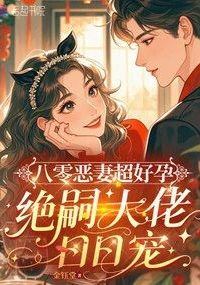
... Read More
Okay, I need to talk about this breakfast scene because it completely wrecked me. Yang Tiehua slapping herself? I know it sounds dramatic but it's the kind of moment that tells you everything about her guilt and transformation in one gesture. She's an orphan in her past life and now she's being loved by a family that literally starved themselves to buy her snacks. The brother saying they skip breakfast to save money for her—"We save the money on rice and can buy you some snacks each month"—and she just breaks. I love how the original host took from them endlessly and now this new consciousness is seeing it for the first time. That's such a rich dynamic. And then the uncle scene! Fifty yuan. He pulls it out without even being asked. "Xiaohua, your uncle still has fifty yuan here. Take it first." No conditions, no questions. Just pure, unfiltered family love. It's almost too much. But then—oh god, then the Fu Ziheng moment. She makes that joke about selling his kidney and he just... leaves. The way he grips his crutch tighter. His internal monologue about "even if I die, I would never sell his kidney" and then deciding to sell it anyway to make her happy with his family. That man is a walking tragedy. I need to know what happens when he finds out it was just a joke. That misunderstanding is going to hurt so bad.

Leave a comment

You must be logged in to leave comments. or