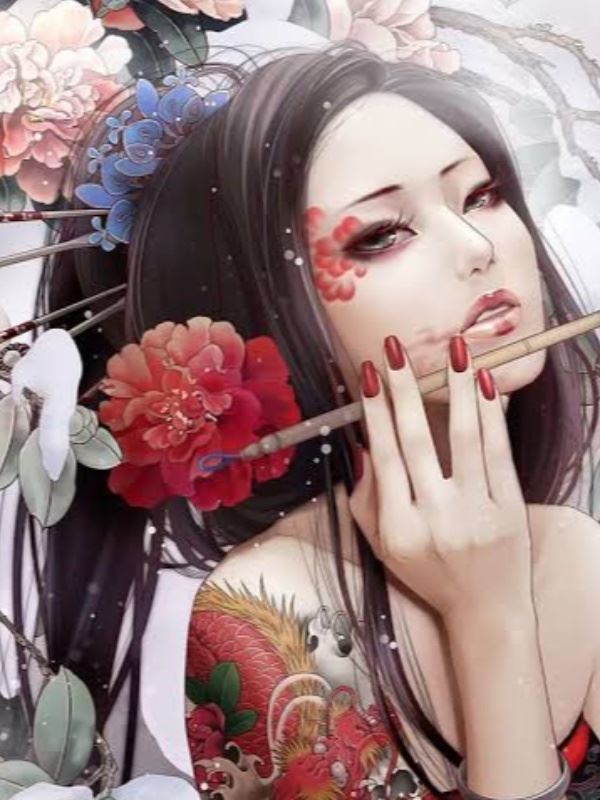
Transmigrated into a Novel: Becoming a Pitiful Girl in the 1970s
Novel Info

Summary

... Read More


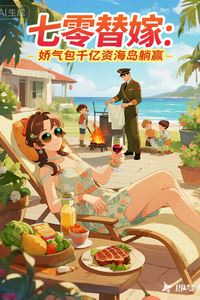
Su Ci, the daughter of a trillion-dollar conglomerate, transmigrates into a novel—becoming a pitiful girl in the 1970s who has her marriage stolen by her stepsister and is forced into a substitute marriage with a rough island-based military officer.

.

Her stepsister has been reborn and knows that the “rough man” comes with three burdensome children and a cold, expressionless personality.

.

In her previous life, he even drove his original wife to an early death. Without hesitation, she “gifts” this fate to Su Ci and instead snatches the promising factory director’s son for herself.

.

Su Ci glances at her space filled with steaks, red wine, and pretty dresses: Go to the island? Far from authority, no one to control me—this is basically a vacation!

.

Marry him!


Novel Items

More
Item
A pouch tied to Zhao Jingqing's waist containing a little over a hundred to nearly two hundred coins. He gives it to Li Changju as an initial payment for his father's medicine.
Currency
A piece of silver that Chi Ye pulls from his belt to pay for hiring a cart, demonstrating his willingness to compensate fairly.
Item
Old Li's cart that travels to town once a week, which Jiang Tian could have used but missed since it had just departed two days prior.
Medicine
A bitter herbal brew Cheng Youyou made to promote circulation and reduce bruising from her injured ankle. She had gathered plenty of herbs recently with Mu Yu's help washing them clean. She drank it despite the bitter taste.
Arcane Treasure
Su Ci's cheat ability — a modern super mall that exists in her mind. The basement has Australian wagyu, Boston lobsters, and premium rice. First floor has SK-II cosmetics and silk bedding. Second floor has clothing, third floor has restaurants, west wing has entertainment, and the pharmacy has antibiotics more valuable than gold in the 1970s. Any item taken is instantly refilled on the shelf.
Money
A thousand yuan given as bride price for An Ruoyan's marriage to Gu Yizhi. An Ruoyan refused to give it to her stepmother Huang Jinxiu, claiming it was hers by law. This was a major point of conflict in the story.
Latest Release
DateGroupRelease
2026-08-11shanghai fantasy c154
2026-08-11shanghai fantasy c153
2026-08-11shanghai fantasy c152
2026-08-11shanghai fantasy c151
2026-08-11shanghai fantasy c150
2026-08-11shanghai fantasy c149
2026-08-11shanghai fantasy c148
2026-08-11shanghai fantasy c147
2026-08-11shanghai fantasy c146
2026-08-11shanghai fantasy c145
2026-08-11shanghai fantasy c144
2026-08-11shanghai fantasy c143

Community Reviews

Rating(0 / 5.0, 20votes)
5 stars
0(0%)
4 stars
0(0%)
3 stars
0(0%)
2 stars
0(0%)
1 stars
0(0%)

Popular reviews

... Read More
The pigsty metaphor keeps coming back and I can't stop thinking about it. Su Ci tells Wang's wife: "No matter how broken a house is, it's for people, not pigs. With a little effort, even a pigsty can turn golden." This isn't just a clapback — it's the entire thesis of the novel compressed into one sentence. The Lu family's house IS a pigsty. The island life IS a pigsty. But Su Ci is transforming it, not just physically with wallpaper and leather sofas, but spiritually. She's saying: you don't have to accept the squalor you were born into. And the cream scene doubles down on this — Lu Xiangnan's face is described as looking like she fell into a flour vat, and Su Ci transforms it. It's literal and figurative purification. Even the aloe gel is symbolic — green, like new life, like something growing in harsh conditions. The recurring motif here is transformation through care. Beauty isn't superficial in this story; it's an act of defiance against a world that wants these people to stay dirty and broken. Every jar of cream, every piece of wallpaper, is a small rebellion.
... Read More
Okay so first of all—CAN WE TALK ABOUT THIS HOUSE. The author really went ALL OUT with the description and I am here for it. Let me just say: I have never felt so viscerally disgusted by a fictional home in my entire reading life. "The walls were peeling, exposing uneven stones underneath. The roof tiles were broken, with weeds growing through the cracks." This is the opening shot and it sets the tone immediately. Every detail is designed to make you want to physically recoil. Flies. Salted fish. Yellowed diapers. And then the commander's house—"ruins within the slums." I literally said "what" out loud. But the real masterpiece is the contrast. The moment Su Ci throws out the old bedding and lays down her white quilt with lavender scent, the entire scene transforms. The author writes: "The contrast—was like placing a princess bed inside a pigsty." That line. That absolute line. I channeled my inner Su Ci and nodded approvingly. And the kitchen scene! The rancid grease, the soot-blackened walls, the fermenting pickle jar—then Su Ci pulls out her nonstick pan and the pork sizzles and suddenly the entire island is enchanted by the aroma. Neighbors stop scolding their kids. Children start crying. The Lu siblings move toward the kitchen "like puppets under a spell." This is worldbuilding through SENSORY OVERLOAD and it works so well. You can SMELL this chapter.
... Read More
Can we talk about how every line Su Ci speaks is perfectly calibrated? She doesn't say much, but when she does, it hits different. 'Want some?' Two words. That's it. She doesn't beg, she doesn't threaten outright—she just dangles the meat and watches him break. And Lu Xiangbei's voice? So distinct from hers. He's all growls and deflection: 'Su Ci, don't push your luck!' 'I'm not your servant!' But then he's the one scrubbing pots and drawing water like a man possessed. The dialogue between them has this incredible push-pull rhythm. She says 'I like being clean. I don't use public bathhouses' and it's so casually cruel—just stating a preference like it's obvious he'll comply. And the chocolate scene! 'Your wages.' She hands him this wrapped package like she's paying a worker, not conquering a household. Meanwhile Lu Xiangbei's internal monologue is this whole other voice—feral, starving, oscillating between hatred and reluctant gratitude. The author gives each character a completely different speech pattern. Su Ci is cool and measured, the kids are sharp and direct ('Sister-in-law! I want some!'), and Lu Xiangbei is this storm of gruff exterior and melting interior. The dialogue never feels exposition-heavy either. It's all action disguised as conversation.
... Read More
Okay I need to just sit with the imagery in this chapter for a moment because the author is DOING THINGS. Let's start with the recycling station scene. The description of that place is visceral—'a mix of moldy rot and fishy sea stench,' broken chairs, rusted metal, blackened cotton scraps. It's genuinely disgusting, and Su Ci's reaction is what makes it brilliant: she walks in 'like she was strolling through a department store,' sandalwood fan in hand, 'the faint fragrance around her pushed the stench back by several feet.' The contrast between her elegance and that grimy environment immediately tells us she doesn't belong here—and that's the whole point. She's an outsider with hidden resources. But the REAL scene—the one I've read five times—is the furniture reveal. Su Ci makes the three kids face the wall, and then we get these sounds: 'Strange friction sounds. Even a faint hum, like air being sliced.' The author deliberately withholds the visual so we experience it through the kids' ears first. Then the transformation happens, and the sensory description is immaculate: 'The beige wallpaper hid all the grime and cracks, glowing warmly under the light. The dark leather sofa lounged lazily against the wall. The vase cast mottled shadows on the table. The suffocating moldy smell was gone. Replaced by the rich scent of leather and faint dried flowers.' And that final image—'the black night outside, filtered through the white curtain, looked poetic'—is the kind of line that makes you stop and just appreciate the writing. It's not just 'the room looked nice.' It's a complete atmospheric shift from a damp, musty workers' dorm to something that looks like it belongs in a different world entirely. The author also nails the era-specific details without info-dumping: newspaper-covered walls, Liberation shoes, Hero fountain pens, White Rabbit candy as 'the most valuable currency of the era.' Every detail grounds us in a specific time and place while serving the story.
... Read More
Let's talk stakes, because this chapter quietly raises them massively. At the start, Su Ci's main conflict is domestic — keep the house nice, deal with one annoying neighbor. By the end? She's become THE person on the island who has miracle medicine. A crowd of wives gathers outside Li Xiujuan's house. Wang's wife is seething. The power dynamic has completely flipped. And here's the thing — Su Ci didn't set out to build an empire. She just wanted to live comfortably. But every act of kindness accidentally builds her influence. The stakes now are: what happens when the whole island knows she has things they desperately need? What happens when someone tries to take that from her? The author is setting up a powder keg and I'm sitting on the edge of my seat. Also, the internal stakes for the kids are rising — they're no longer just surviving, they're gaining status by association. Lu Xiangbei's devotion is almost worship-level at this point. The tension between external threat (neighbors, scarcity, the era itself) and Su Ci's quiet accumulation of power is what makes this chapter pulse. And that ending — the child's neck suddenly clear, the crowd gasping — it's not just a happy moment, it's the moment everything changes. The game has shifted, and we're just getting started.
... Read More
Okay so let me just say — the Wang's wife scene is one of the most satisfying plot beats I've read in a while. Like, Su Ci doesn't just win, she WINS. She doesn't raise her voice, she doesn't throw a tantrum, she just dismantles the woman with a few perfectly placed sentences and then casually shuts the door in her face. The way the author builds this — first we see Su Ci transforming the house, then Wang's wife storms in like a hurricane, and then SUDDENLY the tables turn. Boom. Thunderclap line: "Do you think your husband's rank isn't as high as my Captain Lu's?" I literally gasped out loud. And then the aloe gel scene? That's a classic setup — Su Ci gives away medicine for free, but the author makes sure we hear the passive-aggressive dig at Wang's wife at the same time. It's not just plot progression, it's revenge by proxy. The story is setting up Su Ci as someone who builds power through kindness that secretly cuts deep. And that ending with the child's neck suddenly clear? Chef's kiss. The author is building a reputation arc for Su Ci and I am HERE for it.
See all reviews

Characters

See all characters

Custom lists

Oops…There is nothing here.