Summary

... Read More

Synopsis:
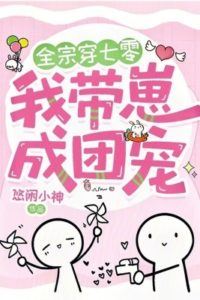
After failing her ascension, Ye Qingyun opens her eyes to find herself reborn as a full-time mother in 1970s China.
Her soldier husband, Fu Linchuan, has been missing for three years and is presumed dead. Her cruel, favoritism-playing mother-in-law throws her and her four children out, sending them back to her parents’ home.
Ye Qingyun: No problem! No problem! My rich parents adore their grandchildren—they’ve been waiting for me to come home and live off them.
The very next moment—
Her parents: “Sorry… we’ve found our biological daughter.”
As the fake heiress, Ye Qingyun can only take her four children and return to her rural hometown in disgrace.
Everyone says life in the countryside is bitter and exhausting. The real heiress and her vicious mother-in-law eagerly wait to see her fail.
Little do they know…
Her entire cultivation sect has been struck by heavenly lightning and transmigrated here with her!
Though the sect consists of only six people, together they have everything they need:
• a feng shui master,
• a state-banquet chef,
• the world’s greatest veterinarian,
• a mechanical engineering genius,
• a legendary traditional Chinese medicine physician,
• and more.
Joining forces with her senior brothers and sisters, Ye Qingyun starts livestock farms, opens a brick kiln, and contributes to scientific research.
Not only do they raise Ye Qingyun and her four little ones into healthy, chubby children, but they also transform their tiny mountain village into a mysterious wonder of China, attracting famous experts and influential figures from all over the country.
Then one day—
Ye Qingyun turns a corner and encounters a rugged, incredibly strong wild man plowing fields. Soon afterward, she picks up a handsome young man who insists on raising fish—and supporting her for the rest of her life. Just as she thinks she’s about to enjoy her happily-ever-after…
A man who looks exactly like her supposedly deceased husband knocks on her door.
Ye Qingyun: Stay calm. As long as the four of us can live a good life together, nothing else matters!
P.S. The “entire sect” is only six people.

Novel Items

More
Item
A massive personal storage space granted by the system as a reward, larger than a football field. It contains shelves full of goods including clothing, food, medicine, skincare products, fruits, and snacks. Time inside stands still, and Zhao Yunsheng can enter and exit instantly. This space ensures she and her son can live comfortably.
Materials
Coupons An Ruoyan needed for purchases but did not have, likely taken by Shi Meijiao for shopping. She bought some at the black market.
Item
A cart Gu Shiyi purchased to help transport larger quantities of goods, especially milk, making shopping more convenient.
Footwear
Traditional footwear worn by Old Wang. After his herbal soak, he dried off and pulled on his trousers and straw sandals before showing off how much lighter his legs felt.
Item
Found by Fu Min inside the old earthen house. They were used to fetch water since no broom or rag was available.
Item
A pile of cut bamboo branches lying on the open ground beside the house, likely leftovers from the production team's bamboo cutting. Ye Qingyun planned to bundle them together and use them as a broom.
Latest Release
DateGroupRelease
2026-08-11shanghai fantasy c1

Community Reviews

Rating(0 / 5.0, 20votes)
5 stars
0(0%)
4 stars
0(0%)
3 stars
0(0%)
2 stars
0(0%)
1 stars
0(0%)

Popular reviews

... Read More
There's a moment in Chapter 18 that I can't stop thinking about. Ye Qingyun pulls out a kitchen cleaver from her storage space and Wang Tiezhu asks why she's carrying it. Her answer: 'I don't have my sword anymore. If I go into the mountains alone without a decent weapon and run into danger, what am I supposed to do?' A cleaver. The symbol of her new life replacing the symbol of her old one. She's not carrying a weapon of cultivation anymore — she's carrying a tool of survival. And honestly? That cleaver is probably more dangerous in the right hands than any sword she left behind, because now she has something to protect. This runs through the whole passage. The stone frogs, the sweetfish, the pickled vegetable rice soup — these aren't just plot devices for food. They're symbols of a cultivator learning to value the mundane. Ye Qingyun misses her blessed realm where she could keep living creatures, but she adapts. She makes do. She turns dried sweetfish into something delicious when fresh ones won't survive. The three-day promise they make to the customer and then immediately break the next day — 'We joined the Hehuan Sect. Since when were we respectable people?' — this is the book winking at us about morality. These aren't heroes. They're survivors who learned long ago that rules are flexible when you're trying to live. And the work points system, the rotation of days off during periods, the way Qi Xue and Mo Qiuyu genuinely support each other — there's this quiet theme of community forming among people who never asked for it. Ye Qingyun came here alone, but she's not staying alone. The cultivator who once believed 'strength was everything' is slowly learning that strength also looks like letting your disciple grill fish while you handle the frogs, or asking your coworkers to cover your shift, or pretending to have a period so you can sell your catch before anyone notices. The sword is gone. The cleaver remains. And somehow that's even more powerful.
... Read More
Okay so this chapter is wild because on the surface nothing happens. Like, literally. Ye Qingyun cooks fish, plants vegetables, builds a toilet, and talks to her brother-in-law about school enrollment. But that's the thing about this story — the plot isn't about dramatic twists or epic battles. It's about survival, one small victory at a time. And honestly? I find myself more invested in whether she gets those vegetable seeds to sprout than I would be in most fantasy novels' plot twists. The structure here is interesting. We get this domestic opening with the fish scene — eight fish, two per person, and Fu Min already ate one secretly — and then it pivots to the larger plot threads. The stone frog business, the black market for coupons, the flashlight purchase, the toilet construction. These all feel like pieces of a puzzle that's slowly coming together. The author is building a world where every small detail matters. What struck me most was the subplot with the people who got scammed. Remember those three buyers waiting in the alley? They got played. Ye Qingyun set them up and vanished. That's a nice little thread of tension — she's not just surviving, she's outsmarting people who tried to exploit her. It's satisfying in a quiet way. And then there's the school enrollment news from Wu Younian. This is the kind of plot point that feels small but actually opens up huge possibilities. Fu Min gets to go to school. The children might actually have a future beyond this commune. It's the kind of moment that makes you want to keep reading, not because of action, but because of hope. The pacing is deliberate. Some parts drag — the entire toilet-building sequence could've been cut in half — but other moments hit hard. Like when Fu Xiangdong keeps pretending he needs to use the toilet just to play in it. That's the kind of detail that makes the story feel alive. Overall? The plot works because it's honest. This isn't a story where everything resolves neatly. Ye Qingyun still has no industrial coupons, she still has to figure out the black market, and she's raising four kids basically alone. But there's a satisfaction in watching her tackle each problem one at a time. It's like watching someone play a survival game on hard mode and actually winning.
... Read More
I have to stop and appreciate the visual choreography of the confrontation scene because the author absolutely nailed it. Let me paint this out for you: two beautiful girls—Mo Qiuyu with her jet-black braids and red ribbons, Qi Xue with her trendy shoulder-length hair and floral blouse—stumbling back to camp looking like they went twelve rounds with a mud pit. Their baskets are empty. Their clothes are torn. Qi Xue's sandal is literally falling apart. This is the setup, and it's devastating because we see their grief through Ye Qingyun's eyes before she even asks what happened. Then the hillside reveal. Zhou Guifen standing on higher ground, hands on hips, chin raised like she owns the place. The text says she looked down "as though she owned the entire hillside." That single detail tells you everything about the power dynamic before a single punch is thrown. And then Ye Qingyun moves. The fight itself is described with this almost clinical precision—sidestep, grab both wrists, tug, forehead collision, slap so fast it's described as a bolt of thunder. Zhou Guifen's perspective shifts from sky to hillside to grass in three sentences. That's not just action writing; that's cinematic. The author makes you feel the disorientation. The search scene afterward is equally vivid—Ye Qingyun lifting a grown woman one-handed with her left arm while her right hand expertly finds a hidden pocket sewn into the undershirt. The image of three tough local women suddenly realizing they've picked the wrong fight, their scalps going numb as Ye Qingyun's gaze shifts toward them… I literally read that passage twice. The worldbuilding here isn't about describing architecture or politics. It's about making every location feel like it has weight, texture, and history. The pig farm with its earthen stove and two large cauldrons, the hillside covered in white clover, the production team gathering area where village children cluster around Fu Min—each space feels lived-in and specific.
... Read More
Okay I need to talk about this one scene because honestly it wrecked me in the best way. Fu Min taking the plate of grilled fish and secretly giving bites to her three younger siblings while their mom is busy serving porridge. She's nine years old and already playing mom. And then Xinyang timidly asking for three, Fu Xiangdong insisting on two, and Xinyu just silently holding out her bowl saying 'Mommy decides' — I was not prepared for that level of childhood chaos and love hitting me at the same time. But what really got me was the Ye Qingyun moment. She sees them all crowding around the stove, drool practically dripping from Fu Xiangdong's mouth, and instead of scolding them for being greedy she just... smiles. She takes the plate, puts it in the middle of the table, and says 'Watch out for the fish bones!' That's it. That's the whole parenting flex. She's exhausted, she's a former cultivator now stuck in a rural commune with four kids and an old man, and she still finds the bandwidth to be gentle about it. And Wang Tiezhu — the guy who complained for three hundred years about bathing children — he's the one grilling the fish. He loves food, sure, but he's also feeding these kids. There's something quietly tender about an immortal who can't keep up with his disciple running back down the mountain, now sprinting to catch up with life. I keep thinking about that line where Ye Qingyun pokes each of the four children to make sure they're asleep before she heads out. She's not their blood mother but she's already the mother. That's the emotional core of this whole arc and I'm just over here emotionally compromised.
... Read More
Let me just say this: the pacing in these chapters is absolutely ruthless and I am here for it. We start with what could easily have been a fluffy domestic scene—Ye Qingyun taking the kids to share fried glutinous rice sticks, visiting her sister-in-law, the twins learning to walk independently. It's warm. It's cozy. It's the kind of opening that makes you think this is going to be a slow-burn slice-of-life transmigration story. Then Wang Tiezhu throws a shoe at Ye Qingyun's head and the tonal shift is so abrupt it's almost comedic. She just shrugs and tells Fu Min to pick up his shoe. The author uses this moment of levity as a bridge—Ye Qingyun heads to the pig farm, finds it empty, and then BAM. The two girls appear in ruins. The pacing here is masterful because the author doesn't rush the emotional beats. Qi Xue's breakdown over stolen hair clips, Mo Qiuyu's tears about her ribbons, the way they collapse into each other's arms—it's given space to breathe before Ye Qingyun snaps into action mode. What I found most interesting is how the revenge sequence itself is paced. There's no drawn-out battle. No dramatic monologue. Ye Qingyun arrives, demands the items back, gets mocked, and then the fight resolves in what feels like three seconds of actual combat time. The author trusts the reader to fill in the gaps. The sprint to the hillside—normally forty minutes, covered in twenty—creates this breathless urgency that carries the entire section forward. And the chapter ends on that perfectly clipped declaration: "If I ever catch the three of you here again…" The ellipsis does so much heavy lifting. I need to know what comes next immediately.
... Read More
The dialogue in this chapter is absolutely phenomenal and I have to highlight the stone frog porridge scene. Four kids surrounding their mother the moment she walks in asking if they're having meat, and she just says no. Then Fu Xiangdong eating it so hot his eyebrows scrunched together insisting it's meat. Xinyu asking if there's such thing as meat-flavored sweet potatoes and Xinyang immediately catching on with excitement. And Fu Min rolling her eyes at her sister calling her dummy. The kids each have such distinct voices—Fu Min is the skeptical bossy one, Fu Xiangdong is the enthusiastic eater, Xinyu is the doubter, Xinyang is the hype girl. And Ye Qingyun's line "Who cares what it is? As long as it tastes good" is just perfect parenting wisdom disguised as casual dialogue. Then the punchline of Fu Min spitting out a bone and staring at her mother like... wait. The humor here is so natural and unforced. The author clearly understands how children actually talk and think. This is comedy written by someone who has either seen kids eat or IS a kid.
See all reviews

Characters

See all characters

Custom lists

Oops…There is nothing here.