The Second Miss’s Melons Are Plump and Round - Reviews

The Second Miss’s Melons Are Plump and Round
+Add to Custom List
Sort
Add review
... Read More
Let me tell you about stakes because this chapter is a masterclass in escalating tension without ever raising its voice. The initial conflict is internal: Lin Shuying wants to farm, her family thinks she's crazy. This is a classic family-vs-individual setup, but the author immediately undercuts the drama with humor—Zhaoye laughing, the watermelon joke, the fact that her 'rules' from her father are actually just him being protective. The stakes feel personal but low. Then the Empress arrives and raises the stakes externally. She's not just a well-wisher; she's a political figure who could make or break Lin Shuying's reputation. When she says 'I've heard there are estates outside the city with accompanying farmland,' she's offering a solution that also keeps Lin Shuying under royal surveillance. Freedom with strings. But the real conflict—the one that made me sit up straight—arrives at the very end with the peony. This isn't just a dying flower. This is an imperial tribute. This is political currency. If Consort Lin Yueyao sees it half-dead when she comes to visit, it's not just embarrassment—it's a diplomatic incident. And the gardener says it needs 'ten days to half a month' to recover. The Empress's sister is coming in 'a few days.' Lin Shuying has four years of agricultural success behind her. She's healed an orchid that was supposed to be beyond saving. But can she do it again, faster, under pressure, with a plant that has zero margin for error? The stakes just went from 'will she learn to farm' to 'will her family face political consequences.' And the chapter ends with her walking into the front hall, seeing the dying peony, and the narrative cutting to her reaching out—leaving us hanging on whether her Wood Spirit Root can save something this valuable. This is how you build suspense. Not with explosions, but with a flower.
... Read More
I need to talk about the waterweed. Like, the absolute smallest detail in this entire passage and it's the one that wrecked me. Lin Shuying is sitting in Daxiangguo Temple during a thunderstorm, and she suddenly remembers the clump of waterweed she was clutching when she fell into the lake. She says: 'That waterweed grew in the mud, yet it could still grow lush and green.' And then she connects it to herself—fine clothes, fine food, jewels and silks are all good, but without something substantive, isn't she just duckweed without roots? This is the emotional core of the entire chapter compressed into one image. She didn't grab that waterweed by accident. Xiao Shengrui noticed this. The Empress noticed this. But the reader? We're supposed to notice that this girl has been preparing for something her whole life, even when she was drowning. And then there's the mother-daughter relationship with Gu Wanyin. Every time Gu Wanyin cries, it's not performative—it's genuine fear. 'Your hands will grow calluses, your face will get tanned.' A mother watching her daughter choose hardship over comfort. The author writes this so quietly, no dramatic speeches, just a mother's practical love. The romantic tension with Xiao Shengrui is basically nonexistent on the surface—he's eight years old—but the subtext is there in every glance. He keeps the lotus seed. He reads agricultural books. He says 'Since he had set this in motion, he might as well see how it ended.' That's not the thought of a child. That's someone who has already decided to watch her grow, and maybe, just maybe, grow with her. The emotional high point for me though? When Lin Shuying says 'Watermelons, to start with' and explains they're 'perfect to cool you both down in the summer heat' while actually thinking about grafting experiments. The gap between her public persona and private ambition is where the real feeling lives.
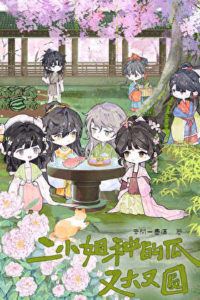
... Read More
I was NOT ready for the Lady Wei scene to hit this hard. On the surface it's just 'mom comes to pick up runaway daughter,' right? Wrong. The moment Lady Wei says 'Fuyu... I leave her in your care' and her eyes are red-rimmed—I literally sat there like what just happened. This woman traveled all the way here, probably worried sick, and instead of dragging her daughter home in shame, she negotiates a MONTHLY SALARY for her to stay as security instructor. Twenty taels a month! She's not just accepting it—she's making sure her daughter has purpose and dignity. And Wei Fuyu! The girl who ran away to escape an arranged marriage shows up and immediately starts bossing people around, grabbing bronze staffs, declaring herself 'Instructor Wei of Little Lin Manor.' But underneath all that bravado, she's just a kid who doesn't want to be married off and is desperately trying to find where she belongs. The fact that she sidles up at the perfect moment to plead her case shows she's smarter than she lets on. Then there's Lin Shuying and Xiao Shengrui—this alliance is so quietly beautiful. He doesn't just help her because he has to; he says 'I also want to see what you can grow.' That's not patronage, that's genuine investment in someone else's dreams. And Lin Shuying's guilt about 'always troubling Your Highness' makes me think she hasn't quite processed that she's earned this support.
... Read More
Okay so I need to talk about the watermelon thing because honestly it had me absolutely losing it. Like, three days from flowering to fruiting?! Lin Shuying basically overpowered the plants with her Wood Spirit Root and now she's trying to play it cool like 'oh this is just a trait of the new variety.' The tension between her wanting to go all-in on the magical growth versus needing to keep a low profile is such good plot engineering. She's not just farming—she's running a tight ship of secrets. And then there's the subplot threading through everything: those old bureaucrats from the Directorate of Agriculture who think a woman farming is 'a slap in their face.' That's not just background noise, that's a ticking bomb. Xiao Shengrui is handling it for now, but the moment her melons actually succeed, all that nitpicking about 'wasting imperial land' and 'not following ancient practices' is going to escalate. The author is setting up this slow-burn conflict that's going to explode when the harvest comes. Also the buffet/canteen system? That's not just a funny side detail—it's worldbuilding as plot. Lin Shuying is essentially building an entire management infrastructure from scratch, and every system she creates (work-point tokens, the canteen layout, the security instructor hire) is a move in her larger game of building something real in a world that doesn't want her to succeed. The plot isn't just 'girl grows melons.' It's 'girl builds an empire while pretending it's just a garden.'
... Read More
There's this one moment—just a single sentence, really—where the author paints the whole scene: 'Outside the window, the evening glow gilded the fields with a golden rim.' And suddenly I'm standing in that field with Lin Shuying, looking at these impossible little emerald melons no bigger than thumbs, with faint rainbow patterns already visible on their rinds. The bamboo trellises, the laborers gathered in a circle like they're witnessing something miraculous, Forester Chen muttering about spirits... it's so vivid I could smell the damp earth. But what really makes this world feel alive isn't just the pretty descriptions—it's the infrastructure. The work-point tokens, the bamboo meal counters, the divided trays with three sections for meat-vegetable-main, the wooden ladles with standardized scoops, the hygiene rules about scalding utensils. The author isn't just giving us a fantasy farming story; they're giving us a complete economic and social system being built in real time. Every detail serves the world. And the canteen layout! Main Courses, Meat Dishes, Vegetable Dishes, Soups & Stews, Fruit Section—each with handwritten wooden signs and prices in wen. This isn't background flavor text. This is a fully realized economy where a laborer from Sichuan can mutter about spicy food and someone actually hears him. The world breathes.
... Read More
Lin Zhaoye is honestly the best character in this whole setup. On the surface he's just the comic relief twin—laughing in corners, roasting his sister for going from wanting to be Jinling's number one wastrel to suddenly wanting to farm. But the way the author writes him, he actually notices everything. He's the one who calls out her contradiction, who remembers what she said last month versus what she's saying now. That's not just a jokester; that's someone paying attention. And then there's Xiao Shengrui. Eight years old, dressed in moon-white brocade, holding a lotus seed he found where she fell into the lake. The Empress asks him if Lin Shuying truly wants to farm, and he says 'I do not know.' But then he adds this line that completely changes how you see him: 'She gripped it very tightly, as if she had been prepared to grab something all along.' This kid is reading her like a book. He noticed something the rest of the family missed. The sibling dynamic between Lin Shuying and her eldest brother Lin Moqian is also quietly brilliant. He doesn't question her strange new interest in farming—he just sees the business opportunity and proposes a fifty-fifty split. That's not just pragmatism; that's genuine trust. He believed in her enough to build an entire brand around her 'Jade Dew Strawberries' without once asking where she got the techniques. What I love most is how the author never makes any of these relationships one-note. Zhaoye teases but also protects. The Empress supports but also tests. Moqian is all business but clearly cares. Even Lin Huaizhou, who seems stern, sets rules that are actually protective—'you may come back anytime, no stubbornness.' He's giving her an exit ramp while pretending to be strict.
... Read More
Okay can we just talk about how good the dialogue is in this chapter because the author has given every character a voice that is immediately distinguishable and I am here for it. Lin Zhaoye's dialogue is pure comedic gold. 'Watermelons? Lin Shuying, are you planning to open a melon stall?' This kid has zero filter and maximum attitude. But what makes it work is that his dialogue always reveals something true. He's not just being funny—he's pointing out the absurdity of his sister's transformation from future wastrel to agricultural enthusiast. The Empress's dialogue is written with this incredible authority that never raises its voice. 'You truly want to farm?' 'Farming is hard work.' 'People will mock you.' Each line is short, almost test-like, but by the third question she's essentially interviewing a CEO for a position she already wants to hire them for. And when she says 'You have spirit'—that's not flattery. That's assessment. The Empress speaks in evaluations. Xiao Shengrui's dialogue is the most striking because of what it doesn't say. Eight years old and he speaks like a miniature scholar-official: 'I hope you will study them well and not betray the words you have spoken today.' But then later, to his mother, he says 'I do not know' about whether Lin Shuying truly wants to farm. The contrast between his formal public voice and his private uncertainty is delicious. And Lin Shuying herself—her dialogue shifts depending on who she's talking to. With her parents, she's formal and reverent ('Please grant your daughter's wish'). With Zhaoye, she's sharp ('Third Brother, when the first melon is ready, I'll make sure you get a taste'). With her maid A Li, she's practical and direct ('Move this orchid to the east window'). The author never lets her sound the same to everyone, which is how real people actually speak.
... Read More
The structure of this section is genuinely clever and I want to dissect it because the author does something really smart with the time jump. We open with Lin Shuying already four years into her 'quiet cultivation.' The chapter immediately drops us into the middle of her garden experiment, shows us the results (the orchid she's healing, the strawberries that became a brand), and only THEN goes back to explain how she got here. This is reverse chronology done right—show the miracle first, then reveal the method. The transition from the temple confrontation scene to the garden scene is where it gets interesting. The temple scene ends with Xiao Shengrui in the carriage, thinking about agricultural books. Then we get this marker: 'Yongchang Fourteenth Year, Spring.' Four years have passed. The author doesn't waste time showing us the transition—the strawberry success, the business deal with Moqian, the daily routines. We get vignettes. A paragraph about the orchid. A paragraph about the strawberries. A paragraph about the peony crisis. It's efficient storytelling at its finest. But here's what I think is the real structural masterstroke: the peony problem at the end. The chapter starts with Lin Shuying successfully healing an orchid with her Wood Spirit Root. She's confident. She's skilled. And then we cut to the front hall where a priceless imperial peony is dying, and the gardener says it'll take 'ten days to half a month' to recover. The Empress's sister—Consort Lin Yueyao—is coming to visit. The stakes just escalated from 'pretty flower' to 'political disaster.' The pacing here is like a rollercoaster that dips and rises. We get relief (the orchid is saved), then tension (the peony is dying), then a cliffhanger (what will she do?). The author understands that after four years of showing us Lin Shuying's competence, the real drama comes when even she might not be able to fix something immediately.
... Read More
Let me just say this: the pacing in these chapters is absolutely ruthless in the best way. You start with the Wei Fuyu family drama—emotional, character-driven—and by the time Lady Wei leaves, you're already getting pulled into the melon field discovery. Three days to fruiting?! Okay now we're talking. Then Xiao Shengrui appears with irrigation maps and overseas seeds, and suddenly there's political intrigue simmering underneath. Then Auntie Liu collapses under the weight of everyone's dietary demands, and you think 'oh it's a comedy break'—but no, it pivots into the canteen system which is basically the most satisfying infrastructure porn I've ever read. The chapter transitions are so clean. There's no dead air. Every scene ends with either a revelation (the melons are growing impossibly fast), a complication (the Directorate officials are watching), or a new system being born (the buffet canteen). And the cliffhanger energy is real—Lin Shuying shut herself in her study revising planting plans, the Wood Spirit Root effect is 'far beyond her imagination,' and she needs to control the pace before someone notices. The story is always one step ahead of the characters' ability to handle it, which is exactly how you keep readers up at 2 AM. The only thing I'd tweak is the Forester Chen trial run at the end feels slightly rushed—just one line about him choosing between pork and fish and then it cuts off. But honestly, that abruptness might be intentional, like the author knows we're already hooked and doesn't need to linger.
... Read More
I need to talk about the Lady Wei moment. Not the dramatic parts—the quiet ones. She takes Lin Shuying's hand before leaving and says, 'Second Miss, Fuyu... I leave her in your care.' That pause. That ellipsis. That's a mother who knows her daughter is too stubborn to listen to her but too vulnerable to survive alone, and she's trusting the one person who actually sees her daughter's worth. Lin Shuying's response—'Rest assured, my lady'—is so simple but it carries so much. This woman who arrived as a worried noblemother leaves having found something she didn't expect: her daughter has a home here. And then there's Wei Fuyu spinning in circles afterward, hugging Lin Shuying, declaring herself 'Instructor Wei of Little Lin Manor!'—that pure, unfiltered joy of a girl who just found out she gets to stay and be herself. She didn't run away to escape marriage; she ran away to find somewhere she belonged. And she found it. Xiao Shengrui's eyes 'bright as stars in the night sky' when he says he wants to see what she can grow—that's not romantic tension, it's something deeper. It's the look of someone who has found a kindred spirit in a world full of people who either want to use her or dismiss her. And Lin Shuying feeling 'guilty' about troubling him? That's the tragedy. She doesn't yet understand that she's not a burden. She's the prize.
... Read More
Auntie Liu's breakdown scene is comedy gold and I need everyone to read it again. 'Miss Wei wants meat with every meal—braised pork, stewed knuckles, soy-braised bones—if there's no meat, she throws down her chopsticks. Nurse Lin says it's too greasy... That boy A-Gua wants hearty meals... And those laborers—some want noodles, some want rice, some want coarse grains...' She's counting on her fingers like a stressed restaurant owner and I was wheezing. But what's impressive is how every character has a completely distinct voice. Wei Fuyu's 'I'll knock their teeth out!' versus her pitiful act with her mother—two totally different registers from the same person. Xiao Shengrui's dry 'Mutual benefit. If you grow good things, I get to share in the credit too' has this perfect blend of casual warmth and royal authority that no other character could deliver. Even Forester Chen's 'It's like they're turning into spirits' is such a perfect period-accurate reaction. And Lin Shuying's internal voice—she's the anchor. When she's thinking about tomato scrambled eggs from her past life, that's a whole different tone from when she's giving orders to Auntie Liu about hygiene standards. The author switches registers so smoothly you never lose track of who's thinking what. The narrative voice itself feels like Lin Shuying's practical, slightly wry sensibility filtering everything.

Leave a comment

You must be logged in to leave comments. or
