The Second Miss’s Melons Are Plump and Round
+Add to Custom List
Genres:
Novel Info

Summary

... Read More

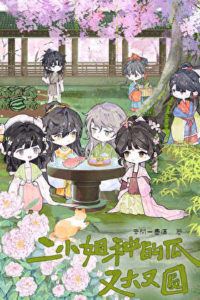
Dr. Lin Shuying, a PhD in agronomy, completes her life’s work and transmigrates into the body of Lin Family’s Second Miss—a spoiled troublemaker loathed by everyone in Jinling City.


Her father is the richest man in the city, her sister is a noble consort, and she herself is a pampered little terror.


Looking at her delicate, soft fingers, Lin Shuying makes a snap decision: this cushy life is not for her!


She promptly “sees through the mortal world,” retreats to a countryside estate, picks up her old trade, and devotes herself entirely to scientific farming.


To her surprise, the fruits and melons she grows turn out huge and sweet, and her rice paddies yield double the harvest.


She only wanted to be a quiet homebody in the countryside, but the estate’s doorstep is worn down by a parade of big shots:


Her overbearing little nephew (the Fifth Prince) comes by daily for free meals; the aloof Seventh Prince becomes her personal “gossip correspondent”; and the general’s daughter insists on becoming her sidekick.


Just as her idyllic life is thriving, the Seventh Prince—who’s always coming to listen to her “storytelling”—corners her by the melon patch:


“Shuying, I really like your melons. But while you’re growing melons… would you consider growing a place for me in your heart too?”


Content Tags: Younger love interest, time travel, farming novel, lighthearted, overpowered protagonist, Agricultural expert, rebirth, vegetable-growing prodigy, ensemble cast, sweet romance

One-Line Summary: Reborn in a different world, scientific farming takes Jinling City by storm

Motto: You reap what you sow—plant joy and harvest fulfillment.

Novel Items

More
Spirit
A spirit connected to the mole on Guan Xiyue's temple that appeared after her head injury. It functions as a shop where she can buy items using real gold and silver. The shop sells everything from small items like food to large items like information, but all are expensive. A meat bun costs ten wen (ten copper coins). The spirit can also run tabs in emergencies, charging ten taels of silver for ibuprofen.
Materials
An edible wild vegetable that Grandma Mei pointed out. She noted it was delicious when prepared by others but implied her own cooking of it was not good.
Manual
A Buddhist scripture that Xie Qingyan copies while confined in the ancestral hall. She uses a wooden hairpin as a bookmark while studying it.
Food
Pastries made by the imperial kitchen that Fifth Prince Xiao Shenglan brings to share with Lin Shuying. He saves them for her in an oil-paper packet. Lin Shuying analyzes their nutritional content as having approximately forty percent oil, fifty percent carbohydrates, and too high saturated fatty acids for children's cardiovascular health.
Food
A type of cake purchased by Song Yuejiao at the shop.
Cultivation Methods
Lin Shuying's special ability gained from her rebirth. When she concentrates, she can sense a plant's condition (thirsty, hungry, sick, or lazy) and transfer energy from herself to the plant to help it recover vitality and grow better.
Latest Release
DateGroupRelease
2026-08-11shanghai fantasy c35
2026-08-11shanghai fantasy c34
2026-08-11shanghai fantasy c33
2026-08-11shanghai fantasy c32
2026-08-11shanghai fantasy c31
2026-08-11shanghai fantasy c30
2026-08-11shanghai fantasy c29
2026-08-11shanghai fantasy c28
2026-08-11shanghai fantasy c27
2026-08-11shanghai fantasy c26
2026-08-11shanghai fantasy c25
2026-08-11shanghai fantasy c24

Community Reviews

Rating(0 / 5.0, 11votes)
5 stars
0(0%)
4 stars
0(0%)
3 stars
0(0%)
2 stars
0(0%)
1 stars
0(0%)

Popular reviews

... Read More
Let me tell you about stakes because this chapter is a masterclass in escalating tension without ever raising its voice. The initial conflict is internal: Lin Shuying wants to farm, her family thinks she's crazy. This is a classic family-vs-individual setup, but the author immediately undercuts the drama with humor—Zhaoye laughing, the watermelon joke, the fact that her 'rules' from her father are actually just him being protective. The stakes feel personal but low. Then the Empress arrives and raises the stakes externally. She's not just a well-wisher; she's a political figure who could make or break Lin Shuying's reputation. When she says 'I've heard there are estates outside the city with accompanying farmland,' she's offering a solution that also keeps Lin Shuying under royal surveillance. Freedom with strings. But the real conflict—the one that made me sit up straight—arrives at the very end with the peony. This isn't just a dying flower. This is an imperial tribute. This is political currency. If Consort Lin Yueyao sees it half-dead when she comes to visit, it's not just embarrassment—it's a diplomatic incident. And the gardener says it needs 'ten days to half a month' to recover. The Empress's sister is coming in 'a few days.' Lin Shuying has four years of agricultural success behind her. She's healed an orchid that was supposed to be beyond saving. But can she do it again, faster, under pressure, with a plant that has zero margin for error? The stakes just went from 'will she learn to farm' to 'will her family face political consequences.' And the chapter ends with her walking into the front hall, seeing the dying peony, and the narrative cutting to her reaching out—leaving us hanging on whether her Wood Spirit Root can save something this valuable. This is how you build suspense. Not with explosions, but with a flower.
... Read More
I need to talk about the waterweed. Like, the absolute smallest detail in this entire passage and it's the one that wrecked me. Lin Shuying is sitting in Daxiangguo Temple during a thunderstorm, and she suddenly remembers the clump of waterweed she was clutching when she fell into the lake. She says: 'That waterweed grew in the mud, yet it could still grow lush and green.' And then she connects it to herself—fine clothes, fine food, jewels and silks are all good, but without something substantive, isn't she just duckweed without roots? This is the emotional core of the entire chapter compressed into one image. She didn't grab that waterweed by accident. Xiao Shengrui noticed this. The Empress noticed this. But the reader? We're supposed to notice that this girl has been preparing for something her whole life, even when she was drowning. And then there's the mother-daughter relationship with Gu Wanyin. Every time Gu Wanyin cries, it's not performative—it's genuine fear. 'Your hands will grow calluses, your face will get tanned.' A mother watching her daughter choose hardship over comfort. The author writes this so quietly, no dramatic speeches, just a mother's practical love. The romantic tension with Xiao Shengrui is basically nonexistent on the surface—he's eight years old—but the subtext is there in every glance. He keeps the lotus seed. He reads agricultural books. He says 'Since he had set this in motion, he might as well see how it ended.' That's not the thought of a child. That's someone who has already decided to watch her grow, and maybe, just maybe, grow with her. The emotional high point for me though? When Lin Shuying says 'Watermelons, to start with' and explains they're 'perfect to cool you both down in the summer heat' while actually thinking about grafting experiments. The gap between her public persona and private ambition is where the real feeling lives.
... Read More
I was NOT ready for the Lady Wei scene to hit this hard. On the surface it's just 'mom comes to pick up runaway daughter,' right? Wrong. The moment Lady Wei says 'Fuyu... I leave her in your care' and her eyes are red-rimmed—I literally sat there like what just happened. This woman traveled all the way here, probably worried sick, and instead of dragging her daughter home in shame, she negotiates a MONTHLY SALARY for her to stay as security instructor. Twenty taels a month! She's not just accepting it—she's making sure her daughter has purpose and dignity. And Wei Fuyu! The girl who ran away to escape an arranged marriage shows up and immediately starts bossing people around, grabbing bronze staffs, declaring herself 'Instructor Wei of Little Lin Manor.' But underneath all that bravado, she's just a kid who doesn't want to be married off and is desperately trying to find where she belongs. The fact that she sidles up at the perfect moment to plead her case shows she's smarter than she lets on. Then there's Lin Shuying and Xiao Shengrui—this alliance is so quietly beautiful. He doesn't just help her because he has to; he says 'I also want to see what you can grow.' That's not patronage, that's genuine investment in someone else's dreams. And Lin Shuying's guilt about 'always troubling Your Highness' makes me think she hasn't quite processed that she's earned this support.
... Read More
Okay so I need to talk about the watermelon thing because honestly it had me absolutely losing it. Like, three days from flowering to fruiting?! Lin Shuying basically overpowered the plants with her Wood Spirit Root and now she's trying to play it cool like 'oh this is just a trait of the new variety.' The tension between her wanting to go all-in on the magical growth versus needing to keep a low profile is such good plot engineering. She's not just farming—she's running a tight ship of secrets. And then there's the subplot threading through everything: those old bureaucrats from the Directorate of Agriculture who think a woman farming is 'a slap in their face.' That's not just background noise, that's a ticking bomb. Xiao Shengrui is handling it for now, but the moment her melons actually succeed, all that nitpicking about 'wasting imperial land' and 'not following ancient practices' is going to escalate. The author is setting up this slow-burn conflict that's going to explode when the harvest comes. Also the buffet/canteen system? That's not just a funny side detail—it's worldbuilding as plot. Lin Shuying is essentially building an entire management infrastructure from scratch, and every system she creates (work-point tokens, the canteen layout, the security instructor hire) is a move in her larger game of building something real in a world that doesn't want her to succeed. The plot isn't just 'girl grows melons.' It's 'girl builds an empire while pretending it's just a garden.'
... Read More
There's this one moment—just a single sentence, really—where the author paints the whole scene: 'Outside the window, the evening glow gilded the fields with a golden rim.' And suddenly I'm standing in that field with Lin Shuying, looking at these impossible little emerald melons no bigger than thumbs, with faint rainbow patterns already visible on their rinds. The bamboo trellises, the laborers gathered in a circle like they're witnessing something miraculous, Forester Chen muttering about spirits... it's so vivid I could smell the damp earth. But what really makes this world feel alive isn't just the pretty descriptions—it's the infrastructure. The work-point tokens, the bamboo meal counters, the divided trays with three sections for meat-vegetable-main, the wooden ladles with standardized scoops, the hygiene rules about scalding utensils. The author isn't just giving us a fantasy farming story; they're giving us a complete economic and social system being built in real time. Every detail serves the world. And the canteen layout! Main Courses, Meat Dishes, Vegetable Dishes, Soups & Stews, Fruit Section—each with handwritten wooden signs and prices in wen. This isn't background flavor text. This is a fully realized economy where a laborer from Sichuan can mutter about spicy food and someone actually hears him. The world breathes.
... Read More
Lin Zhaoye is honestly the best character in this whole setup. On the surface he's just the comic relief twin—laughing in corners, roasting his sister for going from wanting to be Jinling's number one wastrel to suddenly wanting to farm. But the way the author writes him, he actually notices everything. He's the one who calls out her contradiction, who remembers what she said last month versus what she's saying now. That's not just a jokester; that's someone paying attention. And then there's Xiao Shengrui. Eight years old, dressed in moon-white brocade, holding a lotus seed he found where she fell into the lake. The Empress asks him if Lin Shuying truly wants to farm, and he says 'I do not know.' But then he adds this line that completely changes how you see him: 'She gripped it very tightly, as if she had been prepared to grab something all along.' This kid is reading her like a book. He noticed something the rest of the family missed. The sibling dynamic between Lin Shuying and her eldest brother Lin Moqian is also quietly brilliant. He doesn't question her strange new interest in farming—he just sees the business opportunity and proposes a fifty-fifty split. That's not just pragmatism; that's genuine trust. He believed in her enough to build an entire brand around her 'Jade Dew Strawberries' without once asking where she got the techniques. What I love most is how the author never makes any of these relationships one-note. Zhaoye teases but also protects. The Empress supports but also tests. Moqian is all business but clearly cares. Even Lin Huaizhou, who seems stern, sets rules that are actually protective—'you may come back anytime, no stubbornness.' He's giving her an exit ramp while pretending to be strict.
See all reviews

Characters

See all characters

Custom lists

Oops…There is nothing here.