Summary

... Read More

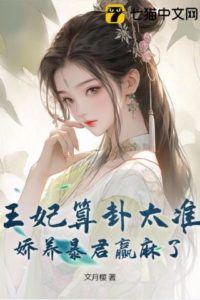
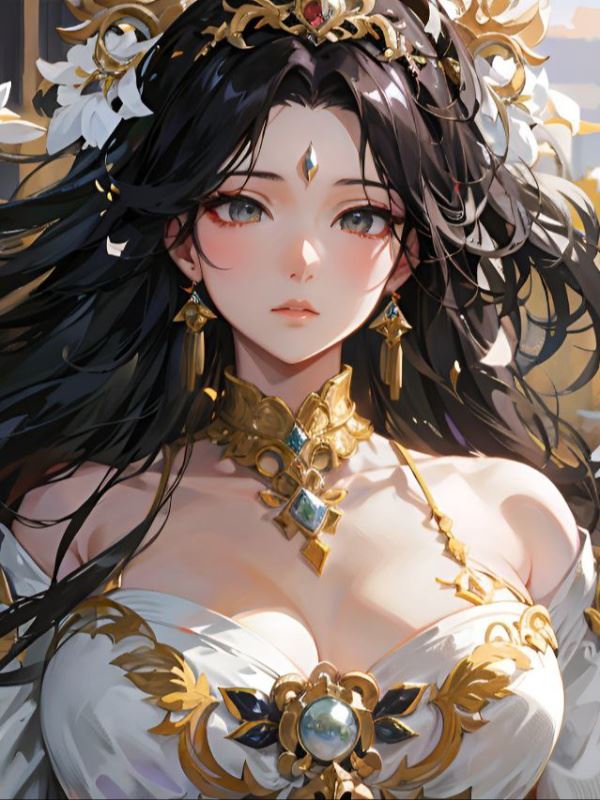
In the capital, the naturally simple-minded Miss Wen, daughter of the Vice Minister of Revenue, suddenly became capable of divination by finger-counting, exorcising evil and capturing ghosts, and even weather-manipulation magic after marrying a “mad” prince! Wait, it seems the mad prince has also turned into a ruthlessly obsessive one.

Just when everyone in the capital thought the couple from the household of Prince Chen was finished:

Miss Wen discovered that the Princess Royal’s biological daughter had been swapped by the Prince Consort for the daughter of his childhood sweetheart. She helped the Princess Royal find her biological daughter, who had been living in the countryside, and became a distinguished guest of the Imperial Family.

Miss Wen helped the Duke of Zhenguo find the ghost of his eldest son, who had been missing for years. It turned out the Duke and his eldest son had been driven apart by the schemes of an adopted son; on the day the eldest son left home, he was murdered and buried in the backyard of their own home.

The Duke of Zhenguo’s entire lineage immediately declared that they would forever support Miss Wen and Prince Chen! Miss Wen went from being associated with supernatural anomalies to becoming the national treasure of the entire Great Yong.

Prince Chen, who originally had the least hope of winning the succession, “lay low” and won his way to the top to become the new Emperor.

But did Prince Chen really do nothing? No. When his wife killed, he handed her the knife; when his wife charged ahead, he handled the aftermath.

Fly high, Princess Consort Chen; Prince Chen will always be by your side!

Novel Items

More
Talisman
Yellow paper charm with Xu Zhizhi's name and an incorrect birth date (one month earlier). Found on the ground after Old Lady Wang sneaked around. Possibly used for cursing.
Arcane Treasures
A half-meter diameter golden seal created by Wen Ling through Hand Seal Casting. It appeared with dazzling golden light and struck toward Gu Chenran's body along with the Talisman to protect him and suppress the black mist in his chest.
Formations
A deadly array that ensnared the entire Prince Chen's Manor. The location where Wen Ling and Ting Yin were trapped served as the final array core. If completed by opening the door, it would forcibly extract the soul-spirits of everyone in the residence, drain the Qi Fortune of Prince Chen's residence, and turn the place into a cursed dead zone.
Arcane Treasures
A two-meter-tall blood-red Malevolent Spirit that had completely coiled around Gu Chenran, tightly strangling his neck with one hand and baring its bloody maw to gnaw at his head. It was stripping away his will and attempting to seize his body. It experienced the agonizing memories it endured while alive. It was blasted away by Wen Ling's golden Talisman and Binding Seal, then scorched by golden light from her body before finally departing.
Other
Hundreds of Resentful Ghosts that gathered around Gu Chenran, all drawn by the violet-black mist in his chest. They radiated ominous energy by continuously attracting surrounding Yin Energy and negative energy.
Other
A cluster of pulsing violet-black mist located within Gu Chenran's chest, resembling a black heart. It was struggling to seize the position of his original heart and was the source of the heaven-soaring Resentful Qi that attracted the Malevolent Spirit and Resentful Ghosts.
Latest Release
DateGroupRelease
2026-08-11shanghai fantasy c10
2026-08-11shanghai fantasy c9
2026-08-11shanghai fantasy c8
2026-08-11shanghai fantasy c7
2026-08-11shanghai fantasy c6
2026-08-11shanghai fantasy c5
2026-08-11shanghai fantasy c4
2026-08-11shanghai fantasy c3
2026-08-11shanghai fantasy c2
2026-08-11shanghai fantasy c1

Community Reviews

Rating(0 / 5.0, 11votes)
5 stars
0(0%)
4 stars
0(0%)
3 stars
0(0%)
2 stars
0(0%)
1 stars
0(0%)

Popular reviews

... Read More
I am SHAKING after reading this section. The conflict here is layered in a way that makes my heart race. On the surface level, Wen Ling is walking back into the home that rejected her, where her father called her a disgrace, her stepmother schemed against her, and her stepbrother called her a fraud. She's returning to people who would have preferred her dead or at least permanently foolish. And she's doing it with a prince at her side. But the stakes go way deeper than family drama. Wen Ling reveals she was poisoned on her wedding day — which means someone in that family tried to KILL her. This isn't just emotional abuse or neglect; this is attempted murder. And when she brings it up, Wen Tingyun's immediate concern isn't justice for his daughter but political consequences for himself. His enemies might investigate. His reputation might suffer. Wen Ling's safety was never the priority — her utility was. Wen Haitian's reaction is particularly chilling: "If she was truly poisoned, wouldn't Prince Chen's residence have reported it directly to the authorities? Why wait until coming home to speak of it? Is our home a court of law? I think she's just deliberately causing trouble!" He's not just dismissing her — he's actively constructing a narrative where SHE is the problem. The victim is the troublemaker. This is exactly how abusers operate, and the fact that the author shows this happening in real time is terrifying. The external stakes are clear: Wen Ling needs to survive this family, expose the truth, and protect herself. But the internal stakes are what got me — she's walking into a place where her own father questions her sanity before he questions her safety. Where her stepmother redirects the conversation away from her poisoning. Where her stepbrother calls her a liar to her face. And yet she smiles. She greets them sweetly. She plays the role they expect while holding all the cards. That's the real tension here — not whether she'll be safe, but how far she's willing to go and what she'll do when the mask finally slips. I need the next chapter immediately.
... Read More
The opening of this passage is absolutely brutal and I'm still recovering. "This is a heart pieced together from nine children's hearts." And then the narration drops that it probably took over a thousand children to assemble. Over. A. Thousand. And it was sitting in a bridal chamber. Like, someone's wedding night room. The sheer wrongness of that image is something I can't shake. But what's fascinating is how the scene transforms. That black, pulsating, disgusting heart—described with words like "sizzling" and "bubbling like soda" when the golden formation hits it—gives way to something almost sacred. The children's souls emerge and the text describes them as looking "remarkably like the golden boys and jade maidens depicted in New Year paintings." This is such a culturally specific image that immediately grounds the story in a particular world. They're hovering, some crawling, some sitting, completely innocent and unaware. The youngest under a year old, the oldest five. The contrast between the black heart that imprisoned them and their luminous, uncorrupted souls is devastating. And then there's the Taoist priest in the other corner of the capital. The moment Wen Ling breaks his formation, he spits blood, his eyes snap open in disbelief, and his skin rapidly withers like a deflated balloon. Bark-like folds. Collapses dead. This is worldbuilding through consequence—the dark arts he practiced have a literal cost, and the moment the formation breaks, that cost is collected. The world feels alive because every magical action has weight and repercussion.
... Read More
The pacing in this section is absolutely masterful and I need to talk about how the author rides these tonal waves without ever losing the reader. It opens at maximum intensity—disgusting black heart, revelation about murdered children, Ting Yin vomiting. This is horror territory. Then Wen Ling starts the ritual and we get this tense, almost meditative sequence of golden light and bubbling black substance and infant shrieks. The Taoist priest spits blood and ages to death in another location—parallel action that raises the stakes. The formation breaks, the shrieks stop, and then... chubby toddlers crawl all over Wen Ling calling her Mommy. The tonal whiplash is intentional and it works because the emotional truth stays consistent. We just went from absolute horror to genuine tenderness, and the reader breathes out for the first time in pages. Then Gao Zhi appears—vengeful spirit, terrifying appearance—and we're back to tension. But Wen Ling defuses it with humor and pragmatism, and by the time we're reading about a five-year-old ghost girl wanting to find her parents, the story has become something almost domestic. The chapter ends with sunlight breaking through dark clouds and the knocking outside stopping. This is the author's way of giving us a moment of relief before the next storm. Every scene transition feels earned, and the shift from horror to comedy to warmth to revenge plot happens so naturally that I didn't even notice I was experiencing four different genres in one sitting.
... Read More
Okay, I need to talk about the poisoning thing because it's not just a plot device and I think the author is using it for something much bigger. "On my wedding day, I was poisoned, passed out, and when I woke up, I was no longer foolish." This line keeps playing in my head. The poisoning didn't just change her mind — it changed her ENTIRE IDENTITY. The "foolish" Wen Ling died on her wedding day, and whatever woke up in her place is someone else entirely. This is basically a rebirth narrative disguised as a poisoning plot point. And think about the symbolism: poison is supposed to be destructive, right? It's meant to kill, to harm, to destroy. But in this story, the poison is what liberates her. It's the thing that breaks the cage the family built around her. The very weapon meant to silence her becomes the catalyst for her voice. There's also the father-daughter dynamic here that's absolutely horrifying when you think about it. Wen Tingyun despised his daughter for being foolish — saw her as a disgrace to his humble origins. He called her by her full name her entire childhood. And when she finally stops being foolish, his first reaction isn't pride or relief — it's suspicion and calculation. "You're not foolish anymore?" Not "I'm glad you're okay" but "hmm, you're useful now." The stepmother Madam Liu being the father's childhood sweetheart adds another layer. She was supposed to be the nurturing figure, the mother type, and instead she's the one who facilitated Wen Ling's suffering. The family structure itself is a symbol of broken trust and inverted care. And Gu Chenran — the prince who was bedridden, whose estate was full of yin energy and death — gets restored through his marriage to Wen Ling. Two broken people healing each other. The poisoning that was meant to destroy one becomes the bridge that connects them. This book is about transformation. About how the things meant to kill you can become the things that make you alive. And it's wrapped in a story about a wealthy family's hypocrisy. That's not just entertainment — that's commentary.
... Read More
Let me just say — the pacing in these chapters is absolutely *impeccable* and I need everyone to understand why. Chapter 27 starts with a quiet, almost domestic scene. Wen Ling takes a bath, eats dinner, sleeps soundly. It's calm. Peaceful, even. And then Chapter 28 opens with her rising early for the big day — the return home. The author doesn't rush this. They let us breathe, let us feel the warmth of the estate, let us see Gao Zhi missing the Wen family from inside a chamber pot wooden plaque (which by the way is the funniest detail and I'm not even mad about it). Then the carriage journey — "The journey passed in silence." Two words. That's it. The author could have filled this with dialogue or description but chose silence instead. And it works because we've already established the relationship between Wen Ling and Gu Chenran. The silence isn't awkward — it's comfortable. It's the silence of two people who have been through something together. And then — BAM — the Wen residence. A crowd at the entrance. The family dressed in their finest. The narrator drops this devastating line: "Could they be waiting for her and Gu Chenran's return visit? That shouldn't be the case." The pacing here is masterful because the author controls the information flow. We see the family before Wen Ling does. We know they're not waiting for her. And then we watch her step out of the carriage and pretend they are. Every beat is deliberate. Wen Tingyun's question about her intelligence comes first — small, sharp, personal. Then the poisoning reveal — bigger, more shocking. Then Madam Liu's deflection — frantic. Then Wen Haitian's accusation — aggressive. Each response escalates the tension, and the chapter ends on his line: "Is our home a court of law? I think she's just deliberately causing trouble!" No resolution. No neat bow. Just pure, unadulterated conflict hanging in the air. And I am HERE for it. The author knows exactly when to slow down and when to accelerate, and this sequence is proof.
... Read More
I need to talk about this one scene that just hit me differently. The description of the prince's estate after Wen Ling cleans it up. "With renovations underway and flowers and plants being cultivated, in time, it would once again become a beautiful, grand residence. The maids and elderly servants each carried out their duties within the estate, quickly filling it with vitality and the warmth of ordinary human life." This is such a small detail but it carries so much weight. The estate was previously described as having "Yin Energy and malevolent aura" — basically a death zone. And now? Flowers. Plants. Servants going about their daily routines. A warm dinner. A hot bath. Wen Ling sleeping soundly and feeling "content and satisfied." The contrast is everything. This place was a tomb, and she turned it into a home. It's not just physical cleaning — it's symbolic of her own transformation. She came into this place broken and poisoned, and now she's the one bringing life back to it. And then the visual of Gu Chenran waiting at the gate — "black robe trimmed with gold, luminous jade belt, gentle and refined, delicate features complemented by a healthy complexion" — this is the first time we really see him looking well, looking alive. The estate's revival mirrors his own recovery. The author is weaving these two threads together without ever stating it outright. The carriage scene is also beautifully staged. "Outside stood a carriage bearing the character 'Chen,' signifying it belonged to Prince Chen's estate." Just that one character on the carriage tells you everything about her new status, her new identity. She's not Wen Ling the foolish daughter anymore — she's the Prince's wife, and the carriage announces it. I love how the author uses physical spaces to track emotional and narrative arcs. The estate goes from desolate to warm, Wen Ling goes from poisoned and unconscious to confident and sharp-tongued, and Gu Chenran goes from bedridden and possibly mad to accompanying his wife home with a jade belt gleaming. Everything is connected.
See all reviews

Characters

See all characters

Custom lists

Oops…There is nothing here.