The Delicate Beauty of the Era Novel Big Shot - Reviews

The Delicate Beauty of the Era Novel Big Shot
+Add to Custom List
Sort
Add review
... Read More
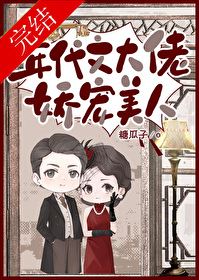
Let me tell you about stakes, because this book understands them on two levels and that's what makes it work. On the surface level, Lin Aiyun needs money to survive. She can't go to the capital without funds. The country is at war. A rickshaw splashes mud on her and she can't even be mad because the driver is an old man apologizing desperately. These are real, tangible stakes - hunger, safety, the ability to move freely in a dangerous world. But the deeper stakes are emotional. Xiao Cheng has been dreaming about this woman for who knows how long. The dreams are consuming him - he travels across the country based on a face he saw in passing. He's desperate enough to see a traditional doctor for a sleep disorder that's clearly connected to her. What happens if he never finds her? Does he keep dreaming? Does the treatment erase her from his mind entirely? And for Lin Aiyun - she's found a family in the Ding household. They're warm, welcoming, real. Every day she stays is a day she's not closer to Xiao Cheng, but it's also a day she's building something safe. The conflict isn't just "will they find each other" - it's "what is she willing to sacrifice to find him, and what is she leaving behind by going?" The war backdrop raises the stakes exponentially. This isn't a simple romance where they can just meet at a cafe. People are dying. Cities are burning. The timeline is real and dangerous. I'm genuinely worried for these characters. Not in a fictional way - in a "I need to know they're okay" way.
... Read More
Can we talk about how the dialogue in this section reveals character without any exposition? The line that got me: 'If his voice had been as gentle as a trickling stream when she'd seen him before, now it was as dull and rumbling as rolling thunder.' TWO VOICES. The same man, completely different tones depending on who he's performing for. That's not just good writing—that's psychological horror encoded in dialogue. Su Xiaomei's lines are equally revealing. 'Hurry up. You said it would be tonight.' That's not concern for Lin Aiyun, that's impatience like they're running a business transaction. And then her jealousy flare—'A flash of irritation and jealousy crossed her eyes' when Niu Wenshan touches Lin Aiyun. The dialogue makes it clear: Su Xiaomei isn't just an accomplice, she's competitive about this. Niu Wenshan's curse—'The hell—I know. What's the rush? We're just getting started.' That casual cruelty in his voice, like he's enjoying this. Meanwhile Lin Aiyun's internal monologue is where the real voice shines. 'What an animal—using a child like that.' 'She was a fool too. If she hadn't let her kindness get the better of her.' Her self-reproach feels so honest, so human. And Liu Hui's dialogue throughout—the warm, flowing conversation about Shanghai, the embroidery invitation, the fish bargaining. Each character has a distinct rhythm. Liu Hui speaks in complete, flowing sentences. Niu Wenshan is all clipped aggression. Su Xiaomei is sharp and utilitarian. The kid just says 'Mother' and 'Okay.' Minimal dialogue, maximum impact.

Leave a comment

You must be logged in to leave comments. or