The Delicate Beauty of the Era Novel Big Shot - Reviews

The Delicate Beauty of the Era Novel Big Shot
+Add to Custom List
Sort
Add review
... Read More
Okay so this is the part where I had to put the book down and just stare at the wall for a bit because the plot structure here is actually kind of brilliant and I need to process it. Xiao Cheng is searching for a woman he sees in his dreams. Lin Aiyun is searching for Xiao Cheng. They are literally looking for each other in the same town at the same time and they don't even know it yet. That's not just a plot device - that's fate written into the narrative architecture. The scene where Xiao Cheng spots her side profile and she disappears into that alley? I literally gasped. He's so certain - "Even if she turned to ash, he wouldn't mistake her" - and then she's just GONE. And the car driving away and coming back? The fact that they were standing EXACTLY where he stopped? The timing is so precise it hurts. Meanwhile, Lin Aiyun is lying in bed that night thinking about going to the capital to find HIM, while he's in the SAME PROVINCE looking for HER. The dramatic irony is making me physically anxious. Every chapter that passes without them meeting feels like the author is torturing me on purpose. Also the subplot with Liu Hui and that embroidered handkerchief - I have a feeling that's going to connect somehow. The orchid embroidery, the fact that Liu Hui noticed Lin Aiyun's beauty and called her kind-hearted... this world is smaller than it appears. Everything is connecting. The plot doesn't drag at all. Every scene advances either the search narrative or the worldbuilding or both. I couldn't stop reading.
... Read More
Let me just say this plot has layers. On the surface it's a romance about a reborn woman trying to reconnect with a man she lost in her previous life. But dig deeper and it's actually a survival story. Lin Aiyun knows things — she knows Xiao Cheng's patterns, she knows he'll fall for her beauty regardless of when they meet, she knows the timeline of events. But here's the thing that keeps me up at night: she's also vulnerable. She doesn't know WHY Xiao Cheng came to Lanxi County. "Treatment?" Liu Hui says, and won't elaborate. In her previous life, Xiao Cheng was always healthy. So what's wrong with him now? Is this a weakness she can exploit? Or is it a ticking clock — if he gets better, he leaves, and she loses her second chance? The subplot with Zhang Wenyue arranging a blind date is also doing heavy lifting. It's not just comic relief — it's raising the stakes. If Lin Aiyun gets married off to some Xu family son, her whole rebirth strategy falls apart. And that ending with the umbrella flying at her head? Classic cliffhanger. Something or someone is coming at her literally and figuratively. The plot is tightening like a noose and I am HERE for it.
... Read More
The pacing in this section is a masterclass in escalation. Let me walk through how the author builds this: It starts almost comically—the aunt can't sleep over a blind date rejection, writes a letter at midnight, cleans the house at dawn. This is domestic drama, the kind of thing that feels almost mundane. Zhang Wenyue is basically a classic meddling auntie, and there's a dark humor to her internal monologue about the carp leaping over the dragon gate. Then we cut to Lin Aiyun in the alley, and the tone shifts. Niu Wenshan returns her lunchbox—but how did he know she had one? That single detail changes everything. The reader goes from 'oh this is a family drama' to 'wait, something is wrong here' in about three sentences. The stalking sequence that follows is where the pacing really shines. It's not one big scary event—it's the slow accumulation of wrong feelings. The third day. The prickling on her neck. Turning around and seeing nothing. This is how real fear works, and the author understands that. Each small moment adds weight until by the time Lin Aiyun is having full panic attacks, we've earned it. The transition to Liu Hui's scene works because it gives us a release valve—Lin Aiyun finally tells someone, the tension breaks a little, and we get that warm handkerchief moment. But then the section ends on a slightly unsettling note with Lin Aiyun weaving a lie about where she saw the fabric. The author won't let us fully relax. The structure here is basically: setup → escalation → partial release → new question. That's why I couldn't stop reading.
... Read More
Okay so this whole dynamic between Xiao Cheng and Lin Aiyun is absolutely fascinating. Let me just say it — Xiao Cheng is a predator and he knows it. The way the text describes his stare is wild: "burning, deep as a frozen pool, tinged with scrutiny." He's not even pretending to be subtle about it. And Lin Aiyun? She's fully aware of what he is — "underneath he was a complete rogue" — but she's playing along anyway. Why? Because she's been reborn and she KNOWS him. That's the whole hook here. She's not some naive girl being swept up in his attention. She's calculated every move, thinking about how to keep him in Lanxi County because "once he went back, there was no telling when they'd meet again." That line hit me hard. This isn't just romance — it's survival strategy wrapped in flirtation. And the scariest part? Xiao Cheng seems to sense she's not as innocent as she looks. He wants to see her cry. That's not love, that's obsession. But also... there's something almost tender underneath all that darkness. He's willing to waste his most valuable asset — time — sitting in this shabby place just watching her. That's not nothing.
... Read More
So the pacing in these chapters is actually really interesting because it does this thing where it alternates between high tension and quiet everyday moments, and I think that's intentional. You start with Xiao Cheng frantically searching, heart racing, giving Jiang Yan three days to find her. That's peak tension. Then you cut to Lin Aiyun in a kitchen helping pick vegetables while a bright girl throws herself into her arms. Total tonal shift. But here's the thing - the quiet scenes don't feel like filler. They feel like breaths between sprints. The chapter structure is smart too. Each section ends on a note that makes you want to keep going. Xiao Cheng alone in the bath chamber asking "Who exactly are you?" - that's a cliffhanger that's more emotional than action-based. Lin Aiyun deciding she needs to save money and find work - that's a quiet determination that pulls you forward. The handkerchief scene ending with her tracing the embroidery in her mind - that's a detail that plants a seed for later. There's one moment where I almost skimmed - the whole Ding family dinner scene felt a tiny bit long, but then I realized it was necessary. We need to feel the warmth of the family she's found so that the stakes of her leaving them to go to the capital actually matter. The author knows when to speed up and when to slow down. The rickshaw mud scene goes quick - splash, apology, handkerchief, gone. But the acupuncture scene lingers. That's craft.
... Read More
Okay, so this batch of chapters (7-14) does something I genuinely didn't expect—it splits into two completely separate storylines and then starts threading them together in a way that has me leaning forward in my seat. The Xiao Cheng opening is a masterclass in mystery-building. We get almost nothing about his past, just fragments: the insomnia, the sleep aids that don't work, the face that haunts his thoughts, and that chilling line—"When I find you, you'd better cry your fill." Find who? What happened? The author refuses to explain, and that refusal is exactly what makes it work. Every detail about him—the scars, the power, the Jiang family serving him, the city-west storefronts, the political tension—adds layers without giving anything away. Then we pivot to Lin Aiyun's storyline, and at first I thought, wait, is this a different book? But no—the bus ride, the village gossip, the aunt's house, the neighbor who watches her too long... it all connects. The ending of this batch, with that black sedan brushing past her and lifting her hem, feels like the moment these two worlds are about to collide. I'm not 100% sure yet, but I have a strong feeling Xiao Cheng and Lin Aiyun's paths are about to cross in a way that changes everything. The plot structure here is bold—dual narratives that feel separate but are clearly building toward the same point. And that final image of the man smiling strangely at Lin Aiyun? Classic misdirection or classic foreshadowing. Either way, I need to keep reading.
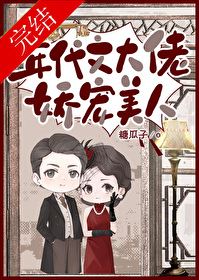
... Read More
The pacing in these chapters is a masterclass in false security. Let me break it down: we get TWO FULL DAYS of Lin Aiyun staying safely at the Liu household. Embroidering, chatting, feeling relaxed. The author deliberately slows everything down—Liu Hui's stories about Shanghai, the pear syrup candy, the wutong flowers. It's warm and cozy and you start to believe she's safe. And then—market day. Liu Hui goes to buy fish, Lin Aiyun goes for mulberries, and in the span of a few paragraphs she's drugged and bound. The transition is so abrupt it's almost violent. One moment she's thinking about pastries for her hosts, the next she's on a damp basement floor. But here's what I love: the author doesn't rush the kidnapping itself. Once Lin Aiyun wakes up, the pacing SLOWS DOWN again. We get her assessment of the situation, her failed attempts to communicate, the passage of time marked by light fading to moonlight. The tension builds slowly, almost excruciatingly. And then Niu Wenshan appears and it all accelerates. The dialogue between him and Su Xiaomei, the reveal of their conspiracy, the physical threat escalating. And the chapter ends mid-action—Lin Aiyun headbutting Su Xiaomei. I NEED to know what happens next. The structure here is basically: comfort → disruption → investigation → escalation → cliffhanger. Classic but executed perfectly. The two-day safety period isn't filler—it's emotional investment. We NEED Lin Aiyun to be safe so the violation of that safety hurts.
... Read More
Okay so this section is doing something really clever with its dual plotlines. On one hand you've got the Zhang Wenyue scheme—forcing Lin Aiyun into a blind date with the Xu family, writing letters, trying to manipulate the situation. And on the other hand, there's this creeping, almost invisible thread of someone stalking Lin Aiyun. The way these two plots run parallel and then intersect is masterful. Lin Aiyun is already under pressure from her family (the letters full of blame, the surprise blind date), and THEN she realizes someone is following her. The stacking of conflicts makes the story feel suffocating in the best way. The Niu Wenshan reveal was a great mini-twist. You plant him early—this creepy guy with that predatory look, Su Xiaomei hanging around his place—and the reader immediately suspects him. Then Lin Aiyun does her own investigation and rules him out because he's working overtime. But here's the thing: the author doesn't let us off the hook. Just because Niu Wenshan is cleared doesn't mean the threat is gone. If anything, it makes it scarier because now the stalker is someone we haven't even considered yet. And that handkerchief moment at the end? Lin Aiyun finding Auntie Hui's handkerchief and tucking it into her pocket like a talisman—that's a plot detail that feels small but actually carries a lot of weight. It's a physical object that connects her to safety, to someone who believes her. The author is setting up emotional anchors within the plot structure, which is why this section hits so hard even though nothing explosive happens. It's all about tension accumulation.
... Read More
OK the stakes in this section went from 'maybe she'll be okay at the Liu household' to 'she is bound, drugged, and about to be assaulted' in about three paragraphs and I am SHOOK. Let me be clear about what's at play here. External conflict: Niu Wenshan and Su Xiaomei are conspiring against Lin Aiyun. They've been watching her—Su Xiaomei while Niu Wenshan maintains his factory cover. This isn't random; it's calculated, patient, and deeply personal. The fact that Lin Aiyun went to the factory asking about him and it was Su Xiaomei watching her instead shows how thorough their surveillance is. Internal conflict: Lin Aiyun blaming herself. 'She was a fool too. If she hadn't let her kindness get the better of her.' That guilt is real and it's dangerous because it could make her freeze. But she doesn't. She assesses, she plans, she waits for her strength to return, she scans for escape routes. And when the moment comes—Niu Wenshan gets distracted by the debris in his eyes, Su Xiaomei rushes to help him, and Lin Aiyun uses THEIR DISTRACTION against them. She headbutts Su Xiaomei. She FIGHTS BACK. The stakes have never been higher—this is literally life or death—and the author makes it clear that Lin Aiyun is not a passive victim. She's bound, drugged, in a basement with two dangerous people, and she STILL finds a way to strike. The cliffhanger is perfect because we don't know if it's enough. Did she hurt Su Xiaomei badly enough to create an opening? Will Niu Wenshan recover? What about the kid—is he truly complicit or just trapped too? I need the next chapter NOW.
... Read More
I need to talk about the bus station scene because it genuinely got to me. Lin Aiyun leaving her family—her mother's worried words, her father's awkward slap to her brother who was crying, the whole family standing together at the county bus station. There's something so tender about Lin Wenkang turning his face away to wipe his tears secretly. And his father blurting out "With your aunt's fiery temperament, who'd dare bully your sister?" only to immediately regret it because his wife is right there. It's funny and sad and real all at once. Then Lin Aiyun on the bus, unable to sleep, dealing with a quacking duck and a disgusting smell, cracking the window for fresh air. She's alone, scared, carrying the weight of village gossip on her shoulders. But then she arrives and sees her aunt—"a big smile spread across Lin Aiyun's lips as she hurried over"—and the warmth of that reunion is everything. Zhang Wenyue taking her luggage, talking about stewed ribs, making her feel welcome despite everything. But then—the neighbor. That moment when Lin Aiyun catches his eye and "a slimy chill crept up from the soles of her feet. Even in the sun-drenched afternoon, a shiver ran down her spine." The contrast between the warmth of family love and the cold dread of that stranger's gaze is brutal. One makes you want to hug the page, the other makes you want to shake the character and warn her. Both emotions hit hard.
... Read More
I need to talk about the ginger soup scene because honestly it caught me completely off guard. Here's this incredibly tense, almost thriller-like setup with Xiao Cheng lurking around like some dangerous figure, and then we cut to Lin Aiyun's family life and — boom — pure domestic warmth. Zhang Wenyue making everyone drink ginger soup, the kids pinching their noses, Ding Weidong getting glared into silence. It's so ordinary and yet it made my chest ache. Because you realize Lin Aiyun has THIS — a family that cares about her, even if it's messy and loud — and she's risking all of it to pursue something with Xiao Cheng. When she drinks the ginger soup in one gulp and nearly throws up? She's enduring it. That's who she is. She endures. And then Zhang Wenyue pulls Ding Weidong aside to arrange a blind date for her niece? I was like WHAT. Is she trying to distract Lin Aiyun from Xiao Cheng? Or is this actually a separate plot thread that's going to collide later? The emotional complexity here is insane — love, family duty, survival, strategy all tangled up together. I kept re-reading that part where Lin Aiyun feels warm inside knowing Liu Hui cares about her, and then immediately thinks about how she can't keep her distance from Xiao Cheng. She's torn between two worlds and I was right there with her.
... Read More
The stakes in this section are layered in a way that keeps me up at night thinking about them. On the surface, there's the stalking threat. But the author makes it specifically terrifying by keeping it ambiguous. Lin Aiyun doesn't know if it's a man or woman, stranger or acquaintance. The person hasn't done anything harmful YET—just lurking. And that elusiveness is described as 'the most torturous part,' which is such an accurate description of real stalking trauma. The uncertainty IS the punishment. But then there's the secondary conflict: Lin Aiyun has no support system. The Dings are gone. The neighbors are unreliable. She's a woman alone in a space that should be safe but isn't. When she considers going to the police, she correctly identifies that they won't do anything for a crime that hasn't happened yet. This is a brutally realistic detail that raises the stakes because it removes her most obvious solution. The family conflict adds another dimension. Zhang Wenyue's interference isn't just annoying—it's dangerous in its own way. By pushing the blind date and then running around making excuses to the Xu family, she's creating social complications that Lin Aiyun has to navigate while already under psychological stress. It's like adding weight to someone who's already struggling to stand. And the biggest question hanging over everything: who is following her, and why? The text hints that it might be about her looks—'that left only one possibility—the person was after her looks.' But is that really it? Or is there something else? The author has set up a mystery that feels genuinely threatening because every logical explanation has been ruled out. Niu Wenshan is cleared. She's not rich enough to be robbed. She dresses plainly. So what makes her a target? That unanswered question is what keeps the tension coiled tight through the entire section.

Leave a comment

You must be logged in to leave comments. or
