Summary

... Read More

(Sweet Doting + 11-Year Age Gap + A Superior’s Surrender + Not a “Double-Clean” Romance)

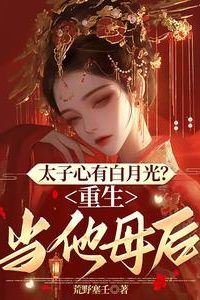
Pei Yunshu, the legitimate daughter of the Guogong Mansion, had a smooth and easy life. Born with the face of an unparalleled beauty, she married the current Crown Prince, Xie Shaoyan, and was exclusively favored after their wedding. However, only Pei Yunshu herself knew that Xie Shaoyan had not touched her in the three years of their marriage. Three years later, when Pei Yunshu fell gravely ill and her fragrant soul perished, she finally learned the truth: the one Xie Shaoyan loved was her gentle cousin, who was fostered in the Guogong Mansion. Pei Yunshu had merely been a shield he erected to protect the woman he truly loved.

When she opens her eyes again, she is still the legitimate young lady of the Guogong Mansion, the most outstanding among the noble ladies of Jingdu—a magnificent and noble flower floating on the clouds.

Everyone knows that the current emperor, Xie Yanchuan, is merely the Crown Prince’s uncle, that the Empress position has long been vacant, and that he has never fathered an heir.

What no one knows is that in his youth, Xie Yanchuan took on a young disciple whom he treasured like a pearl. He gave his little disciple the best of everything in this world, even the position of Crown Princess. But in the end, his little disciple stood before him with tear-filled eyes, unwilling to marry the Crown Prince and insisting on entering the palace.

The woman in his arms was soft and fragrant as jade. Xie Yanchuan’s deep-set eyes were filled with obsession. He wanted to give her the best, but she didn’t want it. So, she would have to accompany him into this abyss.

Xie Shaoyan finally remembers his past life and the agonizing despair he felt after Pei Yunshu’s death, how he endured each day as if it were a year. But his realization comes too late. Now, the woman who was his Crown Princess in his past life is someone he must kneel to and address as Mother Empress.

Novel Items

More
Accessory
Crown worn by Jiang Liuyan as the Crown Prince's rightful Crown Princess. It symbolizes her new status and is part of her embroidered wedding robes.
Clothing
Wedding attire worn by Jiang Liuyan, adorned with a phoenix coronet. It represents her rise to power and her intention to become Empress.
Food
Pastries made by Pei Yunshu's mother, favored by the emperor. Pei Yunshu longs to eat them during her illness, and the emperor once said he would eat every bite of pastries she made.
Material
A type of charcoal that produces no choking smoke, only warm clean heat. Su Qingyan uses it in the fire basin to heat their dilapidated house, making it the most comfortable night the family had in years.
Fuel
Cheap charcoal used in Pei Yunshu's room during winter, causing suffocation risk. It highlights her neglect and ill treatment.
Item
The object used to wrap Xue Yao when he was found after being stabbed during the bandit attack on the caravan. He was casually thrown away wrapped in it.
Latest Release
DateGroupRelease
2026-08-11shanghai fantasy c10
2026-08-11shanghai fantasy c9
2026-08-11shanghai fantasy c8
2026-08-11shanghai fantasy c7
2026-08-11shanghai fantasy c6
2026-08-11shanghai fantasy c5
2026-08-11shanghai fantasy c4
2026-08-11shanghai fantasy c3
2026-08-11shanghai fantasy c2
2026-08-11shanghai fantasy c1

Community Reviews

Rating(0 / 5.0, 12votes)
5 stars
0(0%)
4 stars
0(0%)
3 stars
0(0%)
2 stars
0(0%)
1 stars
0(0%)

Popular reviews

... Read More
I need to just sit with this for a moment because the relationship between Pei Yunshu and Xie Yanchuan is doing SO MUCH emotional work and I am not okay. Let me start with Chapter 1 where Pei Yunshu is dying and her last words are "Teacher." She vomits blood and whispers those two words and then she dies. That's not a casual reference. That's someone calling out for the one person who mattered to her in her final moment. And then in Chapter 3, when she sees him, she doesn't just walk to him—her steps quicken and she THROWS herself into his arms. The text says he was "taken aback for a moment" and then he just... accepts it. Places his arm around her back, strokes her hair. This man is the EMPEROR of Dachen and he's being gentle with a woman who just ran into his arms like she's been starving for him. And he asks "Did someone bully you?" like he's worried about her safety above everything else. The backstory they reveal is devastating in its simplicity. He became her tutor when she was seven and he was incognito investigating corruption. She was seven years old and he was eighteen. Eight years of letters, of meetings, of a relationship that existed in secret while the whole world thought she was just the Crown Princess-to-be. And the text explicitly says: "Perhaps even Xie Changyan did not know that Pei Yunshu's courtesy name is Niannian." The Crown Prince doesn't know her real name. The Emperor does. That single detail is an emotional landmine. What's killing me is the contrast between how Pei Yunshu treats these two men. Xie Changyan—the Crown Prince, her supposed fiancé—was part of the conspiracy that destroyed her. And Xie Yanchuan—the Emperor, her Teacher—was the only person she called out to when she was dying. The emotional loyalty here is crystal clear and it's devastating because Pei Yunshu is processing grief, betrayal, and something that might be love all at once. When she embraces Xie Yanchuan in Chapter 3, I genuinely felt like she was anchoring herself to the only safe thing in a world that had just proven itself completely treacherous. The CP chemistry between her and the Emperor is built on eight years of secret devotion and mutual understanding, and it's so much more compelling than any generic romance trope.
... Read More
The imagery in this novel is absolutely cinematic and I need to talk about how the author uses visual contrast to tell emotional stories without saying a word. Chapter 1 opens with winter—thick paper on windows, inferior black charcoal instead of silver-thread charcoal, a withered tree in the courtyard. The cold is a character itself. Pei Yunshu is described as "a skeleton draped in human skin" and the room is so suffocatingly cold that she asks to have the window opened despite the frigid draft. This isn't just atmosphere; it's physical manifestation of her isolation and neglect. Then Jiang Liuyan enters and the visual shift is immediate and violent. She's wearing a phoenix coronet and embroidered wedding robes—red, the color of power and celebration—in the middle of Pei Yunshu's death chamber. And that ending image: "her great red cape trailing over the snow like a river of fresh blood, flowing far from Pei Yunshu's limply hanging hand." I literally gasped. That's not just description; that's symbolism woven into the scene itself. Red cape, white snow, blood. The entire political conspiracy is compressed into that single visual. Chapter 2 shifts to a bustling capital street scene with the contrast between the poor woman selling herself and the noble carriages passing by. The detail about carriage markings—"a circle, within which was engraved the pattern of a long saber and a long sword crossed—the family emblem of the Pei Guogong Fu"—this is worldbuilding that makes the setting feel real and lived-in. You can picture the bluestone-paved roads, the clip-clopping iron-shoed horses, the tea stall old woman offering water. And then Chapter 3 with Pei Yunshu's entrance at Princess Chang's Mansion. She's wearing "a crimson trailing gauze phoenix-tail skirt" that ripples "like layers of red waves" in the summer breeze. After the winter gray of Chapter 1, this burst of crimson is visually stunning. She's re-entering the world of the living, and the author marks it with color. The Golden Blade Guards protecting the Emperor, the inner courtyard that outsiders can't access—these details build a political world that feels dangerous and layered. The setting isn't just backdrop; it's actively participating in the story.
... Read More
I want to be honest with you—the pacing of this novel is SLOW. Deliberately, almost aggressively slow. And I mean that as a compliment. The author's warning at the beginning isn't just marketing; it's a promise. This story is not going to rush. Chapter 1 is basically Pei Yunshu dying. Just... dying. In a cold room. With her last breath. There's no action sequence, no dramatic escape, no instant power fantasy. She dies and then Chapter 2 starts with her already reborn three months later, still processing, still fragile. But here's what the slow pacing does that fast-paced novels can't: it makes every moment matter. When Pei Yunshu sees Jiang Liuyan in Chapter 2, the author takes time to establish the setting—the busy capital street, the passing carriages, the old tea stall woman. We feel the weight of her rebirth because we're given space to breathe alongside her. The three-month gap isn't filler; it's the time it takes for a traumatized person to slowly understand that she's actually alive again. The text says she spent "over a month in a muddle-headed state" and only today, seeing Jiang Liuyan, did she "descend from the clouds and plant her feet firmly on the ground." That's realistic emotional pacing. The chapter transitions are also carefully controlled. Chapter 1 ends with death. Chapter 2 begins with the living world—busy streets, carriages, people going about their lives. The contrast itself is a structural choice that reinforces the rebirth theme. Chapter 3 moves us into the palace, into the inner world of power, and ends on an emotional peak with Pei Yunshu running to the Emperor. Each chapter has a distinct emotional temperature and the author controls the reader's engagement by varying the intensity rather than keeping it at maximum throughout. The cliffhanger at the end of Chapter 3—"Niannian"—is perfect. It's intimate, it's personal, it reveals a secret that the Crown Prince doesn't know, and it leaves you needing to know what happens next. The pacing isn't dragging; it's breathing.
... Read More
I need to talk about Xie Changyan because honestly he is the most infuriating character and I cannot stop thinking about him. The text says it straight: "If Yunshu were more compliant, life would be easier for him." Compliant. Not happy. Not loved. Just compliant. Like she's a horse that needs breaking, not a person. But here's what makes him genuinely complex instead of just a cartoon villain — he actually believes he's being romantic. The hairpin touch. The sigh. "I only wish to make you happy." He genuinely thinks this is how love works. He's performed enough devotion that even he might believe his own act now. That's scarier than outright malice. And Pei Yunshu — oh man. She's been secretly watching him for days, avoiding him, suppressing her hatred so she doesn't get accused of harming the Crown Prince. She's playing a dangerous game where one wrong move and she's ruined. But then she walks into that encounter and instead of running, she stands there and lets him touch her hairpin. Why? Because she wanted Xie Yanchuan to see it. This is a woman who has turned her own body and reputation into a weapon, and she's aiming it at someone entirely different from the man standing in front of her. Then there's Xie Yanchuan. Sitting upstairs, knuckles white on a teacup, watching through some kind of arrangement he's clearly set up. He didn't "lend her a hand" when she needed it. He let her endure it. And now he's questioning her choices like he has any right to. The power dynamics in this room are so tangled I can't even — who's controlling whom, who's performing for whom, who actually has any genuine feeling left. The hairpin itself is doing so much work. Gold and jade on an ordinary person would look out of place, but on Pei Yunshu it's perfect. It accentuates her. And Xie Changyan touches it like it's an extension of her — like he has a right. Meanwhile she wears it for someone else's approval entirely.
... Read More
The visual writing in this passage is quietly devastating and I want to spend some time on just how carefully the author constructs every image. Let me start with the hairpin. "A golden hairpin adorned Pei Yunshu's hair, swaying gently with her steps and emitting a crisp, tinkling sound." This is such a simple detail but it does triple duty — it establishes her status, it creates auditory atmosphere, and it becomes the focal point of the entire physical interaction between her and Xie Changyan. The sound is described as "crisp" and "tinkling" which feels almost musical, almost light. But then Xie Changyan reaches out and touches it, and that sound becomes something she can't escape. It follows her everywhere, just like his attention. Then there's the contrast between the public space and the private one. Qiongyu Pavilion's upper floor is described as empty — just a table, a chair, and one person. The door is wide open. This is such a deliberate choice by the author. The room isn't sealed off or hidden; it's exposed. And yet it's the most intimate space in the entire scene. Meanwhile, downstairs is where the performance happens, where Xie Changyan plays the devoted prince for any passing witnesses. The lighting and movement are also worth noting. Pei Yunshu's skirt swaying gently, her bright smile curling at the corners of her lips — all of this is external performance. But then we cut to Xie Yanchuan's white knuckles gripping the cup. That single detail replaces every other description. No face, no eyes, no words — just white knuckles. The author trusts us to understand everything from that one image. And the breeze. It opens with her hair "gently in the breeze." The entire scene is framed by this light, almost romantic atmosphere that completely contradicts what's actually happening. The worldbuilding here isn't about describing palaces or markets — it's about creating an atmosphere where every gentle detail feels like a threat.
... Read More
The dialogue in this passage is deceptively simple and I keep coming back to it because every line is doing exactly what it needs to do while hiding what it's actually saying. Let me start with Xie Changyan's voice. He speaks in soft, almost tender sentences: "I only wish to make you happy." "Yunshu, are you angry with me?" "I will not pressure you." On the surface, this is the language of a gentle suitor. But read it alongside his internal thoughts — the ones about her being more compliant, the calculation about the Guogong Mansion proposal — and suddenly every sweet word becomes a performance. His dialogue is a mask, and the author never lets us forget that we're watching someone act. Pei Yunshu's voice is different. She's more guarded, more precise. "Your Highness, why would you say such a thing?" — the genuine puzzlement that isn't genuine at all. "Your Highness, I am not yet betrothed. My father and brother will soon return to the court." She uses protocol as armor. Every formal address is a wall. And yet, when she speaks to Xie Yanchuan upstairs, the formality drops entirely. "Niannian thought, Teacher, did you want to see it or not?" This is sharper, more direct, almost challenging. The shift in register tells us everything about where her loyalties actually lie. The narrator's voice is also doing important work here. Consider this line: "Xie Changyan watched as Pei Yunshu entered the Qiongyu Pavilion and disappeared upstairs before turning to leave. To others, it seemed like the devoted gentleman from a storybook." This is the author winking at us, pulling back the curtain. The narrative voice knows the truth and invites us to share in the knowledge. It's a conspiratorial tone that makes reading feel like being let in on a secret. And then there's the silence between lines. The text tells us Xie Yanchuan's knuckles were white but he says nothing about it. He asks a question that's really an accusation. The dialogue here is all subtext — what's unsaid carries more weight than what's spoken. That's the kind of writing that makes you want to highlight entire pages.
See all reviews

Characters

See all characters

Custom lists

Oops…There is nothing here.