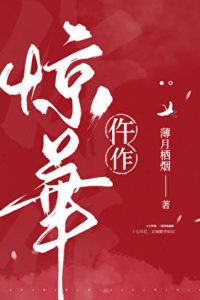
The Brilliant Coroner
+Add to Custom List
Novel Info

Summary

... Read More

A bloody palace case: Marquis Yongxin’s household was condemned, her grandfather and parents sentenced to execution. The young Qi Xun barely escaped with her life.


Fifteen years later, the capital thrives as before. The new emperor has reigned for five years, and peace reigns across the realm. Yet on the joyous night of the Laba Festival, a chain of cursed murders strikes like thunder, shaking both court and commoners.


The gifted coroner Qi Xun rises to fame through this case.


A long-form suspense drama, with a slow-burn romance and a clean, happy ending


A blend of fictional dynasties—do not seek historical accuracy.


Note: From the author of The Record of Washing Tassels!


Novel Items

More
Weapon
A hybrid weapon forged by the Northern Frontier Army after years of fighting Xiliang warriors. Two feet long, less curved than an executioner's knife, thick-backed, thin-edged, weighing dozens of pounds. Only the strong can wield it; it can sever a horse's head. After spreading in the frontier army, it reached other garrisons. The clean cuts on Yu Ming's corpse suggest this weapon was used.
Pill
A pill offered by Qi Xun to Xie Nanke after he rushes out retching from seeing the dismembered corpse. It is presumably used to alleviate nausea or shock.
Incense
Incense sticks protruding from the snow beyond the railing of the east chamber at Furong Post Station. They are different from elegant sandalwood used at home and more costly than common sticks for ancestral rites. They were extinguished by snow but stood upright, clearly placed for worship. Qi Xun notes they were deliberately purchased for offerings.
Offering
Fruit, cakes, and a green porcelain cup filled with liquid (with a tangerine leaf floating within) placed on a table in the east chamber. Qi Xun identifies it as a Buddhist offering rather than an offering to the dead, indicating someone is worshipping in the room.
Weapon
A long, heavy knife with a thick back and sharp edge, used for dismemberment. Qi Xun deduces this type of blade was used based on the bruising and skin tearing at the neck wound. However, she also considers the mo dao as a possibility.
Document
A pass stamped with the seal of the Northern Frontier Army's commander, carried by Fu Jue. It allowed him to lodge at the official station, yet he never reported his name to the registrar upon arrival.
Latest Release
DateGroupRelease
2026-08-11shanghai fantasy c76
2026-08-11shanghai fantasy c75
2026-08-11shanghai fantasy c74
2026-08-11shanghai fantasy c73
2026-08-11shanghai fantasy c72
2026-08-11shanghai fantasy c71
2026-08-11shanghai fantasy c70
2026-08-11shanghai fantasy c69
2026-08-11shanghai fantasy c68
2026-08-11shanghai fantasy c67
2026-08-11shanghai fantasy c66
2026-08-11shanghai fantasy c65

Community Reviews

Rating(0 / 5.0, 14votes)
5 stars
0(0%)
4 stars
0(0%)
3 stars
0(0%)
2 stars
0(0%)
1 stars
0(0%)

Popular reviews

... Read More
Okay, can we talk about the way Qi Xun and Fu Jue operate around each other? There's no romance here—not even close—but there's this weird, electric undercurrent that makes every interaction feel loaded. She's a coroner. He's a marquis heir. She's got nothing on him socially, professionally, nothing. And yet when she stands there and tells him the Bai Fu Zi evidence could point to him, her heart in her throat, she doesn't back down. And he—instead of blowing up or dismissing her—he actually listens. He says "Reasonable." He nods. Then he turns it around on himself in the most Fu Jue way possible. The moment that got me wasn't dramatic at all. It was when Lin Wei mutters behind him about how strange it is that a young woman is working as a coroner and getting valued by Vice Minister Song. Fu Jue just says, "It is not her fault. The killer deliberately misleads." He's defending her without actually defending her. He's acknowledging that she's being played, that the evidence is manufactured, and that the real danger isn't her incompetence—it's the killer's cunning. That's the kind of quiet respect that hits harder than any confession scene ever could. And then there's the scene where he's watching them leave his courtyard and tells Chu Qian to go back to the capital and investigate something. Lin Wei pushes back about being late, about the Emperor possibly being angry, and Fu Jue shuts him down with two words: "Too much talk." He's staying. He's choosing to help investigate instead of leaving. For someone who claims not to believe in Buddha, who says he only prayed for his father's soul, he's investing real energy in this case. Why? I don't know yet. But the fact that he's choosing to stay in this frozen station, surrounded by death and Buddhist fanaticism, instead of returning to the capital—that's a choice that says something about where his loyalties might be shifting.
... Read More
The dialogue in this is so good I almost forgot to be horrified for a second. Like, Qi Xun just walks into a room full of dead man parts and her first instinct is to offer Xie Nanke a suhexiang pill because he's about to throw up? That's not just competence, that's personality. "Mr. Xie, shall I give you a suhexiang pill?" Casual. Efficient. No drama. And then Song Huaijin, who a year ago wouldn't have given her the time of day, now says "Qi Xun—this is your time to shine" with actual respect in his voice. The shift in their dynamic is so subtle you'd miss it if you weren't paying attention. He doesn't say "I'm sorry I was wrong about you." He just hands her the case and trusts her with it. That's how you write character growth without making it a whole speech. But the real gem is Liu Yishan. The man is terrified and his dialogue reflects that perfectly—stammering, deflecting, trying to pivot to superstition the moment things get too real. "My lord, coroner… do you not think Lord Yu's death was too strange, too cruel—unlike the work of man?" That's not a theory. That's panic wearing a philosophical costume. And Qi Xun sees right through it: "Could it be that you suspect Lord Yu's death was caused by spirits or demons?" She doesn't let him hide behind mystery. The narrative voice is also doing a lot of heavy lifting here. It's restrained but observant—never over-explaining, always letting details speak for themselves. When it describes Qi Xun removing her hood and the crowd realizing she's a woman, there's no moralizing. Just: "Her face shone like autumn moonlight, almond eyes bright as spring blossoms." Poetic but not purple. The author knows when to be clinical (the forensic details) and when to be lyrical (the atmosphere). That balance is rare.
... Read More
Let me just say this straight: the stakes in this batch went from "investigate a death" to "someone is systematically killing people who knew secrets at this station" and I was not ready. First Yu Ming is found dismembered. Then twelve years of records are nearly destroyed by fire and water damage. Then Xin Yuanshou — who just happens to have a hidden connection to Yu Ming — is found boiled alive in a cauldron. And the killer is still out there. What makes this so tense isn't just the murders themselves — it's the sense that the killer is watching, adapting, and one step ahead. The boiler room clerk says the fire is never extinguished at night. The water stays hot until dawn. The killer knew exactly when no one would be around. And the timing — discovered at dawn, when Tian Wanchun and Xin Yuanshou were supposed to leave — feels almost theatrical. Like the killer wanted to make sure the body was found at the moment of maximum disruption. Qi Xun's forensic analysis raises the stakes even further. She determines Xin Yuanshou was knocked unconscious first, hoisted by rope, then forced into boiling water. He was no weakling — a seasoned soldier — so someone with significant strength or preparation did this. The rope with blood traces, the beam overhead, the wet ladle — every detail points to a premeditated, physically demanding murder. And the text explicitly compares it to Yu Ming's killer: "It resembles the murderer of Lord Yu." Two murders. Same station. Connected by a secret from twelve years ago. And the people closest to Xin Yuanshou — his attendants — have no idea what he was hiding. One heard a door creak at midnight and was too tired to check. The other found the bed empty and assumed he'd return. They thought they had time. They didn't. The real horror here isn't the gore — it's the isolation. Song Huaijin and his team are surrounded by people who either don't know what happened or are deliberately hiding information. Tian Wanchun burned his letters. Xin Yuanshou's attendants knew nothing. The clerk is too terrified to speak coherently. And Qi Xun, working alone through the night, is the only one piecing it together. The text ends with the entire station knowing Xin Yuanshou is dead. The killer has made a statement. And Song Huaijin just lost another lead — because now the question isn't whether Xin Yuanshou had secrets, but whether the killer will strike again before they can find out what they were.
... Read More
I need to talk about Xin Yuanshou because this guy is fascinating in the most terrifying way. On the surface, he's this composed, almost bored fourth-rank general who just wants to get back to the capital and leave. But the text keeps peeling back layers, and honestly? I was getting chills. The attendants describe him as "uneasy these past two days" but every time Song Huaijin saw him, he appeared calm. Was it all an act? That line hit me hard. It made me wonder what kind of person carries that kind of composure while knowing something terrible is coming. And then the records surface — twelve years ago, he and Yu Ming lodged at Furong Station on the same day. He never stayed here before. He deliberately chose Qinyuan Station, a cramped little stop, for his last visit. And yet this time, he comes straight here. Why? The letters he burned. Five days into the journey he announced they'd stop at Furong Station. Someone was pulling his strings, or he was being summoned. And he burned every letter after reading it. That's not just paranoia — that's someone who knows exactly what's at stake and is trying to control the narrative. What broke me was the attendants' testimony. One heard the door creak around midnight, was too drowsy to check. The other found the bed empty after the third watch. They thought he'd return in time for dawn. They never imagined he'd be dead before sunrise. There's something so intimate about that — the mundane details of shared sleeping quarters, the warmth of the chamber, the assumption that their master would come back. And then the body in the cauldron. I keep thinking about how Qi Xun looked at him and saw not a powerful general but a man who had scraped his palms against the rim of a cauldron, who had been hoisted by rope, who had been knocked unconscious before being forced into boiling water. All that rank, all that composure, reduced to abrasions on the hands and a lump on the back of the skull. The text doesn't romanticize death at all — it's clinical, almost brutal in its detail. And that's what makes Xin Yuanshou's arc so devastating. He thought he could walk away. He thought burning the letters was enough. But the past at this station — whatever happened with Yu Ming twelve years ago — caught up to him anyway.
... Read More
I need to talk about the atmosphere in this book because wow. The opening scene is just—chef's kiss. Qi Xun walking through the Furong Post Station with frost on her lashes, breathing warmth into her hands, pulling her worn cloak tighter. You can feel the cold. You can feel the weight of that snow at ankle depth. And then you walk into that room and the contrast hits you like a wall. "The chamber was modest but well-furnished... Blood had spread across half the room, reaching the doorway, frozen into a frosted lake." Frosted lake. That's the kind of detail that stops me mid-chapter. The blood didn't just pool—it froze. The cold preserved everything. And the corpse, with its gray-blue skin and closed eyes, almost peaceful except for the impossibility of it. Four parts reassembled like a puzzle someone refused to finish. The author doesn't need gore for shock value; the horror is in the precision, the cleanliness, the silence. And the post station itself—built in the previous dynasty, expanded over time, sitting beneath the Yanxing Mountains like a fortress disguised as a rest stop. Fifty fast horses. Warehouses with wide doors and narrow windows. A drum tower. The whole place feels like it has history, like it's witnessed things before. The incense sticks standing upright in the snow beyond the railing, extinguished but still planted there like a silent prayer. Who put them there? When? And why Buddhist offerings in a murder scene? The visual contrast between the warm, orderly world of the officials in their embroidered robes and the frozen, bloody chaos inside that eastern chamber is just cinematic. I kept imagining the lighting—lanterns casting long shadows, the white snow outside against the dark interior, the steam rising from bodies in the cold. This isn't just setting; it's mood. The world feels alive, suffocating, and beautiful all at once.
... Read More
This chapter is a masterclass in how to pace an investigation mystery without ever letting the reader breathe. It opens with a dead body—Xin Yuanshou—and immediately pivots into the Buddhist hell framework through Hu Li's rambling sermon. That's chapter one of three acts in one scene: we get the death, we get the motive framework, and we get the twelve-year timeline all in the first few paragraphs. No wasted words. Then the witness testimony drops—Yang Yun saw Xin Yuanshou heading to the northern courtyard at midnight. That's the first pivot. Suddenly Fu Jue is the prime suspect. Then Qi Xun produces the Bai Fu Zi fragment from under his fingernails. Then the medicine dregs from the heir's courtyard. The evidence is piling up so fast that even Song Huaijin is leaning toward guilt. But here's where the pacing gets smart: Fu Jue doesn't fight it. He accepts the suspicion, offers a two-day delay, and then drops the line about the killer knowing the victims' sins. That's the chapter's turning point—it shifts from "is Fu Jue guilty?" to "who is the real killer and what do they know?" Then Qi Xun goes back to the bodies and discovers the locked-room trick with the thread. Then the frozen blood leads to the Bai Zhi. Then the guillotine blade in the granary. Each revelation comes fast, each one compounding the last, and the chapter ends on a cliffhanger so sharp you can't help but immediately open the next one. Old Zhang has—what? The sentence cuts off mid-action. Perfect. The only moment that slightly slows things down is the back-and-forth between Song Huaijin and Fu Jue about the Buddhist faith, but even that serves the pacing by raising the philosophical stakes before plunging back into the forensic work.
See all reviews

Characters

See all characters

Custom lists

Oops…There is nothing here.