Returning Before the Tyrant Turns Dark
Novel Info

Summary

... Read More

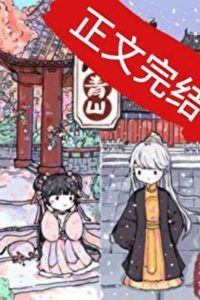
The day Yu Lingxin was abandoned by Jiang Nong, the rain poured down hard. No matter how he begged, Jiang Nong wouldn’t even grant him a single glance.


After he became ruler of the realm, the first thing he did was breach the city gates, kill Jiang Nong’s husband, and imprison her by his side.


Jiang Nong hated him for his cruelty and ruthlessness; Yu Lingxin hated Jiang Nong just as fiercely.


Then Jiang Nong truly died…


Yu Lingxin waited twelve years, finally able to drink a cup of poisoned wine and find release.


He collapsed in the snow, and in a daze, he saw Jiang Nong walking toward him, taking his hand—just as they had in the passionate days of their youth.


With his last ounce of strength, he gripped her hand, blood gushing from his mouth, his eyes still blazing with a venomous, unyielding hatred.


Jiang Nong—even as a ghost, you will never escape me.


Jiang Nong endured three years and finally died—only to open her eyes and find herself back in the days when Yu Lingxin was still a despised hostage, kicked around by everyone.


In the corner, the young boy—thin, solitary, ostracized—cast a fawning, ingratiating smile her way.


A neurotic, dark tyrant and his lovely, lively, kind, and ever-helpful beautiful wife.


[A nontraditional, old-school angsty drama with all the classic tropes.]

One-Line Summary: Neither in life nor death will I ever let you go.

Motto: Integrity and kindness.

Novel Items

More
Arcane Art
An evil, heretical art existing only in legend. Uses the blood of the deceased's closest kin as a catalyst to summon the departed soul and imprison it within a formation's focal point, preventing reincarnation or peace in the afterlife. Performed on the seventh-day soul-returning ceremony at Yuluan Palace.
Lantern
Lanterns released during the Lantern Festival tradition. The farther the lantern floats, the more likely the wish will come true. Wen Youan bought the most expensive one while Shi Ruyi chose a regular one. Shi Ruyi wished to live to see Jiangnan in five years and also wished for Wen Youan to marry a good woman.
Equipment
Dropped as equipment with decent but inferior stats compared to vine armor. Cheng Shijia gave it to Moke Moke, suggesting she sell it at her stall if she doesn't need it.
Event
A ritual held on the seventh night after death within the Tan royal palace, during which the soul-trapping spell is performed on Jiang Nong's remains.
Event
An upcoming examination that Rong Mian warns Jiang Nong about, saying she won't be ready if she ruins her health by going out in the rain.
Food
Uncommon sweets exquisitely crafted into pear-blossom shapes the size of fingernails, carrying a faint fragrance of honey and flowers. They are usually only eaten a few times a year when one wins first place and receives them as a reward from the king. Yu Lingxin carefully selected a package of them and left them in Jiang Nong's desk at the academy, all intact with no pieces broken.
Latest Release
DateGroupRelease
2026-08-11shanghai fantasy c70
2026-08-11shanghai fantasy c69
2026-08-11shanghai fantasy c68
2026-08-11shanghai fantasy c67
2026-08-11shanghai fantasy c66
2026-08-11shanghai fantasy c65
2026-08-11shanghai fantasy c64
2026-08-11shanghai fantasy c63
2026-08-11shanghai fantasy c62
2026-08-11shanghai fantasy c61
2026-08-11shanghai fantasy c60
2026-08-11shanghai fantasy c59

Community Reviews

Rating(0 / 5.0, 13votes)
5 stars
0(0%)
4 stars
0(0%)
3 stars
0(0%)
2 stars
0(0%)
1 stars
0(0%)

Popular reviews

... Read More
This chapter is basically an entire thesis on the question: who will put you first when it matters? The answer, devastatingly, is no one in your family. Not your mother, who pushes you into danger to save your brother. Not your brother, who expects your sacrifices as natural. Not even Chao Ning, who cares most for his mother. The Empress Dowager sees you as a substitute for someone else. Everyone is bound by blood or loyalty to someone else first. "If even her closest blood didn't hold her dearest, then who in this world would put her first?" This line hit me like a physical blow. It's the moment Jiang Nong realizes the fundamental loneliness of her existence—not because she's alone, but because everyone around her loves someone or something else more. The symbolism throughout is relentless. The wind—Yu Lingxin blocking it for her, her not even feeling it because he's in front. The snow melting on his brows like tears he won't shed. The torn window paper in his empty quarters, representing how neglected he is by the very institution that should protect him. The hand warmer she can't give him because she doesn't have one—her inability to fully warm him, to fully reach him. And the dance. The choreographed performance at the banquet, the dancer's sword that becomes a fan, the scream of "Assassin!" that was never really an assassination. Everything at that banquet was performance—everyone playing their role, everyone pretending. Except for the one moment of real violence: a mother pushing her daughter toward danger. The New Year's Eve setting is itself symbolic. A time for family reunion, for warmth, for togetherness—and Jiang Nong lies alone in bed while fireworks crackle outside, watching her servant cry for her because even the people who love her can only express it through tears. The desolate emptiness she feels—"a feeling of drifting suspended in air, frightening in its emptiness"—this is the thematic core of the entire novel. What happens when you realize you are everyone's second choice?
... Read More
Let me talk about tension for a second, because this author knows how to build it like nobody's business. The Yu Lingxin return scene starts with physical stakes—he's half-dead, walked forty li in freezing weather, his wounds barely healed. We're worried about his body. Then the stakes shift to emotional—he's performing kindness to win her pity, and she's performing sisterly affection to keep him at arm's length. The tension here is psychological, the kind where every gesture is loaded and every word is a negotiation. But then—the banquet. The author takes everything we thought we knew about danger and flips it. The scream of "Assassin!" creates genuine panic. Jiang Nong is shoved toward a sword. Our hearts stop. And then—the sword becomes a fan. It was never an assassination attempt. The real danger wasn't the blade; it was the mother behind it. This is masterful misdirection. The author makes us believe the external threat is the dancer, when the real threat has been sitting at the banquet table the whole time, smiling, toasting, pretending to be a loving mother. And the stakes escalate even after the physical danger passes. Now the conflict is internal—Jiang Nong confronting the truth about her family. The external conflict (assassin, succession struggle, political factions) runs parallel to the internal one (who am I to these people, do I matter to anyone). The letter from Tan about the succession crisis—that Yu Lingxin could be a puppet emperor—adds another layer of external stakes that could destroy everything Jiang Nong is trying to build. The most terrifying moment isn't the sword. It's Jiang Nong lying in bed, realizing that her mother will always choose her brother, and her brother will always take what he's given without question. The stakes have shifted from survival to something far more fundamental: the survival of her sense of self.
... Read More
Let me just say this author's dialogue is *chef's kiss*. Every line feels like it's carrying three meanings at once, and the subtext is where the real story lives. Take this exchange: "You're half a year younger than me. I've always treated you like a younger brother. Since you call me 'Sister,' won't you think of me as your sister too?" On the surface, it's a sweet, sisterly question. But read it again—it's a boundary being drawn with surgical precision. She's not asking; she's telling him what their relationship will be. And his response? "Whatever makes you happy, Sister." The period at the end of that sentence is devastating. He's surrendering, but he's also recording every word she says for future reference. Then there's the banquet scene, where the dialogue becomes almost comedic in its cruelty: "The child was frightened—a moment of agitation is normal." "Jiang Biao, you're the older brother—a grown man, lightly slapped by your sister. No need to make such a fuss." "Exactly, exactly—Nongnong is so slender, how much force could she have?" Three lines. Three people. All saying the same thing: your pain doesn't matter. The casualness of it is what makes it unbearable. They're not even being malicious—they're just genuinely unable to imagine that their daughter/sister might feel anything other than what they tell her she should feel. And Jiang Nong's response? "I'm feeling unwell—I'll go rest now." Polite. Composed. The perfect daughter exiting stage left while the audience applauds her grace. But we know she's shattering inside. The narrative voice itself is worth praising too. It's intimate without being purple, observant without being clinical. Lines like "Her lips were rosy, full, glossy as frozen cherry jelly" or "tears soaked into her pillow. Her dark hair spread like clouds, cold against her cheeks"—these aren't just descriptions, they're emotional statements disguised as imagery.
... Read More
This section is a masterclass in pacing. The author sets up this whole assassination plot like it's going to go exactly according to plan—Chao Ning and Jiang Nong have a 'flawless scheme,' right? 'The true culprits would never be found. Once Chao Ning left Xi, if he didn't press the matter, the whole affair would be put to rest—within a few months, no one would speak of it again.' And then Yu Lingxin does the one thing nobody expected: he saves Chao Ning. He takes the arrow. He makes himself a martyr instead of a victim. And suddenly the entire plan is in ruins. The pacing here is so deliberate. First, we get the setup—the hunt, the spectacle, the political maneuvering. Then the assassination happens fast, almost casually, with those two colonels riding in ahead of the main party. The emperor's reaction is telling: 'Upon hearing that only Yu Lingxin had been hurt, the ministers—and even the emperor himself—visibly relaxed.' This is the cold calculus of power, and it's horrifying. But then the real tension builds. Chao Ning can't sleep. He can't eat. He's restless, uneasy, and when he finally confronts Jiang Nong on that path to Yu Lingxin's tent, the emotional weight hits. 'Nongnong, what does Yu Lingxin look like to you? I mean the Yu Lingxin now—not the future one.' That question changes everything. It forces Jiang Nong to see him not as a future threat, but as a present person. And then—the sprint. 'The wavering in Jiang Nong's heart rippled like water. She wiped her eyes, gathered her skirts, and sprinted toward Yu Lingxin's tent.' The pacing accelerates here, almost breathless. The desolate path, the fading lantern light, the sounds of the banquet fading into silence, replaced by wind and insects and night owls. By the time they reach the tent, the tension is absolutely suffocating. The chapter ends on that devastating note about the blood ginseng—'The Empress Dowag...'—cutting off mid-sentence. The author leaves us hanging on the most important question: will she save him or not? And more importantly, will Jiang Nong be able to convince her? The structure here is perfect because it takes a story that seemed like it was heading toward a straightforward revenge/rebirth plot and completely subverts it. The protagonist isn't becoming colder; she's becoming more human. And that's infinitely more interesting.
... Read More
I have to address the Chao Ning and Jiang Nong conversation because it is genuinely one of the most fun exchanges I've read in ages. Jiang Nong drops a Zhuangzi quote about the galloping horse of existence, starts riffing on the death of Chaos as a metaphor for Yu Lingxin's essential goodness, and Chao Ning's response is basically: "Wait, hold on—first tell me how this 'Chaos' fellow died, will you?" THIS is how you write a philosophical debate between two people who are actually different. Jiang Nong is the reader-insert who loves to think deeply, and Chao Ning is the pragmatic friend who just wants to know if the metaphorical chaos guy got stabbed or something. The humor lands perfectly because it's TRUE. Not everyone processes deep ideas the same way, and the author doesn't mock either approach. Jiang Nong's musings aren't pretentious—they're genuine attempts to understand whether killing a currently-good person to prevent future evil is morally defensible. And Chao Ning's confusion isn't stupidity—it's a different cognitive style. He scratches between his brows, his head hurts, he waves it off. And Jiang Nong's response—"it was like playing a zither to a cow. She waved him off, signaling him to get lost"—is so affectionate in its exasperation. But what I love most is how the dialogue reveals character without anyone stating it outright. When Jiang Nong says "Actually, I've been thinking: if we decide that he will inevitably become a villain in the future and therefore kill the Yu Lingxin of now—then what are we? Good or bad?"—she's not just debating Yu Lingxin's fate. She's questioning her own moral authority. She's the one holding the power to save or condemn him, and she's admitting that she doesn't have a clean answer. That's rare in this genre. Most protagonists just KNOW they're right. Jiang Nong isn't sure. And that uncertainty makes every decision she makes afterward feel earned. The servant Xunliang's dialogue is also noteworthy—"I'll have a grand golden statue of her enshrined in a temple"—it's over-the-top in a way that feels genuinely devoted, not sycophantic. You can tell he means it. And Yu Lingxin's reaction—a faint, almost imperceptible smile—says everything about how starved he is for acknowledgment.
... Read More
Let's talk about Chao Ning for a second, because this guy is complicated and I love him for it. He's the one who came up with the plan to fake the assassination and kill Yu Lingxin. He's the one who thought this through logically—compensate the Tan envoys with gold and horses, no one would ever know, Yu Lingxin was unpopular anyway, it would be written off as bad luck. And yet. And YET. When it actually happens and Yu Lingxin takes that arrow, Chao Ning falls apart. He's the one who says 'my clothes were soaked through with his blood. So hot... Nongnong, I truly don't know what to do.' This is a guy who literally planned a murder and now he's having an existential crisis because the victim was too good for this world. What I find fascinating is how Chao Ning's relationship with Jiang Nong shifts here too. He's her ally in this scheme, but he's also... I don't know, protective? Concerned? He keeps looking at her, trying to read her, and when he breaks down, he's talking to HER specifically. Like he needs her to understand, to validate what he's feeling. And she does—she runs to Yu Lingxin's tent with him, sharing this moment of moral reckoning. The triangular dynamic is so interesting now. In the original timeline, Yu Lingxin became some kind of tyrant and Jiang Nong probably hated him. But now? Now Yu Lingxin is the martyr who saved the prince, and Chao Ning is the guilty conspirator who can't sleep at night, and Jiang Nong is the one who has to decide whether to save a life she was supposed to let die. The roles have completely inverted. Also, can we appreciate that Yu Lingxin himself? He's been bullied, mistreated, treated like nothing his whole life, and when he gets the chance to be bitter and cruel, he just... doesn't. He gives Jiang Nong dried apricots he made himself even though his eyesight is bad. He blocks the wind for her during the hunt. He takes an arrow for the guy who's trying to kill him. What kind of person does that? I want to hug him through the page.
See all reviews

Characters

See all characters

Custom lists

Oops…There is nothing here.