Summary

... Read More

(Transmigration + Farming & Business + Portable Space + Strong Female/Even Stronger Male Lead + Power Struggle + Mutual Redemption + Revenge)

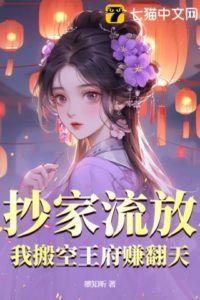
Su Hanchu has transmigrated.

Immediately upon her arrival, she is met with the confiscation of her household and a decree of exile. To make matters worse, she is being sent away just after her wedding. Why is it that when others transmigrate, they become princesses or noble daughters, yet she has to deal with exile and famine? Fortunately, her portable space came along with her.

Su Hanchu swiftly empties the entire estate. While others starve on the road to exile, her whole family is putting on weight.

When faced with the repeated provocations of a manipulative “green tea” antagonist, Su Hanchu delivers a direct slap to the face.

“Did evolution skip a piece of trash like you? Why don’t you have any human traits at all?”

Giving them a taste of their own medicine, she sends the antagonist’s entire family to meet their maker.

Facing oppression from the powerful Imperial Grandson, she simply drugs him unconscious and hauls away all the grain from his manor.

Upon arriving in the impoverished Northwest, she plants peanuts, fruits, and sweet potatoes, developing precious seeds that significantly increase crop yields. Leading the poor commoners toward prosperity, she builds a business empire and becomes the wealthiest person whom no one dares to provoke.

Meanwhile, her husband—who is cold to everyone else but devoted and attentive to her—holds out a command token and whispers in her ear, “My lady, these are my total assets. I’m giving them all to you for safekeeping.”

Supporting and redeeming each other along the way, the two finally return to the Imperial City together to quench their blades with the heart’s blood of their enemies…

Novel Items

More
Cheat Item
A personal space Jiang Tian discovered before transmigrating. It contains a spiritual spring and stored modern supplies from her previous life. The space travels with her to the new world and provides healing water and other items.
Item
Luo Zhen's enormous dowry carried into the Pei residence in a long procession. The sandalwood chests were trimmed with gold, with one chest worth more than half of Madam Zhou's entire dowry. The procession of box carriers was so long that Luo Zhen had already traveled a considerable distance before they finished exiting the Luo residence.
Tool
A lock-picking tool Su Hanchu frequently used in her past life missions. She summoned it with a thought from her Spatial Dimension to pick the lock of the Qin Prince's Mansion treasury.
Materials
Poured around the hotel building by Chen Jun's orders to set fire to it. More deaths from the fire would make it look more like an accident.
Metaphor
A metaphorical reference to devices for igniting Jupiter, as proposed in Chu Xuan's paper. He suggests launching a box of 'matches' in advance as a precautionary measure.
Arcane Treasures
A bracelet An Ruoyan bought at an antique market for 200 yuan in her previous life. After she slipped, hit her head on the bathtub, and her blood dripped onto the bracelet, she gained a spatial ability. It is the source of her golden finger in the transmigration.
Latest Release
DateGroupRelease
2026-08-11shanghai fantasy c10
2026-08-11shanghai fantasy c9
2026-08-11shanghai fantasy c8
2026-08-11shanghai fantasy c7
2026-08-11shanghai fantasy c6
2026-08-11shanghai fantasy c5
2026-08-11shanghai fantasy c4
2026-08-11shanghai fantasy c3
2026-08-11shanghai fantasy c2
2026-08-11shanghai fantasy c1

Community Reviews

Rating(0 / 5.0, 19votes)
5 stars
0(0%)
4 stars
0(0%)
3 stars
0(0%)
2 stars
0(0%)
1 stars
0(0%)

Popular reviews

... Read More
I have to talk about how the author handles the absence of dialogue here. There are no quotes, no snappy one-liners, no dramatic confrontations. Just this slow, quiet narration of people starting to grumble. And it works so well. The narrative voice is restrained, almost clinical — 'discordant voices began to emerge,' 'began to murmur complaints in private.' It's understated, which makes it feel even more real. You can almost hear the silence between the words, the things people are too afraid to say out loud. The Jun Family doesn't get a single line of dialogue in this entire passage, and yet they're the ones being talked about. That's a powerful choice. It makes them feel isolated, voiceless, like they're already being erased from the story by the people around them. The author trusts us to feel the weight of what isn't being said. And that trust? That's what makes the prose feel mature and confident. No need for dramatic speeches when a single line about cornbread buns can make your chest tighten.
... Read More
Can we just appreciate Su Hanchu's internal voice for a second? Because it is TOP TIER. When her mother-in-law threatens to kill herself, Su Hanchu's immediate thought is: "Damn, this plot is so familiar—isn't this the classic 'choose between mother and wife' scenario? And I actually ran into it myself." That's not just funny, that's a whole personality. She's a transmigrator who's read enough novels to recognize the trope and is just... done with it. Her inner monologue has this dry, sarcastic edge that makes her feel like a real person rather than a generic protagonist. She's not swooning or panicking—she's mentally cataloging the absurdity of her situation. And then there's Jun Moye's dialogue, which is basically the opposite energy. The guy says almost nothing. "Su Hanchu." "Come here." "Sit down." His lines are clipped, awkward, barely concealed emotion. When he finally speaks after watching her all day, it's not a romantic speech—it's a gruff command disguised as concern. That contrast between her internal verbosity and his external silence is what makes their dynamic work. Chen Wenqiao's dialogue is equally telling. Every line she speaks is manipulative, guilt-trippy, self-centered. "You are my son, and wherever I am, you must be there too." She doesn't even pretend to care about Su Hanchu's feelings. She just lays down the law. Jun Linfeng, on the other hand, speaks gently but with absolute authority. His dialogue is calm, measured, and every word carries weight. "Wen Qiao, take them. From now on, don't make things difficult for others or for yourself." That's not a request. That's a decree wrapped in courtesy. The author's narrative voice itself is also worth noting—it's third-person limited, mostly following Su Hanchu's perspective, with occasional dips into Jun Moye's. The tone is warm but never saccharine, and it has this slight irony that keeps things from getting too heavy. Even in exile, with people starving and injured, there's a lightness to the prose that makes it readable.
... Read More
"I'm practically barefoot now and not afraid of those wearing shoes. Who knows how long I'll survive on this exile journey? If I die, dragging a couple of people down with me would still be a gain." That line. That absolute line. Su Hanchu is not your typical transmigrated protagonist who plays nice. She's got zero filter, zero patience, and a military family background that shows in everything she does. The way she dismantles Chen Siyu in public is chef's kiss. Chen Siyu tries to flex about being made the principal wife and Su Hanchu immediately compares her to a brothel girl. Brutal. And then the whole scene with her own second aunt-in-law—Su Yangshi—who was all sweet and respectful when the family was prosperous but immediately turns venomous the moment trouble hits. Su Hanchu doesn't just call her out, she lists every single benefit the second branch received at the expense of the eldest. "The clothes you're wearing were made from fine fabric you took from my mother"—this is the kind of detail that makes the character feel real. But what really got me is the relationship between Su Hanchu and Jun Moye. At first you think he's just some invalid husband she's stuck with, but then he steps up. Twice. First when he tells his mother "Hanchu is my wife, not an outsider" and then when he physically supports her through the Chen Family confrontation. The moment where he says "In the future, ignore whatever the Chen Family says. Just stay by my side"—that's not just plot convenience, that's genuine character growth for a guy who was probably raised to prioritize family loyalty over his wife. And Su Hanchu noticing this and thinking "Well, since he helped me, I should help him too" before going to apply his medicine—that's how real relationships start. Not with grand declarations but with small reciprocal gestures.
... Read More
Okay so this whole exile setup is genuinely clever. You've got the Qin Prince's Mansion confiscated and exiled, and instead of just having them trudge along in misery, the author throws in escalating conflicts at every turn. First it's the incited crowd at the beginning, then Chen Siyu's entitlement drama, then the Su family's second branch showing their true colors at the farewell pavilion. Each scene pushes the plot forward while revealing character. The pacing is tight—there's no filler. When Su Hanchu spots those two men in coarse clothing who were stirring up trouble and realizes they slipped away quietly, that's a classic setup for future trouble. The author is clearly laying groundwork. And the divorce mention! Su Hanchu throwing out "write me a letter of divorce" in the middle of an argument is such a bold plot move—it raises the stakes immediately and forces Jun Moye to actually take a stand. The way the plot threads are woven together is satisfying. You've got the external threat from the crowd, the internal family conflict with the Chens, the Su family's own factionalism, and the slow-burn marriage dynamic all running simultaneously without any of them feeling neglected. The only question I have is whether the exile journey will have enough varied obstacles to sustain the narrative, or if we're going to see the same type of conflict repeated. But so far, the plot construction is solid.
... Read More
Let me just say this upfront: the conflict density in these chapters is insane and I am here for it. We've got at least four separate conflict threads running simultaneously and they're all escalating. Thread one: the mysterious instigators. Those two men in coarse clothing who stirred up the crowd and then slipped away? That's not background noise—that's a threat with intent. Someone doesn't want the Qin Prince's Mansion to survive this journey, and they're using mobs as weapons. Thread two: the Chen Family. Chen Siyu wants Jun Moye. Chen Wenqiao is already choosing her niece over her daughter-in-law. Chen Laofuren is demanding submission. They have the numbers, the family connections, and the social leverage. Su Hanchu has nothing but her own two hands and a spatial dimension she hasn't fully revealed yet. Thread three: the Su family's second branch. Su Yangshi's betrayal isn't dramatic—it's quiet and casual, which makes it worse. She's not even angry; she's just calculating. She took benefits from the eldest branch and now she's discarding them like yesterday's news. Thread four: Jun Moye's body. He was caned, he can barely stand, and he's expected to lead a household while exiled. Every physical weakness raises the stakes because in this world, weakness gets you killed. The suspense is maintained masterfully because no conflict is resolved. Su Hanchu slaps Chen Siyu but the Chen matriarch still threatens her. She gives her parents money but she's still in exile. Jun Moye defends her but he's still injured and dependent. The stakes keep climbing because the external threats don't go away—they just change form. And the question hanging over everything is: who are those two men working for, and what happens when they make their next move?
... Read More
I need to talk about the chestnut scene because my heart actually hurt a little. After everything—the confrontation, the divorce threat, the mother's drama—Su Hanchu is just... bustling around. Cooking, feeding everyone, making sure the Qin Prince's Mansion people are taken care of. She even brings chestnuts to Chen Wenqiao, her mother-in-law who literally called her a seductress. That's not weakness, that's strength. She's not playing the victim. She's just living her life. And Jun Moye watches her do all of this. He eats two chestnuts. She doesn't come back to him. And then—he speaks. "Su Hanchu, come here." Not gentle. Not sweet. Just... desperate, probably, even if he'd never admit it. When she sits down, he asks if she's tired. "Are you the only capable one among so many people?" He's basically saying: let me help you. Let me be useful. Let me not be this broken guy who can't even stand without leaning against a wall. Then he puts two peeled chestnuts in her hand. Two. That's it. That's his entire emotional vocabulary in this moment. No apology. No grand declaration. Just peeled chestnuts and silence. And Su Hanchu? She doesn't make a big deal out of it. She just pops them in her mouth and keeps working. She sees through his awkwardness because, as she notes, she's lived two lifetimes and sees him as basically a child. But there's tenderness there. Real tenderness. The kind that doesn't need words. This is what made me soft. Not a confession. Not a kiss. Two chestnuts passed between two people who are both too stubborn and too proud to say what they actually feel. And I was over here like... yeah, I see you, you two. Just talk to each other already.
See all reviews

Characters

See all characters

Custom lists

Oops…There is nothing here.