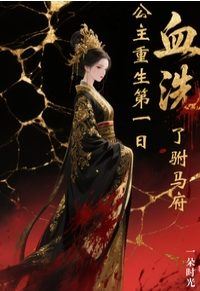
The scene that haunts me isn't the interrogation room or the Third Prince's candlelit study. It's the teahouse. Just a teahouse. Ordinary wooden tables, steam rising from cheap tea, people going about their day. And then one man lowers his voice and says: 'Princess Zhaohua is not human!'
That's how the worldbuilding works in these chapters. Not through grand descriptions of palaces or battlefields, but through the slow, infectious spread of a story through the veins of a city. The author doesn't tell us the capital is tense—they show us a pancake vendor muttering to a vegetable seller, a mother slapping her child's hands away from a cursed rhyme, citizens who once admired Zhaohua now looking at her residence with dread.
The visual of the Northern Guard Bureau's prison is equally brutal. 'The air seemed frozen, thick with blood, rot, and despair.' Inspector Jiang Hui sitting at the head of the chamber, Sun Yun'guang bound to the rack, a guard's fingers flicking a wax pellet into a dying man's mouth. It's clinical. Almost bureaucratic in its cruelty. The poison isn't dramatic—it's efficient. A blink of an eye, and the witness is gone.
But the teahouse scene—oh, the teahouse scene. It's where the world feels most alive. You can hear the whispers, see the fear and morbid curiosity on faces, feel the way a single story transforms from one table to the next like a contagion. The children's rhyme is the worst part: 'The monster will come for you tonight!' A child crying. A mother horrified. And somewhere, someone is deliberately putting those words into children's mouths.
Zhaohua's study at the end provides a stark contrast—candlelight, tea, calm calculation. The storm is outside, and she's watching it from behind glass, deciding whether to open the window or let it rage.
What makes this worldbuilding exceptional is that the capital itself becomes a character. It breathes rumor, it spreads fear, it turns admiration into terror overnight. The physical spaces—the prison, the teahouse, the archive, the Princess's residence—each carry their own atmosphere, and together they create a living, breathing city that feels terrifyingly real.