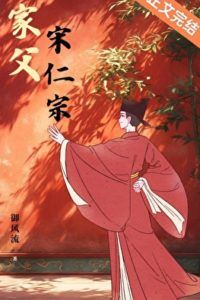
Summary

... Read More

A stroke of misfortune amidst great luck: Zhao Xin has transmigrated.

A stroke of luck amidst misfortune: He has transmigrated as the second son of Emperor Renzong of Song, who in history died young, but now, he is the only son.

With a throne to inherit at home and being the apple of everyone’s eye, even if he does absolutely nothing, that chair in the Zichen Hall will be his sooner or later.

“Osmanthus in the three autumn months, ten miles of lotus flowers, households overflowing with silk and satin, a world of decadence and luxury”—it is truly a wonderful era to lie flat and enjoy life.

What? There are only eighty years left until the Jingkang Incident? Then he’ll have to roll up his sleeves and work hard!

If I just beat all of you to death, there shouldn’t be any more problems, right?

This winning hand will be played by this Crown Prince!

Note: The protagonist’s historical knowledge ≠ the author’s historical knowledge.

Features ensemble-style descriptions; will involve climbing the tech tree.

My skills are limited, so research oversights are inevitable. Please be patient and feel free to point them out.

Novel Items

More
Arcane_treasure
A star mecha that transformed into a small white kitten due to low energy. It communicates with Yun Shu, accumulates favor points, and serves as her companion. It can only meow to others but Yun Shu understands its words. It feeds on favor points rather than conventional food.
Cultivation Methods
A condition that affected Zhao Xin's body after transmigration, imposing a two-year Sealing Period during which all his speech and movements suffered extreme latency. The phrase 'A word in the mind yesterday, reaching the lips only today' was a literal reality for him during this period. Imperial physicians judged his brain had been damaged by high fever with no chance of recovery.
Cultivation Methods
The two-year period imposed by the Rejection Reaction during which Zhao Xin experienced extreme latency in all speech and movements, making him appear as a bona fide fool to others. The countdown in the System showed this period was ending during the events of the chapter.
Item
The title granted to Zhao Xin by his father Zhao Zhen a year before the story events, raised from Duke of Shou. It came with a much larger annual stipend, though as a four-and-a-half-year-old child, Zhao Xin could not access it.
Item
The peerage granted to Zhao Xi, the third brother, along with titles of Acting Grand Preceptor, Military Governor of Wuxin, and Concurrent Chancellor. These were bestowed in an attempt to bring good luck and ward off his illness.
Materials
Rewards scattered by Zhao Zhen to celebrate his son's recovery. The imperial physician received 100 bolts, Empress Cao received 300 bolts, Consort Miao received 200 bolts, Huirou received 50 bolts, and palace attendants received 3-10 bolts each.
Latest Release
DateGroupRelease
2026-08-11shanghai fantasy c10
2026-08-11shanghai fantasy c9
2026-08-11shanghai fantasy c8
2026-08-11shanghai fantasy c7
2026-08-11shanghai fantasy c6
2026-08-11shanghai fantasy c5
2026-08-11shanghai fantasy c4
2026-08-11shanghai fantasy c3
2026-08-11shanghai fantasy c2
2026-08-11shanghai fantasy c1

Community Reviews

Rating(0 / 5.0, 22votes)
5 stars
0(0%)
4 stars
0(0%)
3 stars
0(0%)
2 stars
0(0%)
1 stars
0(0%)

Popular reviews

... Read More
"There cannot be two suns in the sky, nor two rulers in a nation. Now, with two suns appearing side by side before him, he did not know whether it was a blessing or a curse." This line hit me like a truck. The whole chapter is built around this tension between father and son as dual centers of power, and it mirrors the larger political question Zhao Xin raises about legitimacy. When he spreads out those maps comparing the Tang Dynasty to the present and says everyone was basically just a Jiedushi fighting over Tang's inheritance, he's not just being dramatic—he's pointing at the foundational instability of the entire Song project. The yellow bean cakes scene is also doing a lot of symbolic work that I didn't even notice on first read. Zhao Xin eats his father's food, and suddenly his words grow soft. It's this perfect metaphor for how power operates through generosity and obligation. The father-son relationship itself becomes a microcosm of the state—Zhao Zhen wants to spank his son (assert authority) but also needs his son's brilliance (depends on him). He can't fully discipline him because the dynasty's future literally depends on this kid's brain. And then there's the whole legitimacy question Zhao Xin drops: "I wonder which dynasty later historians will recognize as the Orthodox Calendar?" This is the kind of line that shows the author is playing 4D chess while everyone else is just enjoying a fun historical drama. The boy is six years old and he's already thinking about how history will judge his father's entire reign. That's not precocious—that's devastating.
... Read More
The chapter transition from the imperial palace to Wang San's gourd soup shop is genuinely one of the most impressive worldbuilding pivots I've read in a long time. You go from this intensely claustrophobic, candlelit scene where even 'the drop of a needle could be heard' to— "The next day, before the sun appeared on the horizon, amid the steam rising from the steamers of the gourd soup shops and the condensed morning mist, citizens occasionally emerged from their homes." This is Dongjing City, capital of the Great Song Dynasty, and the author paints it so vividly. I can literally see the steam, feel the morning chill, smell the soybean milk and stuffed lung. The Song Dynasty had the largest petty bourgeois class in the world at that time, and you can feel it in every sentence. These are people with money and leisure time whose favorite pastime is 'finding ways to entertain themselves.' The breakfast shop is basically the ancient equivalent of a Twitter feed—everyone gathering to exchange the latest gossip. And Wang San! The shop owner who's so desperate to know what everyone's whispering about that he literally bribes a scholar with politeness: "Could this old man also have a listen?" The humor here is so grounded. It's not just worldbuilding for aesthetics—it's showing us how information travels in this society. The palace news that took two years to filter through official channels is now spreading through breakfast shops in a single day. The contrast between the imperial interior (where Zhao Xin carefully crafts his immortal narrative) and the public exterior (where commoners are slapping tables in astonishment) creates this incredible sense of a living, breathing world. The author isn't just telling a story about a clever prince—they're showing us an entire civilization.
... Read More
There's a lot going on beneath the surface of this chapter, and I want to talk about the theme of contracts and how they represent power, trust, and exploitation in this world. The red and white contract distinction is the most striking symbolic element. A red contract is official, registered, taxed, and protected by law. A white contract is a private agreement between commoners — it saves on taxes but offers no legal protection. This isn't just worldbuilding trivia; it's a commentary on how the legal system in this society is structured to benefit those who can afford to play by the official rules, while the poor are left with informal arrangements that can be weaponized against them. Granny Yang is the embodiment of this system's failure. She operates in the white contract space precisely because it's a loophole — no official records means no accountability. When Zhao Xin calls her out on this, he's not just solving a mystery; he's exposing how the system is designed to let people like her prey on the desperate. The old saying he references — "Carriers, boatmen, innkeepers, porters, and brokers—even if innocent, they deserve death" — reveals a society that has collectively decided certain classes of people are inherently untrustworthy because the system gives them every incentive to be corrupt. The plum drink scene is also symbolically rich. Zhao Xin is drinking something from his previous life — dark plum soup — and noting how the shopkeeper is too stingy to add enough sugar. This small detail connects his past and present, showing how even in a new world, the same human greed persists. The sour aftertaste mirrors the sourness of the justice system: it exists, but it's diluted, insufficient, and leaves you wanting more. And then there's the girl with weeds in her hair. Zhao Xin cleaning her hair before confronting her abuser is a quiet act of care that contrasts sharply with the violence around them. It suggests that beneath all the systemic corruption and exploitation, there are still moments of genuine human connection — small, almost invisible, but significant. The chapter ends with news being sold for five strings of cash. Information as commodity. Truth as something you can buy and sell. This ties back to the contract theme — everything has a price, and nothing is free, not even the truth about Prince Yu's illness.
... Read More
Okay, can we just talk about the scene where Zhao Zhen is literally building a memorial mountain? Like, the author describes it as a towering pile and Zhang Maoze is standing there with his eyes fixed on his own nose, breathing so lightly he's basically trying to exist as little as possible. This is the most vivid bureaucratic horror I've ever read and I love it. The Chuigong Hall setting is so well-drawn. You can feel the weight of the imperial space—the eunuchs bringing in those two large trays piled high with memorials, the way the Grand Councilors are lined up outside like an angry mob. It's not just description for description's sake; the world feels lived-in because every detail serves the power dynamics. The officials aren't just opposing the prince leaving the palace—they're performing their opposition like a ritual, stacking paper like it's a weapon. And then there's the contrast with the earlier scene where Zhao Xin is just plopping on the map eating yellow bean cakes. One moment you're in this grand political theater, the next you're watching a six-year-old use food bribery as a negotiation tactic. The world shifts seamlessly between intimate domestic space and crushing imperial machinery, and that's what makes it feel so real. The palace isn't just a backdrop—it's a character that swallows people whole.
... Read More
'This chapter is only two thousand words, I'll just skim it before bed.' I am lying to you. I am lying because I started reading Chapter 1 at what I told myself was a reasonable hour, and I am now reading the end of Chapter 2 with the blue light of my phone burning my retinas and zero regret. Let me decompose why this pacing works so well, because the author is doing something really clever here. Chapter 1 is structured like a slow unfurling. It starts with atmosphere—the snow, the stool, the quiet observation. Then it introduces the family dynamics through action (Huirou's playful aggression, Consort Miao's gentle protection). Then it drops the transmigration reveal like a bomb, but does it through internal monologue rather than exposition dump. We learn about the Rejection Reaction, the System, the two-year sealing period, all woven into Zhao Xin's thoughts as he watches his sister and mother interact. By the time we get to the third brother's death, we already understand the political stakes because the narrative has been building that understanding gradually. The pacing then accelerates sharply with the news of Zhao Xi's death. The information about his posthumous titles, the succession crisis, the ministers' expectations—it all comes in a rapid-fire sequence that mirrors Zhao Xin's own racing thoughts. And then the countdown. Oh, the countdown. The author keeps the System interface visible throughout, ticking down from 30 minutes to 6 minutes to... zero. Right as the political situation shifts from 'manageable' to 'I am now the heir to the Song dynasty.' The timing is surgical. Chapter 2 then does something even smarter: it slows back down. The Emperor's arrival is drawn out scene by scene—the procession, the crowded room, the ceremonial bow that gets waved away, the embrace. The pacing here is almost agonizing because we're waiting for Zhao Xin to speak, and the author knows we're waiting. Every paragraph builds toward that single line: 'Father, don't cry.' And when it comes, the chapter doesn't resolve—it pivots. Empress Cao's astonishment, the attendants weeping, Zhao Zhen's emotional whiplash. The chapter ends on a note of pure narrative tension. This is what good pacing looks like. Not fast for fast's sake, but rhythmically deliberate. The author knows when to breathe and when to suffocate the reader with information, and the result is that I cannot stop reading.
... Read More
"How can you discard your crown?" This question—posed by a six-year-old who everyone believed was mentally disabled—carries so much symbolic weight it's almost ridiculous. The crown is the central symbol of this entire passage. Zhao Zhen removes it to mourn his dead son, Zhao Xi. In that moment, he's trying to be human—a father grieving a child. But the crown represents something else: the divine mandate, the expectation that an emperor must embody 'half-divine nature' and cannot grieve too deeply. Zhao Xin's comment forces his father back into the role of Son of Heaven, and in doing so, reveals the unbearable weight of imperial performance. Then there's the immortal narrative. Zhao Xin claims the Sacred Ancestor—General Zhao Xuanlang, the dynasty's founder—personally took him to be taught. This is brilliant on every level. Symbolically, it connects him to the founding mythology of the Song Dynasty. The text reminds us that Zhao Zhen dreamed of a great sun residing within the palace canopy before Zhao Xin was born, and saw an immortal speaking about his son. The 'miraculous' birth story that was once just propaganda is now being weaponized by the child himself. He's not just claiming intelligence—he's claiming divine mandate. And the third brother, Zhao Xi, who's dead? Zhao Xin uses him too. "If Third Brother were aware, he would surely be uneasy and troubled." He invokes the dead child to shame his living father into wearing the crown again. The dead son becomes a tool for the living son's agenda. Is this manipulation? Absolutely. But it's also deeply tragic—Zhao Xi is dead and even in death he's being used, while Zhao Xin lives and is already calculating how to wield every relationship around him. The deeper theme here is about performance itself. Everyone in this palace is performing—Zhao Zhen performing grief and joy, Consort Miao performing maternal concern, Empress Cao performing wifely devotion. And Zhao Xin? He's performing foolishness no longer. But the question remains: who is the real child prodigy, and who is just playing a role?
See all reviews

Characters

See all characters

Custom lists

Oops…There is nothing here.