Summary

... Read More

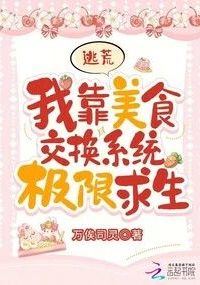
Transmigrating to a fictional ancient era, Mei Qian says: Isn’t this just a farming novel? I get it!

But no one told her the script would start with fleeing for her life amidst the flames of war!

Gourmet Exchange System: [Bind with me, and I’ll help you take shortcuts in your wilderness survival!]

Mei Qian: Do you even hear yourself? You want me to do gourmet exchanges when I can’t even get enough to eat?

Gourmet Exchange System: [How about some Interstellar Nutrient Solution? One tube is equivalent to ten meals. You in?]

Mei Qian grits her teeth: I’m in!

In order to get more nutrient solution, Mei Qian decides to pick up a chef along the way…

Novel Items

More
System
Also known as the Gourmet Exchange Platform System or Xiao Mei. A system that binds to qualified hosts across myriad worlds, allowing them to exchange gourmet food with hosts from different planes. It can detect fresh ingredients and food items. After ten exchanges, it unlocks a System Storage Primary Space (one cubic meter) and precise browsing/priority exchange functions.
Material
A burlap sack of yellow millet stored in the Mei family's cellar. When Mei Qian touched it, the Gourmet Exchange System detected it as a fresh ingredient. It is one of the family's limited grain supplies for their journey.
Material
A burlap sack of whole wheat flour stored next to the yellow millet in the Mei family's cellar. The Gourmet Exchange System detected it as a fresh ingredient when Mei Qian grabbed a handful from it.
Food
An oval-shaped roasted bird egg given to Mei Qian by her cousin Mei Shitou when the family rested in the mountains. Mei Qian uploaded it to the Gourmet Exchange System with the name 'Ancient Flavor Roasted Bird Egg: A hint of charcoal aroma, a taste that lingers forever!' and successfully exchanged it for a low-grade nutrient solution.
Food
A bowl of vegetable soup made from wild herbs gathered by Grandma Mei along the way into the mountains. It has a bland, sour, astringent taste with a rough, almost unbearable texture. The System strongly objected to Mei Qian uploading it for exchange. Mei Qian drank it all in one go and nearly spat it out.
Item
An item exchanged from the Future Interstellar Plane in return for Mei Qian's roasted bird egg. One tube can sustain an adult for three days, supplementing the nutrients needed by the human body and keeping them full and nourished. It is considered incredibly useful in Mei Qian's current situation.
Latest Release
DateGroupRelease
2026-08-11shanghai fantasy c152
2026-08-11shanghai fantasy c151
2026-08-11shanghai fantasy c150
2026-08-11shanghai fantasy c149
2026-08-11shanghai fantasy c148
2026-08-11shanghai fantasy c147
2026-08-11shanghai fantasy c146
2026-08-11shanghai fantasy c145
2026-08-11shanghai fantasy c144
2026-08-11shanghai fantasy c143
2026-08-11shanghai fantasy c142
2026-08-11shanghai fantasy c141

Community Reviews

Rating(0 / 5.0, 39votes)
5 stars
0(0%)
4 stars
0(0%)
3 stars
0(0%)
2 stars
0(0%)
1 stars
0(0%)

Popular reviews

... Read More
Let me just start by saying this line: 'Looking into the distance, she noticed the Junzhu's convoy, maintaining a certain distance from the Chen family's encampment. The lights over there were dimmer compared to those of the Chen family. It gave the impression that, unless absolutely necessary, they didn't even want much light—truly trying not to draw attention.' I read that three times. THREE times. Because the author just dropped an entire world-building lesson in three sentences. You can feel the tension just from the lighting. The Chen family has bright lights because they're confident, established, showing off their resources. The Junzhu's convoy is dim, almost hiding, because they're dangerous but cautious. And Mei Qian watching from her rock, the evening breeze sweeping away her melancholy — this is the kind of scene that makes you put the book down and just breathe. It's cinematic. You can see the crescent moon, the flickering campfires, the distant dark shapes of carriages. The whole setting feels alive. Every encampment has its own personality. The wild vegetable soup exchange, the machete practice, the firewood chopping — these aren't just filler, they're texture. This world has rules and you can feel them. People are careful with light because light attracts attention. Grain is currency and power. The Xirong breach means the world is falling apart around these characters. And yet, Mei Qian still finds a moment to sit on a rock and watch the moon. That's the thing that gets me — the world is brutal and cruel, but there are still small moments of peace. The author doesn't over-describe, which is perfect. You're not drowning in exposition about the political situation or the magic system. You just FEEL the world through what's shown. The dim lights, the hard black buns, the curved swords taken from dead Xirong soldiers. Every detail earns its place.
... Read More
Can we just talk about how atmospheric this whole refugee convoy setting is? The author doesn't go overboard with description but every detail lands. I keep coming back to the campfire scenes — there's something almost cinematic about how the light plays across faces, how shadows move, how people huddle around these small fires in the dark. The image of Han Laoer with his face half-illuminated by the campfire, bruised and swollen, muttering about the Mei family being barbaric — it's such a vivid, almost cinematic shot. You can practically see the flickering orange light casting long shadows. And then there's the contrast: the Mei family's campfire where Mei Qian is cooking wild vegetable and bird egg soup, the warmth of family dynamics even in harsh conditions, versus the Han family's campfire where they're scheming and arguing. The worldbuilding here is all about survival — not just physical survival but social survival. People digging for wild vegetables, getting into disputes over the same plants, the Blacksmith Yang family breaking flatbread and giving the largest piece to the father while the mother takes the smallest. These tiny domestic moments in the midst of chaos make the world feel incredibly real. The refugee convoy isn't just a backdrop; it's a character itself. Everyone is suspended between worlds — they've left their homes but haven't found safety. The mention of Mingcheng territory as this promised land three days away gives the whole thing a sense of movement and desperation. It's a world where a single grain of rice can determine who lives and who dies, and that's what makes every interaction so charged.
... Read More
The 'lips and teeth' metaphor that Mei Qian uses is doing so much heavy lifting in these chapters and I can't stop thinking about it. On the surface it's just a clever rhetorical device — if the lips (the Mei family) are destroyed, the teeth (the other families) will feel the cold. But it's really about something much darker: the illusion of safety in a community that's supposed to be protective. The Chen family's convoy is supposed to be a refuge, right? Wealthy families providing protection for smaller households. But what we see is that this protection is conditional and fragile. The Blacksmith Yang family, the Yan family — they're all clinging to the Chen family's coat tails, and they know it. Scholar Yan's mother digging for wild vegetables and almost getting beaten up because she's too gentle to fight... that's not a safe world. It's a world where the strong prey on the weak, and the only thing standing between you and starvation is which wealthy family you've attached yourself to. The grain itself is such a loaded symbol. Three hundred catties — that's not just food, that's survival, that's power, that's what makes the Han family want to destroy the Mei family. And Huang Shi's reaction when she hears about the grain, her disdain melting into greed, it's almost grotesque. It shows how scarcity warps human nature. Even the food they're eating — wild vegetable soup, mixed grain flatbread — these aren't just details, they're constant reminders of what's at stake. Every meal is a negotiation with death. And then there's the Exchange Platform, which is this whole other layer of symbolism about value and survival in a world where traditional economics have collapsed. Mei Qian carefully filtering exchanges, thinking about what she can and can't offer... it's like she's playing a different game entirely, one where the rules are rewritten. The deeper theme here is about agency. In a world where everything is stripped away — home, security, dignity — what do you hold onto? For Mei Qian, it's her mind. She can't fight with muscles, but she can outthink everyone.
... Read More
I need to talk about the stakes in this story because they're genuinely tense and I kept finding myself holding my breath. Let's start with the most dangerous scene: Han Shi going to confront Huang Shi. Think about what's happening here. This woman is walking into the camp of people who have already shown they're willing to use violence against her family. She has to perform this elaborate act of a abused daughter-in-law while Huang Shi is literally the enemy. And if her acting slips even a little — if Huang Shi sees through it — what then? The text says Han Shi's strength was 'surprisingly great' and Huang Shi 'couldn't budge her no matter how hard she pushed.' That detail sent chills down my spine. This isn't just acting; this is a woman who has staked her safety on this performance, physically holding onto Huang Shi while delivering her lines. The fact that she's wiping snot and tears on Huang Shi's chest while internally trying not to laugh... it's such a human, vulnerable moment. She's risking everything and still has to fight the urge to break character. And then there's the broader conflict — the Han family vs. the Mei family isn't just a family feud. It's about survival in a world where the rules have dissolved. The Han family has numbers, aggression, and a willingness to do whatever it takes. The Mei family has... what? Mei Erhu and Mei Shitou as fighters, Mei Qian's brains, and a grandmother who's clearly sharp. The stakes are existential. If the Han family succeeds in driving the Mei family out of the Chen convoy, they're on their own in a refugee crisis where people are fighting over wild vegetables. But the tension isn't just between these two families — it's spreading. Mei Erhu and his wife going around talking to other families, planting seeds of suspicion... the conflict is expanding like a ripple. And the spies! Mei Qian watching people sneak out at night to gather information. The whole convoy is becoming a web of suspicion and counter-suspicion. What I find most gripping is that nobody knows who to trust. The Han family doesn't know the Mei family is turning everyone against them. The other families don't know whether the Mei family is genuinely warning them or just manipulating them for their own benefit. That uncertainty is what makes the stakes feel so real — because in a world this harsh, trust itself is the most dangerous commodity of all.
... Read More
I need to talk about how this chapter handles its pacing because honestly? Chef's kiss. It starts at FULL THROTTLE — Xirong soldiers charging, blades swinging, horses falling, blood splattering. You're reading fast, heart pounding, trying to keep up with who's fighting whom. Then suddenly: "Splattered with blood on his face, Mei Erhu quickly stood up, seized the curved blade from the soldier's hand, and returned to his family's side alongside Mei Shitou." The action stops. Just like that. And then the MOST BRILLIANT pivot happens. Everyone's hugging, crying, relieved — and Mei Qian, of all people, breaks the emotional moment by saying: "Let's go check those Xirong soldier corpses for any good stuff." The tonal whiplash is incredible. One second you're in a heartwarming family reunion scene, the next you're watching people's eyes turn into dollar signs under moonlight and fire. "By the light of the moon and the flames, hearing Mei Qian's words and looking at those enemy corpses so close at hand, a faint, eerie green light couldn't help but flash in the eyes of every family member." This is such smart structuring. The author lets you breathe after the battle, then immediately hooks you with the looting scene, then drops the milk fruit mystery, then pivots to the Chen family's political maneuvering. Three distinct beats in one chapter, none of them dragging. The transition to the Chen family's perspective — the young master in the carriage, the steward reporting casualties, the sneer that makes Chen San break into a cold sweat — this is a perfect interlude. It expands the world without slowing anything down. You're learning about the power dynamics while the Mei family is still catching their breath. Brilliant.
... Read More
Can we just appreciate how distinct every character's voice is in this chapter? Because I can tell who's speaking without looking at the names, and that's rare. Mei Qian's internal voice is absolutely my favorite. "Ah! If I had known tonight would happen, I would have found a way to exchange for some kind of Space earlier!" This is such a modern, relatable thought process for a transmigrator character. It's funny, it's practical, and it completely defines her personality in one sentence. She's not a traditional noble daughter — she's someone who would absolutely loot a battlefield and then complain she didn't have a storage skill ready. Her dialogue with her brother is also great: "Brother." / "Hmm?" / "Let's go check those Xirong soldier corpses for any good stuff. And those horses over there... everyone says horse meat doesn't taste good... but still, that's meat~" The casual way she just drops this suggestion, knowing full well everyone will hear her, and then watches their eyes turn green? That's Mei Qian in a nutshell. Bold, opportunistic, and unapologetic. Grandma Mei's voice is completely different — clipped, practical, authoritative. "Don't rush. Since it's fruit, we can eat it later on the road when we're thirsty or hungry. What's the point of eating it now?" She's always thinking three steps ahead, always playing the long game. Even her dismissive comment about the milk fruit being ugly because "Xirong dogs—all ugly" feels very in-character. Mei Erhu's dialogue with Steward Chen is perfectly calibrated — humble but not subservient, grateful but strategic. "It's us who should be grateful. In that situation, if we hadn't killed them, it would have been our family members who died." He's acknowledging their mutual benefit without losing dignity. And that young master in the carriage? His single line of dialogue does SO much work: "Among the retainers of the Chen, Yan, Xu, and Wei families, only my Chen family suffered the heaviest losses. Does the Wei family think the Chen family has no one left, that they can't see through their schemes?" Cold, calculating, and immediately establishes him as someone to watch.
See all reviews

Characters

See all characters

Custom lists

Oops…There is nothing here.