Summary

... Read More

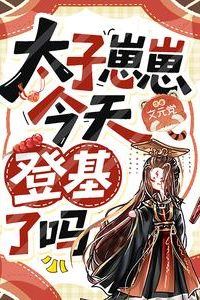
Child-rearing + Qi Luck + No CP. Check the author’s note in the first chapter for content warnings; the synopsis has a character limit.

In his past life, Wu Junji wandered among the common folk for sixteen years before being found by Emperor Zhou and invested as the Crown Prince. He died in bitterness after five years on the throne.

When he opened his eyes again, he had returned to the moment Emperor Zhou sent him out of the imperial palace. He swore that in this life, he would kill Emperor Zhou to avenge his grievances, but Heaven played a joke on him: the moment he emerged from the womb, he was told that Emperor Zhou could not be killed.

As they spent time together during his upbringing, the person he hated most in his past life unexpectedly became the person who loved him most in this life.

Is it hate or love? Fortunately, Wu Junji still has plenty of time to avoid making a choice. In the meantime, he will take his rightful place as the Human Emperor, create a Demon Court from scratch, unify the world, and attain godhood!

First, head to the Northeast and grow a Demon Court!

Years later, Wu Junji is surrounded by a cloud of Demon Generals and throngs of Divine Officials. Holding the Imperial Seal of the Human Emperor, his Qi Luck reaches the heavens, and he is cloaked in the power of faith! Unify! Unify!

The reborn Second Prince: How are we supposed to compete?

The Third and Fourth Princes: How are we supposed to compete?

The reborn Chen Yu: Thanks for the invite, but I’ve already castrated myself.

And Emperor Zhou, who constantly dreams of the past life: [Guilty Face.jpg]

Novel Items

More
Medicine
An anesthetic powder used during Wu Bing's C-section. Despite the amount used, Wu Bing was still drenched in cold sweat from the agony of the procedure.
Medical Material
Sutures made from mulberry bark used by the court physician to stitch up Wu Bing's abdomen after the C-section. They fused with his flesh. After three months of continuous medication and recuperation, his body was restored to normal.
Treasure
A string of Buddhist beads given by Duan Yuyan to Song Yuejiao as a farewell gift. The beads were left by Duan Yuyan's mother and given to her by her grandmother when she was five years old. They bear marks of frequent handling. Duan Yuyan hopes they will keep Song Yuejiao safe in Lingnan. Song Yuejiao wears them on her left hand.
Manuals
A classic Chinese text that Chi Yu knows all the characters from. She mentioned it alongside the Three Character Classic and Hundred Family Surnames as texts she could have transcribed.
Token
A token presented to Luo Fu upon her arrival at Zhenhe Gate, indicating her rank as Noble Lady and her assigned residence. The eunuch told her to keep it safe.
Item
The special food mixture fed to infant Wu Junji, as he did not take pure milk. The capable eunuch inquired about the precautions for caring for him before sending away the three wet nurses. The mixture was kept warm throughout the night and fed to Wu Junji using a flat, round-mouthed bottle.
Latest Release
DateGroupRelease
2026-08-11shanghai fantasy c10
2026-08-11shanghai fantasy c9
2026-08-11shanghai fantasy c8
2026-08-11shanghai fantasy c7
2026-08-11shanghai fantasy c6
2026-08-11shanghai fantasy c5
2026-08-11shanghai fantasy c4
2026-08-11shanghai fantasy c3
2026-08-11shanghai fantasy c2
2026-08-11shanghai fantasy c1

Community Reviews

Rating(0 / 5.0, 12votes)
5 stars
0(0%)
4 stars
0(0%)
3 stars
0(0%)
2 stars
0(0%)
1 stars
0(0%)

Popular reviews

... Read More
The dialogue in this chapter is absolutely vicious and I mean that as the highest compliment. Emperor Zhou's voice is this incredible mix of brutal honesty and accidental tenderness. He calls his own son "stubborn, weak, short and stubby, petty-minded—what is there about you worth liking?" and then immediately follows it up by threatening to kill anyone who scolds him. The man cannot express love without wrapping it in barbed wire. And Wu Junji's retorts! "If Father Emperor is willing to bow, I'll accept it." "Is Father afraid of being scolded?" This kid is TWO and he's verbally sparring with the Emperor like a seasoned politician. The dialogue between them crackles because both of them are using words as weapons, neither willing to yield. The system 88 provides this great comic relief with its deadpan reactions—"In simple terms?" after Wu Junji's elaborate speech about making Chen Yu live in fear. The contrast between the system's literal thinking and the humans' layered, manipulative communication is hilarious. But the most powerful dialogue moment is probably the silence. After the slap, nobody speaks. Emperor Zhou flees. Wu Junji touches his ear. The servants don't know whether to react or freeze. Sometimes what's NOT said is the loudest thing in the chapter.
... Read More
Let's talk about the single most important hour in this entire novel. July 5th. Two princes born on the same day, one hour apart. That's it. That's the entire succession crisis in a nutshell. The stakes here are absolutely massive and the author makes it clear through a series of cascading consequences. Noble Consort Dong hides her pregnancy for three months instead of one. That's a MONTH difference that changes the entire political landscape. Emperor Zhou's constitution is 'peculiar' and unlikely to produce offspring—yet Wu Junji is born healthy against all odds. The Retired Emperor orders induced labor for Noble Consort Dong because the timeline says she should deliver first, but then Emperor Zhou has an 'unexpected incident' at the retreat palace. Both boys born the same day. Wu Junji arrives one hour earlier. Suddenly the child who was supposed to be the second son is now THE ELDEST. And the Emperor is using this to spread the word deliberately—canceling court, letting people ask why he's absent, letting the rumor mill work. This is political chess at its finest. The stakes for Noble Consort Dong are existential. If her son isn't the eldest, she can't become Empress. Her family's rise is tied to this. The Empress Dowager is uneasy but bound by three generations of precedent where the eldest son became Crown Prince and the dynasty prospered. The Retired Emperor is terrified because he abdicated specifically to avoid the mistake of deposing his son for a grandson—and now he's facing the exact same scenario. And through it all, baby Wu Junji is just... existing. Drooling. Gnawing his fist. Completely unaware that his mere birth order has upended an empire's succession plan.
... Read More
The metaphor for Wu Junji in Chen Yu's memories is one of the most devastating images I've encountered in this novel. 'He withdrew completely, transforming into a spider spinning silk in a corner—the more silk he spun, the more emaciated he became.' Let that sink in. A spider, alone, producing something beautiful and intricate while slowly destroying itself. The Taiping Min Dian wasn't just a book—it was Wu Junji's life force, his aspiration to 'bring clarity to the world,' poured into fifty-seven hundred volumes. And Chen Yu burned it. All of it. In a single fire. The ashes didn't just destroy a literary masterpiece—they destroyed the bond between two disciples, the Crown Prince's purpose, his light. The metaphor continues: 'a shattered piece of colored glass: a single crack spread, deepening, multiplying, thickening, until—bang! Darkness.' This isn't just emotional damage. This is the complete annihilation of a person's identity. Then there's the dragon symbolism. 'The Grand Prince bears the sign of a nascent dragon encircling the palace.' The dragon imagery is everywhere in this text—Emperor Zhou watching the 'little dough ball' on the 'luxurious dragon bed,' the prophecy of heavenly destiny, the succession tradition itself rooted in the idea of the eldest son carrying the mandate. But the real question the text seems to be asking is: what is destiny versus what is human ambition? The Retired Emperor spent years consulting diviners, and the answer was always the same—only the eldest brings prosperity. Yet he still tried to manipulate the outcome. Human schemes versus heavenly will, and the text keeps tilting toward the idea that some things simply CANNOT be altered. The water imagery is also worth noting—Wu Junji's 'aquatic fragrance,' the fluidity of fate, the way everything flows and shifts like water around obstacles.
... Read More
Let me just say this: the relationship between Wu Junji and Emperor Zhou is the most complicated thing I have ever read in a novel and I am HERE for it. Emperor Zhou is this terrifying figure—ruthless emperor, sharp tongue, kicks eunuchs, threatens to flay people—but the moment he hears guards surrounding his son, he loses his damn mind. "I'll fuck your ancestors! Who dares?!" He literally throws his jade pendant and storms out like a tiger protecting its cub. And then he beats Wu Junji because he's frustrated and hurt and doesn't know how else to process it. But the slap—when it happens, the narrative makes it clear that Emperor Zhou's hand is TREMBLING. He's the one who's heartbroken, not Wu Junji. He flees the scene. He can't even stay to see the aftermath. And Wu Junji? He's calculating even while being beaten. Even while crying. His internal monologue never stops. He's a two-year-old body with a sixteen-year-old beggar's soul who was nearly starved to death in prison. When Emperor Zhou threatens to make him skip dinner, that's when the fear really hits because hunger = hell for him. The physical abuse is bad enough, but the psychological trigger is starvation. "He and Emperor Zhou were separated by a lifetime. Neither knew the other's pain points, yet in their arguments, they struck each other's vital spots with precision and ruthlessness." This line absolutely destroyed me. They're both trying to hurt each other because they don't know how to connect.
... Read More
I keep coming back to one image in this chapter: Wu Junji's stomach. First it's "slightly protruding" from whatever he's been fed, and then after the fight, as he sits alone in the palace, it "flattened and growled." Hunger. It's everywhere. Hunger is Wu Junji's deepest trauma. Sixteen years as a beggar. Nearly starved to death in prison by the old man (Emperor Zhou, in his previous life). When Emperor Zhou threatens to make him skip dinner, that's not discipline—that's triggering a survival-level panic. The starvation threat cuts deeper than any physical beating ever could. And then there's the ear. Wu Junji lost hearing in one ear in his previous life and is terrified of going deaf again. The slap rings his ears, and his immediate reaction isn't pain—it's fear of permanent damage. His body remembers what his mind is still processing. The cloth tiger he tosses aside when he stands up to leave is another symbol I can't stop thinking about. It's a child's toy, representing the innocent facade he wears. When he throws it down and stretches his numb legs, he's shedding that costume. The little radish Emperor Zhou plopped him onto the carpet—that imagery of a child as produce, as something to be planted and controlled—also sticks with me. This chapter is really about two people who are starving in completely different ways, unable to feed each other because they only know how to take.
... Read More
Okay, I need to talk about this chapter because holy shit. The entire arc of Wu Junji vs. Emperor Zhou has been building like a pressure cooker and then—BAM—Emperor Zhou slaps him. And not just any slap, one that makes Wu Junji genuinely terrified of going deaf again because of his previous life trauma. The plot here is doing SO MUCH work on multiple levels. On the surface, it's a father-son squabble over a palace. But underneath? Wu Junji is playing a four-move chess game and he just laid out his opening. He went to Emperor Zhou demanding a palace, knew it would fail, knew it would escalate, and the whole point was to make the Emperor furious so that when Wu Junji later 'finds' Chen Yu and 'warns' him about his family's fate, Chen Yu will be suspicious and resentful. One move, four gains. The man is a monster and I love it. The structure of this chapter is also brilliant—starting with Wu Junji's cold calculation about Chen Yu, shifting into the seemingly domestic father-son scene, and then detonating into that slap. The transition from political scheming to emotional violence is jarring in the best way. It reminds you that underneath all the rebirth plots and systems, these are two traumatized people who don't know how to talk to each other.
See all reviews

Characters

See all characters

Custom lists

Oops…There is nothing here.