Darkly Charming Seduction! Entwined Doting Kisses! Captured by Master Cen’s Secret Lure - Reviews

Darkly Charming Seduction! Entwined Doting Kisses! Captured by Master Cen’s Secret Lure
+Add to Custom List
Sort
Add review
... Read More
Okay so let me just say this upfront: the plot structure here is absolutely delicious and I am here for it. The author sets up this whole scenario where Qiao Zhiyang runs away from her controlling family, panics at the airport, and randomly grabs the first tall guy she sees — who happens to be Cen Zhou, the most powerful man in the room, AND her best friend's little uncle. That is a plot twist that hits like a freight train. But the real genius? Cen Zhou isn't just some random powerful man who got grabbed. He's been watching her. He's been waiting. The moment she pins him to the wall, his internal monologue reveals he's been holding back desire for YEARS. This isn't a coincidence plot — it's a calculated trap disguised as chaos. The author plays with dramatic irony masterfully here. We know Cen Zhou is scheming, but Qiao Zhiyang has no idea. She thinks she's using him as a shield, when in reality he's the one holding all the cards. The line 'The most sophisticated and cunning hunters often excel at disguising themselves as prey' literally appears in the text and it's basically the thesis statement of the entire story. Every time she thinks she's making a smart move, he's already three steps ahead. And the pacing? Chef's kiss. Chapter 1 ends with her realizing who he is and being absolutely devastated. Chapter 2 escalates immediately — the bodyguards are closing in, they need to pretend to be lovers, and then HE KISSES HER THUMB instead of her lips. That's not desperation, that's control. He's setting the terms. The plot doesn't just move forward, it spirals tighter with every chapter. But here's what I'm wondering: how long can this game of cat and mouse go on before she figures out he's been planning this? And when she does find out, will she run again or will she finally stop?
... Read More
Can we just take a moment to appreciate how well-written the WeChat exchanges are in this novel? Because I will die on this hill. The author clearly understands that digital communication has its own rhythm, its own humor, its own emotional texture—and they're using it masterfully. Cen Jinhuan's messages are a masterclass in chaotic best friend energy. The rapid-fire notifications, the ALL CAPS panic, the 'Ugh, if I'd known they sent people, I wouldn't have gone on that island vacation'—this is how real people text when they're worried. And then immediately pivoting to 'Mama's coming to save you!!!' with the sobbing sticker. It's funny, it's warm, it's exactly what you'd expect from someone who 'fell in love at first sight' with her best friend in etiquette class. The voice call that follows is even better: 'Quick, quick, tell me—is this guy handsome? Tall? Big eyes? Sharp nose? Thin lips? And most importantly, does he have double doors?!' The escalation from genuine concern to aggressive gossip to anatomical inquiry is perfectly timed. Then there's Qiao Zhiyang's side. Her messages are so carefully measured—earnest, slightly formal, always trying to maintain propriety. 'Third Brother, I've already arrived at the room. Thank you for bringing me here -ˋ( "`)ˊ-' The emoji choice alone tells us everything about her personality. She's trying so hard to be polite and appropriate, which makes the accidental 'sticking close' sticker infinitely funnier. And her follow-up with the 'brilliantly blooming red roses' sticker with 'Thank You!' in flashing text? The generational gap is palpable and I laughed out loud. Cen Zhou's reaction—'She claimed she didn't think he was old, yet here she was sending him an emoji that screamed elderly. Little liar.'—is such a perfect character beat. The voice messages are a different kind of dialogue entirely. They're not written as transcript but as experience. 'A sexy, low, magnetic chuckle, as if hiding countless hooks.' 'The husky, seductive bass was as if he were right beside her, pressing his thin lips against her ear.' The author is using the voice message format to create intimacy that text can't achieve. It's a smart structural choice that pays off emotionally.
... Read More
Okay so I need to talk about this one moment where Qiao Zhiyang first walks into her hotel room and it's basically the most satisfying scene in these chapters. Like, think about it—she's been trapped in this suffocating, controlled environment her entire life, right? And then she swipes the card, the sensor door opens, and suddenly she's alone in this clean, bright space with her luggage neatly arranged. The author doesn't even go overboard with description, just this simple line about her circling the room with a sense of novelty and satisfaction. But man, that was EVERYTHING. It felt like the first breath of fresh air after being underwater for nineteen years. And then there's the car scene with Cen Zhou—so much atmosphere packed into a confined space. The cool touch of his gold-rimmed glasses brushing against her earlobe, the crisp scent of cold wood filling her senses, the way the author describes him leaning in and then suddenly pulling back. You can literally feel the tension in that car. It's not just a romantic moment, it's this whole world of power dynamics, unspoken desires, and carefully maintained facades all compressed into a vehicle. The hotel apartment entrance scene too—where she stops him from walking her in because she's worried about his reputation, and he turns it around with that line about her taking responsibility. The spatial dynamics between them shift so subtly throughout these chapters. First they're distant, then the distance shrinks by a few millimeters, then he leans in close, then she darts away. The physical space between them is basically a character in itself. What really gets me is how the author uses these enclosed spaces—the car, the hotel room, the doorway—to create this intimate pressure cooker where everything feels heightened. It's like the world outside doesn't matter, and all that exists is these two people navigating this weird, charged space. Makes me wonder if the author has a thing for cars and hotel rooms as settings, because they really work here.
... Read More
Okay so let me just say this: the plot in these chapters is genuinely tight. I know I usually complain about web novels being all over the place, but the way this one weaves together the escape storyline with the slow-burn romance is actually really well done. Qiao Zhiyang flees the Qiao family, gets rescued by this mysterious 'Third Brother,' settles into a hotel, and then—boom—she's also a secret cheongsam blogger with her own bank card and a whole life she's been building underground. That's not just a side detail, that's a major plot reveal that recontextualizes everything. She's not some helpless girl who ran away with nothing. She had a plan. She had an exit strategy. That's smart writing. And the pacing? The author knows exactly when to hit you with information. First we get the airport rescue, then the best friend's dramatic voice call, then the WeChat profile picture moment, then the voice messages that make your soul leave your body, and THEN—right when you're still recovering from the romantic tension—we get the Estazolam bottle reveal. That's a gut punch. The plot doesn't just flirt with you, it also slaps you across the face with her backstory. 'Don't get used to being wronged'—that line from Cen Zhou basically rewires the entire emotional landscape of the story. It's not just a sweet moment, it's a turning point. She literally throws the pills in the trash after that. The plot is doing heavy lifting here, and it's doing it well.
... Read More
"You're too tense." That's all he says and suddenly I'm a mess. Let me tell you about Cen Zhou because this man is EVERYTHING and also absolutely terrifying. On the surface he's the Jade-Faced Buddha — refined, elegant, restrained, the kind of man who buttons his shirt all the way to the top and wears prayer beads like some kind of ascetic monk. But underneath? He's a wolf. A scheming, calculating, patient wolf who has been watching this girl grow up and has been dying to make his move. And Qiao Zhiyang — oh my god. She's this sweet, soft little lamb who's spent nineteen years being controlled by her family, told everything is for her own good, and the moment she escapes she immediately throws herself into the arms of the one person she should NOT be throwing herself into. Her internal monologue is so relatable. She's flustered, embarrassed, trying to be good and proper, and simultaneously having the most inappropriate thoughts about this man's chest muscles through his suit. The dynamic between them is absolutely electric. Every physical interaction is loaded with meaning. When he holds her waist, when he leans close to her ear, when he uses his thumb to cover her lips before kissing it — these aren't just romantic gestures, they're power moves. He's testing boundaries, seeing how much she'll tolerate, how far he can push before she pulls away. And she keeps letting him, because he's being so gentle about it, so patient, so... nice. But we know he's not nice. We know he's plotting. And that's what makes their relationship so intoxicating to read. She thinks she's the prey, but he's the hunter who's been waiting years for this exact moment.
... Read More
Let me just say this right now: this story is SO much deeper than it appears on the surface. Yes, it's a romance about a wolf and a lamb. Yes, it's sweet and flirtatious. But beneath that, there are these incredible symbolic layers that the author weaves throughout. The prayer beads. Cen Zhou wears them. They're described as pressing against her through her cheongsam, creating a tingling sensation. These beads symbolize his Buddhist devotion, his restraint, his vow of abstinence. And yet — he breaks that vow for her. He uses them as a physical reminder of his self-control even as he deliberately crosses every boundary. The beads become this symbol of the tension between who he pretends to be and who he actually is. The wolf and lamb imagery isn't just cute — it's deeply symbolic. She's the little lamb, innocent and trusting, running from her cage-like family. He's the wolf, but not just any wolf — he's a wolf in gentleman's clothing, a predator who has learned to wear the mask of civility. The story asks: who is the real predator here? Is it Cen Zhou, or is it her family who treated her like property? The title itself is a theme: "Throwing herself into his arms, luring him closer." On the surface, she thinks she's the one making the moves. But the narrative keeps reminding us that he's the one who's been waiting, planning, calculating. The irony is that she's not luring him — he's been luring her this whole time, and she just walked right into it. The suit is another powerful symbol. It represents his public persona — refined, respectable, untouchable. But underneath that suit is "untamed strength" and "vibrant wildness." The suit is his cage, just like her family's control is hers. Both of them are trapped in roles they've learned to play, and the story is about what happens when those roles start to crack. And the airport setting — a place of transitions, of people between places, neither here nor there. She's escaping one life, he's about to pull her into another. The liminal space becomes the perfect metaphor for their relationship: neither fully safe nor fully dangerous, but always on the edge of something.
... Read More
This author's dialogue is actually fire and I need everyone to know about it. Let me start by saying: the way Cen Zhou speaks is *perfect*. He never says too much. Every line is calculated, measured, dripping with double meanings that fly right over Qiao Zhiyang's head but hit the reader like a truck. "Young lady, do you need assistance?" — sounds polite, proper, gentlemanly. But the way it's delivered, with that lazy laughter and the way he's already got his arm around her waist? It's predatory. He's playing the role of the helpful elder while secretly orchestrating everything. And Qiao Zhiyang's dialogue is equally well-done. Her internal voice is so distinct from her external voice. Out loud she's demure and proper: "Sorry, Mr. Cen. I was too forward." But inside? "Ugh. How did things end up like this ( )!" and "Damn it. Are you kidding me!" The contrast between her polite exterior and her chaotic inner monologue is hilarious and so relatable. The author also uses silence as dialogue. That moment where Cen Zhou kisses her thumb instead of her lips — no words needed. The action speaks louder than anything he could have said. And the narration itself has such a distinctive voice, especially when it dips into Cen Zhou's perspective: "Tsk. So obedient. How could she be so obedient? It made one want to protect her, yet also tease her a little." The narrative voice shifts between third-person limited (mostly following Qiao Zhiyang) and occasional dips into Cen Zhou's thoughts, and the transition is seamless. You always know whose head you're in, and the author never over-explains. The dialogue feels natural, not stiff or overly literary. These two sound like real people having a real conversation, even though the situation is wildly dramatic. Also can we talk about how the author uses the Hong Kong accent detail? "Her Mandarin, with its Hong Kong accent, was both clear and sweet." Little touches like that make the characters feel three-dimensional.
... Read More
"Sticking close? Who does Little Zhiyang want to stick close to? Me?" I need a minute. I literally need a minute. This scene is everything. The accidental sticker, the immediate voice message reply, the way his voice is described—sexy, low, magnetic, with a chuckle that hides 'countless hooks.' The author doesn't just tell us he has a good voice, they MAKE US FEEL it through the prose. 'Each word coiling around and licking at the depths of her heart.' That's not just description, that's an experience. I was sitting there with my phone like 'excuse me, how is a written scene supposed to make me feel this flustered?' And then the second voice message. "Mhm, sticking close~" with that lowered tone. Qiao Zhiyang burying her face in a cushion. The whole 'voice enthusiast' realization. This is peak romantic tension writing and the author knows exactly what they're doing. Every sentence is calibrated to make her (and us) feel the weight of that voice. But then—AND THIS IS WHAT MAKES IT BRILLIANT—the third voice message starts with "Third Brother likes you—" and just STOPS. The pause. The deliberate ambiguity. Qiao Zhiyang's heart going thump thump thump. She's convinced he's about to say something devastatingly romantic, and then he finishes with "I like your sticker emojis." The emotional whiplash! She's equal parts relieved and infuriated, and the text captures it perfectly: "That kind of sentence break was totally unfair!" What gets me though is the quiet emotional moment that comes after all that. The Estazolam scene. She's alone in the hotel room, holding that bottle of pills, remembering how her family treated her anxiety like a shameful secret. 'The Qiao family absolutely cannot have an abnormal young lady.' And then Cen Zhou's voice echoes in her memory: 'Don't get used to being wronged.' The contrast between the flustered, blushing girl from the voice messages and this vulnerable moment where she's confronting her past—it's devastating. She throws the pills away and declares herself 'Niu Gulu Yang.' That's not just a plot point, that's an emotional victory. She's choosing herself.
... Read More
I'm still thinking about how the pacing works in these chapters, specifically around that candy moment. Let me break it down because it's honestly brilliant. The chapter starts with this heavy emotional beat—Qiao Zhiyang crying, Cen Zhou comforting her, all that vulnerability. And then, just when you think it's going to stay in that serious zone, he pulls out CANDIES. Like, a few exquisitely wrapped candies from his suit pocket and hands them to her. The tonal shift is so sudden and yet so natural. It's like the author is saying, okay, we've done the tears, now let's give the reader a breath before the next wave. But here's what really impressed me—the blackcurrant candy detail. The author takes their time with it. The wrapper with elegant English, the brand that supposedly closed down, her confusion, his explanation about happiness magic. Each beat lands perfectly. It's not rushed, it's not dragged out. It's exactly the right length for a moment that's supposed to feel magical and slightly mysterious. Then immediately after the candy scene, we get the phone number exchange, which leads to her saying 'I'm not little anymore' and bolting. The pacing there is like a rollercoaster—build up, release, build up, release. And then Cen Zhou's internal monologue at the end, where he goes from gentle Third Brother to this calculating wolf king talking about buying out the Qiao family's investments. WHAM. Just like that, the genre shifts from romantic comfort to something much darker and more intense. The chapter transitions are also smooth. We go from emotional vulnerability to light sweetness to flustered romance to ruthless business revenge, and somehow it all flows. No jarring jumps, no feeling like we skipped important beats. The author clearly knows how to control reader engagement, and these chapters are proof of it.
... Read More
"If there's anything that makes you unhappy, bite Third Brother instead." I need to sit with this line for a moment. Because on the surface, it sounds sweet, right? Like, oh, Third Brother is so caring, he wants her to feel safe, he's offering himself as a punching bag. But read it again. And again. Because this man is literally saying, in the most gentle, magnetic voice possible, that he wants her to bite him. Anywhere she fancies. Let her bite to her heart's content. And the way the author writes his dialogue—it's always this perfect balance of warmth and something underneath. He calls her "Little Zhiyang" with such tenderness, but we know what he's thinking. The narrative voice gives us his inner monologue right after these sweet lines, and it's like, okay, the dialogue is one thing but the thoughts are completely different. That contrast is what makes his voice so compelling. Qiao Zhiyang's dialogue is simpler, more straightforward, which works because she's supposed to be the innocent one here. Her line "I'm already nineteen years old" followed by "I'm not little anymore" is delivered with this mix of shyness and defiance that feels so real. She's trying to assert herself, and it's adorable. But then she immediately runs away, which is so character-accurate. The dialogue between them has this rhythm where he says something slightly inappropriate wrapped in sweetness, and she reacts with flustered embarrassment. It's been done before, sure, but the execution here is genuinely good. The author gives each character a distinct voice—his is layered, magnetic, always with that roguish edge barely concealed behind elegance. Hers is warmer, more direct, occasionally sassy when she's comfortable enough. What I love most is how the dialogue reveals power dynamics without ever stating them outright. Every exchange between them is a tiny negotiation of control and trust, and you can feel it in every line.
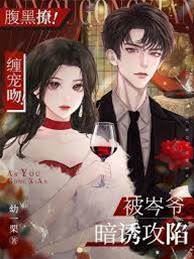
... Read More
I need to talk about the airport scene because WOW. The author takes what could have been a boring, generic airport setting and turns it into something so atmospheric and tense. Let me paint this for you — it's a busy airport, right? People everywhere, bodyguards in black suits scanning the area, the hum of announcements and footsteps. But then Cen Zhou pulls Qiao Zhiyang into this secluded corner and suddenly the whole world shrinks down to just the two of them. The sensory details are incredible. The clean, crisp scent of oud that envelops her. The prayer beads on his wrist pressing against her water-blue cheongsam. The way his chest rises and falls against her palm with each breath. The author doesn't just describe what they see — they describe what she FEELS. The vibration of his voice against her ear. The warmth of his body. The contrast between his broad shoulders and her petite frame. And the visual of him shielding her — his tall, imposing figure completely blocking her from the bodyguards' view, only her aqua-blue cheongsam hem visible — that's pure cinema. I could literally see this as a film scene. The tension of almost being discovered mixed with the intimacy of being hidden in someone's arms. What I also love is how the setting reflects their situation. An airport is a place of transit, of people coming and going, of escape and arrival. Qiao Zhiyang is literally running away from one life and into another. The airport becomes this liminal space where her old life and new life collide. And Cen Zhou appears in this space like some kind of fate-made guardian angel... or demon, depending on how you look at it. The contrast between the public, chaotic airport and the private, intimate corner they create together is just *chef's kiss*. It makes every whispered conversation feel stolen, every touch feel dangerous.
... Read More
I keep coming back to the symbolism in these chapters because it's everywhere and it's so deliberate. Let's start with the most obvious one: the lamb and the wolf. Qiao Zhiyang's avatar is a fluffy little lamb. Cen Zhou's is a big gray wolf. They're from the same drawing blogger, so the styles match—they look like COUPLE avatars. She tries to rationalize it away ('He probably just found my profile picture cute'), but the narrative keeps reinforcing the imagery. She's the lamb. He's the wolf. And the text literally says he wants to be a 'patient hunter' who will make his 'tender little rose bloom brilliantly only for him.' The predator-prey dynamic is woven into every interaction, but it's not threatening in a scary way—it's threatening in a romantic tension way. She's not afraid of him (yet), but the symbolism is clear: he sees her as something precious to be won, and she's too innocent to realize she's being hunted. Then there's the prayer beads. Cen Zhou 'leisurely fiddled with the prayer beads that symbolize abstinence, yet his eyes brimmed with a maddening, obsessive desire.' This is such a rich image. Prayer beads represent control, spirituality, restraint—all the things he's projecting to the world. But his eyes tell a different story. The beads are a prop, a performance of his 'elegant, upright Buddha-like' persona, while underneath he's thinking 'I really want to eat her up.' The contrast between his external composure and internal obsession is the central tension of the entire story. And the Estazolam—the medication—is probably the most powerful symbol in these chapters. It represents everything the Qiao family used to control her: her anxiety, her vulnerability, her 'abnormality.' They told her to take it to stay 'normal,' to keep playing the obedient child. When she throws it in the trash, she's not just discarding pills. She's discarding their definition of her. 'Goodbye, to that damn life of the past. And to the lost, anxious, and insecure version of herself.' The cheongsam photoshoot that follows is her reclaiming herself—her aesthetic, her hobby, her identity. She's not Qiao Zhiyang the obedient daughter anymore. She's Niu Gulu Yang, the lamb who escaped. The dark cyan cheongsam, the round fan covering her face, the Jiangnan painting imagery—all of this connects to a theme of traditional beauty and restrained femininity that she's both embodying and subverting. She's performing grace on camera while internally declaring her independence. The symbolism is consistent and layered throughout.

Leave a comment

You must be logged in to leave comments. or
