Summary

... Read More

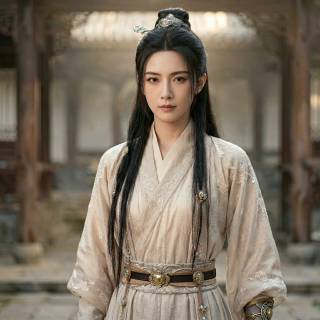
Chen Yan, the scion of a prestigious family, was a man of unparalleled elegance and the dream of countless young ladies.

For ten years, Ye Feishuang served as his mistress without regret, devoting her entire heart to him.

But later, she discovered that the very “illicit affair” that had demoted her from legal wife to mistress was a scheme orchestrated by Chen Yan himself.

He despised her for being raised in the countryside and loathed her timid, cowardly nature; he never had any intention of honoring their marriage contract.

Upon returning to the age of ten, the first thing Ye Feishuang did was annul the engagement.

Chen Yan was highly satisfied with his fiancée.

Though still young, she already possessed world-tilting beauty.

Despite her rural upbringing, she was refined and well-mannered.

Most importantly, she was skilled in both letters and martial arts, possessing a brilliant and strategic mind.

Chen Yan could not wait to welcome her home with a grand wedding.

To his surprise, the young lady threw a letter of annulment in front of him: “Master Chen, let us break the engagement. I have no interest in you.”

Thereafter, Chen Yan was plagued by frequent nightmares.

In his dreams, Ye Feishuang, who should have been his legal wife, became his mistress, locked away by him in a secluded courtyard for ten years.

In his dreams, Ye Feishuang loved him truly, yet never received a single kind look from him.

In his dreams, Ye Feishuang said she never wanted to meet him again.

Later, Chen Yan realized these weren’t just dreams. He immediately sought out Ye Feishuang to make amends—only to find that someone else was already by her side.

Novel Items

More
Clothing
A crimson silk skirt woven with gold thread from over ten years ago, unearthed from the bottom of a chest by Ye Feishuang. In her past life, she wore it on her final day for the first time according to her own tastes rather than catering to Chen Yan's preference for simple elegance.
Treasure
A valuable gold hairpin studded with gemstones, purchased years ago in Beijing through a trusted person. Sun Miaoyin gave it to Lin Yue as compensation and to settle her nerves, fearing Lin Yue might bring up the day's incident later due to her relationship with Wang Song.
Clothing
Chen Yan's jade-white crane-skin cloak. He wrapped it around Ye Feishuang after pulling her from the lake in their first meeting, and later wrapped it around her again when she was dying under the old plum tree.
Document
A legal agreement arranged by Qin Zelin's grandfather and Old Master Cen. It stipulates a nominal marriage for one year with financial compensation upon divorce. Cen Miao does not need to fulfill marital duties and can adjust the compensation amount if unsatisfied.
Poisonous Substance
Tea prepared by Taoyue under Lin Guanguan's direction, laced with a potent drug intended to affect Lu Yanzhi. Cang Feng secretly swapped Lu Yanzhi's tea with the Second Young Master's tea before serving. Lu Jinyu consumed the drugged tea and became dazed with flushed cheeks and glassy eyes. The drug caused him and Lin Guanguan to lose control, leading to their collapse the next day.
Weapon
The weapon Shi Qi used to attack Shi Jianchuan. Shi Qi had bought the knife and struck first. During the struggle, Shi Jianchuan seized the blade and redirected it into Shi Qi's chest, killing him. The police determined this constituted justifiable defense under Article 20 of the Criminal Law.
Latest Release
DateGroupRelease
2026-08-11shanghai fantasy c10
2026-08-11shanghai fantasy c9
2026-08-11shanghai fantasy c8
2026-08-11shanghai fantasy c7
2026-08-11shanghai fantasy c6
2026-08-11shanghai fantasy c5
2026-08-11shanghai fantasy c4
2026-08-11shanghai fantasy c3
2026-08-11shanghai fantasy c2
2026-08-11shanghai fantasy c1

Community Reviews

Rating(0 / 5.0, 5votes)
5 stars
0(0%)
4 stars
0(0%)
3 stars
0(0%)
2 stars
0(0%)
1 stars
0(0%)

Popular reviews

... Read More
I need to talk about Mrs. Lu because she is such a fascinating character and honestly kind of terrifying in the best way. On the surface she's the hero who saves Ye Feishuang, but the narrative is very clear that her motivation is purely self-serving. She controls household management and Mrs. Qin has been trying to take it from her. Protecting Ye Feishuang is really about asserting dominance over her rival. The text says it outright: "Mrs. Lu simply disliked Mrs. Qin." That's it. That's the entire alliance. And Ye Feishuang KNOWS this. She's not naive — she sees the play and plays along. "She did not mind entering the fray, playing the role of the weak and innocent, allowing Mrs. Lu to assert her authority in the process." This is a girl who understands power dynamics better than most adults in this house. Then there's the moment after Mrs. Lu leaves and Ye Feishuang's expression changes — the text describes her smiling with "triumph and arrogance, even carrying a hint of provocation" right at Mrs. Qin, and then Mrs. Qin can't tell if she imagined it because Ye Feishuang's face goes back to being terrified. That switch is chilling. She's performing vulnerability like an actress while internally calculating every move. Meanwhile her relationship with her real parents — Zheng Lian and Madam Jin — that's where the heart is. The scene where she kneels beside her father's bed and weeps, remembering how in her past life he fought for her and died — "his health had never been good, yet he had never failed her" — that hit me hard. It's the emotional anchor that makes all her scheming feel justified. She's not just surviving, she's protecting the only people who actually love her.
... Read More
Okay so this whole scene where Ye Feishuang turns the tables is actually genius-level plotting. Let me break it down because I literally gasped when she said: "I will stand trial alongside these servants and see who breaks first and confesses!" That's not desperation, that's a trap. She knows those servants are lying, and she's basically saying "let's all get beaten and see who cracks first" — which is a brilliant psychological move because the guilty ones will panic and confess before she does. And it works! Mrs. Lu's threat of fifty strokes does the rest. The way the maid breaks first, then the domino effect of confessions — "how Zheng Wenbo and Zheng Qianyuan had climbed the tree, how they had carried the dog's blood" — it's so satisfying. The author really knows how to set up a false accusation and then dismantle it piece by piece. Also the detail about the dog's blood is such a specific, visceral touch. They were going to frame her by making it look like she attacked them with animal blood? That's dark and creative worldbuilding within the plot itself. What I love most is that Mrs. Lu's intervention isn't pure altruism — the text explicitly says "Ye Feishuang knew that Mrs. Lu's protection of her was not because Mrs. Lu was particularly kind-hearted" but because of the power struggle over household management. So the plot operates on two levels: the surface drama of the accusation, and the deeper political game between the aunts. That's layered storytelling right there.
... Read More
The pacing in these chapters is relentless and I couldn't put it down. It moves from a high-stakes accusation scene — where Ye Feishuang's life and reputation are on the line — straight into an intimate family moment with her parents, then immediately into the servant confrontation, and ends with her walking into Old Madame Zheng's courtyard. That's a lot of ground to cover and the author handles it without any drag. The transition from the main room to her parents' courtyard is especially effective. One moment she's just won a major battle against Mrs. Qin, and the next she's kneeling beside her sick father, and the emotional whiplash works because it grounds all that political maneuvering in something human. Then the pacing shifts again when she discovers the food situation. The scene with the servants escalates so quickly — from a simple question about meals to the servant boy leering at her with a wine cup, to her overturning the table. It's almost too fast, but that's the point. Ye Feishuang is done waiting. In her past life she endured, and now she's exploding. The chapter ends with her walking into Old Madame Zheng's presence, and I love that the text cuts off mid-description of the young master approaching — it's a natural cliffhanger that makes you immediately want to turn the page. The author also uses short, punchy dialogue during the confrontations which speeds up the reading, then slows down for the quieter family scenes. That rhythm — fast, slow, fast — keeps you engaged without exhausting you.
... Read More
The contrast between the two households in this section is one of the most vivid pieces of worldbuilding I've read. You have Mrs. Qin's courtyard described as "as splendid as a celestial palace" and then you cut to Zheng Lian and Madam Jin's place: "remote and small, with no valuable furnishings inside — a pitifully shabby sight." But what really gets me is the food. The author keeps coming back to what people eat as a way of showing power and neglect. Ye Feishuang's parents get "one plate of greens, one plate of bean sprouts, three bowls of plain rice porridge, and three tough, unleavened buns" — and the text specifically notes that even the servants eat better. Meanwhile the servants in her parents' courtyard are having "four dishes, three of which were meat, along with a pot of wine." That image of the servants eating greasily while the masters starve — it's grotesque and it tells you everything about who really runs this household. The detail about the small kitchen is such a smart touch too. Every courtyard has one, but Zheng Lian and Madam Jin have no money for it because "all their monthly allowances and income had been spent searching for Ye Feishuang" for ten years. Ten years of pouring money into finding a daughter who was stolen from them, and they're still eating porridge. And then when Ye Feishuang confronts the servants, the old woman says "Behave yourself, serve your legal mother and Sixth Young Lady and Ninth Young Master properly" — that line about proper behavior while they're literally starving the masters is so bitterly ironic. The world feels real because every detail reinforces the power structure. Food isn't just food here, it's a weapon.
... Read More
There's this recurring idea throughout these chapters about what it means to be a "proper" young lady, and it keeps getting turned on its head. The servants tell Ye Feishuang she needs to "understand the rules of the Zheng household" and "behave yourself" — but the real behavior here is starvation, slander, and betrayal. Meanwhile Ye Feishuang, who was raised in the countryside and supposedly lacks propriety, is the one who actually acts with dignity. She stands up for her parents, she doesn't let herself be bullied, and she outsmarts people who have had decades of practice at manipulation. The dog's blood detail is symbolic too — they tried to make her look like she attacked her siblings with animal blood, which is a kind of ritual contamination, trying to mark her as dangerous and unhinged. But instead of being defined by that false label, she reclaims her identity through action. And then there's the father figure, Zheng Lian, who represents passive suffering. In her past life he fought for her and died for it, and now she's determined to protect him. The text says "In this life, she was determined to protect her father and mother" — that word "this life" tells us everything about the rebirth theme. She's not just returning home, she's returning with a new consciousness, a new strategy. The shabby courtyard where her parents live could symbolize everything they've lost, but also everything that's truly theirs — no gold, no power, but genuine love. Mrs. Qin's celestial palace is built on theft and cruelty. The story keeps asking: what does it mean to be noble? And the answer keeps being that it has nothing to do with wealth or status. It's about who you protect and what you're willing to fight for.
See all reviews

Characters

See all characters

Custom lists

Oops…There is nothing here.