Summary

... Read More

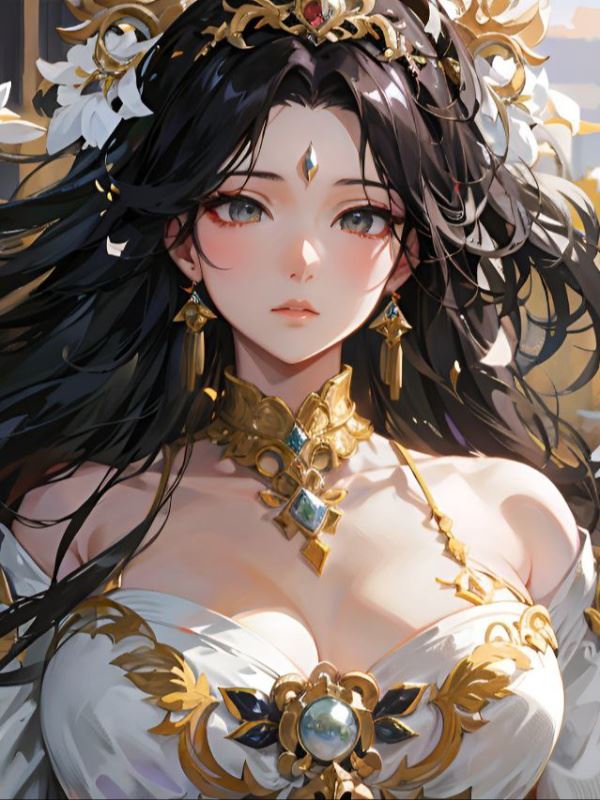
Jiang Rao was the well-known drama-queen beauty of Lushui Village, both delicate and capable of making scenes.


But on this day, Jiang Rao unexpectedly saw the bullet comments and awakened.


Through the bullet comments, she learned that she was actually a cannon-fodder female supporting character in a certain era novel, while the female lead was her half-sister from the same father but different mother. She envied her sister for marrying the town mayor’s driver, while she herself could only marry a rough man. She courted death all the way and ended up miserable, while the rough man would later counterattack and become the richest man.


Startled, Jiang Rao covered her little heart: What? Abandon the richest-man husband? Impossible. Is it that the wife-slave isn’t obedient enough, or the money isn’t fragrant enough?


The villagers discovered that after marriage, Jiang Rao became even more capable of making scenes, pickier than an empress:


“What kind of lousy bed is this? It makes my waist hurt. I want to sleep on a Simmons mattress!”


“This dish tastes awful. I want to eat mountain chicken soup and braised pig’s trotters!”


“This house is both shabby and small. I want to live in a big villa!”


The villagers all said that Lu Shen had married an ancestor who eats well and does nothing, and that life like this would sooner or later become impossible!


As a result, Lu Shen got up earlier than the chickens and went to bed later than the dogs, working hard without complaint, changing his ways every day to satisfy and pamper Jiang Rao. He was forcibly trained by her into becoming all-round skilled, counterattacked to become the richest man, and upgraded their home from a village house to a town house and finally to a provincial capital mansion.


“Without her, there would be no me today.”


Lu Shen was clearly a rough man who did not understand romance, yet because of an unintentional word from Jiang Rao, he would run around the entire city and plant a rose garden overnight just to make her happy.


——


Jiang Yu was reborn. She knew that in her previous life, Jiang Rao had always caused trouble and ended up miserable.


In this life, Jiang Rao was still that dramatic, but the plot went off track: the more Jiang Rao acted up, the more Lu Shen held her at the tip of his heart, pampered her into becoming the richest man’s wife, and until Jiang Yu had endured to the point her hair turned white, she still did not see the two divorce.


Warning: Fictional era setting, meticulous fact-checkers, please proceed with caution.


Novel Items

More
Supernatural Item
A translucent panel that appeared before Jiang Rao's eyes after she was rescued from the river, displaying countless lines of comments and barrage text about the story plot, characters' fates, and upcoming events. It allowed her to see the original novel's plot and commentary, enabling her to awaken and change her fate.
Item
Jiang Tianhua's jacket that he hurriedly took off and draped over Jiang Rao after she was pulled from the river, afraid that his daughter's body would be seen by others.
Materials
Expensive sweets in this era that Ye Wuyou craves. Ling Yu secretly bought a large supply and hides them so she won't eat too many and ruin her teeth. Each day he gives her a few pieces. They are highly valued and Ye Wuyou shared some with Ling Zixiao.
Event
Lin Xiao initiated the engagement discussion with Su Yundai, transferring a large sum of money as a gift. Wei Lin was not informed beforehand and reacted with shock and ambiguity when he discovered it. The engagement status remains unclear as Wei Lin brushed it off as being too busy.
Event
Lu Shen performing chest compressions on Jiang Rao to save her after she drowned in the river. This act led to Chen Cuihua's scheme to force Lu Shen to marry Jiang Rao by claiming he had ruined her reputation.
Betrothal Gifts
Traditional Chinese betrothal gifts including jewelry and other items. Song Dechao gave this set to Jiang Yu as part of his betrothal. Jiang Rao requested to keep this set for her living expenses after marriage. Lu Shen also promised to provide this set as part of his betrothal to Jiang Rao.
Latest Release
DateGroupRelease
2026-08-11shanghai fantasy c45
2026-08-11shanghai fantasy c44
2026-08-11shanghai fantasy c43
2026-08-11shanghai fantasy c42
2026-08-11shanghai fantasy c41
2026-08-11shanghai fantasy c40
2026-08-11shanghai fantasy c39
2026-08-11shanghai fantasy c38
2026-08-11shanghai fantasy c37
2026-08-11shanghai fantasy c36
2026-08-11shanghai fantasy c35
2026-08-11shanghai fantasy c34

Community Reviews

Rating(0 / 5.0, 9votes)
5 stars
0(0%)
4 stars
0(0%)
3 stars
0(0%)
2 stars
0(0%)
1 stars
0(0%)

Popular reviews

... Read More
"Ahhhh, this is so exciting! I can't believe I get to see this for free!" That's what the bullet comments say, and honestly, same energy from me as a reader. Let me break down why this chapter sequence works so well pacing-wise. The author opens with conflict — Tiewazi on the wall, demanding meat, being a terrible human being. Jiang Rao and Lu Shen team up against him. It's fast, it's sharp, it's satisfying. You want to shake this kid and also protect your newly married couple from him. Then — and this is the masterstroke — the author immediately pivots from the highest energy moment to the quietest moment in the book. Tiewazi leaves. Lu Shen apologizes to Jiang Rao. She makes him promise to spoil her. He agrees. And then she goes to lie down. The conflict is over and the chapter just... exhales. The wedding night scene is where the pacing really shows its teeth. It's slow. Deliberate. Every line is loaded with unspoken tension. The bullet comments try to spice things up with their wild speculation about Lu Shen's physique, but Jiang Rao shuts them down with her privacy concern, and they pixelate. The author uses the bullet comments themselves as a pacing device — they speed things up when the scene gets tense, then vanish when intimacy becomes real. Then morning comes. The rooster crows. Porridge simmers. Bird eggs. And just when you think it's all going to be soft and domestic, Jiang Rao drops the bomb: "Go up the mountain with me tonight. There are national relics there. Gold." Cliffhanger. Boom. Chapter ends on that note and I immediately opened the next one. The author knows exactly when to punch you with tension and when to let you breathe. The shift from domestic sweetness to adventure hook is seamless because Jiang Rao's character makes it inevitable — she's not just a wife who cooks and waits, she's someone who sees opportunities.
... Read More
The pacing in this chapter is absolutely relentless. We go from Jiang Rao's arrival to family separation negotiations to physical confrontation in what the narrative itself tells us is 'less than an hour.' That's extraordinary compression. The author structures this like a series of escalating blows. First the mother-in-law's fake sweetness about 'treating you like my own daughter.' Then the immediate pivot to 'hand over your money.' When that fails, the father-in-law joins the attack. When Lu Shen defends his wife, they threaten to starve her. When she agrees to cook separately, they refuse to provide ingredients. Each beat raises the temperature. What's remarkable is how the author uses silence and response patterns to control rhythm. Jiang Rao's repeated non-response to Zhang Fengxia's initial kindness creates tension - we're waiting for the other shoe to drop. When she finally speaks, it's like a door opening after pressure has built. The scene transitions are equally tight. We move from the confrontation in the main room to the private moment with Tiewazi almost seamlessly. The younger brother's entrance serves multiple purposes: it shows Zhang Fengxia's favoritism, it gives us comic relief, and it sets up the chapter's violent climax. The ending is perfectly timed - just when we think the conflict has resolved with the 50/50 work points agreement, Jiang Rao grabs Tiewazi's ear. The chapter doesn't fade out on a diplomatic note; it ends on a physical action that reminds us this family is still at war.
... Read More
The most fascinating character arc in this chapter is Lu Shen's transformation. For twenty-something years, he was the perfect filial son - working the fields, giving all his wages to his parents, eating wild greens while his brother ate eggs. The text tells us 'he never heard a single kind word in return' and he just... accepted it. That's not filial piety, that's conditioned submission. But something shifts the moment he sees his parents gang up on Jiang Rao. The text captures this perfectly: 'They could scheme against him, but they had better not even think about laying a finger on his wife.' This is the birth of a boundary. Lu Shen isn't becoming unfilial - he's becoming human. He's realizing that blind obedience isn't virtue when it enables abuse. Jiang Rao is equally compelling. On the surface, she's the delicate, fair-skinned city girl who's never done farm work. But her sharpness is immediate and instinctive. When Zhang Fengxia tries the emotional manipulation ('we're one family now'), Jiang Rao doesn't fall for it for a second. Her response about the marriage certificate being unfinished is legally precise and emotionally devastating. The relationship between Jiang Rao and Lu Shen is already showing perfect sync - 'As expected of husband and wife, their hearts were in perfect sync.' This isn't just romantic idealism; it's survival strategy. Two people who recognize each other as allies in a hostile environment. And Zhang Fengxia? She's not a cartoon villain. Her calculation is chillingly rational - she believes she's entitled to her son's labor and his wife's dowry. The fact that she can't comprehend Jiang Rao's resistance suggests she's never faced anyone who wouldn't play along.
... Read More
I keep coming back to the bird eggs. Three of them. Smooth and round, slightly larger than chicken eggs. Lu Shen risked his life climbing a dangerous tree on a steep slope — a slope where a child once fell and was paralyzed — just to get these eggs for his wife. Why eggs? Why not just buy some? Why not wait? I think the eggs are symbolic of everything about Lu Shen's character and everything about what this marriage represents. Eggs are potential. They're small, unassuming, but inside them is life. They're a promise of more — not just breakfast, but chickens, more eggs, sustainability. And Lu Shen explicitly connects the dots: "When they grow up, they'll lay eggs for you every day. Chickens lay eggs, and eggs produce more chickens." He's thinking generations ahead. He's not just solving today's problem, he's building a system. The bullet comments are another symbol I can't stop thinking about. They represent Jiang Rao's connection to another world, another consciousness. At first they're just entertainment — gossiping about her husband's body, speculating about the plot. But then they become something else: information. Knowledge. The mountain has relics. Gold. A way out of poverty. The bullet comments are her cheat code, but also her burden. She can't share them with Lu Shen directly — how do you explain that invisible voices in your head are giving you investment advice? She has to filter, translate, manipulate the information without revealing her secret. And then there's the Simmons bed. It's mentioned twice and never seen. It's a symbol of everything Jiang Rao wants and everything Lu Shen promises. It's not just a bed — it's comfort, security, a life different from the one she was born into. When she complains about the hard bed, she's not just talking about her back. She's talking about her entire existence. The marriage certificate they're going to get the next morning? That's the ultimate symbol too. Paper. Ink. A promise made legal. Lu Shen treats it like a religious vow — "his tone almost reverent." In a world where everything is handmade and fragile, that piece of paper is supposed to be permanent. But can paper hold this much weight?
... Read More
There are these moments in the text where the author just paints a picture so vivid I could step right into it. The first one that hit me: Lu Shen washing off in the yard after working. He's drenched in sweat, body giving off a slight odor, and he's afraid it'll bother Jiang Rao. So he fetches a bucket of cold water from the well and pours it over himself right there in the yard. Water dripping from his short black hair, sliding past his sharply defined features, down his chest, disappearing into that cotton cloth barely covering him. Jiang Rao watches this through half-open eyes and her heartbeat quickens. This is cinema. This is not a novel, this is a film. Then there's the morning scene. The rooster crows. Dawn breaks. "The golden morning glow spread across the sky like shining scales." I stopped reading for a second just to sit with that image. Shining scales. Like a fish, like dragon scales, like something alive and breathing light across the sky. And the house itself — it's barely a home. A bed, a cool spot to keep meat from spoiling, a yard where he does carpentry, a well in the corner. They have two bamboo stools and a table that he makes with his own hands. This is a world where furniture is something you build, not something you buy. Where a toothbrush and snow cream from the small shop are luxuries. Where bird eggs are a precious treat worth risking your life for. The mountain scene is also worth mentioning — steep slopes, tall trees, the danger of falling. A child who climbed for greed and was pecked blind by a mother bird, fell, became paralyzed. The world here has consequences. It's not a soft world. What I love is how the setting mirrors the relationship. Both of them are building something from nothing. The table, the stools, the straw mattress, the trust — all of it is handmade, rough around the edges, but theirs.
... Read More
The stakes in this chapter operate on multiple levels, and the author is clever about making us feel each one. On the surface, it's about money - who controls the dowry, who gets half the work points. But the deeper stakes are about survival in a system where ration coupons determine whether you eat or go hungry. When Zhang Fengxia says 'don't expect her to eat our food anymore,' this isn't empty threats. In this time and place, that's a death sentence. The 'Harmonious and Loving Family' title competition adds a brilliant layer. It's not just vanity - it's material benefit. Extra grain, rice, and meat coupons for winning families. This explains why the parents can't simply kick Jiang Rao out; they need the appearance of family harmony to maintain their competitive position. Lu Shen's internal conflict is the emotional core. He wants to separate immediately, but he knows he can't - not while his parents and younger brother depend on his labor. The text makes us feel his trapped position: 'If he asks to separate now, that would leave his parents and younger brother without any labor force.' This isn't just duty; it's the reality of rural survival. The physical stakes become real when Jiang Rao uses Tiewazi as a human shield. Zhang Fengxia would rather slap her own son than let Jiang Rao hurt - but that's exactly what makes the threat so chilling. The mother's love for her precious boy is real, but it's also part of what makes this family system toxic. Tiewazi is both victim and weapon.
See all reviews

Characters

See all characters

Custom lists

Oops…There is nothing here.