Summary

... Read More

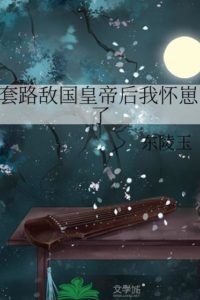
To protect his country, Jiang Huaichu, a prince of Southern Ruo, sought a marriage alliance with the Emperor of their rival nation.

He concealed his true identity, slipped into the enemy country, and placed first in the imperial examinations as the Zhuangyuan. He then exhausted every means possible to get close to the enemy Emperor.

At the Qionglin Banquet, the new Zhuangyuan was drugged. With his consciousness fading, he stumbled into His Majesty’s arms.

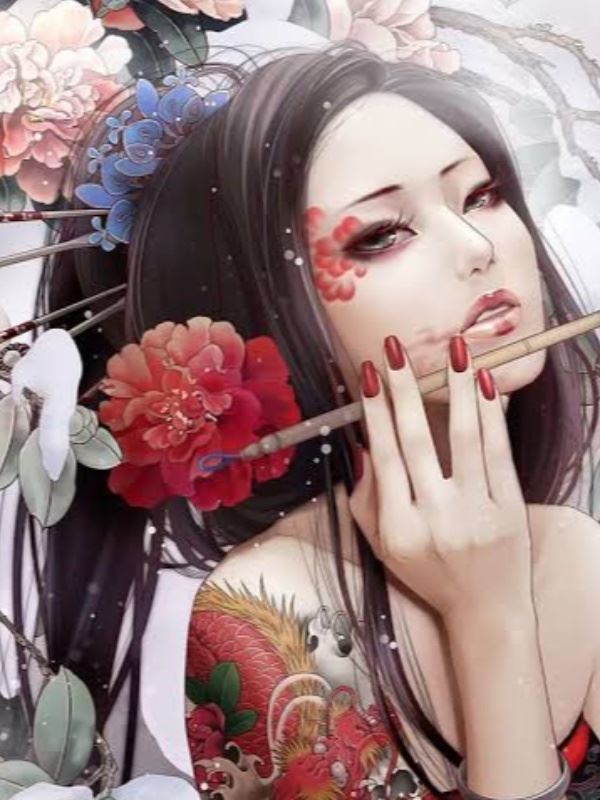
His face was as fair as polished jade—elegant, refined, and aloof.

Xiao Yun, maintaining a facade of stoic restraint, calmly accepted a kiss before… heartlessly pushing him away.

As soon as the Emperor left, the Zhuangyuan’s expression shifted in the blink of an eye into one of utter indifference.

Once the Zhuangyuan “regained his senses,” he expressed deep gratitude for His Majesty’s “noble” and “upright” conduct and sought to “repay” him in every way.

He cared for the Emperor with meticulous devotion, yet wouldn’t let him touch so much as a finger.

With the poised, dignified, and elegant Zhuangyuan swaying before his eyes every day, Xiao Yun’s patience gradually wore thin.

It turns out the Zhuangyuan was an enemy spy, and now, the man had vanished.

After a fruitless search, a furious Xiao Yun led his army to the border of the enemy state to demand his man back.

As the two armies faced off, banners fluttering and battle cries shaking the heavens, the world-renowned young prince of the enemy nation was carefully escorted onto the city walls to face the wind.

…His belly was slightly rounded.

Below the walls, Xiao Yun glanced up, his expression freezing.

He took another look: “Withdraw the troops! Tell my men to fucking retreat right now!”

Notes:


Setting: Alternate History. A scheming, “gentle as jade” uke x a “black-bellied” rogue Emperor seme.


Includes M-preg (male pregnancy). Both leads only have eyes for each other.

Novel Items

More
Pills
A white powder formulated by Jiang Huaichu himself. When rubbed on the hands it becomes colorless and odorless. It was used to drug Emperor Jiang Huaiyi, causing him to faint for six hours, allowing Jiang Huaichu to escape undetected.
Materials
A calligraphy work by the renowned artist Zhang Shiqing. The Young Marquis spent three months searching for it and paid a heavy price to acquire it, then presented it to Jiang Huaichu as a gift at his manor.
Token
A split military token that Yu Lingxin had divided in two before leaving. He gave half to Jiang Nong, granting her authority to mobilize all troops in Fengye for her protection. This proved his trust in her and exposed the forged decree as a lie.
Event
The plan proposed by Miluo Manor for Jiang Huaichu to infiltrate the enemy nation, seduce Emperor Xiao Yun, and bear his child for the sake of Southern Ruo's future. Jiang Huaichu agreed to the mission despite his brother the Emperor's opposition, and drugged him to escape and carry it out.
Manuals
A book read by Jiang Huaichu during his carriage journey back to the border. He occasionally turns a page of this text while seated upright in the carriage, reflecting his scholarly nature and strategic mind.
Item
An emblem engraved on a carriage that allowed it to pass unimpeded through the city gate of the Nanruo capital. The insignia represents the prestigious Miluo Mountain Estate, and its presence ensured the carriage was not stopped or questioned.
Latest Release
DateGroupRelease
2026-08-11shanghai fantasy c10
2026-08-11shanghai fantasy c9
2026-08-11shanghai fantasy c8
2026-08-11shanghai fantasy c7
2026-08-11shanghai fantasy c6
2026-08-11shanghai fantasy c5
2026-08-11shanghai fantasy c4
2026-08-11shanghai fantasy c3
2026-08-11shanghai fantasy c2
2026-08-11shanghai fantasy c1

Community Reviews

Rating(0 / 5.0, 31votes)
5 stars
0(0%)
4 stars
0(0%)
3 stars
0(0%)
2 stars
0(0%)
1 stars
0(0%)

Popular reviews

... Read More
The dialogue in this chapter is absolutely lethal. I need to highlight how each character has a completely distinct voice, and how the author uses conversation as combat. Xie Zhe's voice is all controlled irritation—"What is he playing at?" and "This official does not dislike him." He's always performing composure, always one step away from losing it. His dialogue is clipped, defensive, occasionally petulant. When he says "Let him in" after wrestling with himself, it's the sound of someone who has already lost but refuses to admit it. Jiang Huaichu's voice is smooth, layered, deliberately ambiguous. "Caiqing prefers his"—said while looking at Xie Zhe, meaning he prefers Xiao Yun's chess style, but also maybe meaning something else entirely. His line about people being attracted to opposites is the kind of dialogue that works on three levels simultaneously. And then there's the gatekeeper, who delivers Jiang Huaichu's messages with this perfect blend of professional stiffness and barely-contained amusement. The chess commentary is where the dialogue really shines. Jiang Huaichu describing Xie Zhe's playing style—"steady yet dynamic, flexible and varied, using softness to overcome strength"—while Xiao Yun is literally behind the curtain? That's not just dialogue; that's character assassination through metaphor. Xie Zhe doesn't even realize he's being described until it's too late.
... Read More
Okay, so let me just say—Xie Caiqing's strategy here is genuinely brilliant. The whole scene starts with this absurd premise: he shows up to visit the Commander completely empty-handed, and Xie Zhe's reaction is pure confusion. Like, of course he's confused. In this world, nobody visits anyone without gifts. It's the social contract. But Xie Caiqing flips it on its head with this reasoning that money is like scrap metal to someone of Xie Zhe's status, so why waste time bringing something he doesn't need? That line alone—"a thousand pieces of gold are easy to obtain, a smile from you is hard to earn"—is the kind of plot twist that makes you slam the book shut and stare at the ceiling. But the real plot genius is how the author structures the entire encounter. It's not just a simple visit. There's the gatekeeper relay, the Emperor secretly listening from behind the beaded curtain, the chess game that doubles as a conversation about power dynamics, and then the final request that ties everything together. The qin repair isn't really about the instrument—it's about creating an ongoing excuse to see each other. And Xie Zhe, who has spent years building walls and refusing visitors, ends up letting this kid tug at his sleeve like some kind of romantic comedy protagonist. The plot doesn't just move forward; it deepens every layer.
... Read More
There's a theme running through these chapters that I can't stop thinking about: the relationship between appearance and truth. Xiao Yun spends an entire court session mocking officials for thinking their daughters are good enough for him, and then the text goes out of its way to describe HIS appearance—"tall and well-built, with broad shoulders and a straight waist... the kind of looks that made young ladies blush." But here's the thing: the courtiers had been told he was a "ferocious demon." His appearance doesn't match the rumors. He's handsome, yes, but he's also dangerous. The text says his dignity is "mixed with a hint of roguish teasing, making people feel both uneasy and wildly excited, often unsure whether to advance or retreat." He is literally impossible to read, and that's the point. Then you have Xie Caiqing, who has been wearing a human skin mask—not literally, but functionally. For three years, he's been Jiang Huaichu to the world while secretly being the prince who runs the entire intelligence network. The mask allowed him to operate freely, to build trust without suspicion, to be both invisible and omnipresent. And what about the empress selection itself? The officials keep presenting the same few names for years, treating women like objects to be stored and preserved. "You've been keeping her for me since her teens until her twenties." Xiao Yun flips this on its head by demanding beauty AND virtue, essentially saying the women on the list aren't good enough—which is both genuinely progressive and deeply self-serving. The recurring question seems to be: who is really in control of their own image? And how many masks are we wearing without realizing it?
... Read More
Let me just say: the pacing in these chapters is absolutely immaculate. You start with this massive court scene—tension building, officials kneeling, the emperor dismantling them verbally. It's long, it's detailed, it's the kind of scene where you're leaning forward in your seat because every line of dialogue is a weapon. And then—BAM—chapter break, one month later, and we're suddenly following a carriage on a quiet road. The shift from the noisy, sweaty court to the calm, book-reading Jiang Huaichu is jarring in the best way. It gives you room to breathe while still pulling you forward. Then Rushi flips into the carriage and everything changes. The pacing accelerates again, but differently this time—it's not the slow burn of political tension, it's the rapid-fire revelation of identity. "I am not the Young Master." "What are your orders, Young Master?" "...Jiang Huaichu thought, Forget it." This back-and-forth is so quick, so efficient, and then the emotional gut-punch of "Xie Caiqing?!" And then—another chapter break, another scene shift to the teahouse. Xiao Yun is back, but now we're seeing him through a different lens. He's not just the emperor dealing with marriage pressure; he's the emperor evaluating candidates, discussing corruption, and the text ends on this note about Xie Caiqing arriving in the capital. The structure is basically: court drama → identity reveal → political intrigue, and each section feeds into the next without feeling rushed or dragged out. The author knows exactly when to slow down and when to accelerate. I stayed up way too late reading this.
... Read More
Okay so let me just say—Jiang Huaiyi is one of the most fascinating emperors I've encountered in a while. The way he explodes in Chapter 1 is absolutely legendary. He's furious, yes, but underneath all that rage there's this raw, almost childlike fear of losing his brother. When he says "Did I raise you for all these years just to give Xiao Yun a bargain?" that's not just political anger—that's a brother who has doted on Huaichu his entire life and feels betrayed. And yet, the moment Huaichu submits, the moment he just stands there taking it without talking back, Huaiyi's entire demeanor shifts. He softens. He says "As long as you don't go down the wrong path, do whatever you want to do. If the sky falls, I'm here." That line absolutely wrecked me. The Emperor of Southern Ruo, all-powerful, saying he'll bear the weight of the world for his brother. And then—he faints. From rage. And Huaichu catches him. Of course he catches him. But here's what really got me: Huo Xiao. The general who has been quietly complicit in this whole scheme despite privately opposing it. The scene where he watches Huaichu undress—where Huaichu sheds his furs and robes and reveals this almost translucent, jade-like body—is one of the most charged moments in the entire text. Huo Xiao's heart beats faster, and he's been close to Huaichu for years but has NEVER seen him like this. The power dynamic here is insane. Huaichu is a prince; Huo Xiao is a subject. But Huaichu has always treated him as an elder brother, and now Huo Xiao is the one who knows his secrets, who has helped him plan this suicidal mission, who is about to be the one guarding the border while Huaichu walks into the lion's den. Their relationship is built on this foundation of mutual loyalty that transcends rank, and it's beautiful and terrifying at the same time.
... Read More
The worldbuilding in this text is surprisingly layered for what appears to be a relatively short excerpt. Let me start with the opening image—Jiang Huaichu gazing out at the capital of Nanruo 'hidden behind the hazy spring scenery.' That's not just atmosphere; that's thematic. The capital is beautiful but obscured, just like the political situation. Peace is maintained through careful concealment. Then there's the description of the three pillars holding up Nanruo's stability: the diligent emperor, General Huo guarding the border, and eighteen-year-old Prince Duan. This is efficient worldbuilding—three names, three roles, and suddenly you understand the entire geopolitical landscape. The fact that Prince Duan single-handedly borrowed more troops than an army of two hundred thousand to defend his country at age sixteen? That's not just character backstory; that's worldbuilding through legend. But the most vivid scene has to be the Golden Luan Hall in Chapter 3. The officials 'clad in voluminous court robes' standing 'rigidly in place without daring to move.' The chief eunuch announcing court proceedings. The way the emperor makes them wait two hours before appearing. This is a space of power, and the author makes you feel the weight of it. The jade tablets, the dragon robes, the black boots embroidered with golden dragons approaching—every detail builds a sense of imperial grandeur and terror. And the Miluo Mountain Estate! The text describes it as 'openly a sacred place in the hearts of the common people' while secretly being 'the largest and most tightly-knit intelligence network organization in the entire world.' This duality is brilliant. It's a sanctuary and a weapon, a temple and a spy network. The imagery of 'wherever there are people, there are traces of Miluo spies' gives you chills. This is worldbuilding that operates on multiple levels simultaneously.
See all reviews

Characters

See all characters

Custom lists

Oops…There is nothing here.