Summary

... Read More

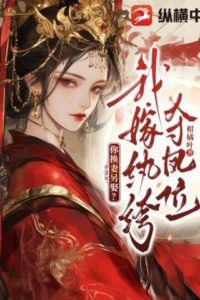
On their wedding night, her husband went off to war. Jiang Zhiyu waited for a year, only to receive an imperial decree announcing her husband’s marriage to a princess.

How could a married man marry a princess? It turned out that the husband’s name on the marriage certificate had long since been swapped. To climb the social ladder, she had been traded to his crippled elder brother, becoming his sister-in-law.

He claimed it was all due to the pressure of power, an act of desperation. To set things right, she offered her medical prescriptions time and again, helping him rise to the top. Yet she was pushed step by step into the abyss, eventually becoming so powerless she could only watch as her loved ones became his stepping stones and her own life was drained to the bone.

With a fatal blow, she was reborn.

Returning to the day she was forced to swap marriages, this time, she takes the initiative! In this life, she will not be a helpless bird trapped in the inner chambers; she will break free, seize power, and live as she pleases.

Not only will she be the scumbag’s sister-in-law, but she will also be the Heir’s Consort and the Matriarch of the Marquis Manor.

Her husband’s legs are crippled, preventing him from inheriting the title? She’ll cure him! Her mother-in-law is timid and lacks management skills? She’ll teach her! From his wheelchair, her new husband stared at her with cold, dark eyes and asked, “What is your goal?”

“Because we are husband and wife for life. You will be the Marquis, and I will be the Marchioness. I can help you take beautiful concubines, but the mistress of this house can only be me.”

Years later, he shoved the Empress’s golden seal into her hands.

“I don’t want a single concubine. But you were right—the mistress of this house can only be you.”

Jiang Zhiyu: Is it too late to regret this now?

Novel Items

More
Document
The official certificate obtained by Xi Xingye and Shen Qinci at the Civil Affairs Bureau. Shen Qinci later tosses it into a toolbox beside her motorcycle, showing her disregard for it.
Manuals
A secret prescription for treating the Empress Dowager, containing ingredients such as snow lotus core from Mount Qilian, ten-year pearl from Five Peak Lake in Yongzhou, and fire fruit from Mohe'er City in the Western Regions. Jiang Zhiyu deliberately wrote it slowly in the past life to buy time for A-Yuan to escape. She had spent days and nights researching it previously, and Gu Jin had taken a similar prescription to trade for an exceptional promotion.
Cultivation Method
A lightness skill that allows users to move swiftly and lightly. Shen Yuan possesses this ability, which he used to carry Xie Chengze up Yu Ji Mountain. Wuji also has superior lightness skills, as demonstrated by his ability to silently remove a roof tile and drop the ledger to Shen Yuan.
Weapon
A massive projectile weapon used by Gu Jin's soldiers to kill A-Yuan in the past life. It whistled through the air at lightning speed and pierced through A-Yuan's body, killing him instantly.
Document
An imperial decree that arrived at Chengen Houfu, ordering Jiang Zhiyu to step aside as an obstacle to Gu Jin's marriage with the Princess Royal. This decree forced the confrontation and marriage switch.
Manuals
One of three Buddhist texts (along with the Diamond Sutra and Heart Sutra) that Jiang Zhiyu copied in the side room of Minghui Tang. Though she does not believe in Buddhism, copying the sutra helped calm her mind and settle into the reality of her rebirth.
Latest Release
DateGroupRelease
2026-08-11shanghai fantasy c10
2026-08-11shanghai fantasy c9
2026-08-11shanghai fantasy c8
2026-08-11shanghai fantasy c7
2026-08-11shanghai fantasy c6
2026-08-11shanghai fantasy c5
2026-08-11shanghai fantasy c4
2026-08-11shanghai fantasy c3
2026-08-11shanghai fantasy c2
2026-08-11shanghai fantasy c1

Community Reviews

Rating(0 / 5.0, 10votes)
5 stars
0(0%)
4 stars
0(0%)
3 stars
0(0%)
2 stars
0(0%)
1 stars
0(0%)

Popular reviews

... Read More
The dialogue in this book is absolutely razor-sharp. Every conversation is a duel, and the characters are all fencing masters. Jiang Zhiyu's voice is my favorite because of how perfectly she modulates it. With the Marchioness, she's deferential but firm — 'Your kindness is appreciated, Mother-in-law, but since fate has decreed it so...' She's using the exact language of a submissive daughter-in-law while simultaneously trapping her mother-in-law in a corner. The line 'I am only being cautious for the sake of the Houfu and him' is delivered with a choked voice and a deep bow, making her look like the wronged party, while the words themselves are a threat wrapped in silk. Gu Jin's dialogue is equally revealing — and not in a good way for him. When he tries to play the victim in the garden, his lines are performative: 'A-Yu, I've wronged you,' 'I had no other choice,' 'Wait for me.' He's reciting the script of a guilty but lovable man, and the narrative makes it clear that Jiang Zhiyu sees right through it. His dialogue is designed to manipulate, and that's exactly what makes him dangerous — he's good at it, he just forgot who he's talking to now. Old Madame's dialogue is sparse but devastating. 'Once something is given away, it is not so easy to take back.' One line, and it carries the weight of decades of household management. She's reminding Jiang Zhiyu that she's already made her move and there's no going back — but also that Jiang Zhiyu's move has consequences for everyone. The narrative voice itself is worth mentioning too. It's close third-person, mostly anchored in Jiang Zhiyu's perspective, but it dips into her past-life memories seamlessly. The contrast between how she interpreted Gu Jin's actions then versus now creates this incredible dramatic irony that makes every line of dialogue feel double-layered.
... Read More
The dialogue in this text is one of those things that makes you stop and appreciate what the author is doing. Every character speaks in a way that reveals their personality without the author having to tell us directly. First Madame says things like this secondhand goods and her voice cuts off when she realizes she has been played. That is not just anger. That is humiliation and the author lets us feel it through the fragmented sentences. But the real magic happens between Jiang Zhiyu and Gu Huaiqiu. When he asks what do you want, his voice is colder than his gaze. That is not just a description. That is the author telling us that Gu Huaiqiu measures everything in terms of threat and utility. He cannot imagine a conversation that is not transactional. And Jiang Zhiyu, instead of backing down, says something that completely disarms him. She says this matter is not about whether you or I are content. Whether we are or not, this is how it must be. Since that is the case, why not make the best of our lives? That line is so simple and so devastating. She is not trying to seduce him. She is not trying to manipulate him. She is stating a fact and offering him an alliance. And the author lets his response be silence and a trace of mockery. He does not know how to handle someone who is not playing his game. That is when she offers to treat his legs. She says I know a bit about medicine. I could try treating them. And when he challenges her, she says twenty percent. Just twenty percent. She does not overpromise. She does not flatter. She is honest and that honesty is what makes him pause. The narrative voice throughout is also worth noting. The author writes in third person but stays close to Jiang Zhiyu's perspective. We feel her calculations, her patience, her quiet determination. When she says no need to rush, the author lets us hear her inner voice without breaking the narrative flow. The tone is restrained but the emotional undercurrent is always there, bubbling just below the surface.
... Read More
The stakes in this section are incredibly high and the author makes sure we understand what happens if Jiang Zhiyu fails. On the surface, the conflict is between Jiang Zhiyu and First Madame. First Madame wants her gone. She guards the empty courtyard herself. She orders servants to watch every move. But the real conflict is internal. Jiang Zhiyu is repeating the mistakes of her past life if she delays. She cannot afford to break her legs. She cannot afford to lose. Every action she takes is a gamble and the author makes that clear. When Gu Huaiqiu tells her to leave, the servant beside him steps forward and looms like a mountain. That is not just description. That is the author showing us the physical danger Jiang Zhiyu is in. She is a woman walking into the home of people who want her dead and she knows it. But she also knows that if she does not try, she will die anyway. The stakes are life and death and the author never lets us forget it. The conflict with the Marchioness is different but equally dangerous. The Marchioness offers her a place in the second branch. She says Fenglin Yuan is close to the main branch. She says we can break down the wall. On the surface this is generous. But the stakes are just as high. If Jiang Zhiyu accepts, she becomes a pawn in the second branch's political games. If she refuses, she loses an ally. The author makes us feel the weight of every decision. What I find most compelling is how the author balances external conflict with internal stakes. First Madame is furious because she has lost control. Gu Huaiqiu is cold because he has lost faith. Jiang Zhiyu is persistent because she has lost everything before and she will not lose again. The author makes us care about the outcome because we understand what each character stands to lose. First Madame stands to lose her position. Gu Huaiqiu stands to lose his dignity. Jiang Zhiyu stands to lose her life. And the suspense is maintained because the author never tells us who will win. We only know that the next move will change everything.
... Read More
I need to talk about this ONE detail because it destroyed me. After Jiang Zhiyu walks past Gu Jin, calling him 'Second Brother' with that calm, polite smile, the narrative drops this: 'Only after passing through the moon gate did Jiang Zhiyu lift the hand hidden in her sleeve. It was already covered in blood from where her nails had dug into her palm.' That's it. That's the whole emotional core of these chapters compressed into one sentence. She wanted to lunge at him. She wanted to bite his neck. She had to physically stop herself. And the only thing keeping her from losing control was the pain in her palm reminding her she was still alive. This is a woman who has died and come back, and her first instinct is still murder. But she can't afford it. She has to be calm. She has to be the gracious, accepting ex-wife. And the cost of that performance is written in blood on her own skin. The Gu Jin scenes are even worse emotionally because they're layered with past-life memory. When he cries and says 'I had no other choice,' the narrative tells us directly: 'In her past life, Jiang Zhiyu had listened to such words, believed them, and felt immense pity for him.' And now? Now she sees it for what it is — his tears aren't for her, they're for the medical prescriptions she carries in her mind and the political power Princess Royal represents. The most heartbreaking line might be the simplest one: 'Wait for him? Pah!' She spat that inwardly. After everything — after a lifetime of waiting, of believing, of being used — she just... doesn't anymore. And that's both devastating and incredibly satisfying to read.
... Read More
The stakes in these chapters are incredibly high, and what's remarkable is how the author makes you feel the danger without a single sword being drawn. Jiang Zhiyu is at her lowest point. She's been stripped of her position, isolated in Ruanyan Ge, and surrounded by people who want to use or destroy her. The Marchioness has been actively working against her. The Princess Royal holds political power that could ruin everything. And Gu Jin — the man she trusted with her life — is now married to the Princess Royal and has every reason to keep her silenced. But here's the thing: Jiang Zhiyu isn't just surviving, she's counter-attacking. Every conversation is a battle, and she's winning them. The confrontation with the Marchioness is the first major conflict, and the stakes are clear — if Jiang Zhiyu makes a scene, she looks unstable and dangerous. If she stays silent, she loses everything. Her solution? She reframes the entire conversation so that complying with the Marchioness's demands actually benefits HER. The stakes escalate when Old Madame gets involved. This is the matriarch who controls the household, and her opinion is everything. When Nanny Huang delivers the message about the mao hour meeting, the tension is palpable — Jiang Zhiyu has to go before this woman who has the power to make or break her completely. And then there's Gu Jin. The personal stakes here are enormous because this isn't just about survival — it's about justice. Jiang Zhiyu died in her past life believing Gu Jin loved her, and that belief was used against her. Every interaction with him now is a test: can she maintain her composure? Can she resist the urge to confront him? The garden scene is a perfect example of this internal conflict playing out against an external one. The author does a brilliant job of making you care about the outcome because Jiang Zhiyu is so clearly the underdog, but also so clearly competent. You're not just rooting for her to survive — you're waiting to see how she dismantles her enemies one conversation at a time.
... Read More
There's so much going on beneath the surface of these chapters that I can't stop thinking about. The Buddhist sutras are the most obvious symbol. Jiang Zhiyu chooses the Śūraṅgama Sūtra specifically — and for those who know, that's the sutra about breaking through illusions and seeing reality as it truly is. She's not copying it for piety; she's copying it because she's literally undergone a rebirth and needs to ground herself in this new reality. The act of copying is meditative, yes, but it's also a ritual of transformation. She's writing herself into this new life, one character at a time. The blood on her palm is another symbol that hits hard. It's hidden — concealed in her sleeve, visible only to the reader. This represents everything Jiang Zhiyu must suppress: her rage, her grief, her desire for vengeance. The pain keeps her alive but also keeps her contained. It's the physical cost of her performance. Then there's the concept of 'fate' that comes up repeatedly. Jiang Zhiyu tells the Marchioness 'it must be fate' and 'since fate has decreed it so, we should follow its will.' But the reader knows this is a lie — or at least, a strategic truth. She's using the language of destiny to mask her own agency. The real theme here might be about who gets to define fate. In her past life, fate was something that happened TO her. Now, she's the one writing it. The dowry and servants are also symbolic — they represent her identity, her history, her power. When she demands they move with her to the eldest branch, she's not just being practical. She's reclaiming every piece of herself that was taken. And Gu Jin's 'sentimental eyes' — in her past life they were a trap, a symbol of false emotion. Now she sees them for what they are: the mask of a man who can perform love but cannot feel it. The eyes she wants to gouge out aren't just organs of sight; they're the instruments of her past-life deception.
See all reviews

Characters

See all characters

Custom lists

Oops…There is nothing here.