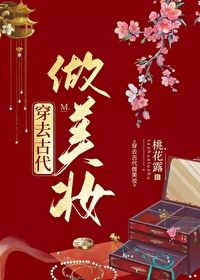
Traveling to Ancient Times to Become a Makeup Artist
Novel Info

Summary

... Read More

After achieving success in her career, Nie Qinghe retired to the mountains to live a lazy, carefree life. Unexpectedly, she became an “ancient-style” internet celebrity, adored by netizens and the media. Then one day, she accidentally transmigrated into the ancient world for real.

 
Her father was a skilled craftsman working as a master for a jewelry shop, and her mother was an expert embroiderer. Despite their talents, the family lived in abject poverty. Her older brother worked as an apprentice, while her younger siblings were underfed and poorly clothed—all because of a blood-sucking grandmother and fourth uncle.
 
The original owner of her body was beautiful and innocent, but she had been blindly obsessed with a “mama’s boy” scholar. She had given him her heart and soul, only for him to treat her as a mere seamstress.
 
Nie Qinghe immediately “burned the paper” on her childhood engagement, cutting ties with the scholar forever. She then found a job in the beauty industry, developing new products and expanding into new markets. Her business flourished.
 
Yet, her neighbors watched the drama unfold with glee. They figured a girl who showed her face in public would surely be rejected by a future mother-in-law and dumped by her fiancé. They believed that no matter how much money she earned, she would never marry and would end up as a loathsome old maid.
 
Nie Qinghe scoffed, Are these jealous losers trying to comfort themselves?
 
Later…
 
The scholar: “Qinghe, why are you ignoring me? My mother wants us to get married early.”
 
The jealous neighbors: “Boss Nie, please take us with you as you get rich!”
 
The toxic relatives from her hometown: “We’re sorry! We’ll never do it again!”
 
Boss Nie also had a savior—a young marquis who was breathtakingly handsome and incredibly powerful, yet had a rebellious streak. Rumor had it that at nine years old, he had beaten his own father and threatened to kill his stepmother with a sword. When his family forced him to study, he secretly ran off to join the army.
 
Nie Qinghe glanced at He Yu beside her. His long eyelashes were lowered, and the tips of his ears were bright red. He was cold on the outside but sweet and devoted on the inside. He was clearly a social anxiety sufferer—so how could anyone call him a paranoid maniac?
 
***
 
【Mini Theater】
 
He Yu 【Nervous】: “Since you like me so much, let’s get married.”
 
Nie Qinghe…

Novel Items

More
Clothing
Traditional Dragon Boat Festival clothing for children, embroidered with crude patterns of the Five Poisonous Creatures. Part of a local custom where children wear these garments besides eating zongzi and hanging mugwort.
Food
Sticky rice dumplings steamed by Ji's mother on Dragon Boat Festival morning. Ji Yanyu was asked to take two to Ji Bai. Sun Daying also gave two zongzi as part of a gift to Zhang Hongzhi's family.
Plant
Plants hung by doorways as a Dragon Boat Festival custom to ward off evil. By the time of the story, they had already withered and dried in the sun.
Item
Carelessly placed spirit money in the ancestral hall that caught fire when the candle fell over, starting the blaze.
Tool
An old, blood-stained woven basket carried on Gou Dan's back, clearly used to carry game before. It had a few holes. Lin Yue used it to catch fish by placing it at a lower point in the river so fish would swim into it.
Clothing
An indigo robe sewn by the original Nie Qinghe for Song Qingyuan from the age of ten. Despite his obvious dissatisfaction with the arranged marriage, he wore the robe she made, though he never showed any gratitude.
Latest Release
DateGroupRelease
2026-08-11shanghai fantasy c14
2026-08-11shanghai fantasy c13
2026-08-11shanghai fantasy c12
2026-08-11shanghai fantasy c11
2026-08-11shanghai fantasy c10
2026-08-11shanghai fantasy c9
2026-08-11shanghai fantasy c8
2026-08-11shanghai fantasy c7
2026-08-11shanghai fantasy c6
2026-08-11shanghai fantasy c5
2026-08-11shanghai fantasy c4
2026-08-11shanghai fantasy c3

Community Reviews

Rating(0 / 5.0, 40votes)
5 stars
0(0%)
4 stars
0(0%)
3 stars
0(0%)
2 stars
0(0%)
1 stars
0(0%)

Popular reviews

... Read More
I need to just stop and appreciate the dialogue in this book because honestly it's one of those things that just works on every level. Let's start with Shopkeeper Liu. The man has twenty years of experience and a sharp mind, and you can hear it in every line he speaks. When he says "Well said!" after Nie Qinghe's argument about women serving women, it's not just approval — it's the sound of a businessman who just saw his competitive edge multiply. And when he offers her terms that are practically a bargain — waiving the shop's cut on hair styling, taking only ten coins per hundred for home visits — you can hear the calculation behind his generosity. He's not being kind. He's being strategic. And the dialogue makes that clear without ever saying it outright. "Qinghe, did the Flower Immortal teach you anything else?" — that line is perfect. It's casual, almost offhand, but it's also the line of a man who's already planning his next move. He's not just hiring help. He's acquiring a weapon against his competitors. And he's asking about it like he's making small talk. Then there's Nie Qinghe, and her voice is just... right. She knows exactly how to navigate these conversations. When she tells Shopkeeper Liu she'll credit him as her teacher, it's not just clever — it's survival. "Only you believe in me. To prevent anyone from saying I'm talking nonsense, I'll just tell them that you're knowledgeable and taught me, and that I'm quick-witted and learned fast!" That's not just dialogue. That's a tactical statement. She's giving him an out, giving herself cover, and showing him she understands the politics of the situation — all in one sentence. But the real star of the dialogue is Second Shopkeeper Lin. Oh my god, the man is a treasure. He starts as an antagonist — the one watching her like a hawk, the one about to scold her for wasting ink and paper. But then she smiles at him, and suddenly he's puffing out his chest and striking a grand pose while writing "Price Tags" in bold, sweeping script. The internal monologue is priceless: "Are you mocking me?" followed by him deliberately using rigid, constrained strokes to make a point, then getting completely disarmed by her compliment about his wife. "Shopkeeper Lin, your calligraphy is superb... Your wife must always praise you for being such a considerate man." — and the way he responds, instinctively puffing out his chest, is one of the funniest moments in these chapters. He goes from hostile to completely charmed in about three seconds, and the author never lets us forget how easily he was manipulated. The dialogue between Nie Qinghe and Madam Luo is also wonderful. It's formal but warm, professional but personal. Madam Luo says "Go ahead. Style my hair however you like, and add a few ornaments." — that's trust, that's expectation, that's a customer who knows she's in good hands even before she knows she is. And Nie Qinghe's explanation of the pricing, the offer to refund if she's not satisfied — it's all delivered with the calm confidence of someone who knows her worth. Even the minor characters have distinct voices. Laishun, the assistant, is present through action rather than speech, but his role in moving screens and bringing trays and posting signs gives him a kind of silent presence that works perfectly. The two second shopkeepers nagging behind Shopkeeper Liu's back — their dialogue is all complaint and anxiety, and it creates this constant background hum of opposition that makes the world feel alive. The narrative voice itself is also worth praising. It's close to Nie Qinghe's perspective but not trapped in it. We get her calculations, her strategies, her observations about Madam Luo's hair and lifestyle — but we also get moments of dramatic irony where we know things the other characters don't. Like when we know Second Shopkeeper Lin is plotting against her while he's simultaneously being charmed by her. The narration lets us see both sides, and that creates this delicious tension in every interaction. And the humor! It's there in the small moments — Lin's mustache twitching with smug satisfaction, his internal monologue about bringing his wife's friends to support her "to save her from total embarrassment." That's not just funny. It's character revelation. We learn everything about him in that one thought. The dialogue never feels like exposition. Even when characters are explaining business terms or pricing structures, it feels natural because it's coming from people who are actually negotiating, not from an author who needs to tell us something. The information is embedded in the interaction. I could quote pages of this dialogue and just laugh or nod along. The author has a real gift for making every character sound like a real person with their own motivations, their own fears, their own ways of navigating the world. And in a story that's partly about a woman finding her voice in a world that wants her silent, that's not just a writing technique — it's the whole point. The way these characters talk is the way they think, the way they fight, the way they survive. And I'm just grateful to be reading it.
... Read More
The opening line — "was already dipping in the west. Still, summer days were long; there was plenty of time between sunset and darkness." — and I'm already transported. You can feel the heat, the lingering light, the lazy pace of a rural summer evening. The author doesn't overdo it but every detail lands. The kitchen scene is where the worldbuilding really shines though. "From a small clay jar behind the stove, she scooped out a bit of vegetable oil with a wooden spoon." That's it. One sentence and I can smell the scallions hitting hot oil. The way she describes the dough drops bobbing and sinking in the soup — there's a rhythm to it, almost cinematic. You're standing in that cramped kitchen watching her work. And then the courtyard meal. Carrying the table outside, arranging benches, bowls, chopsticks. The separation of sexes detail — "even an uncle and his niece wouldn't walk side by side. Father Nie let his niece walk well ahead, trailing about twenty feet behind her" — this is how you show cultural rules without lecturing. You just let it exist in the background like it's normal, which makes it feel infinitely more real. The embroidery workshop world is sketched in lightly but effectively. Mother Nie leading women in needlework, the delivery deadlines, the economic pressure of buying oil and vegetables instead of growing them. This is a family that exists in a specific economic niche — skilled craftspeople who are one bad season away from hardship. The world feels lived-in because the author never forgets that money is always tight.
... Read More
The setting of Liu's Jewelry Pavilion serves as more than just a backdrop - it's a living ecosystem of social dynamics and economic opportunity. The chapter opens with a flower festival banquet scene that immediately establishes the social hierarchy and the value placed on appearance. The Dressing Pavilion is mentioned as a rival establishment, creating a sense of a broader commercial world. What's fascinating is how the author builds the world through economic details - the twenty-coin minimum fee at the Dressing Pavilion, the five-coin rate Nie Qinghe negotiates, the three-hundred-coin monthly wage of her cousin. These numbers ground the story in a tangible economic reality. The jewelry rental service concept is particularly brilliant worldbuilding - it addresses a real social need where middle-class women want to display wealth at important occasions but can't afford to buy. The celestial garden dream sequence Nie Qinghe concocts is described with such vivid detail - pavilions, pagodas, ethereal maidens painting and dancing - that it feels like a fully realized fantasy world within the story. This dream narrative also reflects the cultural context where supernatural experiences were accepted explanations for sudden knowledge or skill.
... Read More
Okay, so this whole section is basically one massive plot knot tied together with social pressure, and I love it. The setup is deceptively simple—girl gets saved by a mysterious guy after falling into a pit, wakes up, and immediately decides to dump her engagement—but the layers underneath are what make it click. The Song family is sitting on this goldmine of social climbing: the father is now a County Magistrate, the son is a Xiucai, and they've been treating Nie Qinghe like a free seamstress this whole time. Meanwhile, the Nies are stuck in this impossible position where they can't just call off the engagement without looking like ungrateful jerks, because the whole family narrative is built on Father Nie saving Father Song's life years ago. That's not just backstory—that's a ticking bomb. And then there's the mystery of who saved Qinghe. The text drops these little breadcrumbs: her face was clean but her hands and hair were muddy, someone carried her to the clinic, she remembers a beautiful deep voice. Is it Song Qingyuan? Is it someone else entirely? The author is playing with reader expectations here—making us assume it might be the guy she's obsessed with, while simultaneously giving us reasons to doubt. The clinic mistress's testimony is basically a plot device to prevent gossip, which is such a smart move because it keeps the focus on Qinghe's internal transformation rather than external scandal. What really sold me is how the engagement breakup isn't handled as a dramatic confrontation but as a slow, strategic fade-out. Mother Nie wants to just announce it, but Qinghe stops her and explains the social mechanics: if the Nies initiate the breakup, the Song family will twist it, smear her reputation, and the Nies have zero power to fight back. So the plan is to let it die naturally. It's a plot move that feels both realistic and satisfying—Qinghe is outsmarting the system instead of crashing into it.
... Read More
The pacing here is exceptional - every scene drives the plot forward while revealing character. The chapter begins with the flower festival setup, moves through the negotiation with the ladies, transitions to the encounter with Manager Liu, and culminates in the hiring decision. There's no wasted space. The tension builds naturally as Nie Qinghe navigates each social interaction, from the initial haggling with Madam Fang to the final pitch about jewelry rental. The author controls engagement through a series of small victories - securing five coins, gaining Manager Liu's attention, proposing the rental service, convincing him with the dream story. Each beat raises the stakes slightly while providing satisfaction. The structure mirrors Nie Qinghe's own strategy: start small, build momentum, then expand. The dream narrative she tells Manager Liu serves as both plot device and thematic element - it's her version of controlling the narrative, just as she's controlling her circumstances. The chapter ends on a note of anticipation - she's hired, the business partnership is forming, but there are still obstacles (the Song family, competitors) that will need addressing.
... Read More
The dialogue in this chapter is distinctive and purposeful. Each character speaks in a way that reveals their social position and personality. Madam Fang's voice is that of a frugal woman who wants to appear generous - her impulsive offer to hire Nie Qinghe followed by immediate regret is perfectly captured. Madam Zhao's mocking tone when she suggests five coins shows her competitive nature. Nie Qinghe's dialogue is measured and strategic - she rarely says more than necessary, always calculating the impact of her words. Manager Liu's speech patterns reflect his position as a businessman - he's polite, apologetic, but also calculating. The exchange about jewelry rental is particularly good dialogue - it moves from problem (women can't afford new jewelry) to solution (rental service) with natural back-and-forth. Nie Qinghe's internal monologue provides another voice - she's constantly analyzing, planning, strategizing. The dream narrative she tells is delivered with confidence and detail, showing how she can perform different versions of herself depending on the audience. The dialogue never feels expository; it's always advancing character or plot.
See all reviews

Characters

See all characters

Custom lists

Oops…There is nothing here.