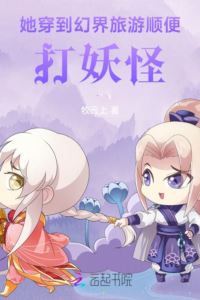
Traveling Through the Fantasy Realm While Accidentally Becoming a Monster Slayer
Novel Info

Summary

... Read More

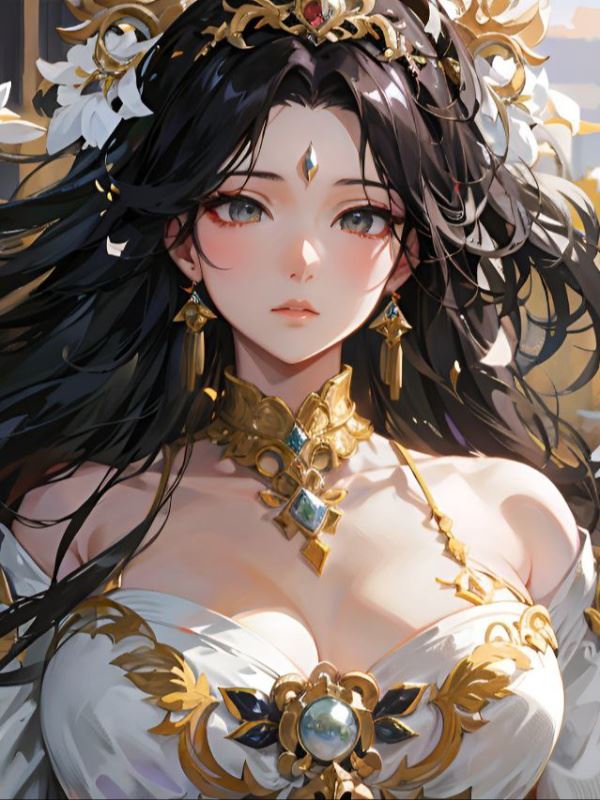
College student Mu Shuiqi was once the Divine Maiden of the Mystic Realm. While still in her mother’s womb, she perished alongside her, but her spiritual root was preserved by the Ice God, allowing her to be reborn in the mortal world.

When she returned to the Mystic Realm, she grew stronger step by step, sweeping across all enemies to avenge her parents.

That same Ice God, the strongest existence in the Mystic Realm, silently cherished her. He owed nothing to the world, but he gave everything to her.

He never once made her a promise—
Yet in the end, he gave her his life.

Novel Items

More
Elixir
A crystalline medicine crafted personally by the Tomb Lord Bingyou. It is refined from Frostbane Grass of the Tomb and the waters of the Lake of Purple Despair. Any mortal who consumes it can resist the deadly cold of the Frozen Tomb. Yi Yao fed it to Mu Shuiqi, which restored warmth to her body.
Materials
A rare herb cultivated within the Frozen Tomb by Bingyou. It is one of hundreds of unique herbs with miraculous properties unlike any found elsewhere. It is used as an ingredient in refining Frostbane Ice.
Item
Tiny insects that rise from the Lake of Purple Despair at dusk, glowing with strange orange light like fireflies. They illuminate the forest around the lake and clothe the wilderness in a veil of mystery.
Potion
A healing potion crafted by Bingyou using Revitalizing Grass that takes a thousand years to grow a single stalk. Three stalks were consumed to brew one bottle. It can restore vitality and heal gravely injured beings but cannot resurrect the dead. The Devourer Serpent drank it and its charred body healed completely.
Bound Beast
Also called Devouring Spirit Snake, a serpent that can become a bonded beast. Once bonded, it is utterly loyal to its master, with its life tied to theirs. It was nearly killed by demonic fire but was saved by Bingyou's Recovery Water. It bit Mu Shuiqi's forehead to complete the bonding ritual, linking its blood spirit with her soul essence.
Ritual
A ritual where a serpent bites the forehead of its prospective master, linking its blood spirit with the master's soul essence. The bond means if the master dies, the beast dies too. It creates a lifelong tie of loyalty and shared strength.
Latest Release
DateGroupRelease
2026-08-11shanghai fantasy c40
2026-08-11shanghai fantasy c39
2026-08-11shanghai fantasy c38
2026-08-11shanghai fantasy c37
2026-08-11shanghai fantasy c36
2026-08-11shanghai fantasy c35
2026-08-11shanghai fantasy c34
2026-08-11shanghai fantasy c33
2026-08-11shanghai fantasy c32
2026-08-11shanghai fantasy c31
2026-08-11shanghai fantasy c30
2026-08-11shanghai fantasy c29

Community Reviews

Rating(0 / 5.0, 20votes)
5 stars
0(0%)
4 stars
0(0%)
3 stars
0(0%)
2 stars
0(0%)
1 stars
0(0%)

Popular reviews

... Read More
Can we just take a moment to appreciate Chou Chou's dialogue? This little snake is the comedic genius of the entire novel and I will die on this hill. "Master, are you going back to see Purple Sorrow Lake thaw?" — concern wrapped in a question. "I'm still just a baby." — said about himself, from a snake who is apparently still growing. The self-pity is immaculate. And then the scene where Yi Yao gets absolutely roasted by Bingyou without even realizing it. Bingyou: "She managed to earn a golden ingot in just one day. Could you do that in the mortal world without using spells?" Yi Yao: "I—I..." Bro got destroyed and he doesn't even know he's been destroyed. The Lord ate one chicken leg and his loyalty is already wavering apparently. But the dialogue between Mu Shuiqi and Bingyou is what really gets me. She's all energy and questions and he's... well, he's barely saying anything and yet every line lands. "Where did Miss Mu spend last night?" "On a tree." The casualness of it! She slept on a tree and he's just... asking. Not judging. Just curious. And when she asks about the bird on the bow—"Is that a phoenix?" and he corrects her: "It's a Vermilion Bird. Even more exalted than the phoenix." He's teaching her things. Building her up. The subtext is SO thick you could spread it on toast. The author's voice in the narration is also perfect—light, observant, never over-explaining. It trusts the reader.
... Read More
Okay, I need to talk about Chou Chou because this little demon is honestly the best character in the book. Like, think about it—he's this tiny creature who's supposed to be a fearsome demon, but half the time he's just worried about his master and being scared out of his mind. The scene where he's trembling and saying "Master, don't go any farther. I'm scared..." while simultaneously preparing to fight an Infant-Eating Beast? That's comedy gold, but it's also genuinely touching because you can tell he cares about her. And Mu Shuiqi? She's this weird mix of ruthless businesswoman and selfless hero. One minute she's calculating profit margins with the shopkeeper's wife like a shrewd merchant, and the next she's charging into a demon's territory to save a pregnant woman she doesn't even know. The contrast is hilarious but also kind of inspiring. She's not some perfect heroine—she admits she's terrified, her palms are sweating, she's internally screaming—but she does it anyway. The relationship between them has this really nice dynamic where they're both useless in different ways. She can't even summon her fire properly until the beast is literally jumping at her face, and Chou Chou keeps saying he's too weak to help but then somehow swallows the demon's spirit and gets stronger. It's like they're both pretending to be more capable than they are, but somehow it works out. I also loved the moment when Chou Chou immediately starts flattering her after she accidentally burns the beast to death. "My master is a genius, learning without a teacher, brilliant beyond compare!" Classic demon sycophant energy, but it's clear he's genuinely proud of her too. They've got this unspoken bond after spending days eating and sleeping together—like, they're not just master and servant, they're actually friends. The pregnant woman scene was brutal though. The beast just circling her, laughing, saying "Human lives are worthless"—it made me so angry. And Mu Shuiqi couldn't just stand by. That's when I realized she's not doing this for glory or money. She's doing it because someone has to. "Saving lives matters more! Didn't you see it just took a woman?" That line hit me hard. She's not a hero by choice, she's a hero because she can't be anything else.
... Read More
Let me just say this: the stakes in this section escalated faster than I thought possible and I am HERE for it. On the surface, Mu Shuiqi's goal is simple—go home. She gets what she wants in Chapter 29. She crosses Sacred Snow Mountain and lands back in Yicheng. Mission accomplished, right? Wrong. Because the moment she returns, the story reveals that her absence has created a crisis that's somehow worse than the original problem. The monster photo. The school forum. Auntie Zhao's worried questions. Cui Mengmeng's tears. All of this exists because Chou Chou carried her out of the bathroom window during her fever. The very act that saved her life is now the thing that could get Chou Chou captured and dissected. "Would they capture it and cut it open for research?" This line hit me like a truck. The stakes shifted from personal (can she go home?) to existential (will her companion be destroyed?). And then there's the romantic conflict, which is operating on a completely different frequency. Bingyou suggests she leave right when Luoying arrives. Is this genuine helpfulness or emotional self-sabotage? The text deliberately keeps it ambiguous: "His tone was light, unreadable." That ambiguity IS the tension. We don't know if he's pushing her away because he cares, or because he's afraid of caring. But the most interesting conflict is the one between two worlds. Mu Shuiqi now has a way to travel between the Mystic Realm and Yicheng—but every time she goes back, she risks exposure. The weather condition (snow plus moonlight, or sunshower) is rare in Yicheng. She can't just pop back and forth whenever she wants. The mechanism exists, but it's constrained by real-world conditions, which means every journey is a calculated risk. The author is layering conflicts like an onion. Personal stakes (homesickness, friendship), romantic stakes (unspoken feelings, misunderstandings), existential stakes (Chou Chou's safety), and cosmic stakes (two worlds connected but fragile). And none of them are resolved. If anything, they're all compounding. That's what makes this section so gripping—you feel the pressure building from every direction at once.
... Read More
The pacing in this section is absolutely wild and I need to unpack why it works so well. Chapter 28 is basically a slow-burn romance scene. Snow, moonlight, osmanthus cakes, a confession that isn't quite a confession. The prose slows down, the descriptions get longer, you can feel the author taking their time here. "The sky was dark and heavy. From the night descended pure white flakes, settling as ice and water upon all things, cleansing the world of its dust and grime." This is cinematic. This is the kind of passage that makes you close the book and just stare at the ceiling. Then Chapter 29 hits like a freight train. Goddess Luoying arrives, Mu Shuiqi gets jealous, flies home in a huff, lands in Yicheng, gets confronted by Auntie Zhao about monster rumors, rushes to her dorm, and discovers the entire school has been talking about her disappearance. The chapter goes from ethereal snow romance to "someone photographed me being carried away by a flying serpent" in approximately three paragraphs. That whiplash is intentional. The author is using contrast as a structural tool. You're still emotionally suspended from the snow scene when suddenly you're dealing with real-world consequences. Mu Shuiqi can't just have her magical romance moment and then go back to normal life—the normal life has been disrupted too. Chapter 30 then pivots again into something almost comedic with Cui Mengmeng's reaction to Chou Chou. "Oh my god!" followed by the snake demon saying "Please take care of me." The tonal shift from drama to awkward comedy is jarring but it keeps you reading. You want to know what happens next in every direction at once. The only thing I'd question is whether the transition from the Mystic Realm back to Yicheng feels too quick. We go from Sacred Snow Mountain to a dorm room in a few paragraphs. But honestly, the urgency of Mu Shuiqi's situation (the monster photo is already circulating) justifies the speed. The story doesn't have time to slow down because her world is literally catching fire.
... Read More
I need to talk about the emotional arc of Mu Shuiqi returning to Xiaoyao Pavilion, because this scene hit me in a way I didn't expect. Earlier in the day, she was turned away by the waiter without even being reported to the manager. He sneered at her strange clothes and basically told her to get lost. And then later, after making over 13,000 dao coins in half a day, she comes back dressed in a "blazing red embroidered gown" and scatters a fistful of coins on the table. "Bring me your ten most expensive dishes," she declares with the air of a rich lady. The waiter doesn't even recognize her at first. "In just half a day, she seemed like a different person—not only more beautiful, but wealthy too." This is the kind of scene that makes you want to cheer out loud. It's not about being mean to the waiter—it's about proving to yourself that you matter, that your worth isn't determined by someone else's prejudice. But what I loved most was how she handled it. She didn't make a scene, she didn't gloat or insult him. She just... ate her expensive meal, fed a peanut to Chou Chou, and then left. The manager was the one who got awkward, offering her a room for two thousand dao coins, and she just laughed it off. "I worked so hard to earn money, I'm not giving it all to you." That line is so relatable—she's not trying to show off, she's just being practical about her hard-earned cash. And then the real emotional payoff came later, when she's sleeping under a tree and hears people gossiping about her. "Did you hear the Infant-Eating Beast kidnapped Zhang Xing's wife?" "Yeah, she went into labor early. Don't know which deity saved her last night, but she's lucky to be alive. This morning she gave birth to a baby boy!" "I heard from the Zhang family's old matron—it was a goddess and a flying serpent who rescued her daughter-in-law. They burned the beast to death with fire. That goddess was as beautiful as a celestial maiden..." She's up in the tree listening to people praise her, and she "didn't know whether to laugh or cry." This is such a human reaction—she saved someone's life, she's exhausted, she's scared, and now people are calling her a goddess. The irony is almost too much. She's not a goddess, she's just someone who couldn't stand by while someone else suffered. The moment with the pregnant woman was emotionally devastating though. "Please, don't eat me! My baby will be born in two months. I beg you—spare us!" The woman's desperation, the beast's cruel laughter, the way it circled her like a victor savoring its prey—it made my chest tight. And then Mu Shuiqi burst through the bushes, panting, and shouted "Stop!" She didn't have a plan. She didn't know if she could actually use her fire. She just... acted. Because watching an innocent woman and her unborn child get killed was worse than any fear she felt. That's the kind of courage that doesn't come from being brave—it comes from caring so much that fear becomes irrelevant. "My stomach hurts so much… I'm afraid the baby will come early." The woman's voice was probably shaking, and Mu Shuiqi had to stay calm even though she was terrified inside. That contrast—her external composure versus internal panic—is so real. Heroes aren't fearless, they're just willing to be scared and do it anyway.
... Read More
I've been thinking about this a lot and I need to get it out: food is the central metaphor of this entire section and it's brilliant. Mu Shuiqi doesn't know how to express care in any language Bingyou understands—she's a mortal girl in an immortal's world, she can't offer spiritual cultivation or ancient wisdom or underworld politics. So she offers FOOD. Lotus seed porridge, osmanthus rice cakes, fried buns, sesame flatbread, fragrant wrapped chicken, beef soup. She buys ALL of it. She carries it all the way back from Ting City. And when she tears off that chicken leg and holds it out to him? That's her saying I see you. You're lonely. You have no money. Let me feed you. The Shaohua Bow is also food-adjacent in a weird way—it's a gift of protection, yes, but it's also an extension of that same impulse. She feeds him; he arms her. It's a exchange of care in the only languages they both speak. And the name Shaohua—do not lament the fleeting years. That's the theme right there. Time is the enemy. Mortals live briefly. Immortals live forever. She's nineteen and he's twenty thousand and the bow is his way of saying the years won't take her. The Dragonblood Tree itself—ten thousand years old, once a Spirit Cherrywood—symbolizes that same tension between permanence and change. Even Chou Chou eating everything and digesting fast is a kind of food symbolism—pure, unfiltered appetite for life.
See all reviews

Characters

See all characters

Custom lists

Oops…There is nothing here.