Summary

... Read More


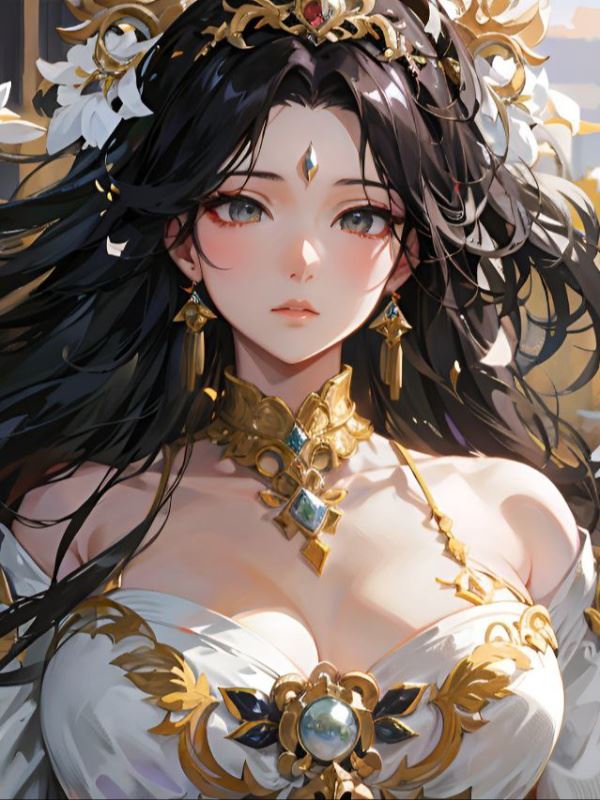
Winning the battle for the family inheritance, Lin Yanran, in her sheer excitement, died in an extreme sports accident. Fortunately, she transmigrated into a novel she had read, becoming the supporting female lead—the primary wife who died of depression because the novel’s male protagonist kept a mistress.

The female lead of the book, of course, was that very mistress who successfully forced her way into the household.

Initially, Lin Yanran had already rolled up her sleeves, fully prepared to empty the scumbag husband’s private treasury and bring the mistress into the estate to torture her.

However, Lin Yanran soon discovered that her ‘eldest son’ seemed to possess some rather unusual capabilities.

Consequently, the style of the household completely shifted:

“Xuan’er, take charge of your younger brother.”

“Xuan’er, take charge of your father.”

“Xuan’er…”

All in all, it was a lifetime of Lin Yanran watching the drama unfold while completely lying flat.

Chu Yunxuan: “Rest, Mother. Leave everything to your son.”

Novel Items

More
Item
Keys to Chu Mochen's private treasury. He snatched them from his waist and threw them at Lin Yanran, telling her to send her own people to move the contents.
Item
A box hidden in a secret compartment behind a bookshelf in Chu Mochen's study, containing the bulk of his private treasury wealth in the form of banknotes and land deeds. Lin Yanran took it and had Wenlan deliver it to her mother for safekeeping.
Document
An official memorial that Chu Mochen agreed to submit to establish Chu Yunxuan as the Heir Apparent. He wrote it overnight after learning his private treasury had been emptied.
Item
The novel in which the original owner of Lin Yanran's body existed. In the original book, Sun Xinrou becomes the ultimate winner and actual matriarch after the original owner's death from heartbreak.
Treasury
The Crown Prince's private medicine storage containing valuable herbs bestowed by the late emperor and current Emperor, aside from those left by the late Empress. Used to treat Yun Mu Jing's condition.
Document
Deeds to manors outside Cangming City. The Dowager Marchioness sent two large manor deeds to Lin Yanran and one medium-sized manor deed to Lady Zhou. These were given as compensation and for Lin Yanran's sons Xuan'er and Heng'er to practice managing affairs.
Latest Release
DateGroupRelease
2026-08-11shanghai fantasy c122
2026-08-11shanghai fantasy c121
2026-08-11shanghai fantasy c120
2026-08-11shanghai fantasy c119
2026-08-11shanghai fantasy c118
2026-08-11shanghai fantasy c117
2026-08-11shanghai fantasy c116
2026-08-11shanghai fantasy c115
2026-08-11shanghai fantasy c114
2026-08-11shanghai fantasy c113
2026-08-11shanghai fantasy c112
2026-08-11shanghai fantasy c111

Community Reviews

Rating(0 / 5.0, 14votes)
5 stars
0(0%)
4 stars
0(0%)
3 stars
0(0%)
2 stars
0(0%)
1 stars
0(0%)

Popular reviews

... Read More
Okay so let me just say—this whole arc is a masterclass in dramatic irony and I am SHOOK. The author doesn't just drop Sun Xinrou into the estate and let us watch her flounder. No, the trap was already sprung before she even crossed the threshold. Chu Mochen literally lays out the entire power structure in one monologue: his back is wounded by the Grand Princess, the Marquis title belongs to Chu Yunxuan, and if Sun Xinrou causes trouble, she gets three people executed while the Grand Princess gets a slap on the wrist. That's not foreshadowing—that's a warning label. And Sun Xinrou? Still doesn't get it. She's asking to change the courtyard name like she's some kind of partner, not a concubine with two taels a month. The plot structure here is brilliant because every scene is a step further into Sun Xinrou's cage. First she's told her belongings were sold. Then she learns her allowance. Then she has to kneel before the Mistress and call the children "Concubine" instead of "Mother." Each beat strips away another layer of her delusion. And Lin Yanran? She's playing 4D chess while Sun Xinrou is still learning checkers. The morning greeting scene is the perfect capstone—Lin Yanran's polite cruelty, the way she directs Sun Xinrou to "go to the Marquis" for help (when he's bedridden), the calculated kindness that's actually a threat. The plot doesn't need explosions or betrayals to be thrilling. This quiet dismantling of a woman's entire worldview is more satisfying than any action scene.
... Read More
I need to talk about Nanny Tian because this character made me genuinely furious—and that's the author doing something right. This woman isn't just a one-note villain. She's tragically, predictably human. Her motivation? Her youngest daughter. She thought if she helped bring the mistress into the estate, her daughter could become a concubine and free the family from bondservant status. It's a calculated gamble that completely backfires because she misread her master entirely. 'This servant only disclosed the County Princess itinerary to the Marquis a few times for the sake of my youngest daughter wish.' The pathetic thing is she genuinely thought she was being smart. And then she kills herself before Lin Yanran can even pass judgment. Wenmei kicking her corpse twice—'Heartless wretch! Not only did you betray your master, but even in death, you had to dirty the master ground'—had me absolutely roaring. But what really got me was Lin Yanran's treatment of her four head maids. In the original story, all four died within two years of the original owner's passing. Wenju was thrown to wild dogs for attempting poison. Lin Yanran docking their salaries instead of punishing them severely? That's not just mercy—that's loyalty investment. She's rewriting their fate. The relationship dynamics between Lin Yanran and her maids feel earned because she treats them as people, not tools. Meanwhile, the Dowager Marchioness's relationship with her son is quietly devastating. She loves him but is horrified by his choices. 'Even if people praised his masculinity on the surface, who wouldn't secretly question his moral character in private?' She's mourning the son she thought she raised while knowing she can't stop what he's done. Complex. Messy. Real.
... Read More
There are so many layers of symbolism packed into these chapters that I can barely contain myself. Let's start with the jade pendant—that's not just a plot device, it's a symbol of legitimate succession itself. Chu Yunyu stealing it from the Heir is basically a microcosm of the entire second branch trying to steal resources and status from the main line. And Lady Zhou's rage isn't just maternal protectiveness; it's the realization that her son's entitlement is going to get him destroyed because he doesn't understand his place in the hierarchy. Then there's the tea ceremony, which is loaded with meaning. The too-hot tea that burns Sun Xinrou's hand—symbolic of the pain she'll face entering this household. Lin Yanran's warning about spilling the tea and going to 'see the King of Hell'—that's a death threat wrapped in domestic etiquette. And the Child-Bestowing Guanyin statue? That's the ultimate ironic gift. Lin Yanran is essentially saying: your only purpose here is to produce heirs for THIS family, not your own. She's reducing Sun Xinrou to a breeding function while wrapping it in the language of duty and contribution. The most powerful symbol though is the house being SOLD. Sun Xinrou arrives expecting honor and status, and Wenmei immediately sells everything—including the house she thought was hers. The text says 'since the Mistress had no interest in them, they were naturally to be sold.' That's the theme in a nutshell: nothing that belongs to this estate exists outside Lin Yanran's permission.
... Read More
The dialogue in this passage is absolutely vicious and I love it. Let me just highlight a few moments that made me spit out my tea. First, Muqing's exchange with Sun Xinrou about her courtyard name. She asks if she can change it. He says she needs the Mistress's permission. She asks if the Marquis can override that. He says yes, but implies the Marquis would never disrespect the Mistress over something trivial. The subtext is screaming: you are nothing here, and everyone knows it. And Muqing is just a steward. A steward. He doesn't even have to try hard to make her feel small. Then there's Lin Yanran's line to Chu Yunyun: "If you need anything, just go to the Marquis; he will certainly be able to resolve it for you." On the surface, this is helpful. But we KNOW the Marquis is bedridden. She's essentially saying: your only recourse is a man who can't help you. Polite. Deadly. Perfect. And Sun Xinrou's internal monologue about her old philosophy—"women conquer men, and men conquer the world"—is such a sharp narrative voice choice. It's not just dialogue; it's the author letting us hear the exact moment a character's entire belief system cracks. The contrast between Sun Xinrou's naive internal voice and Lin Yanran's razor-sharp spoken words creates this incredible tension. Every character speaks from their position of power (or lack thereof), and you can feel the hierarchy in every exchange.
... Read More
I need to talk about Lin Yanran because THIS WOMAN is everything. There's one line that absolutely wrecked me: "Your mother used to believe in love, but now that love is shattered, no one can be my opponent." She says it so casually, almost offhand, like she's discussing the weather. But it's a whole origin story in one sentence. This woman was hurt. She was betrayed. And instead of crumbling, she became something else entirely—something cold and precise and absolutely formidable. And the way she handles her sons? Chef's kiss. Chu Yunxuan wants to charge in and beat up the newcomers, and Lin Yanran doesn't scold him or shame him. She just takes control—literally grabbing his collar from Wenlan—and says, "I've already beaten them myself." Then she sets boundaries: you can deal with the kids, just don't hurt Sun Xinrou because she's your father's woman. It's practical, it's protective, and it shows she's teaching her son to be strategic, not reckless. But the most fascinating relationship dynamic is between Lin Yanran and Sun Xinrou. Sun Xinrou genuinely believed the old mantra: "women conquer men, and men conquer the world." She thought if she could just win the Marquis, she'd win everything. The moment she realizes the Marquis is powerless against his own wife—a member of the Imperial family—her entire philosophy collapses. And Lin Yanran? She doesn't gloat. She doesn't even seem to notice Sun Xinrou's internal crisis. That's the real power move. The fact that Sun Xinrou's entire worldview shattering goes completely unacknowledged by the person who caused it? That's dominance at its finest.
... Read More
I keep coming back to this one detail: Sun Xinrou doesn't like the name "Shiyun Courtyard" (Servant of Clouds) and wants to change it. Do you realize what the author is doing here? The name itself is a symbol of her entire position. She's not the Mistress. She's not even truly a wife. She's a servant—clothed in silk but still a servant. And the fact that she can't even change the name of the courtyard she's given tells the whole story of her powerlessness. Then there's the money. Two taels a month. One meat dish per meal. Two sets of clothes. The author lists these details with such clinical precision, almost like an inventory. It's not just world-building—it's a commentary on how women in this society are commodified. Sun Xinrou thought she was entering as a concubine, a woman with status. Instead, she's being given an allowance like a household expense. Her "private assets" were sold by the Mistress's people, and even that wasn't discussed with her. She had no voice in her own economic fate. And the most powerful symbol? The Marquis's back. The wounds inflicted by the Grand Princess Changning. This physical mark of power—literally written on the man Sun Xinrou thought she could control—serves as a constant reminder that some hierarchies cannot be climbed. No amount of charm or manipulation can heal a wound inflicted by the Imperial family. The body itself becomes a map of power, and Sun Xinrou is standing at the bottom of it.
See all reviews

Characters

See all characters

Custom lists

Oops…There is nothing here.