Summary

... Read More

Synopsis:
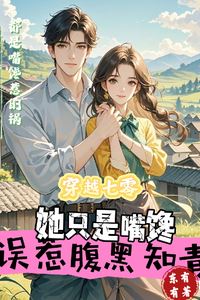
Su Meier wakes up one day to discover that she has transmigrated—into the body of Su Mei’er, a young woman who took her own life over a failed romance.
To make matters worse, she’s landed in the struggling early years of the 1970s, where food is scarce, clothes are patched, and simply getting by is a daily challenge.
The one small consolation? She’s not from the very bottom of society. At least her father is the captain of the local production brigade.
But she’s not the original Su Mei’er.
She’s someone who can’t stand hardship.
As if that weren’t enough, the original owner of the body was a lazy glutton with a terrible reputation. Now Su Meier has to work hard to repair that image—though one thing she absolutely refuses to change is her love of good food.
Unfortunately, in an era of shortages, delicious meals are almost impossible to come by.
That is, until she discovers a hidden gem among the educated youths—a remarkable young man. From that moment on, she has only one thought…

Novel Items

More
Materials
A highly prized luxury snack in this era of scarce supplies. Stored in a glass jar/tin, owned by Song Cili who has a whole room full of snacks. Traded by Song Cili to Su Meier in exchange for two fish. The value of the jar far exceeded the two fish. Su Meier shared them with Su Dabao, Xiaobao, and her parents.
Materials
A one-yuan bill given by Mother Liang to Su Meier as pocket money. In this era, one yuan could buy approximately a hundred eggs, making it a considerable sum. Mother Liang gave it because she felt guilty for not thinking things through regarding Su Meier's safety at the riverbank.
Betrothal Gift
Offered by the Qin family as part of the betrothal gifts for the wedding between Bei Qinghuan and Qin Zhenghua. Mei Suqin proposed this as part of the wedding arrangements.
Weapon
A wooden bow Su Meier plans to build using a lever structure of three wood pieces, two rubber bands for elasticity, and a bamboo tube to launch arrows. It is based on her university graduation project and intended for hunting rabbits and wild game.
Material
Elastic bands needed for the compound bow. Su Meier considers using elastic from pants but decides to ask her mother, a tailor, for spare elastic instead.
Food
Ling Yu obtained some candy and gave it to Ye Wuyou while they were working in the fields. It helped melt away much of her fatigue.
Latest Release
DateGroupRelease
2026-08-11shanghai fantasy c26
2026-08-11shanghai fantasy c25
2026-08-11shanghai fantasy c24
2026-08-11shanghai fantasy c23
2026-08-11shanghai fantasy c22
2026-08-11shanghai fantasy c21
2026-08-11shanghai fantasy c20
2026-08-11shanghai fantasy c19
2026-08-11shanghai fantasy c18
2026-08-11shanghai fantasy c17
2026-08-11shanghai fantasy c16
2026-08-11shanghai fantasy c15

Community Reviews

Rating(0 / 5.0, 21votes)
5 stars
0(0%)
4 stars
0(0%)
3 stars
0(0%)
2 stars
0(0%)
1 stars
0(0%)

Popular reviews

... Read More
I need to talk about the emotional core of this story because it's doing something really subtle and I think a lot of readers might miss it. The original Su Meier didn't just get her heart broken — she was devastated enough to literally throw herself at a wall. That's not a normal reaction to a breakup. That's the kind of reaction that comes from someone who had everything tied up in one person, and then had it all ripped away without explanation. Tao You'an left without saying goodbye. No closure, no conversation, just gone. And the mother's reaction to her daughter's amnesia is the most emotionally complex thing in these first three chapters. She says "Maybe it's better if you don't remember. Those sad things aren't worth holding onto." But there's something underneath that. Is she protecting her daughter? Or is she protecting herself from having to face what happened? The original owner's desperation is palpable even though we never see the actual breakup scene. We only see the aftermath — the bump on the head, the village gossip, the mother's quiet hope that her daughter has moved on. That's powerful storytelling. The author is making us feel the weight of something we never actually witnessed. And then there's Su Meier's own emotional journey. She's a modern woman who stayed up three nights straight working on design drawings and then woke up in 1975. Her initial reaction isn't panic or dramatic acceptance — it's practical. "At least, Su Meier knew she could never do something like that." She's horrified by the original owner's desperation and makes a conscious decision: she won't throw her life away over a man. That's a really strong emotional statement that tells us everything we need to know about who this character is. The romance hasn't even started yet and I'm already emotionally invested. That's rare.
... Read More
I have to say, the scene where Su Meier is literally building a compound bow in her family's courtyard with NOTHING but her hands is one of those moments that just sticks with you. Think about it. No power tools. No proper materials. Just 'several suitable pieces of wood in the courtyard' and two blisters already forming. And she's not some random person — she's a weapons systems designer who spent nights on a light machine gun design before transmigrating. The contrast between her actual expertise and the primitive setting is kind of hilarious. The details are what make it work. The wood shavings scattered across the ground. Su Dabao squatting nearby watching her like 'Auntie, what are you making?' The fact that she considers making him a smaller bow to play with — that tiny moment of warmth in the middle of all this survival mode energy. And then the rubber band problem! She literally thinks 'I could use the elastic from a pair of pants. No, wait. There was no need to take apart clothing. Her mother was a tailor.' This is the kind of practical, almost comedic problem-solving that makes the world feel SO real. She's not just transmigrated into some fantasy world — she's in a place where you have to think about where you're going to get elastic bands. The dinner scene that follows is equally vivid. The square dining table, the vegetable dishes, the chopsticks clinking, the whole family arranged around it like a stage. You can literally see the power dynamics playing out — Liang Shufen defending her daughter, Zhang Aiyuan's passive-aggressive greens comment, Su Mingding stepping in. The setting isn't just background, it's actively shaping every interaction.
... Read More
I need to talk about Song Cili because this character is doing SO MUCH with very little screen time. The moment he looks at that gray rabbit and asks 'You hunted this with a bow and arrow?' — that's it, I'm done. He's the first person in this entire story who actually LOOKS at Su Meier and sees something she doesn't want seen. Think about it: everyone else sees either a spoiled captain's daughter or a clumsy farm worker. But Song Cili notices the precision of the kill, the fact that one rabbit was shot through the heart while another was deliberately wounded. He pieces together that this isn't luck. And his response? He doesn't gush or praise her — he just quietly negotiates the trade and says he'll come to her house at eight. That restraint is everything. It's the opposite of Shen Jianyang, who is basically drooling over her and immediately trying to barter his own body for a dead rabbit. The contrast between these two men is so sharp it hurts. Shen Jianyang is all surface — he sees a pretty girl with rabbits and his brain goes straight to 'how do I get food from her.' Song Cili sees the same girl and his brain goes to 'what is she actually capable of.' I also love the dynamic with Mother Liang. The scene where she secretly brings Su Meier a boiled egg and rubber bands, whispering that 'your father knows too,' is one of the most tender moments in this batch. It's a mother who understands her daughter's secret project and chooses to enable it rather than stop her. That's not traditional maternal behavior in these kinds of stories — usually the mom is the voice of reason telling the girl to behave. Here, Mother Liang is basically an accomplice. And then there's Fang Zhaodi, who represents the kind of female rivalry that always shows up when a new person enters a group. 'She's slow herself, drags everyone down' — Ouch. But Huang Yurong's response ('she's new, we should be understanding') and Jiang Honglian's offer to help later show that not all the women are hostile. The social ecosystem at the threshing ground is actually really nuanced. Su Meier is navigating a minefield of class tension (she's a captain's daughter doing manual labor), gender expectations (pampered girls aren't supposed to be this capable), and her own hidden agenda (hunting while pretending to work). Every conversation she has is layered with things unsaid.
... Read More
Let me just say this upfront: the stakes in this novel are deceptively high. On the surface, it's about a girl hunting rabbits and making friends in a village. But underneath? Everything is a performance, and one wrong move could cost her everything. Take the work point scene. Five points. That's it. But in this world, work points determine survival. They determine whether you eat, whether you're respected, whether you're labeled a troublemaker. Lin Siyu's decision to redistribute Su Meier's points isn't just administrative—it's a power move. And Su Meier's acceptance of it? That's the real tension. Is she genuinely indifferent, or is she playing the long game? The author never lets you forget that in this environment, every interaction is potentially dangerous. Then there's the Song Cili thread, where the stakes are equally high but in a completely different way. When he says, "Miss Su is truly different. Compared to the people here... you seem rather out of place," he's not just making small talk. He's probing. He's trying to understand what she is, and she has to decide how much to reveal. The tension here isn't about life or death—it's about trust. Can she let him in? Should she? And the subplot with Zheng Qingning? The girl in white who seems almost delighted when Su Meier mentions breaking up with Senior Tao? That's a slow-burn conflict that's been simmering since before the story started, and the author is planting seeds that are going to pay off later. The stakes keep rising, and I'm not even halfway through.
... Read More
Okay so let me just start by saying: the very first scene with Song Cili and Su Meier bargaining over snacks is genuinely one of the most charming plot setups I've seen in a while. She walks in and immediately demands ALL the snacks in his room, and his response? Not even a flicker of reluctance. He just says, "If you can make it, and it passes my inspection, every snack in that room will belong to you." This is a man who is either incredibly confident or incredibly intrigued—and honestly, both are true. The plot here is doing something really smart: it's establishing their dynamic through a seemingly trivial negotiation that actually carries enormous weight. Snacks in this setting are worth at least a thousand yuan. This isn't a casual bet; it's a test. Then she pivots immediately to asking for fiberglass and ox tendon for her bow. The way the plot layers these requests is brilliant—first the playful demand, then the serious one, and Song Cili's reaction shows he's already taking her seriously. He doesn't push back. He just says he can get it. The narrative is building this quiet but steady alliance between them, and I'm here for it. The work point subplot is where things get interesting though. Su Meier gets penalized half a point for arriving late, and then Lin Siyu transfers some of her earned points to Jiang Honglian under the guise of "fairness." Su Meier's reaction—just accepting it and saying five points is fine—is either genuine indifference or masterful acting. Given that she's a transmigrator with modern sensibilities, I'm leaning toward the latter. She doesn't care about the points; she cares about getting back to her bow and her hunting plans. The plot is weaving together romance, survival, and social maneuvering in a way that feels organic rather than forced.
... Read More
Let me be honest with you — I picked this up because the transmigration genre is usually either too slow or too rushed, and I was skeptical. But the pacing here is actually really well calibrated. Chapter 1 does three things in quick succession: it establishes the transmigration, it reveals the era and setting, and it introduces the central emotional wound (the breakup). That's a lot to pack in, and the author handles it by using Su Meier's confusion as a vehicle for exposition. We learn about the 1970s setting through her own disbelief rather than through an info-dump. The poster that says "Great Motherland, Flourishing and Prosperous, 1975!" is a perfect example — it's a single detail that does massive worldbuilding work. Chapter 2 is a nice pivot. After the emotional intensity of Chapter 1, we get a lighter chapter focused on daily life and survival. The fishing scene with Dabao is charming and gives us a breather while also showing us Su Meier's resourcefulness. The pacing here is deliberately slower, which makes the return to plot tension in Chapter 3 feel more impactful. Chapter 3 introduces the educated youths, and the chapter ends on a note that makes me want to immediately start Chapter 4. The author knows how to build curiosity — Shen Jianyang spotting the fish and immediately wanting to approach Su Meier, the tall handsome one in blue watching indifferently. These are classic romantic tension setup moves, and they work because the author has earned our attention by making us care about Su Meier first. The chapter lengths are varied but consistent. None of them feel padded or rushed. Each one advances the story while also developing character or setting. That's the kind of pacing that keeps you reading past midnight.
See all reviews

Characters

See all characters

Custom lists

Oops…There is nothing here.