Transmigrated into the Rugged Farmer’s Wife in Ancient Times
Novel Info
  • Author:
  • 凤五
  • Status:Ongoing

Summary

... Read More

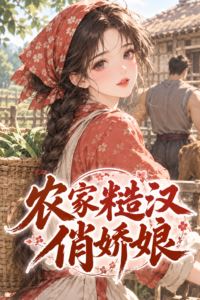
Yue Ning merely closed her eyes for a brief nap, only to wake up having transmigrated into another world.

.

She had become a “half-dead” bride who had been bought for two taels of silver.

.

Her new home was desperately poor, with barely anything of value inside. Her husband was a rugged man who was “half-disabled” and soft-hearted despite his intimidating appearance.

.

To make matters worse, his parents showed him no affection, and even his elder brother and sister-in-law treated him with disdain.

.

Looking at the empty rice jar, it was obvious that once they finished this meal, they wouldn’t know where the next one was coming from.

.

Yue Ning’s eyes gleamed with determination as she grabbed her “soft-hearted black bun” of a husband by the arm.

.

“Come on,” she declared. “Let’s go mooch a meal off your parents’ family!”

Novel Items

More
Document
A folded sheet of paper containing the names of people the Liya clan has quietly placed within the imperial palace over the years. Lady Xilin Gioro gives this to Yu Mu as a hidden asset to help her navigate palace life. The family has been gathering information about the palace all this time.
Clothing
The robe Yu Mu wears after her morning washing and grooming. Her hair is arranged in an elegant coiled hairstyle, adorned with matching hairpins and earrings, before she sets off to pay respects to her mother.
Event
An event two years prior where Yu Mu participated and was designated as a Secondary Consort to Crown Prince Yinreng. This selection set the course for her current situation.
Event
Palace-assigned senior matrons instruct future imperial consorts in court etiquette, palace taboos, the preferences of every important imperial family member, and proper etiquette for every occasion. Yu Mu is currently undergoing these lessons.
Event
The wedding between Xi Xingye and Shen Qingci held at a luxurious hotel in the capital. The ceremony was disrupted multiple times - first by Shen family members at the entrance, then by the photo scandal attempt, and finally by debt collectors who tied up the Shen family. Despite the chaos, the wedding proceeded.
Item
A large pink flower held during the wedding procession, with one end held by Yu Mu and the other by the Crown Prince.
Latest Release
DateGroupRelease
2026-08-11shanghai fantasy c6
2026-08-11shanghai fantasy c5
2026-08-11shanghai fantasy c4
2026-08-11shanghai fantasy c3
2026-08-11shanghai fantasy c2
2026-08-11shanghai fantasy c1

Community Reviews

Rating(0 / 5.0, 16votes)
5 stars
0(0%)
4 stars
0(0%)
3 stars
0(0%)
2 stars
0(0%)
1 stars
0(0%)

Popular reviews

... Read More
I have to talk about Lady Tang. This woman is a COMEDIC GEM. After her night with Yinreng, she struts around boasting: "The Crown Prince really doesn't know how to take it easy on people. My waist still aches from serving His Highness last night." She has NO IDEA that he was mentally elsewhere the entire time. She thinks she won. She's already planning how to bear a son and become a Secondary Consort. And then he comes back that evening and walks PAST her to Lady Lin's room. The dialogue throughout this batch is so natural, so character-specific. Yu Mu's quiet "I know. I understand. You don't have to worry so much" — three short sentences that carry an ocean of resignation. Lüxiu's nervous rambling, trying to comfort her mistress and accidentally almost insulting her fertility. Madam Zhang's internal panic. These aren't people delivering monologues; they're people reacting in real time, thinking with their mouths. Yinreng's dialogue is notably sparse, which is perfect. He's a man of few words, raised to be controlled and measured. When he tells Lady Lin "The summer heat has left me with little appetite," it's polite, deflective, and completely honest — just not about the right thing. The author trusts the reader to understand what he's not saying. That restraint is what makes his character feel real.
... Read More
There's this line that stopped me cold: "No wonder people always said the women of the imperial harem eventually became bitter. When dozens of women shared a single man, as long as you never fell in love, everything was manageable. But once your heart became involved, how could you possibly stop worrying?" This is the thesis statement of the entire novel, isn't it? The central paradox of Yu Mu's situation. She came in with a survival strategy — stay detached, coast peacefully, don't invest emotionally. And for a while it worked. But the moment she started liking Yinreng, the moment she started making him egg tarts and noticing how he liked his food and feeling genuinely happy when he visited, she lost her armor. The harem doesn't punish women for failing to be strategic. It punishes them for being human. The sweet and sour dishes are a symbol of this too. Yu Mu learns that Yinreng likes things that are sweet but with a tang — complexity, not just one note. And their relationship becomes the same way. It's not purely happy, not purely tragic. It's sweet and sour, like the food she's cooking for him while he's not coming home to eat it. The egg tarts themselves — a dessert, something indulgent, something made with care — represent everything that's fragile about their connection. Beautiful, sweet, and completely vulnerable to being left to go cold.
... Read More
Okay so I need to talk about Lüxiu because honestly she's my favorite character in this whole arc and I don't think enough people are noticing her. Let me set the scene: Yu Mu deliberately tests her with tasks, everyone figures out who the mistress chose, and Lüxiu? She doesn't get arrogant. She doesn't let it go to her head. She just... stays composed. Meanwhile Caihe, the one who DIDN'T get chosen, is quietly removed from service before Yu Mu can even process what happened. Madam Zhang handles it so fast that Yu Mu is left stunned. "She was deeply disappointed that she hadn't been chosen. Unfortunately, the moment that disappointment began to show on her face, Madam Zhang quietly had her removed from Yu Mu's service." This is the part that genuinely chilled me. Not because it's evil — it's actually protective. But it's a brutal lesson for Yu Mu about what her world looks like. If she'd transmigrated as a regular servant instead of a noble lady, could she have survived that kind of political whack-a-mole? The text literally makes her think about this, and it hit me hard. Then there's Madam Zhang herself. She's basically Yu Mu's shadow consultant, feeding her intelligence about the other concubines, the staff, the layout — all before Yu Mu has even properly settled in. And Linglan, the senior maid, who quietly excuses herself to give Madam Zhang and Yu Mu privacy? That's not just good servant behavior, that's emotional intelligence on another level. The relationship between Yu Mu and her household staff is developing in this really organic way. It's not the typical transmigration fantasy where the MC immediately dominates everyone. She's still figuring things out, still nervous, still a newbie in every sense. But she's also smart enough to delegate trust — to Lüxiu, to Madam Zhang, to Linglan — and that's what makes her feel like a real person rather than a power fantasy vehicle. I'm also intrigued by how Yinreng treats Lüxiu versus how he treats Yu Mu. He's gentle with Yu Mu but clearly respects Lüxiu's competence. The dynamics here are layered in a way I didn't expect from a palace romance setup.
... Read More
Can we just take a moment to appreciate how natural the dialogue is in this text? Because I've read enough palace dramas where every conversation sounds like it was written by someone who's never actually talked to another human being, and this is refreshingly different. Yinreng's voice is particularly well-done. He's not delivering monologues or dropping philosophical wisdom in every line. He's a guy who's a bit drunk, a bit tired, and trying to make his new wife feel comfortable. His dialogue is short, practical, and laced with this dry warmth: "Is His Highness all right?" / "Please don't worry, Your Ladyship... His Highness has only had a little too much to drink. He isn't drunk." He Zhong's line is perfect servant-speak — respectful but not groveling, informative but not over-sharing. And Yinreng's response to Yu Mu's stiffness: "Come. Sit with me. Let's talk for a while." Not commanding. Not romantic in a performative way. Just... inviting. It reveals everything about his character in six words. The exchange about her nickname is my favorite dialogue scene in this whole batch: "Do you have a childhood nickname?" / "My mother always called me Mu Mu at home." / "Mu Mu... That's rather adorable." He's not flirting. He's genuinely curious. And the fact that he repeats her nickname softly before calling it adorable — that's not dialogue writing, that's character writing disguised as dialogue. Yu Mu's voice is equally well-crafted. She's formal when she needs to be ("You flatter me, Your Highness") but her internal monologue is completely different — sarcastic, anxious, occasionally funny. The contrast between her external politeness and internal chaos is where the humor lives: "Well... thank you very much." (thinking about not having to do the full husband-wife bow) / "Wearing an incredibly heavy headdress, she had absolutely no desire for such an 'honor.'" That's not just witty — that's a distinctly modern voice breaking through a historical setting, which is basically the whole premise of the transmigration genre done right. Even the concubine introductions through Madam Zhang's report have distinct voices embedded in them. Lady Tang is "outspoken and likes playing little tricks." Lady Zhang is "quiet and keeps to herself." Lady Lin is older and "her temperament isn't to his liking." Three women, three sentences, three fully realized character sketches. That's efficient dialogue-driven characterization at its finest.
... Read More
The opening paragraph is deceptively simple: 'Early in the morning, the entire capital was already sweltering beneath the blazing summer sun.' Heat. Sweat. People hurrying. It sets the tone for everything — this is a world that is physically oppressive, where everyone is moving with purpose, where there's no room to breathe. Then we're taken to the western district, 'a district of elegant residences belonging to nobles and high-ranking officials,' and immediately the author reminds us that even within privilege, there are hierarchies. 'Even among the aristocracy, however, there were different levels of status.' The Liya family's estate is 'relatively modest' — a five-courtyard mansion with an 'exquisitely decorated two-story pavilion.' Every detail places them in the social pecking order. They're not at the top, but they're not at the bottom either. And that in-between space is where Yu Mu's entire existence will play out. The morning routine scene is where the worldbuilding really comes alive. The maids waiting outside the door, the wet nurse Madam Zhang in her 'dark purple Manchu robe,' the bed curtains being drawn aside to reveal the young lady's silhouette. There's a choreography to this world — every movement has meaning, every position is assigned. The author doesn't explain the rules; they show them through action. And the time period detail — 'It was now the twenty-ninth year of Emperor Kangxi's reign' — grounds everything in real history without feeling like a textbook. The Han Banner vs. Manchu Eight Banners distinction, the imperial selection process, the mourning period delaying the wedding — all of it builds a world that feels lived-in and specific. This isn't a generic 'ancient China' backdrop. It's Kangxi's capital, with all its particular tensions and hierarchies. I can smell the summer heat and the incense and the anxiety.
... Read More
I need to talk about the stakes in this text because on the surface it reads like a gentle palace romance, but underneath there's this constant undercurrent of danger that makes every sweet moment feel earned rather than given. Let's start with Caihe. The text handles her removal with this chilling efficiency: "She was deeply disappointed that she hadn't been chosen. Unfortunately, the moment that disappointment began to show on her face, Madam Zhang quietly had her removed from Yu Mu's service. From then on, Caihe never appeared before her mistress again." Never appeared again. Not transferred. Not reassigned pleasantly. Just... gone. And Yu Mu's reaction is one of the most important moments in this entire batch. She doesn't feel relief that it wasn't her. She feels gratitude mixed with terror. She imagines herself as an ordinary servant and realizes she wouldn't have survived. That's not world-building — that's a full philosophical statement about power, privilege, and luck. The stakes are established not through battles or conspiracies but through this single quiet moment of understanding. Yu Mu now knows: in this world, disappointment gets people disappeared. And she's about to spend the rest of her life in a palace where everyone has reasons to be disappointed in her. Then there's the structural conflict: Lady Liujia arrives in one month. Same rank. Same status. And Yu Mu has to navigate an entire month of being the sole Secondary Consort before sharing that position. The text makes this clear: "That month would determine whether her future life in Yuqing Palace would be easy or difficult." That's a ticking clock embedded in the romance. Every sweet moment with Yinreng is shadowed by the knowledge that another woman is coming, that the balance of power will shift, that this happiness is temporary unless she secures her position. And the existing concubines! Lady Tang, Lady Zhang, Lady Lin — all already established, all already part of Yinreng's life. Yu Mu isn't just entering a marriage; she's entering a completed ecosystem where she's the newcomer, the outsider, the one who has to prove herself. But here's what I love about how the author handles these stakes: they never feel manipulative. The danger is real but it's not screaming at you. It's in the quiet glances, the unspoken threats, the way Madam Zhang reports information like she's filing a military briefing. The conflict is there, simmering beneath every conversation, and that's what makes the tender moments between Yu Mu and Yinreng feel genuinely precious rather than naive.
See all reviews

Characters

See all characters

Custom lists

Oops…There is nothing here.