Summary

... Read More

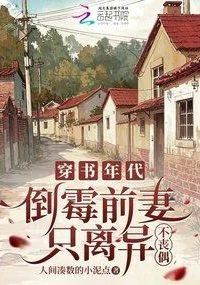
Zhao Ran has transmigrated into a book as the unlucky ex-wife of the male lead. She is the sacrificial ex-wife who is ground down to death before the male lead, a regimental commander, finally has an epiphany and bestows all his love and responsibility upon the female lead instead. Even the ex-wife’s three daughters, out of gratitude for the female lead’s care, continue to support the female lead’s son even after they are married, leading them to be loathed by their in-laws and ultimately meeting tragic ends. In an era where even basic survival is a struggle, she is faced with such a family of relatives and a husband who always expected the original soul to suffer in silence. Having transmigrated from the modern world, Zhao Ran decides she will indeed become the male lead’s ex-wife—but not by becoming a ghost; she’s getting a divorce!

Novel Items

More
Storage Divine Skill
A storage divine skill that creates an internal space containing an endless expanse of black soil, a well, and a small stream. It can be used to hide and retrieve items. When Xu Zhitao entered it with Young Master Shen, she discovered he lost his consciousness inside and behaved like a puppet following her commands. The effect persisted even outside the Kongjian.
Document
Chen Wanyue's savings passbook which she offered to Song Ruannin to help with her sister's medical treatment.
Item
Cash found inside a box within Yang Jianjun's cabinet, alongside his military medals. Zhao Ran took this money with her to the hospital for expenses.
Item
A cabinet that Yang Jianjun kept locked, claiming it contained important factory documents. Neither the three daughters nor the original host were allowed to touch it. Zhao Ran smashed it open with a brick and discovered military uniforms, blankets, military medals, 300 yuan cash, and the savings passbook inside.
Item
A cart from Xiao Jun's family used to transport Zhao Ran to the hospital. Xiao Jun's mother spread wheat straw in the cart for her comfort. Zhao Ran paid 30 yuan to Grandma Sun and 50 yuan total for the transportation and childcare arrangements.
Event
The medical emergency and surgery that Zhao Ran underwent after transmigrating. The original host had died from this same condition because Yang Jianjun abandoned her to help others. Zhao Ran survived after taking decisive action to get to the hospital herself.
Latest Release
DateGroupRelease
2026-08-11shanghai fantasy c10
2026-08-11shanghai fantasy c9
2026-08-11shanghai fantasy c8
2026-08-11shanghai fantasy c7
2026-08-11shanghai fantasy c6
2026-08-11shanghai fantasy c5
2026-08-11shanghai fantasy c4
2026-08-11shanghai fantasy c3
2026-08-11shanghai fantasy c2
2026-08-11shanghai fantasy c1

Community Reviews

Rating(0 / 5.0, 14votes)
5 stars
0(0%)
4 stars
0(0%)
3 stars
0(0%)
2 stars
0(0%)
1 stars
0(0%)

Popular reviews

... Read More
Let me be honest with you: I went into this expecting a slow, tedious story about a woman suffering in an unhappy marriage. And yes, the opening chapters do move at a deliberate pace, almost painfully so. We spend time understanding Zhao Ran's situation, her financial exploitation, her emotional isolation. It could have dragged. But the author makes a crucial decision around the hospital scene that changes everything. The structure here is almost surgical. We get the setup—Zhao Ran in the hospital, Yang Jianjun absent, the mounting tension of unpaid bills. Then the inciting incident: she discovers the money is gone. Instead of collapsing, she acts. She goes to the payment office, she goes to the police station, she sets the trap. And then—the payoff. Yang Jianjun arrives, she performs, she reveals, he unravels. All of this happens in what feels like real time, and the pacing never lets you breathe. What I found most impressive is how the author controls the release of information. We learn about Yang Jianjun's true nature gradually, through Zhao Ran's observations and memories, but the full picture only comes together in the hospital ward. The confrontation scene is structured like a detective story in reverse—the reader knows what is happening before the characters do, and we watch Yang Jianjun dig his own grave with every defensive word he speaks. The chapter breaks also work well here. Each one ends on a note that propels you forward: the realization of betrayal, the police report, the public confrontation. There is no filler, no unnecessary scene. Every moment serves the central arc of Zhao Ran's awakening and her decision to fight back.
... Read More
The stakes here are immediate and visceral. Zhao Ran is dying. Not metaphorically dying—actually dying. Acute appendicitis can kill, and she's aware of it. The conflict isn't just marital strife; it's a battle for her life. Every moment she spends at home instead of the hospital is a risk. The external conflict is clear: Yang Jianjun's negligence, his willingness to prioritize strangers over his wife. But the internal conflict is deeper. Zhao Ran is grappling with the original host's memories, her own rage, and the fear of what might have been. She's not just fighting for survival; she's fighting to reclaim agency. The tension is masterfully built. When she asks, "Where did you go?" while waiting for the cart, the reader feels the dread. Will he show up? Will she survive? The author doesn't let up. Even after the surgery, the conflict escalates. Yang Jianjun's apology feels hollow, and Zhao Ran knows it. She sees his guilt but also his defensiveness. The stakes shift from physical survival to emotional and financial autonomy. She takes the passbook, decides to manage the household finances, and sets boundaries. The suspense is maintained through small details: the trembling hands, the cold gaze, the unspoken threats. What does Yang Jianjun really think? Is he remorseful or calculating? The novel keeps us guessing. The climax isn't a grand confrontation; it's a quiet realization that Zhao Ran is no longer the same woman. She's learned to prioritize herself. The conflict will likely escalate as she asserts more control, and Yang Jianjun resists. But for now, the stakes are clear: survival, independence, and the chance to rewrite her fate. It's gripping because it's personal. We're not just watching a plot; we're witnessing a woman's awakening.
... Read More
I have to talk about this line: 'Are you hungry? How about some dough drop soup for breakfast?' Because on the surface it's just... a meal offer. But listen to how casual it is. She's basically saying 'I'm going to feed you people' with the energy of someone ordering takeout. That contrast between the enormity of what she's doing—taking responsibility for three children—and the mundanity of the delivery? Chef's kiss. The author isn't letting Zhao Ran monologue about her feelings or give any big speech. She just offers soup. And then immediately pivots to 'I'll go to the market at noon to buy some things, so we can have proper meals from now on.' That 'from now on' is doing so much heavy lifting. It's a promise wrapped in a grocery list. I love that the dialogue feels this natural. No one's giving speeches. They're just... existing together, figuring it out, one meal at a time. It makes me want to read more just to hear what comes next.
... Read More
This story is layered with symbolism, and the cabinet is the centerpiece. On the surface, it's just a locked box containing Yang Jianjun's medals, cash, and passbook. But it represents everything about their marriage: secrecy, control, emotional abuse. The original host worshipped him, kept his things locked away, believed his lies about 'important documents.' The cabinet was a physical manifestation of his power over her. When Zhao Ran smashes it open, she's not just retrieving money; she's breaking the illusion. She sees the truth: he's been hiding wealth, manipulating her ignorance. The savings passbook, with its meticulous records of fifty-yuan deposits, shows his calculated control. He knew exactly how much he earned and chose to give her only ten yuan a month. That's not frugality; it's oppression. The novel also explores the theme of self-sacrifice as a trap. The original host died because she prioritized everyone else's needs over her own survival. Zhao Ran's transmigration is a chance to rewrite that narrative. She refuses to be the 'great woman' who sacrifices her family for the greater good. Instead, she chooses herself. The hospital scene, where she handles everything alone, reinforces this. She's not waiting for rescue; she's taking charge. The recurring motif of pain—appendicitis, emotional pain, the pain of betrayal—ties into the theme of awakening. Zhao Ran's physical suffering mirrors the original host's emotional suffering. But where the original host endured, Zhao Ran acts. The novel critiques the cultural expectation that wives should be selfless, silent, and subservient. It asks: what happens when a woman wakes up to that? The answer is rebellion.
... Read More
Okay so this one moment right here—"she struggled for a long time, still unable to refer to herself as 'Mom'—it was just too awkward for her"—I need to sit with this for a second. Zhao Ran has been through literally everything, right? She's got a Kongjian, she's surviving, she's taking care of three kids. But the title of 'Mom' still feels like it's on loan to someone else. That's not weakness, that's actually devastating in the best way. It shows she takes it seriously enough to be terrified of getting it wrong. And those three little ones? They're just staring at her with hunger-widened eyes. She notices that. She notices them. That's the whole relationship right there—she doesn't know how to be a mom yet, but she's already showing up. I keep wondering if she'll ever say it out loud, or if that's the arc the author is building toward. Because the fact that she offers to buy proper meals and go to the market instead of running away? That's not nothing. That's her choosing them, over and over, even when the word itself still sticks in her throat.
... Read More
I need to talk about the dialogue in this section because it is genuinely exceptional, and not just because it is well-written. It is because every line serves a purpose, and the voices are so distinct that you could tell who is speaking without any attribution. Yang Jianjun's dialogue is full of deflection and aggression. He never takes responsibility. Even when he is caught red-handed, his first instinct is to blame, to shout, to make it about everyone else. His lines are short, sharp, often incomplete—like a man who is so used to controlling conversations that he panics when he loses control. "Shut up! I've already paid your medical bills. Get out of here now!" That is not a husband talking to his wife. That is a man trying to reassert dominance. But Zhao Ran's dialogue is where the real magic happens. Watch how she shifts from one voice to another. First, the submissive wife: "You've told me several times that you'd only let me go to the city with you if I fixed my habit of saying the wrong things. I'm just too stupid; I never learn." It is devastating because it is exactly what he has told her, weaponized back at him. Then the performance: sobbing, trembling, clinging to his arms. And then—the real voice, the one she has been saving for six years: "You wanted everyone in the hospital to laugh at me." The dialogue between Zhao Ran and the police officers is also worth noting. She knows exactly how to perform for them—how much vulnerability, how much desperation, how much credibility. She speaks politely, without an accent, in standard Mandarin. She is reading the room and adjusting her performance accordingly. This is a woman who has spent her entire life navigating hostile environments, and she is using every tool she has.
See all reviews

Characters

See all characters

Custom lists

Oops…There is nothing here.