Summary

... Read More

(Strong Female Lead, Strong Male Lead, Lighthearted Monster Battles,  Power Fantasy , Team Growth, Female Lead Is the Absolute Core, No Saintly/Mary Sue Behavior)

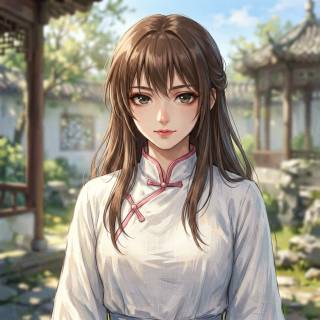
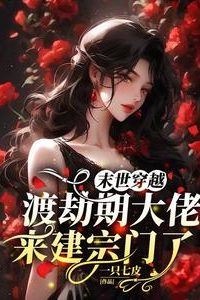
Xia Ruxi, a mighty cultivator at the Tribulation Transcendence stage, stood at the pinnacle of the cultivation world. But when she failed to withstand the final Heavenly Tribulation lightning, she was unexpectedly thrown through a portal into another world—a modern era in the midst of an apocalypse.

The journey through the dimensional rift leaves her drained: her spiritual energy is completely depleted, her spiritual core shattered, her spirit beast falls into a deep slumber, and her natal flying sword is sealed away.

No matter.

Starting over has never frightened Xia Ruxi. She will rebuild her strength from scratch, adapt to this strange new world, and embark on a brand-new path of cultivation amidst the apocalypse.

Novel Items

More
Arcane Treasures
A spatial artifact left by the original owner's mother. It contains a miniature space capable of storing living creatures, unlike ordinary Storage Pouches. Song Xunzhen uses it to isolate spirit insects and plans to capture Medicine-Seeking Bees.
Elixir
A first-tier healing liquid in a small white porcelain bottle. It is a glowing milky-white flowing liquid that melts on contact and flows directly to wounds across the body. Xia Ruxi used her last bottle to heal Pei Yuanxiu's severe injuries, which depleted her remaining spiritual energy.
Elixir
A healing medicine carried by Xia Ruxi in her storage ring, intended for treating her own minor injuries after the fall.
Elixir
One bottle remaining in Xia Ruxi's storage, saved for emergencies. She decided not to use it on Pei Yuanxiu, reserving it for when it truly matters.
Weapon
A dagger stored in Ye Wuyou's space. She drew it with full intention to stab Ling Yu when she felt herself weakening and lost control during their fight, but collapsed from exhaustion before she could use it.
Weapon
Xia Ruxi's personal flying sword that was lost during her fall through the Heavenly Tribulation. She was unable to summon it while falling due to her shattered spiritual palace and depleted spiritual energy.
Latest Release
DateGroupRelease
2026-08-11shanghai fantasy c10
2026-08-11shanghai fantasy c9
2026-08-11shanghai fantasy c8
2026-08-11shanghai fantasy c7
2026-08-11shanghai fantasy c6
2026-08-11shanghai fantasy c5
2026-08-11shanghai fantasy c4
2026-08-11shanghai fantasy c3
2026-08-11shanghai fantasy c2
2026-08-11shanghai fantasy c1

Community Reviews

Rating(0 / 5.0, 10votes)
5 stars
0(0%)
4 stars
0(0%)
3 stars
0(0%)
2 stars
0(0%)
1 stars
0(0%)

Popular reviews

... Read More
Okay I need to talk about this scene where Xia Ruxi absolutely DESTROYS Hua Zaitian with words before she even uses her spiritual pressure. The dialogue here is so sharp it's almost comical. Her line about 'you people only remembered the part about being able to rob others' had me literally yelling at my phone. And then the follow-up—'given your comprehension ability, you probably still won't understand what a team means'—that's not even a threat, that's just pure condescension delivered like it's nothing. The author really understands how to make a character's voice feel distinct. Hua Zaitian being left completely speechless, just standing there with 'his entire face twisted'—it's humiliating in the best way. And the contrast between her casual cruelty and the formal setting of sect leaders is hilarious. I love that she doesn't even raise her voice during most of this. She's just stating facts while everyone else is crumbling. The line 'if you anger me further, none of you are leaving' is delivered with such casual menace too. Like, I get that she's powerful but the way she just tosses out threats about scattering ashes while maintaining complete composure? Chef's kiss.
... Read More
"A trace of a smile crept onto the corner of Pei Yuanxiu's lips." That's it. That's the whole romantic tension of this section right there. A trace. A corner. Barely there. And yet it says everything about how he's starting to feel about this woman who just appeared out of nowhere and healed his fatal wounds. I need to talk about the campfire scene though because it's so quietly devastating in the best way. She's eating roasted fish she grilled herself, and 'a satisfied smile bloomed across her face, making her look a lot less otherworldly than before.' For someone who carries the weight of a shattered spiritual mansion and the loneliness of being stranded in an alien world, that moment of pure, simple contentment over grilled fish? That's the most human thing about her. And he sees it. He notices it. The man who 'maintained his unruffled exterior' through everything just watches her eat and thinks she's fascinating. Then there's the race scene—'their mismatched outfits contrasted with their perfectly synchronized, agile movements.' Synchronized. That word alone made me pause. They're not just matching each other physically; there's this rhythm developing between them, like they're learning the same dance without knowing the steps. And when she wins and walks toward the stream 'her hem swayed as if mirroring the joy in her heart,' Pei Yuanxiu can't stop smiling. 'Unaware that a doting curve always lingered at the corner of his lips nowadays.' Nowadays. As in, it's become a habit. He's been caught doing it so often that even he doesn't notice anymore. The emotional beats here are all understated. No grand confessions, no dramatic declarations. Just two people who keep finding reasons to stay in the same room, who keep making excuses to interact, who keep revealing pieces of themselves without meaning to. And honestly? That's so much more romantic than any big scene could be.
... Read More
'The tower was gilded completely in gold and looked extremely magnificent.' That's such a simple sentence but it paints the whole picture. I love how the author describes the pagoda expanding until it 'virtually covered the entire square, flashing with golden light.' There's something almost cinematic about this image—this massive golden structure rising up and dominating the space. And then the detail that this is still Xia Ruxi 'keeping its size controlled' and its true form wouldn't even fit inside the Qingyun Sect? That's worldbuilding through implication rather than exposition, which I think is much more effective. You don't need a paragraph explaining the power levels when a single detail like that tells you everything. The golden light flashing, the sheer scale of it—it creates this sense of awe and intimidation that fits perfectly with Xia Ruxi's character. She's not just powerful, she's extravagantly powerful. The pagoda itself feels like an extension of her personality. I also appreciate the practical details woven in: the nine floors, six checkpoints, the death teleportation mechanic. These aren't just random game mechanics—they add stakes and tension to what's essentially a tournament arc. The author knows how to build a world that feels lived-in and functional.
... Read More
I know this is a minor character but I couldn't help but feel for Zinv. While everyone else is posturing and threatening and plotting revenge, she's just sitting there 'pale' with her 'internal organs felt like they were churning.' That detail is so viscerally human. After all the dramatic dialogue and spiritual pressure displays, we get this one moment of pure, unfiltered fear from someone who's just along for the ride. She's not a sect leader, she's not a protagonist, she's just a person who got caught up in something way bigger than herself. And her line 'Brother Hua, I'm not resigned to this' feels genuine—not the calculated anger of Hua Zaitian vowing revenge, but the raw panic of someone who knows they're outmatched. It's easy to get swept up in the main character's power fantasy but moments like this remind me there are real people in this world with real consequences. I also found myself oddly invested in Bai Yanrou's silence throughout this whole scene. She's been brought back to the national base only to be treated like 'street rats' without her master. Her parents were killed by Xia Ruxi. She's lost everything and she's standing there letting Yu Shen do all the talking. There's a grief there that the text doesn't explicitly show but I can feel it underneath. I wonder if she'll find her own voice in this story or if she'll remain this shadow figure following others' agendas.
... Read More
There's something really interesting happening thematically with the Xuanhuang Pagoda trial. Xia Ruxi explicitly states her motivation: 'I wanted even more was for the disciples to become familiar with one another so that if a need for cooperation arises in the future, they can stand united against outsiders rather than slaughtering each other.' This is the core theme right here—unity versus division, cooperation versus internal conflict. And the pagoda itself becomes this symbol of that ideal. It's a shared trial, a communal experience where everyone faces the same challenges. The fact that it's nine floors with increasing difficulty mirrors the idea of growth through adversity. But what's particularly sharp is the contrast with Hua Zaitian's sect, who represent everything Xia Ruxi is trying to move beyond—sect leaders who only think about robbing others, who can't even understand the concept of a team. The pagoda is her answer to that toxic individualism. And then you have Yu Shen and Bai Yanrou choosing the opposite path, aligning with Hua Zaitian for revenge. They're rejecting the possibility of cooperation and doubling down on old grudges. I think the story is setting up a clear thematic divide: those who choose to work together versus those who choose to tear each other apart. The pagoda trial will probably test not just strength but the ability to trust and rely on others.
... Read More
I'm still recovering from the tonal whiplash of these chapters and I need to process it. The author just—just—drops a full exposition dump about the zombie apocalypse, the mutated world, the survival bases, the traitor within the ranks, and then immediately pivots to a woman threatening to stir-fry a sentient vine. How is this even coherent? And yet it works. It actually works so well. Let me break down why the pacing here is secretly brilliant. Chapter 4 opens with Xia Ruxi failing at cultivation—immediate stakes, we see her limitation, we understand her vulnerability. Then Pei Yuanxiu explains the world in one smooth monologue that hits all the key beats: the mist, the mutation, the bases, the bullet. Efficient. No filler. And right when you think the chapter is going to stay in 'serious survival mode,' he asks 'what shall we eat later?' and suddenly we're racing down cliffs and hunting fish. The transition into Chapter 5 is where it really shines. The cave scene feels like a breath of calm after the exposition, almost domestic in its simplicity. Then the race—pure kinetic energy. Then the stream conversation where they discuss the future of the world, and Xia Ruxi's internal monologue reveals she sees this as a 'primordial world of cultivation just beginning to gestate.' The author is layering world-building on top of character interaction on top of rising personal stakes (the traitor, the hunters closing in), and it never feels crowded. The vine-fighting sequence is the standout pacing moment though. It starts as a genuine threat—'a vine as thick as an adult's arm whipped through the air'—and then Xia Ruxi's internal dialogue immediately undercuts the tension with 'A mere blade of grass wants to assassinate your aunt-grandma? Watch me strip you and turn you into stir-fried greens.' The author uses humor as a pressure valve, releasing the tension so the next scene can build it back up. This is textbook pacing control, and it's executed with remarkable ease.
See all reviews

Characters

See all characters

Custom lists

Oops…There is nothing here.