Transmigrated in the 70’s: My Villain Son Picks Trash to Support Me
+Add to Custom List
Genres:
Novel Info

Summary

... Read More

【Raising a Child + Military Marriage + Daily Life + First Love】

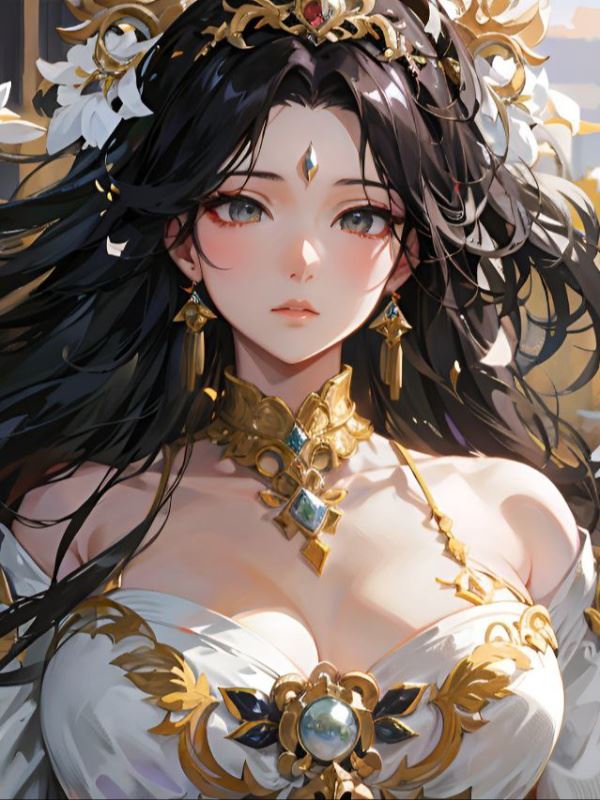
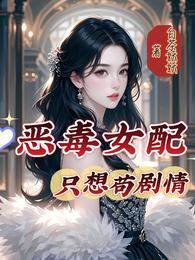
When she woke up, rich and beautiful Xu Yao found herself once again transmigrated into the 1970s—this time as the mother of the little world’s future big villain!

The original owner was all curves and no brains. After scheming to marry her beloved and failing, she bore a son with another man. She blamed all her misfortune on the child, beating and scolding him constantly, until he grew up twisted and resentful. Later, once he became the great villain, the very first person he took revenge on… was his own mother!

World Consciousness: Because of a time-space error, you accidentally entered this world and caused the villain’s birth. Therefore, you must guide and redeem him!

Xu Yao: “?? You want me to start off by raising the son who’s supposed to kill me?!” shivering in fear

… Meanwhile, little Xu Jia’an wished every day for his abusive mother to die.

Novel Items

More
Materials
Scratchy, nutritionless ground cornstalks that was the only food in the house. Xu Yao cooked it into a lumpy porridge for her son.
Food
Food items eaten by Moke Moke to restore stamina. She ate two steamed buns to restore her stamina to 141 after Cheng Shijia left.
Materials
A man's phone number carved by Xu Yao with a fire poker. She intends to contact him for child support, though six years have passed and he may have moved on.
Arcane Treasures
Xu Yao's transmigration mission: redeem the little villain, prevent his blackening, and guide him to become a good person to prevent the world from collapsing.
Item
Qin Ya asked Wang Ma to buy buns for breakfast, offering them as a playful reward to Shi Jianchuan for behaving well the previous night.
Tool
Scissors that Shen Qingci had prepared and used to cut Shen Lan's long pants into boxer shorts at the wedding venue as punishment for his disrespectful behavior.
Latest Release
DateGroupRelease
2026-08-11shanghai fantasy c146
2026-08-11shanghai fantasy c145
2026-08-11shanghai fantasy c144
2026-08-11shanghai fantasy c143
2026-08-11shanghai fantasy c142
2026-08-11shanghai fantasy c141
2026-08-11shanghai fantasy c140
2026-08-11shanghai fantasy c139
2026-08-11shanghai fantasy c138
2026-08-11shanghai fantasy c137
2026-08-11shanghai fantasy c136
2026-08-11shanghai fantasy c135

Community Reviews

Rating(0 / 5.0, 20votes)
5 stars
0(0%)
4 stars
0(0%)
3 stars
0(0%)
2 stars
0(0%)
1 stars
0(0%)

Popular reviews

... Read More
Can we just take a moment to appreciate how well-written the dialogue is in this section? Like, I can tell who's speaking without looking at the names, and that's not always the case in novels I read. Xu Yao's voice is sharp, practical, and laced with this dry humor that comes from surviving hard things. When she tells Xu Jia'an her standards for a husband—"tall, rich, handsome, owns a car and a house, and both parents dead"—it's funny but it's ALSO a genuine expression of her worldview. She's not being sarcastic for comedy's sake; she's being honest about how impossible it is to find a good man, and she's deflecting the real question (will she remarry?) with humor. That's a very specific character voice, and it's consistent. Xu Gang is another standout. His dialogue is minimal but each line carries weight. "I ain't dead yet! You think you can bully my sister? Next time—woman or not—I'll beat the crap out of you." That's not just a threat; that's a character moment. This boy who was bullied for his face, who works hard, who loves his sister fiercely—he speaks in short, hard sentences because that's how he protects himself and his family. The brick-splitting scene doesn't need dialogue at all; the action speaks for him. Then there's Aunt Wu, who is honestly one of my favorite side characters now. "Look at your An'an, so skinny—I've already thickened my skin enough to steal his nutrition, how could I take your chicken too?" This is such a specific, colorful way of speaking. She's warm but also proud, generous but not charitable in a way that makes you feel small. She pays five yuan for a chicken that's worth 4.5 and calls it conscience. That's a whole philosophy in one sentence. Li Wenhui's dialogue is chilling in its casual cruelty. "Maybe you should just adopt Jia'an instead. That way Xu Yao won't have a burden holding her back from marrying again, right?" She says this half-joking, which makes it worse. It's the kind of thing a person says while smiling, testing the waters to see how much cruelty they can get away with. And then her matchmaking proposal—"My family has a younger brother. Proper city household registration, too. He's picky and still unmarried. I think you're acceptable"—is so casually insulting that it's almost comedic. Calling a woman "acceptable" like she's a used appliance. Han Gaoyi's dialogue is where the comedy really shines. The drunk friend trope is always fun, but this version is particular because he's genuinely sweet despite being a bit of a fool. "If I ever see that dog, I'll kill him with my own hands!" and then immediately after, Ji Changyu is the one who's actually angry about Xu Yao. The irony is delicious. And Ji Changyu—his dialogue is sparse, which is perfect for his character. He doesn't talk much, but when he does, it lands. "Who did you say you want to win over?" said after shattering a wine glass. Three lines of dialogue and a sound effect, and you feel the entire room temperature drop. Later: "Stop meddling. If you drive away my wife and son, you'll regret it." He says this while his mother has no idea he has a wife and son, which means he's either talking to himself or he's already imagining a future with Xu Yao so vividly that he can't help but speak it aloud. Either reading is valid and both are wonderful. The narrative voice itself is also worth discussing. It's close third person, bouncing between Xu Yao and Ji Changyu's perspectives, and it has this warm, slightly wry tone that fits the story perfectly. It's not overly literary or pretentious—it's the kind of narration that feels like a friend telling you a story. "The villain's son was like a sponge, soaking up knowledge." That's the narrator chiming in with an opinion, and it's delightful. One thing I want to flag: Xu Jia'an's dialogue is carefully calibrated to sound like a child who is smarter than his years but still a child. "Mom, will you get married?" asked quietly after his dramatic declaration that he'll never marry. The pause, the shift in tone—it's perfect. He's using his childishness as a weapon, and he knows it.
... Read More
I need to talk about this one moment because I am NOT okay. Xu Jia'an calls her 'Mom' for the first time. FIRST TIME. After everything—the abuse, the neglect, the nights spent shivering in the rain—and Xu Yao just shows up with a bowl of water and stays up all night? The way the text describes his eyes: 'like obsidian washed with water,' 'like a lost fawn searching desperately for home.' I literally got chills. This is a kid who was taught that accepting kindness could get you killed, and yet here he is, running barefoot through the morning light toward the only person who's ever shown him warmth. And then Xu Yao, being Xu Yao, completely deflates the moment by launching into her ridiculous demands about a five-hundred-meter Simmons bed and ninety-nine male servants. Classic deflection. She's clearly uncomfortable with genuine emotion and covers it with humor. But the narration tells us everything: 'She hated sappy moments. Hypocrisy, she could handle—but exchanging true hearts? No thanks.' Oof. That hit hard. The most devastating part comes at the end when he says 'Okay, I'll wait for you at home' and the text reveals his internal monologue: 'Xu Yao, you'd better keep your word. If you lie to me, even if I have to, I'll tie you up and drag you back.' That's not a child's thought. That's someone who has been abandoned before and is already preparing for it. The fact that he's already planning to trap her if she leaves? That's not love—that's trauma wearing love's costume. And Xu Yao has no idea any of this is happening. She just thinks he's being obedient.
... Read More
I need a minute. I genuinely need a minute after reading the deworming candy scene. This is the most heartbreaking thing I have ever encountered in a novel and I don't care who knows it. Xu Jia'an eats this little sugar cube, his stomach starts hurting, and his immediate assumption is that it's poison and he's going to die. Not 'mom I feel sick' — he neatly folds his pocket money and new clothes at the bedside, lies down with his hands on his chest, and says goodbye. He even asks her to keep his ashes with her so he can 'protect you forever.' A FIVE-YEAR-OLD who has apparently seen children die before and concluded that candy might kill him too. The fact that he thought 'better not to waste food' before putting down his chopsticks absolutely destroyed me. And then the reversal — Xu Yao realizes he misunderstood, tries to play along with the burial thing, and this kid's internal monologue is just 'of course she doesn't love me enough to even grant my last wish. Better to just die quickly. No one loves me anyway.' He turns his back to her and silently faces away. I was sobbing. This child has zero survival instinct because he genuinely believes he is unlovable, and the moment Xu Yao laughs and tells him he's just hungry — 'Yes — it did feel like hunger after all!' — the relief is so palpable you can feel it through the page. The tic-tac-toe scene after that? Pure comfort food. 'You're amazing. That's your reward — a kiss.' A five-year-old kissing his mom on the cheek after losing. I'm not crying, you're crying.
... Read More
There's this one moment in chapter 40 that I can't stop thinking about. Xu Yao and Xu Jia'an are in the bedroom, the sky fully dark, and she lights a kerosene lamp to teach him pinyin. The whole scene just... glows. The author describes the dim light reflecting in Xu Jia'an's deep dark eyes, breaking into a thread of brightness. His lips curving into that sweet smile when he says 'Okay. You can count on me.' It's such a quiet, intimate moment between these two, and the setting makes it feel almost sacred. But then you have the contrast of the village scenes—the blazing sun when they're walking to the bus station, Liu Mei carrying that small bundle with unfocused eyes, the old house with its broken locks and scattered memories. The world feels so textured. You can smell the kerosene, feel the heat of the fire Xu Yao is stoking (badly, apparently), see the pinyin scratched into the ground in front of their door. The detail about the county town bus running only twice a day? That's the kind of specific, grounded detail that makes the setting feel real. You can't just hop on a bus whenever—you have to plan, to wait, to miss it and suffer the consequences. It adds this layer of constraint to everything they do. And the cowshed! Liu Mei considering living in a cowshed because 'at least it would save them some rations.' The poverty here isn't abstract—it's calculated, every meal weighed against survival. The author doesn't need to spell it out. The world speaks for itself.
... Read More
Okay so let me just say—this chapter arc is *chef's kiss*. The whole setup with Xu Yao going to the county to meet Liang Zhicheng feels like a coiled spring. Every step she takes toward that meeting, the author keeps layering in reasons why this could go horribly wrong. First you've got her father's suspicious behavior, then the cousin's meddling, then the creepy stepson who literally says 'I don't want a stepmother' to her face. And then—BAM—the drug in the malted milk tin. I literally gasped. The author had me convinced this was just a matchmaking drama, then pivots into full survival mode. What's brilliant is how the original plot is subverted. In the source material, the public security officer saves her, right? But here, Xu Yao *knows* this might happen and comes prepared anyway. She's not relying on fate—she's using her knowledge of the plot as a safety net while still keeping her options open. That line where she says 'I want to report him!' and points at Liang Zhicheng? Perfect. She doesn't just wait to be rescued; she seizes the moment. The pacing is relentless too. Rainstorm → fever → medicine → morning porridge → cousin arrives → bike ride → county town → the house → the drug attempt → the arrest. It's one escalation after another with barely a breath. And the fact that her father literally *leaves* her there to get a report? That's the kind of detail that makes you want to throw the book across the room at Xu Weidong.
... Read More
There's this incredible symbolic layer running through these chapters that I can't stop thinking about. Water and fire are everywhere. Xu Jia'an feels like he's being 'roasted over a fire' during his fever, and then Xu Yao brings him 'sweet dew'—water as salvation. But the original Xu Yao's rule was: 'without her permission, he mustn't accept things from anyone else, because the one offering might be the very person roasting him.' So water is both poison and medicine depending on who's offering it. That's the whole theme of this story right there—trust is the most dangerous thing in this world. Then there are the leather shoes. Xu Lanxiang tiptoeing around puddles, terrified of dirtying them, while Xu Yao strides through everything barefoot and unbothered. Those shoes represent everything Lanxiang has been given that Xu Yao never received—not just the shoes, but the father's favor, the opportunities, the careful coddling. And yet Xu Yao doesn't even notice the injustice. She just laughs it off and says she'll buy Lanxiang clothes from the deputy director's money. The ultimate power move: refusing to play the victim. And the boy's dark thoughts beneath that obedient smile? That's the recurring motif of the whole novel—the gap between appearance and reality. Everyone is performing. Xu Yao performs the shameless daughter. Lanxiang performs the grateful cousin. Xu Weidong performs the caring father. And Xu Jia'an performs the obedient child while secretly planning to kidnap his own mother if she tries to leave. The world of this novel is one where authenticity is a liability and performance is survival.
See all reviews

Characters

See all characters

Custom lists

Oops…There is nothing here.