Summary

... Read More

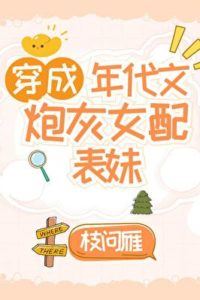
Qiao Jiajia, who grew up in an orphanage, was reincarnated into the 1950s. As an only daughter born after her parents had been married for several years, she was deeply cherished and doted upon.

Although life in the fifties was a bit arduous, Qiao Jiajia was very satisfied with this transmigration, having finally gained the familial love she had long yearned for in her previous life.

Her family had caught a lucky break; despite being from the countryside, they managed to secure urban household registration. From her grandparents to her parents, everyone worked as staff in the provincial capital. Her grandfather was even the only “eighth-level fitter” in the steel plant, earning a monthly salary of 126 yuan—higher than the factory director’s. Life at home was wonderful.

However, as she enjoyed her blissful days, Qiao Jiajia had no idea she had actually transmigrated into a period novel, and her family was merely part of the background.

The female lead of this book was the daughter of a rural village party secretary, the male lead was a “sent-down youth,” and Qiao Jiajia’s cousin was a Cannon Fodder female supporting character. The entanglements between the three of them spanned hundreds of chapters without reaching an end.

Many years later, Qiao Jiajia looked at her boyfriend—the male lead’s friend—who was being incredibly attentive and even knitting a sweater for her. She contemplated whether she should break up with him quickly.

She had heard that people around the male and female leads were usually Cannon Fodders who attracted endless trouble, and she really didn’t want to get involved in their drama.

Lu Baiqing, dressed in a formal suit with a cold and stern aura, sat behind his office desk knitting a sweater for his young girlfriend. He looked up at her and spoke slowly with an unreadable expression:

“Jiajia, what did you just say? I didn’t hear you clearly.”

Looking at that face—as handsome as jade and perfectly matching her aesthetic—the words of breakup died in Qiao Jiajia’s throat.

Reading Tips:

1.
A “slice of life” story with no Golden Finger. Warm and gentle pace. The female lead is an only child. Slow-burn plot focusing on the daily lives of the protagonist’s family.

2.
The story begins in 1956. Although the title mentions the fifties, it will cover the sixties and seventies.

3.
Part of the “Only Daughter” series. Other completed works in this genre can be found in the author’s column.

Novel Items

More
Historical Item
Rationing coupons that had just begun to be used in 1956. Qiao Jiajia pieced together this basic historical detail from her family's daily conversations, indicating the era's economic system.
Item
A large, old-fashioned wall clock hanging in the Qiao family's house. Its large face made it easy for one-year-old Jiajia to read the time even from a distance.
Materials
Coupons An Ruoyan needed for purchases but did not have, likely taken by Shi Meijiao for shopping. She bought some at the black market.
Item
A wage classification system implemented at the factory last year. Qiao Qiusheng was rated as a Grade 8 Fitter just a month ago, making him the only Grade 8 Fitter in the factory with a monthly salary of 126 yuan.
Item
Brought by Yang Xichen to the hospital ward containing meat porridge for Haitang. He handed her the box and spoon to eat.
Item
A small bamboo crib placed near the window in the Qiao family home. Qiao Qiusheng pulled it to the table during meals to keep his granddaughter Jiajia within his sight while he ate.
Latest Release
DateGroupRelease
2026-08-11shanghai fantasy c10
2026-08-11shanghai fantasy c9
2026-08-11shanghai fantasy c8
2026-08-11shanghai fantasy c7
2026-08-11shanghai fantasy c6
2026-08-11shanghai fantasy c5
2026-08-11shanghai fantasy c4
2026-08-11shanghai fantasy c3
2026-08-11shanghai fantasy c2
2026-08-11shanghai fantasy c1

Community Reviews

Rating(0 / 5.0, 20votes)
5 stars
0(0%)
4 stars
0(0%)
3 stars
0(0%)
2 stars
0(0%)
1 stars
0(0%)

Popular reviews

... Read More
I need to be honest about the pacing here because it's kind of a love-hate relationship. On one hand, this is a slice-of-life novel set in the 1970s Chinese countryside. Of course it's not going to have the breathless pace of a thriller. On the other hand, the author is so good at making the slow moments feel essential that I never actually wanted to skip ahead. The chapter structure in this batch is interesting because it moves from domestic tranquility to social conflict and back again. We start with Auntie Wu's visit—light, almost cozy neighborhood chatter. The tension is minimal. Then Master Hu appears and everything shifts. The confrontation escalates quickly, peaks with Qiao Qiusheng's devastating monologue about blood-sucking leeches, and then resolves with Master Hu slinking away. By the time the young couple returns home in the evening, the emotional temperature has shifted again from public confrontation to private fury and comfort. What I found really effective was how the author uses Qiao Jiajia's perspective as a pacing device. She's a one-year-old who needs lots of sleep, so there are natural pauses in the action where she dozes off. These moments give the reader a breather between scenes of dialogue and conflict. It's a clever structural choice that feels organic rather than forced. The transition from the daytime neighborhood scene to the evening family scene works well too. There's a clear time jump that's signaled by the young couple's return, and it resets the emotional context. He Yingying's reaction to hearing about Master Hu's comments adds a new layer—we see the conflict through a different generational perspective. If I had one critique, it's that some of the economic details about wages and savings (Qiao Heping's sixty-four yuan, He Yingying's thirty-nine yuan, the watch costing fifty-six yuan) slow things down slightly. But honestly, I didn't mind because these details are what make the world feel real. The author trusts the reader to stay engaged even during quieter moments, and that trust is well-placed.
... Read More
I am still recovering from He Yingying's response to Ma Dahua. This woman is absolutely ruthless and I love her for it. Let me just walk through this exchange because it is a masterclass in dialogue. Ma Dahua comes out with this fake concern, this patronizing advice about how He Yingying should take her job more seriously because she does not have to worry about childcare. It is so thinly veiled and anyone with ears can hear the jealousy underneath. And He Yingying? She does not even raise her voice. She just smiles and dismantles the woman completely. First she corrects the form of address — pointing out that Ma Dahua is around the same age as her mother-in-law, so she should be called auntie, not sister. Then she asks if Ma Dahua has become a factory director now, which is this subtle dig at the fact that Ma Dahua gave up her job to raise children. Then she mentions how fast she gets to work on her bicycle, and finally, and finally she drops the line about Ma Dahua's family still borrowing money to raise their son. The pacing of this dialogue is perfect. It starts light, almost friendly, and then each sentence chips away a little more until Ma Dahua is left standing there with no comeback. The author gives each character a distinct voice here. Ma Dahua sounds like someone who has spent years swallowing her pride and now finally has a son so she is puffing herself up to feel superior. Her dialogue is full of false concern and backhanded advice. He Yingying on the other hand is sharp, confident, and completely unbothered. She knows exactly what she is doing and she delivers every line with precision. What really stands out is how natural this conversation feels. It is not some dramatic movie confrontation where people shout and cry. It is two women in a residential compound exchanging polite but venomous words, which is so much more realistic and honestly more satisfying to read. I want to live in this author's dialogue.
... Read More
Let me just say this: Qiao Zhufang's dialogue is the single best thing about this book's writing. The grandmother speaks in a way that is so distinctly GRANDMOTHER that I immediately understood her character without any narration telling me who she was. Take this exchange from Chapter 1: "Our Jiajia is so amazing, walking so much again today and so steadily too. No other child can compare to our Jiajia! Ahhh! Let Grandma give you a kiss; Grandma loves our Jiajia the most. Our Jiajia is so good-looking, so handsome." That's not just dialogue. That's a performance. The repetition, the exclamation points, the sudden "Ahhh!" — this is how a real Chinese grandmother talks. Not how a writer thinks a grandmother talks, but how an actual grandmother talks. The author clearly observed this voice carefully. And the internal narration around the dialogue is equally strong. When Qiao Zhufang praises Jiajia, the narration tells us: "Even though her granddaughter Jiajia was only a year old and might not understand much of what adults said, Qiao Zhufang habitually praised her every day. Who told her granddaughter to be so lovable? She wished she could pile all the praise in the world onto Jiajia." That's not just dialogue support. That's character depth delivered in a single paragraph. Jiajia's dialogue, by contrast, is deliberately sparse — she can only speak in short sentences at this age. But her internal voice is rich and distinct. She's an adult mind in a child's body, and the author never lets us forget that. When she thinks about her previous life as an orphan who climbed the academic and professional ladder only to die alone, and then contrasts it with her current situation, the voice shift is seamless. The narration handles both perspectives without confusion. The author's note also reveals something important about the narrative voice: "This is a warm, daily-life story about family matters. There is no Golden Finger." This signals to the reader that the voice will be grounded, realistic, and emotionally honest rather than fantasy-driven. The dialogue supports that promise — it's natural, warm, and never feels like the characters are speaking to serve the plot.
... Read More
Okay so I have to talk about the revenge scheme because honestly it is the smartest thing I have seen in this novel. Qiao Heping doesn't just sit there and take the Hu family's nonsense. He actually devises a plan. And not just any plan — he recruits his three childhood followers from the village, Dalong, Zhuzi, and Huzi, and they split up, change clothes, put on fake mustaches, and casually drop hints to the Hu family's creditors. The level of detail here is what gets me. He even tells his wife not to let anyone catch them doing it because it would ruin his reputation. That line made me laugh out loud because it shows how calculated he is. He is not just being petty, he is being strategic. And the best part is that the author doesn't make this feel forced. The Hu family has been established as awful people who borrowed money and gave bad advice, so when Qiao Heping decides to get revenge, it feels completely earned. The subplot about the three village friends who followed him to the city and now work as factory workers is also doing heavy lifting here. It shows that Qiao Heping has built a network of loyalty, which makes the revenge plan believable. If he had just been a lone wolf, it would have felt unrealistic. But he has people who owe him, people who are grateful, and that changes everything. I also love how the author weaves in the family dynamics into the plot. While Qiao Heping is whispering his revenge plan to his wife, their daughter Qiao Jiajia is right there craning her neck trying to overhear. It is such a small detail but it adds this layer of warmth and humor to what could have been a cold, calculating scene. The plot doesn't just move forward with schemes and revenge, it breathes. And I am genuinely curious about what happens next. Will the Hu family figure out who leaked the information? Will the creditors come knocking? The author has set up this ticking clock and I cannot wait to see it explode.
... Read More
I need to talk about He Rourou because honestly? This four-year-old just stole my heart and I didn't see it coming. On the surface she's this polite, sensible kid who hesitates before accepting candy and looks to her parents for permission. But then there's this one line—'If only I were also Auntie's child'—and it completely dismantles her. She's the cannon fodder supporting female character in the original book, the daughter of the brigade leader's wife, and she's already carrying this quiet, unspoken ache at age four. Meanwhile Qiao Jiajia, her cousin, is living the dream life: doted on, celebrated, surrounded by imported toys from Shanghai. The contrast between these two girls sitting on that sofa playing with Matryoshka dolls and building blocks is just... devastating in its simplicity. What fascinates me is how the author never makes He Rourou resentful or bitter. She's just quietly envious, and that's so much more powerful. It makes you wonder—what happens to this girl as she grows up? Does she become the cannon fodder the book destined her to be, or does something shift? And what about Qiao Jiajia? She has no idea her cousin is wishing to be her. She's too busy playing with blocks, unaware that she's living someone else's plot. The cousin dynamic here is so underutilized and I desperately want more of it.
... Read More
This chapter is deceptively calm. On the surface, it's just a birthday party. But the stakes are everywhere if you know how to look. Qiao Jiajia is a transmigrator in a book where she's supposed to be background furniture, and yet she's already changing things just by being aware. The original plot is over a decade away, but the author keeps that sword of destiny hanging over everything. He Rourou is marked as cannon fodder. The male lead is an educated youth who'll be sent down to the countryside later. None of this has happened yet, but we know it's coming. The external conflicts are subtle—economic hardship, the coupon system, the social pressures of face and reciprocity between families. But the real tension is internal: Qiao Jiajia knows she's in a book, knows her family is barely mentioned in the original plot, and yet she's building real relationships here. She loves her new grandmother. She's kind to her cousin. She plays with the Matryoshka doll not because she needs to, but because she's present in this moment. The stakes aren't about life and death yet—they're about something more fundamental. Will she remain a background character, or will she rewrite her destiny? The author is playing the long game, and that patience is both a strength and a risk. Some readers might find the slow burn frustrating, but I find it incredibly compelling. The tension isn't in explosions—it's in the quiet certainty that everything here is temporary, and the clock is ticking.
See all reviews

Characters

See all characters

Custom lists

Oops…There is nothing here.