Transmigrated as a Little Chef: My Refrigerator Can Refresh Infinitely
+Add to Custom List
Genres:
Novel Info

Summary

... Read More

[Farming + Slow-paced + Family Life + Business + Food]

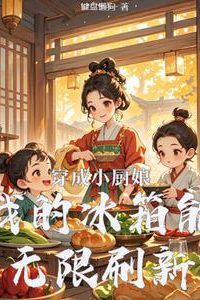
Lin Yue transmigrated into an ancient era where clothing and food were scarce, and the world was in turmoil.

Hellish start! Her husband had supposedly died in battle, and a ruffian barged into her home.

After dealing with the thug, she fled with her two scrawny younger siblings to her husband’s family home—only to be given a drafty thatched hut.

No money, no land.

Fortunately, she had a golden cheat: the modern refrigerator had transmigrated with her!

Steamed buns, eggs, jelly noodles, pork legs, steaks, potatoes, sweet potatoes, liquor, cola…

Starting from a humble food stall, she began to make her mark in ancient times!

What Lin Yue never expected was that her husband hadn’t died at all—instead, he had carved out territory for himself, ruling a region.

And he was hiding a huge secret.

Novel Items

More
Arcane Treasure
A silver-gray three-door refrigerator from the modern world that followed Lin Yue after she transmigrated. It contains drinks (Coke, Sprite, Fanta), condiments (oyster sauce, rock sugar, MSG, soy sauce, thirteen-spice blend, kimchi, etc.), fresh produce, fruits, and premium frozen ingredients (Kobe beef, wagyu, lobster, caviar, etc.). It has a system interface that allows binding and retrieving items. The storage space can also store non-fridge items like a plastic bag.
Food
Food items eaten by Moke Moke to restore stamina. She ate two steamed buns to restore her stamina to 141 after Cheng Shijia left.
Food
Liquid malt sugar poured into bamboo tubes for sampling and trade. Cheng Youyou makes two varieties: mint-infused with a refreshing cool sweetness, and plain. Beastmen are fascinated by the sweet taste which is unlike anything they have experienced.
Food
Half a piece of hard, black, rancid cornbread that the little sister brought to Lin Yue when she was starving. Lin Yue ate it to regain some strength.
Item
Basic currency in the Apocalypse Game. Players receive copper coins as drops from monsters. Exchange rate: 1 gold = 100 silver = 10,000 copper.
Material
Collected by Ling Yu from mountain, used for cooking.
Latest Release
DateGroupRelease
2026-08-11shanghai fantasy c62
2026-08-11shanghai fantasy c61
2026-08-11shanghai fantasy c60
2026-08-11shanghai fantasy c59
2026-08-11shanghai fantasy c58
2026-08-11shanghai fantasy c57
2026-08-11shanghai fantasy c56
2026-08-11shanghai fantasy c55
2026-08-11shanghai fantasy c54
2026-08-11shanghai fantasy c53
2026-08-11shanghai fantasy c52
2026-08-11shanghai fantasy c51

Community Reviews

Rating(0 / 5.0, 36votes)
5 stars
0(0%)
4 stars
0(0%)
3 stars
0(0%)
2 stars
0(0%)
1 stars
0(0%)

Popular reviews

... Read More
There's something deeply symbolic about the liangfen versus tofu rivalry that goes beyond simple business competition. Tofu represents the old way—Gu Dafu's family has been making it for generations, it's established, it's safe. Liangfen is new, innovative, born from Lin Yue's resourcefulness. It's a cold jelly made from bean starch, something that doesn't exist in this world yet. When Lin Yue cuts it into small squares and offers free samples, she's not just marketing; she's demonstrating that new things can be approachable if you remove the barrier to entry. The two wen price point is also significant. It's cheap enough that even poor villagers can afford it, but valuable enough that Gu Grandma's private stash money matters. That scene where Gu Grandma reluctantly pays two wen from her apron—'Damn it! And that was her private stash money!'—this is about dignity and survival intersecting. Every coin counts. And the sugar-coated haws? Those are pure symbolism for everything these children can't have. Two coins for two sticks. A luxury so small it's almost cruel in its accessibility. The rich girl with her golden necklaces and silk clothes stands in stark contrast to Gou Dan and Da Ya, who are drooling over something that costs less than a bowl of liangfen. But the deeper theme here is about value and perception. The Wang family, the major landlords who could make or break a supplier, represent the entire class structure of this world. Gu Dafu sees them as his ticket out of poverty. Lin Yue sees them as just another customer. The author is quietly asking: who really holds power in this economy, and what does it cost to participate in it? The wooden token system, the stall fees, the three-coin fines—every detail reinforces that this is a world where even the smallest transaction has consequences.
... Read More
Okay so let me just say—Lin Yue is a tactical genius and I am here for it. The way she handled Gu Dafu's wife? Chef's kiss. The woman bursts in demanding food like she owns the place, and Lin Yue doesn't even flinch. She literally says 'They're in my mouth. What do you want to do?' and then goes on this absolutely devastating verbal takedown about reputation and marriage prospects. In a rural setting where gossip is basically currency, that threat hits harder than any physical confrontation could. I literally gasped out loud. But the real plot twist for me was the trap scene. Gu Dafu's wife tries to steal stuff, trips on her own greed, and Lin Yue snatches back the wild boar trap—that's a valuable piece of equipment right there. It's these small moments where the power dynamic shifts that make the plot feel so satisfying. The author doesn't give Lin Yue easy wins, but she earns every single one through sharp thinking instead of brute force. And then there's the cliffhanger with the woodcutter. 'Perhaps it's a bit forward,' he scratches his head. My heart literally stopped. After everything with Da Huangya, this follow-up tension is masterfully done—the reader is already on edge and the author just keeps adding fuel. I need to know what happens next immediately.
... Read More
I need to talk about the porridge scene. Like, I went into this chapter expecting survival drama and instead got emotionally destroyed by a bowl of wild vegetable soup. Aunt Li boiling those two eggs — she hesitates before taking them out of the cupboard. You can literally see her doing the math in her head. Most families can only afford pork during festivals, and eggs are precious. She puts them in, serves the porridge, and Lin Yue finds a whole egg at the bottom of her bowl. And Dog Egg? He pushes his half to his sister and says he's full. The egg stays untouched. And then Lin Yue does the same thing. She forces herself to finish her porridge and hand back the bowl with the egg still in it. The whole scene is just two starving people pretending they aren't starving, and it's devastating. The descriptions throughout this section are also incredibly vivid. The flooding river with mud and debris barreling toward the village. The musty straw mattress in the unused room. The candlelight reflecting on Lin Yue's face as she finally feels warmth. These aren't just setting details — they make the world feel tangible. You can smell the damp, feel the cold, taste the ginger porridge. The author doesn't over-describe but every detail earns its place.
... Read More
Let me just say this: the stone mill scene is one of the most vividly written sequences I've read in ages. You can literally SEE it. Grandma Gu carrying those four bags of rice, carefully sweeping every last grain, her vision going dark when she sees the crowd approaching. The way the author describes the villagers gathering—men returning from the fields, curious faces, the gossip spreading like wildfire. And then Lin Yue walking through the village with that fish in her basket, people licking their lips, staring at her like she's holding gold. The atmosphere is so thick you could cut it with a knife. I love how the setting reflects the power dynamics. The Gu family controls the rice, the land, the resources. But Lin Yue controls the narrative. She walks into that mill surrounded by villagers who are now her audience, her witnesses, her leverage. The stone mill itself becomes this theatrical stage where the real drama unfolds. Grandma Gu's face when she realizes she's been played—that moment where she points at herself going 'Huh? Huh? Me?'—it's comedy gold but also deeply tragic. This woman has spent her life managing a fractured family, and here comes this young girl who outmaneuvers her in five minutes flat. The visual of Lin Yue 'forcibly snatching' those rice bags while maintaining that innocent smile? Chef's kiss. The author makes you feel the heat of the village, the tension in the air, the weight of every gaze. This isn't just worldbuilding; it's immersion.
... Read More
I need to discuss the conflict architecture here because it's layered in the best way. On the surface, you have Lin Yue versus the Gu family—a young widow and two children trying to survive against a patriarchal household that's already exploited them. But the author keeps raising the stakes. First, it's about food: will they starve? Then it's about dignity: will they be respected or mocked? Then it's about survival itself: can they maintain their autonomy while dependent on others' charity? The stone mill scene is where all these conflicts collide. Lin Yue has the villagers as witnesses, which gives her social leverage. Grandma Gu has the rice, which gives her material leverage. But Lin Yue's performance—the fake gratitude, the innocent smile, the dramatic 'snatching'—neutralizes Grandma Gu's position. And then Dogdan's kneeling? That's the masterstroke. He turns Grandma Gu's own family against her by making her look generous in front of everyone. She can't take the rice back without looking like a liar. The stakes escalate when we cut to the Gu family's explosion. The eldest aunt screaming about betrothal gifts, Gu Sanping threatening to find Lin Yue, the daughter-in-law being blamed for being 'too dumb.' This isn't just a family argument; it's the cracking open of decades of resentment, economic tension, and gender dynamics. The author makes us care about the outcome because everyone has something to lose. Lin Yue needs the rice to survive. Grandma Gu needs to maintain her authority. The daughters-in-law need food for their children. And the villagers? They need drama. The conflict is multi-directional, and that's what makes it so compelling. I'm on the edge of my seat every time.
... Read More
This author writes dialogue like a sniper. Every line is placed, every silence means something. Take this exchange: "Sister-in-law, this sugar..." Dog Egg's eyes were full of concern. That's it. That's the whole line. He doesn't say "Where did you get sugar?" or "This must be precious." He just says "this sugar" and the reader understands everything—he's worried she's spending something valuable, he's trying to be responsible, he's a kid pretending to be an adult. And Lin Yue's voice is distinct even in translation. She's direct, practical, never wasteful with words. "Wash your hands and eat the buns. We need to pack and leave quickly." No "my dears," no dramatic speeches. She's a woman who just killed someone and her first concern is whether the kids have enough energy to run. That's character through dialogue. Yellow Teeth is barely given any lines and it works perfectly. "I'll be real good to you" and "Hehehe, forget it, this is even better"—two lines and you've got a complete monster. No need for monologues when the action does the work. The narrative voice is also doing heavy lifting. Lin Yue's internal thoughts have this modern, slightly sarcastic edge that contrasts with the ancient setting: "Compared to the rancid, hard cornbread from earlier, this was something else entirely." and "No matter how humanity advanced over thousands of years, the taste buds always craved this." She's a food content creator thinking like one, even while covered in mud in the Dayong Dynasty. What I appreciate most is that nobody sounds the same. Dog Egg's speech is fragmented, anxious, trying too hard to be grown-up. Lin Yue's is clipped and efficient. The narrative voice is warm but not saccharine. Three distinct registers in a few chapters—that's craft.
See all reviews

Characters

See all characters

Custom lists

Oops…There is nothing here.