The Slave Wife of the Hunter’s Family
Novel Info

Summary

... Read More

Sweet Mutual Devotion + Business & Farming + Mutual Redemption + Family Life + True Love Conquers All


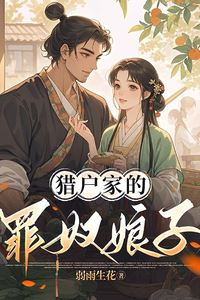
Qinghe’s life is turned upside down when she is condemned to the status of a convict servant and sold at auction.


Qin Xiao of Zuohe Village buys her and brings her home.


One hopes to have a beautiful woman by his side, while the other longs for nothing more than a place to belong, a home she can finally call her own.


Handsome yet rugged, Qin Xiao may appear rough around the edges, but beneath that exterior lies a thoughtful and dependable man. Qinghe, having once served as a maid in a wealthy household, possesses skills and knowledge far beyond what most villagers would expect.


Working side by side, they build a life together through farming and business, and their days become increasingly prosperous.


Everything seems to be moving in a better direction.


However, Qin Xiao’s family is far from simple. Endless domestic disputes, troublesome relatives, and one complication after another continually threaten the peaceful life they have worked so hard to create.


Can the two of them overcome the challenges surrounding them and find the happiness they both desperately seek?

Novel Items

More
Document
The official document Qin Xiao received after purchasing Qinghe from the Office of Convict Slaves. He held it happily in his hand after completing the transaction.
Food
Two enormous deer brought back by Chief Ah Jin and his companions from hunting. Their return coincided with the sweet potatoes being nearly done roasting, creating a sweet fragrance throughout the tribe.
Currency
The amount Li Cui's current husband paid to buy her. He mentioned this sum while beating her, emphasizing he had invested money in her.
Event
Qin Xiao spent six taels to purchase Qinghe, a convict slave, from the county slave office. He carried her on his back back to his house. Ma San also considered buying a slave for the same price.
Materials
Qin Xiao brought Qinghe a ceramic jar containing medicinal powder to treat the blisters on her feet. She drained the blisters and applied the powder, which provided a cool sensation.
Item
Qin Xiao bought Qinghe a pair of shoes and socks. The shoes were slightly too large but soft, making walking much less painful for her blistered feet. Her old shoes had only a thin layer remaining after two months of exile.
Latest Release
DateGroupRelease
2026-08-11shanghai fantasy c10
2026-08-11shanghai fantasy c9
2026-08-11shanghai fantasy c8
2026-08-11shanghai fantasy c7
2026-08-11shanghai fantasy c6
2026-08-11shanghai fantasy c5
2026-08-11shanghai fantasy c4
2026-08-11shanghai fantasy c3
2026-08-11shanghai fantasy c2
2026-08-11shanghai fantasy c1

Community Reviews

Rating(0 / 5.0, 34votes)
5 stars
0(0%)
4 stars
0(0%)
3 stars
0(0%)
2 stars
0(0%)
1 stars
0(0%)

Popular reviews

... Read More
Okay so I need to talk about this chapter because Madam Qin showing up the next morning is honestly one of the best plot moves the author has made. Let me explain why. Up until this point, Qinghe has been this fragile, broken convict slave who can barely stand on her feet. And then suddenly she's standing at the gate blocking a noblewoman's mother from entering her master's house like she's guarding a fortress. The power dynamic just completely flipped and I was screaming internally. But here's what really got me—the plot twist isn't just that Qinghe stood her ground. It's that Qin Xiao was LISTENING the entire time. He heard the whole confrontation from wherever he was hiding nearby and appeared exactly when his mother was about to slap Qinghe. That's not coincidental pacing. That's the author carefully setting up the fact that he's been watching her, protecting her, even if he won't admit it out loud. And then his response to Madam Qin? "As for serving tea, that's a custom for daughters-in-law. Mother, have you prepared the red envelope and the change of address that come with accepting one?" I literally dropped my book. He basically told his own mother that this girl is his future wife and anyone who disagrees can get lost. The audacity. The absolute boldness. The subplot about the younger brother is also brilliantly woven in. Every time Madam Qin mentions him, it reveals another layer of why this family is toxic. They've spent all of Qin Xiao's money, built a new house without leaving him a room, and still expect him to fund their dreams. The fact that Qin Xiao threatens to split the household and cut off financial support completely is a MAJOR turning point. This isn't just about a girl at the gate anymore—it's about him finally drawing a line after years of being used. What I love most is how the plot connects Qinghe's exile backstory to the present. The whip marks on her back, the blisters on her feet, the two months of suffering—all of it matters because it explains why she's so cautious, so calculating in her survival instincts. She knew exactly what to do at that gate because she's been playing survival games her entire life. The plot rewards careful readers who notice these details. Also the scene where Madam Qin swings at Qinghe and the pain never comes because Qin Xiao catches her wrist? Chef's kiss. The author doesn't even need to describe the impact because the tension is already so high. I was holding my breath the entire time. And then—plot twist within a plot twist—Qinghe goes to apologize to Qin Xiao afterward, saying she upset him. And the reader sees her internal monologue where she despises herself for having to grovel. This is the tragedy of her character compressed into one moment. She's been trained her whole life to please powerful men, and even though Qin Xiao is technically her master, she's starting to see him as something more. The plot is setting up this beautiful tension between duty and genuine feeling. The author also drops this gem: "Although Qin Xiao looked fierce, his heart was actually soft." But Qinghe doesn't say this out loud. She thinks it. And that's when Qin Xiao's throat bobs and he gives her pheasants. The plot is moving so fast but every beat feels earned. I can't wait to see what happens when the younger brother returns and finds out his family is losing their financial lifeline.
... Read More
Okay so this whole arc where Qin Xiao's mom shows up with Miao Xiugu is honestly one of the best plot devices I've seen in a while. It's not just a random conflict — it's the culmination of EVERYTHING that's been building. Qin Xiao has been quietly planning his escape from his family's control, and this scene is where he finally pulls the trigger. The fact that he had already decided to register the marriage the day before makes his confrontation with his mother feel so much more powerful. He wasn't asking for permission — he was informing her. But the real plot twist here isn't the confrontation itself. It's Qinghe dropping that bomb about Qin Xiao possibly not being her biological son. "Of course he's my biological son!" — the way Madam Qin's confidence instantly crumbled? Chef's kiss. The author planted this so subtly throughout the earlier chapters with all the neglect and abuse Qin Xiao suffered, and now it hits like a truck. This changes EVERYTHING about how we understand his relationship with his family. Also love how Miao Xiugu's subplot gets resolved — she comes in as a threat to the main romance, begs to be bought, and Qin Xiao flat-out refuses. Not because he's cruel, but because he genuinely only wants one wife. That's a rare moment where the "potential love rival" trope gets subverted instead of dragged out for filler chapters. The narrative structure here is tight. Setup (Qin Xiao's plan) → Complication (mother arrives with bride) → Escalation (Qinghe's intervention) → Revelation (the biological secret) → Resolution (mother backs down, Xiugu rejected). No loose ends. This is how you write a chapter.
... Read More
Okay so I need to talk about the snake scene because honestly it's one of the funniest AND most important moments in this entire chapter. Let me set the stage: Zhou Ye is this guy who clearly has a twisted sense of humor, and he left a sack of snakes at Qin Xiao's house. Qinghe opens it and SCREAMS. I literally laughed out loud. But here's the thing that makes this scene so brilliant—it's not just comic relief. It's a PLOT TURNING POINT. Think about it. Qinghe, who has spent twelve years as a servant, who has never had anyone protect her, suddenly throws herself into Qin Xiao's arms. Like, full-on wraps her legs around his waist situation. And Qin Xiao? He freezes. His internal monologue goes completely wild. Is she seducing him? Does he mind? The answer, apparently, is no. "And strangely enough, he didn't dislike it at all." This is the moment where the entire dynamic shifts. Up until now, Qin Xiao has been this model of restraint—bathing her while she's unconscious, wrestling with his conscience, basically masturbating with her hand because he can't bring himself to take advantage. And now, in the most absurd way possible, she's literally clinging to him, terrified, and he's pulling her closer. The plot has been building this sexual tension like a coiled spring, and the author uses a sack of snakes to finally release it in the most unexpected way. Also, Zhou Ye's reaction when he arrives and gets yelled at? Perfect. He completely forgot about the snakes because he was too embarrassed watching his friend and his future wife embrace. The author's joke about "a friend who values beauty over brotherhood" had me wheezing. This is how you weave comedy into romance without it feeling forced.
... Read More
I keep thinking about the toothbrush. It's such a small, seemingly random detail, but it's doing enormous thematic work. Madam Qin can't understand why Qin Xiao would buy Qinghe a toothbrush and tooth powder. In her world, everyone chews willow twigs dipped in salt and stove ash. Qin Xiao himself lived that way for years. The toothbrush represents something radical: the idea that this woman deserves care, comfort, and attention to her wellbeing—not just as a servant who keeps the household running, but as a person. The silk gauze is the bigger symbol, obviously. It's not just expensive fabric—it's a declaration. Qin Xiao is saying, with every bolt he purchases, that Qinghe is worthy of beauty and luxury. And Madam Qin's reaction reveals everything about her worldview: she sees Qinghe as a threat because Qinghe receives things that Madam Qin herself never received. Not because she's cruel (well, partly because she's cruel), but because the silk gauze represents a different economy of love—one based on mutual care rather than control and extraction. Qin Xiao's line "I'm good to her because she's good to me" is the thesis statement of the entire passage. It's a radical idea in this context. Filial piety demands that sons support mothers regardless of how they treat them. But Qin Xiao is proposing something different: relationships should be reciprocal. Care should be earned, not demanded by blood. The villagers' response confirms this—every single one of them sides with him because they've watched Madam Qin extract from Qin Xiao his entire life while giving nothing back. The toothbrush, the silk, the cotton quilts—they're all the same symbol. Material goods as evidence of love. And the real question the story asks is: who deserves to receive them?
... Read More
I need to discuss Qin Xiao because this man is a walking contradiction and I am HERE for it. Let me start with the scene where he discovers Qinghe's whip marks. The text says: "Thinking about how she had silently endured all this time, his voice softened unconsciously." UNCONSCIOUSLY. That's the key word. He didn't plan to soften. His body betrayed him. He wanted to be the cold, dominant master but her suffering broke through his defenses before he could stop it. And then he applies medicine to her back. This is such a domestic, intimate moment wrapped in the guise of practicality. He doesn't say anything sweet. He doesn't compliment her. He just says "Turn around" and "I'll apply it for you" and then leaves the room because he can't handle being this close to her wounded body. The self-control is insane. The man is literally fighting his own desires because he refuses to take advantage of someone who's already suffered enough. But here's where it gets interesting—when Qinghe offers to scratch his back, the desire he suppressed "reignited instantly." And his response? "Stop trying to seduce me." BRO. She's scratching your back. That's not seduction. That's kindness. But he's so starved for physical contact that any gentle touch from her sends him into panic mode. He has to leave the room AGAIN. This man cannot win. Now let's talk about the relationship with his mother. The text reveals: "Her eldest son had always tried to please her. The colder she treated him, the more eagerly he sought her approval." OOF. This is generational trauma right here. He spent his entire life trying to earn love from people who only saw him as an ATM. And Qinghe—the girl he bought as a convict slave—is the first person who makes him choose someone ELSE over his family. The moment he says "Who I marry is none of Mother's concern" and threatens to split the household, I felt something shift in his character. This isn't just about Qinghe. This is about him finally breaking a cycle that's controlled him his whole life. Qinghe is the catalyst, but the real transformation is internal. And Qinghe's relationship with him? She's calculating, yes. She knows she has to please him to survive. But there's a moment where she thinks: "Although Qin Xiao looked fierce, his heart was actually soft." And this isn't manipulation. She's genuinely observing him, reading him, and coming to a conclusion that contradicts everything she expected. She bought into the narrative that he's just a brutal master, but she's discovering the truth layer by layer. The most beautiful character moment is when he gives her the pheasants. After everything—the confrontation, the argument, the apology—what does he do? He brings her food. He says "Stew them and nourish yourself." He's caring for her body because he saw her injuries and he couldn't sleep knowing she was still weak. This man shows love through acts of service, not words. And Qinghe, who has never experienced genuine care, doesn't even know how to process it. Their dynamic is shifting from master-slave to something else entirely, and neither of them has the vocabulary to name it yet. Every glance, every touch, every silence between them is charged with unspoken meaning. I'm emotionally compromised.
... Read More
I have to talk about the pacing in these chapters because the author is a absolute genius at controlling reader engagement and I need to understand how they do it. Let's start with the morning scene. Qinghe wakes up, sees the sun, and immediately panics. "How had she slept so long?" This is such a small moment—she's just oversleeping—but the author uses it to build tension in a brilliant way. We're worried she'll get in trouble, we're worried Qin Xiao will be angry, we're worried she'll be sold. And then—plot twist—the man prepared BREAKFAST for her. Warm porridge, pickled vegetables, a boiled egg. The tension releases instantly and then redirects. Now she's panicked for a completely different reason: a man made her food. This is domestic tension, not survival tension, and it's equally compelling. The structure of Chapter 5 is also masterful. It starts with the intimate medicine scene, moves to the quiet night, then the morning panic, then the outdoor exploration, and then BAM—Madam Qin appears. The chapter doesn't linger on any single beat. It flows like water, and by the time the mother-in-law arrives, we're already invested in Qinghe's world. The pacing ensures we care about what's at stake before the conflict even begins. But the real pacing masterpiece is the confrontation scene itself. The author doesn't rush it. Madam Qin arrives, Qinghe politely blocks her, the mother gets angry, threatens her, raises her hand—and then Qin Xiao appears. The delay between the threat and the rescue is calculated to maximize tension. Every second Qinghe stands alone against an angry woman who could easily overpower her, our anxiety grows. And when Qin Xiao finally speaks, his voice carries "unmistakable anger"—the release is satisfying because the buildup was so deliberate. The chapter also uses a brilliant structural device: the split perspective. We see the confrontation from Qinghe's point of view, then we cut to Madam Qin complaining to her husband at lunch, then back to Qin Xiao and Qinghe at the mountain house. This triangulation shows us how different characters interpret the same event. Madam Qin thinks Qinghe is a scheming fox spirit. Qinghe thinks she gambled correctly and read the situation perfectly. Qin Xiao thinks her actions were exactly right. Three perspectives, one event, completely different realities. This structural choice adds depth without slowing the pace. The pacing of Qin Xiao's character revelation is also noteworthy. He doesn't announce his feelings. He shows them through actions—applying medicine, catching his mother's wrist, bringing pheasants, saying "Stew them and nourish yourself." The author trusts the reader to connect these dots. There's no need for dramatic confessions because the pacing of small moments builds something far more powerful. One structural choice I want to highlight is the ending. The text cuts off mid-sentence: "He untied two beautiful pheasants from"—and that's it. The chapter ends on an incomplete action, which is a classic cliffhanger technique. We're left wanting to know what happens next, what he was untieing them from, what he'll say. The author knows exactly how to make us turn the page. The overall chapter structure follows a pattern: intimacy → domesticity → conflict → resolution → new intimacy. This cyclical structure mirrors the growing relationship between the two leads. Each chapter brings them closer, and the pacing ensures we never get bored because there's always a new layer to discover.
See all reviews

Characters

See all characters

Custom lists

Oops…There is nothing here.