Summary

... Read More

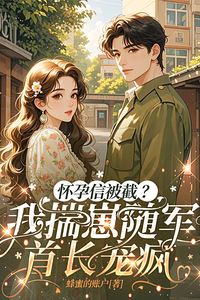
(1970s, Rebirth, Spatial Storage, Alternate History, Face-Slapping Revenge, Devoted Male Lead)

On the day of her wedding, Lin Ruochu opens her eyes—and finds herself reborn.

In her previous life, she was framed on her wedding day and woke up in bed with Fu Tingshi. Caught “in the act” by her new husband, she was condemned in disgrace while Fu Tingshi was sent away in political exile. From that moment on, she spent the rest of her marriage living under her husband’s contempt.

Only as she lay dying did Lin Ruochu learn the truth: everything had been a carefully planned conspiracy orchestrated by her so-called best friend, Xia Lin, and her childhood sweetheart-turned-husband, Lu Yichen.

Because of their scheme, she devoted her life to caring for her sickly in-laws and even raised the lovers’ child as her own. Once they had drained every last bit of value from her, they cast her aside. Sick, broken, and filled with regret, she died with nothing.

Given a second chance, Lin Ruochu refuses to be fooled again. On her wedding day, she calls off the marriage without hesitation.

Since they manipulated her so thoroughly in her previous life, this time she’ll simply let Xia Lin and Lu Yichen have each other. But without Lin Ruochu caught between them, their perfect romance quickly falls apart. The couple who once loved each other until old age now can’t stand the sight of one another—and would rather kill each other than stay together.

Just after breaking off her engagement, the equally victimized Fu Tingshi appears and insists, “I have to take responsibility for you.”

Lin Ruochu immediately refuses.

“I don’t need your responsibility.”

But Fu Tingshi is nothing if not persistent.

“Then,” he says with a grin, “you can take responsibility for me.”

With a fiercely devoted military officer who only has eyes for her and the chance to rewrite her destiny, Lin Ruochu is determined to get the revenge—and the happiness—she deserved all along.

Novel Items

More
Medical Equipment
An oxygen mask Shen Simo wore in the hospital bed after fainting. She yanked it off herself after feeling embarrassed about being hospitalized.
Clothing
Held by Sister Zhang. Shen Qingci says it's for a special day - her battle attire for the grand opening of the stage play.
Accessory
A bridal corsage pinned to Lin Ruochu's outfit at the wedding banquet. After declaring she would never marry a man of such despicable character, she unpinned the bridal corsage from her outfit and walked straight home without looking back, symbolizing her complete rejection of the engagement.
Event
Lin Limei drugged Su Xiaoyin and Yuan Songzhi with a heavy dose, knowing Yuan Songzhi had strong self-control, but they managed to escape despite the drugs.
Event
The Ban family broke off their engagement with Xie Xixiao in the second month after his capture, then submitted the daughter for palace selection. She is now confirmed as Crown Princess.
Money
The Gu family discusses setting aside 1,000 yuan as Ruoyan's dowry. Gu Yizhi initially refuses and wants to handle it himself, but his mother and sisters-in-law insist. His sisters-in-law each received only fifty yuan when they married.
Latest Release
DateGroupRelease
2026-08-11shanghai fantasy c10
2026-08-11shanghai fantasy c9
2026-08-11shanghai fantasy c8
2026-08-11shanghai fantasy c7
2026-08-11shanghai fantasy c6
2026-08-11shanghai fantasy c5
2026-08-11shanghai fantasy c4
2026-08-11shanghai fantasy c3
2026-08-11shanghai fantasy c2
2026-08-11shanghai fantasy c1

Community Reviews

Rating(0 / 5.0, 9votes)
5 stars
0(0%)
4 stars
0(0%)
3 stars
0(0%)
2 stars
0(0%)
1 stars
0(0%)

Popular reviews

... Read More
Let me tell you, the stakes in this story are deceptively high. On the surface, it's about a broken engagement and some money. But underneath? It's about a woman who spent her entire first life being exploited, abused, and discarded—and now she's drawing a line that she will not cross. The Lu family's refusal to return the dowry isn't just greed; it's about power. Li Guifen spent years convincing herself that Lin Ruochu was an unworthy daughter-in-law, and returning the money would mean admitting she was wrong. That five hundred yuan represents the Lin family's entire savings, exhausted to give their daughter a decent start. The Lu family took it and never intended to give it back. What makes the conflict so tense is that everyone knows the truth but is performing differently. Lu Xianggui knows his son is at fault but can't admit it publicly. Lu Yichen genuinely believes Lin Ruochu is just throwing a tantrum. Xia Lin is playing the victim while having orchestrated the whole mess. And Lin Ruochu? She's done performing. She's not here to negotiate anymore. The moment Lin Zhiyuan throws that punch at Lu Yichen is the breaking point—the family's protective instinct finally overriding years of awkward dynamics. And Lin Ruochu shielding him instead of Lu Yichen? That's the story's central conflict crystallized in a single gesture. She's not just ending an engagement; she's rewriting every relationship in her life.
... Read More
There's this one image that keeps sticking in my head—Lu Yichen and Xia Lin returning to the wedding banquet to find it completely stripped bare. Not a single scrap of food left, tables cleared, guests gone. It's such a powerful visual because it represents everything Lin Ruochu has taken back. She didn't just leave; she dismantled the entire performance the Lu family was putting on. The Lu household itself is vividly drawn. The parents 'faking illness inside' and then storming out when they see Lu Yichen clinging to Xia Lin—that's such a specific, almost comedic detail that grounds the story in rural Chinese life. The walking stick, the river outside the house, the carrying pole Lin Jianguo grabs. These aren't just props; they're objects that carry cultural weight and tell us about the world these characters live in. I also love the physical descriptions. Lu Mother's 'face thick with flesh and eyes narrowed into triangles'—that's such a sharp, almost caricature-like image that immediately tells us everything about her character. And Xia Lin's 'torrent of theatrical tears' when she flees? Perfect. The author has a gift for visual storytelling that makes every scene feel like a movie frame. The contrast between the Lin family's humble, honest world and the Lu family's performative, hypocritical one is maintained throughout. Even the dowry items—three hundred yuan, quilts, two large wooden wardrobes, a large wooden chest—feel specific and real, like we can picture them in an actual rural Chinese home.
... Read More
Let's talk about stakes because this book does not play around. The military marriage application is the central external conflict, and the stakes are absolutely life-or-death level. We're told that if the soldier refuses to grant a divorce, dissolving the union is "exceptionally difficult, if not downright impossible." For Lin Ruochu, who has already lived through a nightmare marriage, this isn't abstract—it's the difference between freedom and another lifetime of suffering. Her thought that she might have to "turn him into a widower" isn't hyperbole. After everything she's been through, the reader believes she would actually do it. But the internal conflict is what makes this hurt. Lin Ruochu isn't just fighting Lu Yichen—she's fighting the ghost of her past self, the version of her that believed in him, that trusted him, that gave him everything. Every moment with Fu Tingshi is a reminder of what she was too naive to see before. When he calls out to her joyfully, wanting the whole world to know they're connected, and she remembers how Lu Yichen always kept her at arm's length? That's not just romantic tension. That's the collision of two lifetimes of emotional damage. And Xia Lin? Her conflict is smaller but no less real. She's lost her social standing, her best friend, her comfort, and now even Lu Yichen is using her. The moment he steps back from her because she smells like nightsoil—that's the lowest point of her arc, and the author delivers it without a single extra word.
... Read More
I need to talk about Lin Jianguo because this man is absolutely everything. The scene where he grabs that carrying pole and marches toward the Lu house to beat up Lu Yichen? Chef's kiss. He's clumsy with words, sure—he never could express his feelings—but the moment he sees his daughter crying, his instinct is pure protection. No hesitation, no questioning, just 'someone hurt my kid, I'm going to fix it.' And the backstory about him aging dramatically because he was working her fields for her? That hit me right in the feels. In her past life, Lin Ruochu only realized her father's love too late, and now she's getting a second chance to see him clearly. The author really understands that sometimes the people who love us the most are the ones who struggle to show it. Then there's Lin Zhiyuan. Oh man, he's such a great character. He's always been the stepbrother she disliked, the one who warned her about Lu Yichen and she wouldn't listen. But now seeing him throw a punch at Lu Yichen, claiming it's about 'not losing face' while clearly caring deeply? That's classic Lin Zhiyuan—awkward, defensive, but genuinely protective. And the detail about him dying in a pool of blood in her past life? That moment where Lin Ruochu's eyes redden seeing him alive again? I literally got chills. The Lu parents are fascinating too—Li Guifen's fake protectiveness masking years of cruelty, Lu Xianggui's performative anger. They're not one-dimensional villains; the text shows us exactly how they treated Lin Ruochu after the marriage, and it makes their current performance even more infuriating.
... Read More
The bracelet is the most loaded object in this entire passage, and I think the author knows it. In Lin Ruochu's first life, that bracelet was part of her dowry—something given in good faith, something that represented trust and commitment. Lu Yichen took it. Now, two chapters later, he's standing in front of Xia Lin asking for it back, unable to even admit it was Lin Ruochu's to begin with. The bracelet has traveled from victim to betrayer, and its return represents the unraveling of every lie built on top of Lin Ruochu's suffering. But then you have the flowers. Fu Tingshi buying crimson roses—not because he's performing, not because he's hiding their connection, but because he genuinely wanted to see them on her. The text says: "the crimson roses were fresh and dewy, glistening with tiny droplets of water." This is the first time Lin Ruochu has ever received flowers in two lifetimes. The contrast between what was taken and what is being given is the entire thematic engine of this story. And the nightsoil—that's not just punishment, is it? Xia Lin, who refused to do hard labor while living off Lin Ruochu's generosity, is now literally carrying waste. She wanted to be seen as noble and selfless, and instead she's being reduced to exactly what she is. The symbolism is almost too on-the-nose, but it works because it's earned.
... Read More
I need to talk about the pacing in these chapters because the author is playing 4D chess with narrative structure and I am here for it. Chapter 8 starts with Xia Lin's ostracization—fast, almost breathless. The gossip spreads like wildfire, and within paragraphs we're already watching her get assigned nightsoil duty. There's no filler, no wasted space. The author doesn't linger on Xia Lin's internal monologue for long; we get just enough of her twisted self-justification before she's forced to confront consequences. This is tight writing. Then Chapter 9 pivots completely—to Fu Tingshi waiting in town with flowers and a hair clip. The shift in tone is jarring in the best way possible. One moment you're reading about human waste and village politics, the next you're watching a man buy roses because he thinks they'll look good in a woman's hair. The contrast between Lu Yichen's cold distance and Fu Tingshi's earnest warmth hits so much harder because of this structural choice. The chapter ending with them still needing to handle the marriage application? That's a deliberate pacing decision. The author could have resolved it there but chose instead to end on a note of anticipation. The flowers, the clip, the unspoken tension—all of it builds toward something, and the reader is left wanting more. That's how you control engagement.
See all reviews

Characters

See all characters

Custom lists

Oops…There is nothing here.