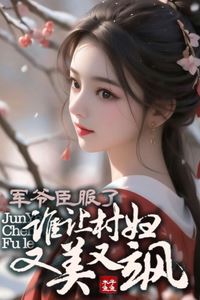
The Military Lord Has Surrendered! Who Could Resist a Village Woman Who Is Both Beautiful and Fierce?
Novel Info

Summary

... Read More

[Farming + Power Fantasy + System + Space + Face-Slapping + Getting Rich]

Lu Meiyu had stockpiled plenty of useful supplies, only to transmigrate from the apocalypse into an alternate ancient world.

In the blink of an eye, she became a “well-equipped” beautiful village woman—with two kids, weapons, a personal space, and a spiritual spring.

If her husband is no good? Kick him out immediately.
If her in-laws are cruel? Teach them a proper lesson.

The apocalypse hardened her heart, but this life—with children, food, and a bit of farmland—turns out to be unexpectedly sweet.

Who would have thought that even as a village woman with two kids, she could still capture the heart of that handsome yet slightly naive military lord?

Oh, military lord… you’re still too young…

Novel Items

More
Item
An extra-large storage space gifted by the system to Ruan Jiaojiao, filled with 1970s supplies. She used it to retrieve a three-pound bass to show her children. The system described it as a gift to make her journey more enjoyable.
Item
A light-providing tool given by Lin Meijuan to Qiao Huan for walking on the dark path to the back mountain at night.
Pills
Water from a spiritual spring within An Ruoyan's space. After drinking a cup of diluted spiritual spring water, her injuries began to heal, though she felt dizzy and did not want to overdo it for fear of someone noticing her recovery.
Arcane Treasure
A shabby little store that appeared inside the storage space. It sells basic necessities including oil, salt, soy sauce, vinegar, and soybean paste at low prices (one copper coin each). Lu Meiyu purchased oil, salt, and soybean paste from it.
Arcane_treasure
A star mecha that transformed into a small white kitten due to low energy. It communicates with Yun Shu, accumulates favor points, and serves as her companion. It can only meow to others but Yun Shu understands its words. It feeds on favor points rather than conventional food.
Tool
Scissors that Shen Qingci had prepared and used to cut Shen Lan's long pants into boxer shorts at the wedding venue as punishment for his disrespectful behavior.
Latest Release
DateGroupRelease
2026-08-11shanghai fantasy c23
2026-08-11shanghai fantasy c22
2026-08-11shanghai fantasy c21
2026-08-11shanghai fantasy c20
2026-08-11shanghai fantasy c19
2026-08-11shanghai fantasy c18
2026-08-11shanghai fantasy c17
2026-08-11shanghai fantasy c16
2026-08-11shanghai fantasy c15
2026-08-11shanghai fantasy c14
2026-08-11shanghai fantasy c13
2026-08-11shanghai fantasy c12

Community Reviews

Rating(0 / 5.0, 15votes)
5 stars
0(0%)
4 stars
0(0%)
3 stars
0(0%)
2 stars
0(0%)
1 stars
0(0%)

Popular reviews

... Read More
Okay so I have to talk about this plot twist because honestly it had me laughing out loud. Remember how Lu Meiyu was basically a doormat at the start of this story? The Liu family walked all over her, villagers mocked her, she couldn't even say no. And then BOOM—suddenly she's wielding a magical black rod and threatening to maim anyone who comes near her daughters. The scene where the Wang mother shows up demanding half her silver and Lu just casually pokes her with the rod and the woman drops like a sack of potatoes? Chef's kiss. Absolute perfection. But here's what really impressed me—the plot doesn't just stop at the confrontation. It weaves in this parallel storyline about earning money through vegetables that actually complements the main conflict. She earns a tael of silver asking directions, then immediately faces the consequences when the Wang mother comes for it. Then she pivots to selling vegetables, only to discover how brutally cheap the market prices are. One wen for three jin! Can you believe that? It's this perfect loop of earning money → facing threats → finding new ways to earn → realizing the system is rigged against her. The subplot with the Liu family plotting revenge while her son is on the battlefield adds this nice layer of tension. They're fuming about the silver but powerless to act. It makes the world feel alive—there are consequences everywhere, even when the immediate threat is neutralized. And that ending where she's reflecting on earning money from the land? It sets up this entire arc about self-sufficiency that I'm really curious to see develop. This author knows how to layer plots without making it feel cluttered. Every scene serves multiple purposes.
... Read More
Okay, the dialogue in this book is... fine. Not amazing, not terrible, but there are moments where it really works and I want to talk about why. First, the system. The cold, mechanical voice that threatens Lu Meiyu with death if she doesn't raise the kids — it's delivered with this deadpan energy that's almost funny. 【Host, please dismiss such heartless thoughts.】 That's such a bureaucratic way to handle existential threats. And then later, when she sells her hair, the system sounds 'slightly warmer.' I loved that detail. It's a tiny character moment for a machine voice that makes it feel like it's actually developing. The kids' dialogue is where it really shines. 'Mother, we'll all be obedient.' 'Mother, you should eat the rest. I'm full.' These lines are simple but they carry so much weight. The author doesn't over-write them — they sound like actual children who have been taught to be careful and considerate because their survival depends on it. Xiaoxuan is the standout voice. She's the older sister, the responsible one, and her dialogue reflects that. She asks practical questions, she plans ahead, she worries about money. When she suggests trading white rice for coarse rice to get more, that's not a child's thought — that's a child who's been forced to think like an adult. The villains' dialogue is appropriately over-the-top. Liu Er shouting 'You shameless woman!' and his aunt threatening to drag her to the ancestral hall — it's melodramatic but that's the genre. You want bigger-than-life antagonists in these stories. The key is that Lu Meiyu's responses to them are sharp and modern, which creates this fun contrast. She doesn't engage in their dramatic threats — she just zaps them. One line that made me actually laugh out loud: 'As long as they could be fooled, that was enough!' That's Lu Meiyu's internal monologue and it perfectly captures her pragmatic, slightly cynical but ultimately caring personality.
... Read More
I've been thinking about this story more than I expected to, and there are some themes here that are surprisingly rich for what appears to be a straightforward transmigration novel. The hair. Lu Meiyu cutting her hair is such a loaded moment. In the text, it explicitly mentions the traditional belief that 'the body, hair, and skin are given by one's parents' and cutting it is unfilial. But she doesn't care — she cuts it for practicality, and then the system offers to buy it for twenty copper coins. This is such a perfect metaphor for her entire situation: she's shedding her old identity (her modern self, her old life) and converting it into something that helps her survive in this new world. The hair becomes currency. Her past becomes her present survival tool. The rice is another powerful symbol. White rice — something so ordinary in our world — is treated like a luxury in this story. The kids are 'practically intoxicated by its aroma.' When Lu Meiyu cooks it for them, it's not just a meal; it's an act of love, of protection, of saying 'you matter, you deserve to eat well.' The fact that they finish their bowls and then refuse to take more because they want their mother to have it all — that's the theme of the story in a nutshell. Survival through sacrifice. And the title itself — 'If You Don't Raise the Children, Then Go Meet the King of Hell' — is basically the thesis statement. The story is about choosing to care even when you didn't ask to care. Even when you'd rather have your supplies and your freedom. Lu Meiyu initially thinks about abandoning the kids, and the system's response is essentially 'fine, die then.' But she chooses life. She chooses them. And that choice, that active decision to be a mother when she never asked to be one — that's the heart of this story. The drought is also worth noting. It's not just a plot device for poverty; it's a symbol of how the world has turned against these women. No rain, no harvest, no mercy. But Lu Meiyu brings her own kind of rain — the spiritual spring water from her space.
... Read More
I need to talk about pacing because this author really understands how to control the reader's heartbeat. Let me break it down. The chapter opens with HIGH TENSION—Wang mother screaming, villagers gathered, Lu Meiyu defending her silver. It's fast, it's loud, it's chaotic. And then right after the confrontation resolves (Wang mother gets poked and flees), the story SLOWS DOWN significantly. We get this quiet, almost domestic scene of Lu Meiyu cooking, the kids singing, eating sweet potatoes. It's like the author is letting us breathe after the adrenaline spike. This is textbook pacing—action, then recovery, then a new smaller conflict (selling vegetables at terrible prices), then another small resolution (buying shoes). The market scene is where I almost wanted to skip ahead honestly. The vegetable pricing realization was interesting but it dragged a bit. Though I get why it's there—it establishes the economic reality of this world and shows Lu Meiyu's post-apocalyptic mindset clashing with normal peasant economics. She's used to hoarding and surviving; now she's trying to thrive in a peaceful(ish) world. What I love is how the author uses scene transitions. The ox cart ride to town feels like a natural bridge. We're moving from the village confrontation to the market, and along the way we get worldbuilding—seeing the drought's effects, the poverty, the other women's lives. It's efficient storytelling. No wasted movement. The chapter ends on this reflective note about earning from the land, which is a perfect pivot point. It's not a cliffhanger, but it's a hook. It makes you want to read the next chapter to see what she does with this new awareness.
... Read More
The stakes in this story are deceptively simple on the surface—money, food, safety—but the author layers them so effectively that every scene feels tense. Let's talk external conflict first. The Wang mother confrontation is perfect because the stakes are simultaneously tiny and enormous. One tael of silver. To a wealthy person, that's nothing. To Lu Meiyu and her daughters, it's food for weeks. It's new shoes. It's the difference between surviving and... well, still surviving, but barely. The author makes you feel how much that silver actually means by showing us the market prices, the worn-out shoes, the thin porridge. But the real genius is how the author escalates. It's not just the Wang mother. It's the Liu family plotting in the background. It's the villagers who will always find something to criticize. It's the drought making everything harder. These conflicts compound on each other like layers of pressure. Internally, Lu Meiyu is fighting her own instincts. She came from a world where kindness got you killed. Where you hoarded and hid and never trusted anyone. Now she's trying to live in a community, to be a mother who lets her children play outside, to sell vegetables in public. The conflict between her trauma and her desire for a normal life is the quiet engine driving everything. The scene where she buys the shoes is where the stakes hit me hardest. Twenty-one wen for three pairs of shoes. That's over a tenth of everything she earned that day. But she buys them anyway because her daughters deserve it. And Xiaoxuan's immediate response—offering to walk home and carry the basket—shows how deeply the scarcity mindset has affected her. The little girl has already internalized that her needs come last. That's when I knew this story wasn't just about a woman with a magic rod fighting villagers. It's about a mother trying to break cycles of scarcity and fear for her children. The stakes aren't just about surviving today—they're about whether these girls will grow up anxious and hoarding, or whether they'll learn that it's okay to have nice shoes and eat sweet flatbread with sugar inside. And honestly? That's way scarier than any villain. Because breaking generational trauma is the hardest battle there is.
... Read More
Okay so I need to talk about Lu Meiyu and those two kids because honestly this is what made me actually care about this story. At first I was like 'ugh another transmigration with kids, whatever' but then she actually started caring and it hit different. The scene where Yadan says 'Mother, you have to live well. You can me.' — I literally paused and just stared at my screen. This kid is five or six years old and she's already carrying the weight of the world on her tiny shoulders. And Lu Meiyu? She felt this pang of pity. Not love yet, not quite, but the seed was planted. What I love is how Lu Meiyu doesn't pretend to be the original mother. She literally tells them 'I've forgotten many things. You'll have to remind me.' That's actually more honest than a lot of transmigration novels where the MC just rolls with it and acts like nothing's weird. The kids are smart enough to accept it — Xiaoxuan especially. She's the responsible one, the one who immediately starts planning and worrying about money and food. And the grandmother? Liu Zhangshi is pure villain energy and I loved every second of watching Lu Meiyu shut her down with that electric baton. The way the whole family treated these women — kicked them out after the father was conscripted, gave them thirty copper coins and a broken house, called the girls 'worthless' because they're girls — it made my blood boil. But also, it made Lu Meiyu's transformation feel earned. She's not just protecting strangers; she's protecting people who were abandoned and told they don't matter. The system threatening to make the space disappear if she doesn't raise the kids is kind of darkly funny too. Like, 'fine, I'm trapped with these kids and I have to love them or die.' Classic forced proximity trope but with actual stakes.
See all reviews

Characters

See all characters

Custom lists

Oops…There is nothing here.