Summary

... Read More

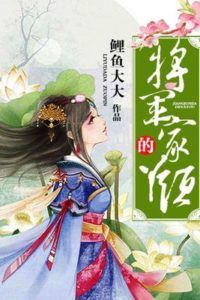
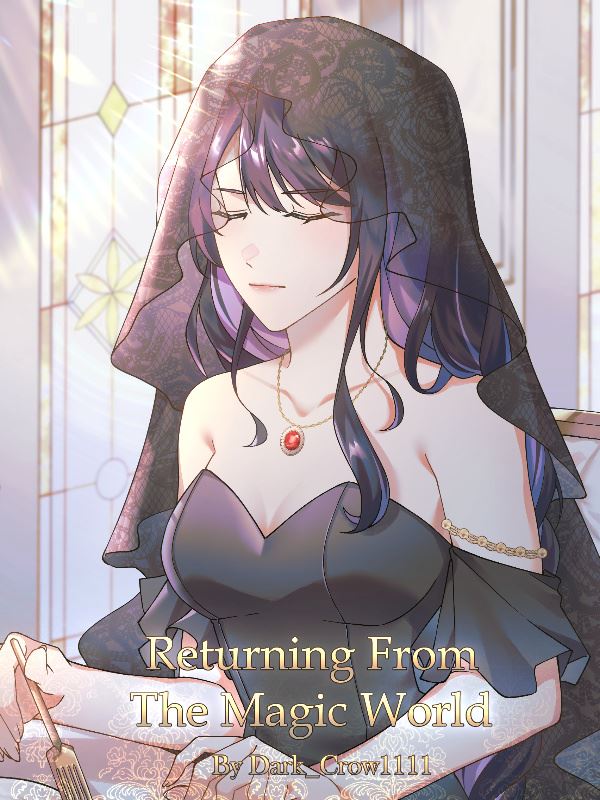
Chu Suian transmigrated and sold herself into service, only to discover that her master intended for her to be his concubine. Seizing a moment of chaos, she made her escape…

The master, however, refused to let it go and began searching for her across the world.

Unknowingly, this little maidservant from the General’s household stirred up a massive storm. The General felt his life was truly miserable, being saddled with such a troublesome girl.

Novel Items

More
Contract
A legal document signed by Chu Suian with Liu Yapo, stating that a deposit of one hundred coins is paid first, and if Suian cannot find a master in the future, the deposit must be returned. Suian pressed her thumbprint on it.
Textbook
Classical Chinese texts that Master Cao taught to Huai and Jin, skipping elementary texts like the Three Character Classic and Disciples' Rules as instructed by Pei Pu.
Textbook
A classical text containing chapters such as Gongye Chang, Yong Ye, and Wei Ling Gong. Jin had memorized multiple volumes of this text ahead of his brother.
Beverage
A type of tea that Director Shen brews and serves to He Yuan and Yang Xiujin during their meetings in the factory director's office.
Toy
A toy belonging to Chu Yi that he frequently plays with. He once searched for it when his maternal grandmother visited and later continued fiddling with it throughout the conversation about placing a maid in Ninth Master's quarters.
Food
A pastry made by Chef Liu in the main kitchen that Old Lady Wang particularly enjoys. Qipei was sent to fetch it for the visiting old lady.
Latest Release
DateGroupRelease
2026-08-11shanghai fantasy c10
2026-08-11shanghai fantasy c9
2026-08-11shanghai fantasy c8
2026-08-11shanghai fantasy c7
2026-08-11shanghai fantasy c6
2026-08-11shanghai fantasy c5
2026-08-11shanghai fantasy c4
2026-08-11shanghai fantasy c3
2026-08-11shanghai fantasy c2
2026-08-11shanghai fantasy c1

Community Reviews

Rating(0 / 5.0, 28votes)
5 stars
0(0%)
4 stars
0(0%)
3 stars
0(0%)
2 stars
0(0%)
1 stars
0(0%)

Popular reviews

... Read More
Okay so let me just say this — the way the author drops the Lin family backstory like a landmine in the middle of what seems like a quiet household drama is genuinely brilliant. You think you're reading about a maid and her eccentric young master, and then suddenly Wang Ziyu spills everything about Mrs. Lin's sister, the Prince of Ling, the military draft, and boom — the whole political landscape shifts. This isn't just a story about servants and masters anymore. It's about power, desire, and how one beautiful woman can uproot an entire family's fate without lifting a finger. What really got me was how Chu Yi pieces it together. He already suspected something from Suian's comments, and then Wang Ziyu fills in the blanks. The author doesn't rush this reveal — it comes out slowly, through casual conversation over wine, which makes it feel even more real. Like, this is just gossip at a family dinner, except the gossip could get people killed. And then there's the subplot of the poetry slips. Suian spends who-knows-how-long carving that stone mold, making each slip by hand, and Chu Yi just hands them to Wang Ziyu as a gift. On the surface it's a tiny moment, but it's actually a masterclass in showing power dynamics without stating them outright. Suian can't say anything. She packs the box herself. The reader wants to scream. I keep wondering what the author is building toward with the Lin family's arrival in the capital. The Prince of Ling wants Mrs. Lin's sister. Commander Chu is already connected to the Lin family through the military draft. Chu Yi is caught in the middle of all of it, and Suian — poor, clever Suian — is just trying to survive while everyone around her plays dangerous games. How long until the personal becomes political for her?
... Read More
I need to discuss Lin Songluan because honestly she is the most fascinatingly annoying character to walk through these pages and I have strong opinions. Let me just quote this exchange because it perfectly captures everything wrong with her: "You should go back to your work. I know the way and won't get lost. You're still young and growing, so if you ever have too much work to handle, just call for me, and I'll come help you." She just plucked a fallen leaf off Suian's shoulder like she's some kind of benevolent fairy godmother and then says this? With trembling red lips and a meaningful look at Chu Yi before leaving? The audacity is breathtaking. And the worst part — and this is what makes her such good writing — is that the narrative never explicitly calls her out as a villain. Suian thinks to herself: "I thought she was a flower on a high peak, but who knew she was just a speck of dust in the sea of people." That's it. That's the author's judgment, delivered through Suian's internal monologue, and it's perfect. Chu Yi's dialogue is another thing entirely. His voice is sharp, layered with sarcasm that most characters seem to miss. When Lin Songluan claims she helps the servants at home because they have it hard, Chu Yi's response is: "Really? Mr. Lin has always been known for his integrity and refused to employ servants. I never imagined there were maids and servants in his household." He's dismantling her lie in real time and she has no idea. The reader knows. Suian knows. But Lin Songluan? She's just standing there, smiling, completely blind to the fact that every word out of her mouth is being dissected. And then there's Suian's voice — this mix of outward deference and inner snark that is absolutely my favorite thing in the book. "This servant hasn't eaten yet." Said to Chu Yi after he nags her about her work, when clearly she's been up since before dawn. The gap between what she says and what she means is where the comedy lives, and also where the tragedy lives, honestly. The author's narrative voice is doing something really clever too. It's close to Suian's perspective most of the time, but it slips into Chu Yi's head when it matters. That moment where he thinks about keeping her because she won't lie — the narrative gives us access to his genuine (if flawed) reasoning, which makes him more than just a cartoon villain.
... Read More
There's this one symbol that keeps coming back to me: the yawn. Suian yawns. She's punished for it. She learns to hide it. But the Ninth Master... the text literally says "he had always hoped to see her yawn again." Think about what a yawn represents here. It's involuntary. It's human. It's a moment of weakness in a place where weakness is punished. The cane strikes weren't just about discipline — they were about control. A servant who can't even control her own body is a servant who can't rebel. But the Ninth Master wanting to see her yawn? That's him wanting to see her be HUMAN. In a household where everyone is performing — Old Madam performing maternal concern, Chu Yi performing spoiled brat energy, Suian performing obedient servant — the yawn is the one thing that can't be faked. And then there's the silver. Suian's entire motivation is saving manumission silver — one tael at a time, always lost to her father's medical bills. The text says: "Money was as hard to earn as climbing to the heavens, yet it flowed away like water when spent." This isn't just plot detail. It's the central theme. Freedom has a price, and for people like Suian, that price keeps moving further away. The tongfang arrangement is another form of bondage dressed up as opportunity. Old Madam calls it doting. Suian knows it's another chain. The question the book keeps asking is: what does freedom actually cost someone who's been sold?
... Read More
I have to be honest — I fell in love with Suian in this chapter. Not romantically, obviously, but as a character. There's this one moment where she's standing by the gate, watching the Lin family arrive, and she's not thinking about romance or drama or any of that. She's thinking about money. Ten or eight taels — that's her dream. And when she realizes the Lin family hasn't even offered a reward or a word of thanks, her heart sinks. But she doesn't break down. She just... recalculates. 'Since her goal hadn't been achieved, Suian decided to treat her earlier efforts as nothing more than diligent service.' That line broke me a little. This girl has been planning her freedom since she was a scrawny child, and she's still standing. Still smiling. Still negotiating. And then there's Chu Yi, who is apparently so lost in his own head that he can't figure out whether he wants her or not. He kicks her — not hard, but the gesture itself is so telling. He's frustrated, confused, and he's taking it out on the one person who sees through all his pretenses. The tension between them isn't romantic in the traditional sense. It's something darker, more complicated. It's about power and survival and two people who are both trapped in different ways. Suian is trapped by her contract. Chu Yi is trapped by his reputation, his family expectations, and his own inability to understand what he actually wants. And the scene at the gate — where she deliberately dresses festively and both Chu Yi and Mr. Lin are struck by her appearance — that's the moment everything shifts. She's not just a maid anymore. She's visible. And visibility is dangerous when you're trying to stay invisible. The author doesn't give us a single romantic confession or tender moment. What we get is so much better: two people who are completely mismatched, completely confused, and completely unable to look away from each other.
... Read More
This chapter is a masterclass in pacing. It starts with absolute COMEDY — Wang Ziyu vomiting in a carriage, Chu Yi's face darkening, the whole disastrous journey back. I was laughing out loud at the image of Chu Yi getting splashed with vomit and then coldly ordering "Return to Chu Mansion." The tone is light, almost farcical. Then it transitions into this quiet, domestic scene with Suian eating her cabbage dinner, the charcoal brazier, the chestnuts in the ashes. The pace slows down, becomes almost meditative. We're settling in, getting comfortable with the rhythm of this small courtyard. And then — WHAM. Lin Songluan appears at the gate like a storm cloud. The entire energy shifts. What was a cozy domestic comedy suddenly becomes a social thriller. Every word exchanged between Suian, Ziyu, and Lin Songluan is loaded with subtext. The pace doesn't speed up in terms of action, but the TENSION ramps up dramatically. You can feel the stakes rising with every polite greeting. The chapter ends on this note of Suian covering for Chu Yi, whispering to Ziyu about keeping watch. It's a perfect button — we're left wondering what Ziyu will do with this information, what Chu Yi's real intentions are, and how this web of relationships is going to unravel. The author knows exactly when to accelerate and when to let the reader breathe, and this chapter has both in spades.
... Read More
There's so much going on beneath the surface of this chapter and I can't stop thinking about it. The central symbol is obviously DRUNKENNESS. Wang Ziyu gets himself into a complete stupor, and this drunkenness sets the entire chapter in motion. But it's not just plot device — drunkenness here represents the luxury and carelessness of the elite. They can afford to get wasted, to make messes, to have servants clean up after them. Chu Yi, for all his temper, is still the one making decisions about where everyone sleeps and how problems are handled. The drunkenness exposes the power structure. Then there's the CABBRAGE. Suian's humble meal — old-cooked cabbage with marbled pork belly and vermicelli — becomes this incredible symbol of her entire existence. It's modest, practical, nourishing. The chef gives her extra because his plump daughter reminds him of her. She's invisible enough to be pitied but useful enough to be kept around. When Chu Yi eats her food, it's almost like he's consuming her world, her smallness, her survival strategy. And those paintings — the mother hen with chicks too timid to eat, the bamboo that looks like crabs. These are Suian's soul on the wall. The hen is protective but her chicks are frozen in fear. That's the study courtyard in a nutshell: a place where everyone is watching, waiting, too afraid to act. The title "Bamboo Brings Peace" is the most ironic thing in the entire chapter because nothing about this household is peaceful.
See all reviews

Characters

See all characters

Custom lists

Oops…There is nothing here.