Summary

... Read More

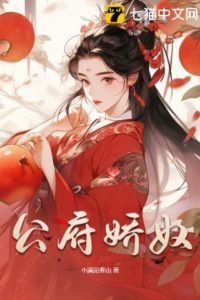
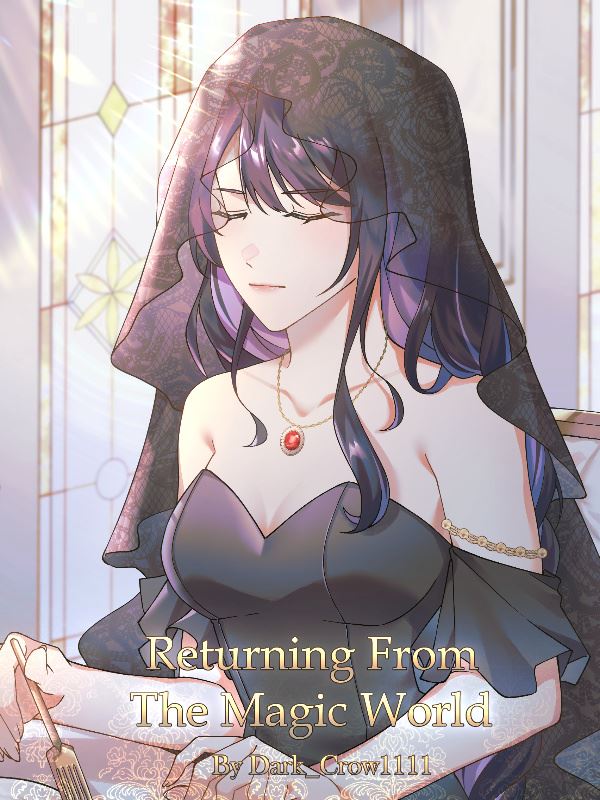
Song Jinyin had spent eight years by the side of Shizi Pei Yanzhou. At fifteen, she became his bed-warming maid, and now, she was only sixteen years old.

In those eight years, she had fallen from the daughter of an official family to the status of a slave. Her pride had been ground down, she bore the weight of guilt, and all intimacy between her and Pei Yanzhou had been completely extinguished.

Yet, though Pei Yanzhou hated her, he refused to let her go.

Later, with the help of an old friend, she escaped from the Guogongfu.

But that noble and cold Shizi seemed to go completely mad. Casting aside an imperial decree, he searched every corner of Jingdu Cheng.

At first, he could not see into his own heart, allowing hatred to fester as he vowed to drag Song Jinyin down into ruin with him.

Later, he finally found Song Jinyin, but on that day, he nearly died within the gaze of her indifferent eyes.

Novel Items

More
Pills
A dark, pitch-black medicinal broth that Song Jinyin must drink after intimate encounters with Pei Yanzhou. It causes severe abdominal pain and makes bearing children difficult. Pei Yanzhou eventually stopped giving it to her, but it still affects her. Today's dose seemed more potent than usual.
Treasure
A half-broken jade pendant that was found by Wang Cuihua when she adopted baby Lin Kexin. It was hung around Lin Kexin's neck for over a decade. Lin Tianci stole it as a gift for a girl, was rejected, and threw it at Lin Kexin's face, breaking it into two pieces. When Lin Kexin's blood touched the jagged edge, it activated a Spatial Spirit Spring mystical space.
Item
A document or record used as leverage over Song Jinyin. Pei Yanzhou threatened to send it to Wanjin Ku or Qianjin Ge if Song Jinyin refused to serve Miss Ye. It represents control over her past.
Event
Yuan Songzhi proposed marriage to Su Xiaoyin on their very first day of meeting, which is considered very straightforward and unusual. Many people in the town believe they are already married despite no formal certificate.
Currency
Chi Dahu gave thirty taels to Chi Ye (ten to repay Qin Mu, twenty for supplies). Chi Qiao took two hundred taels for preparations. Chi Yu kept seventy taels from the Qi Family compensation. A pound of refined rice costs twelve wen.
Item
A Chinese chess set used by Old Master Meng, Tao Wanxing, and Meng Chu in the hospital VIP ward. Tao Wanxing cheated during the game and won with Meng Chu's hidden assistance.
Latest Release
DateGroupRelease
2026-08-11shanghai fantasy c10
2026-08-11shanghai fantasy c9
2026-08-11shanghai fantasy c8
2026-08-11shanghai fantasy c7
2026-08-11shanghai fantasy c6
2026-08-11shanghai fantasy c5
2026-08-11shanghai fantasy c4
2026-08-11shanghai fantasy c3
2026-08-11shanghai fantasy c2
2026-08-11shanghai fantasy c1

Community Reviews

Rating(0 / 5.0, 14votes)
5 stars
0(0%)
4 stars
0(0%)
3 stars
0(0%)
2 stars
0(0%)
1 stars
0(0%)

Popular reviews

... Read More
Let me just say this: the stakes in this novel are ABSOLUTELY TERRIFYING and I cannot look away. Song Jinyin's situation is the worst possible position for a woman in this setting. She's a former official's daughter reduced to slavery. She has no family protecting her — her mother is a concubine who abandoned her (or so she thinks), her father is dead or missing, and the woman who could be her mother figure walks away when Song Jinyin calls out to her. She's trapped in a mansion with a man who rapes her and hates her, surrounded by women who want to see her suffering. What does she stand to lose? Everything. She already has nothing. But the author makes it clear that even having nothing isn't safety. Ye Wanqiu could have her killed. Pei Yanzhou could destroy her completely. The Old Madame could decide she's no longer useful. The external conflicts are relentless: Ye Wanqiu's jealousy, the social hierarchy that keeps her trapped, the mystery of her father's disappearance, the political situation involving the Duke and the magistrate's flood relief funds. But the INTERNAL conflict is what keeps me up at night. Song Jinyin wants to escape. She's saving silver. She wants to find her father. But every step she takes toward freedom seems to pull her deeper into the mansion's web. The Pei Yanzhou situation — whether it's abuse, twisted attachment, or something more complicated — keeps her physically and emotionally bound to the place she wants to leave. The suspense is maintained masterfully. We don't know what happened eight years ago. We don't know if her father is alive. We don't know if Pei Yanzhou will ever see her as a person rather than an object. And we definitely don't know if she'll escape or be consumed by Guogongfu. Every chapter raises the stakes higher. I'm terrified for this character and I can't stop reading.
... Read More
The author writes scenes like a film director. I'm not exaggerating. The courtyard kneeling scene is the most visually striking passage I've read in months and I need to break it down. "A light autumn rain fell today. The fine drizzle, carrying a chill, landed on Song Jinyin's hair and cheeks, freezing her entire body stiff and numb." Just... look at that. The cold rain. The stiff numb body. And then the contrast — inside the hall, "pastries, clear tea, and from time to time, replenished charcoal and warming stoves." The laughter of a woman drifting through the walls. Two worlds separated by a thin wooden door, and Song Jinyin is trapped in the wrong one. And then Pei Yanzhou walking her back under his umbrella, looking at the two of them — him and Ye Wanqiu — who "indeed seemed well-matched." The visual composition of that scene is devastating. He's literally sheltering the woman who's tormenting his servant while the servant is still kneeling in the rain outside. The mansion itself feels like a character. Guogongfu — the Duke's mansion — is described through Song Jinyin's eyes as cold, oppressive, layered with hierarchy. The side courtyards, the rockeries where people hide for intimate encounters, the main hall where power is displayed. Every location tells you something about the social structure. The detail about Steward Wang remembering the flood eight years ago, the magistrate father, the disaster relief — this worldbuilding is done through memory and implication rather than exposition dumps. I love it. The atmosphere is consistently oppressive. You can FEEL the damp cold. You can feel the weight of every gaze directed at Song Jinyin.
... Read More
There's so much symbolism packed into these chapters it's almost unfair. Let me break down what's really going on beneath the surface. The silver under the mattress is the first symbol that jumps out. Five taels per ingot, saved from rewards given by the Old Madame. This is her secret wealth, her hidden independence. Every coin she's saved is a step toward freedom. The fact that it's mixed with 'broken silver and copper coins' is significant too—she's not rich, she's scraping together whatever she can. The silver represents agency in a world where she has none. Then there's the letter. A letter from a dead father, preserved beneath the silver. The father represents love that exists outside this mansion's corrupt system. He 'never favored one over the other.' In a place where every relationship is transactional—where Pei Yanzhou uses affection as a weapon and the Old Madame dollops out rewards to maintain control—that letter is a relic of something pure. It's the emotional anchor that keeps her from drowning. And the escape itself—that's the ultimate symbol. 'Even if it means death, she must escape this Guogongfu to properly offer incense for her father.' Escape isn't just physical here; it's spiritual. She wants to honor her father properly, and she can't do that inside this mansion that has consumed her. The Guogongfu isn't just a setting—it's a tomb she's slowly being buried in, and the letter is her will to dig herself out.
... Read More
I need a minute. I actually need to step away from my screen because the moment where Song Jinyin says "Mother..." to Liu Shi and Liu Shi just walks away — I am NOT okay. Let me explain why this hit me so hard. Throughout these chapters, Song Jinyin has been this incredibly stoic character. She takes the slaps. She kneels in the rain. She lets Pei Yanzhou use her body and never fights back. I thought she was numb. I thought she had no emotions left. And then she says one word. "Mother." Just one word. And it cracks everything open. Because we learn through Steward Wang's internal monologue that Liu Shi IS her mother. The former magistrate's wife who was brought into the mansion as a widow, who carved out her identity in the rear courtyard, who is now Concubine Liu. She survived. She adapted. She became cold and calculating to survive this place. And Song Jinyin, kneeling in the rain, defeated and broken, reaches for the one person who could save her and that person literally walks away. The romance angle with Pei Yanzhou is... complicated. He clearly has some twisted attachment to her — he gets angry when she doesn't resist, his jaw tightens, his eyes darken. But it's not love. It's possession. It's resentment. "You don't want to? That's not up to you." That line is supposed to be sexy in some romance novels but here it's just... devastating. She's trapped with a man who hates her family and uses her body to vent his anger. The only warmth in this entire story is Xueyu, her maid. "If I'm badly hurt later, take it and hire a physician for me." Song Jinyin is thinking about her own survival even while being destroyed. That's not strength. That's survival instinct so deep it's become her personality.
... Read More
I need to talk about the atmosphere in these chapters because the author is really painting with contrasts and it's hitting hard. First, Pei Yanzhou's room. The text says it 'exuded an intimidating oppression' even when he's not there. Xueyu literally couldn't relax there. That single detail tells you everything about who this man is—his presence lingers like a shadow. The side chamber where Jinyin ends up is described as 'not as warm,' and a 'wave of chill' greets them when they open the door. Cold rooms, cold treatment. The physical temperature mirrors the emotional temperature of her situation. Then there's the wooden box beneath her mattress. Five taels per ingot, saved from the Old Madame's rewards. This tiny domestic detail—money hidden under a mattress, broken silver mixed with copper coins—grounds the whole story in reality. This isn't some glossy palace drama; this is a woman counting every coin, hoarding what she can, planning her escape one silver ingot at a time. And then the letter. 'A faded, old letter, its neat handwriting addressing: To my daughter, Jinyin.' The contrast between the cold, oppressive mansion and that warm, faded piece of paper pressed to her chest—chef's kiss. The author uses environment to mirror internal states so perfectly.
... Read More
'Song Jinyin, who am I?' That's it. That's the line. Three words and Pei Yanzhou's entire character is laid bare. He's not asking for information—he's demanding she DEFINE her place in his world, and the fact that he asks this DURING an intimate moment is so psychologically brutal it made my skin crawl. But what's genius is how the author gives each character a voice through what they DON'T say. Song Jinyin barely speaks in these chapters. Her most powerful line is 'The upper beam is crooked, so the lower beams are askew... I wonder which one you are referring to as the upper beam?'—and it's delivered with such cold precision that you can feel the servants shrinking. She's been here eight years and she's learned exactly how to weaponize politeness. Ye Wanqiu's dialogue is perfectly calibrated too. 'Brother Yanzhou, may I decide her fate tonight? Surely you wouldn't begrudge such a crude and vulgar maid?' The fake sweetness, the deliberate use of 'crude and vulgar' to demean Song Jinyin—it's entitlement dressed as politeness. And Pei Yanzhou's response? 'She's just a servant, naturally crude.' He doesn't defend her. He AGREES with the insult. That single line tells you more about his relationship with Song Jinyin than any monologue could. The narrative voice itself is fascinating—third person but deeply embedded in Song Jinyin's physical experience. We feel her pain, her cold, her exhaustion. The author doesn't tell us she's suffering; we EXPERIENCE it through the prose. 'Her thin lips pressed tightly together'—that's it, that's the whole scene of her trying to maintain dignity while being physically destroyed.
See all reviews

Characters

See all characters

Custom lists

See all custom Lists