The City Husband Who Changed Everything
+Add to Custom List
Genres:
Novel Info

Summary

... Read More

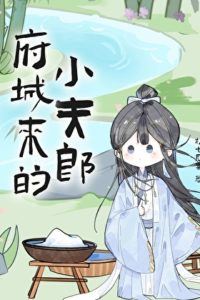
A young ge’er from the city had arrived in Liushan Village.

He was strikingly beautiful—his peach-blossom eyes shimmering with life, even his fingers as delicate and pale as jade. Yet he was so poor he could only live in the Zhong family’s long-neglected old house, taking care of his sick mother.

Rumors spread quickly through the village: the young ge’er had been cast out by the Zhong family for doing something wrong. No one wanted anything to do with him, and the eligible men were repeatedly warned by their families not to be led astray by him.

The first time Pei Mu met Zhong Yizhu, the latter was washing clothes by the river.

He used soap pods as if they were free, yet didn’t even know how to rinse clothes properly—like a complete fool.

The second time, Zhong Yizhu was gathering firewood in the mountains.

His pale, eye-catching hands were now covered in scratches and small wounds. When he saw the wild fruit in Pei Mu’s basket, his eyes lit up, and he smiled as he asked if he could trade some firewood for a couple of fruits.

Pei Mu glanced at the half-dry firewood in his basket, tossed him two fruits with a cold expression, and turned to stride down the mountain.

The third time they met, the slight figure of the young ge’er stood blocking the entrance to Pei Mu’s house. His lips were pressed tight, with a trace of blood at the corner.

His voice trembled, but his tone was strangely calm.

“Pei Mu… will you marry me?”

The marriage between the city-bred ge’er and Pei Mu—the village’s so-called “bringer of misfortune”—left everyone in shock.

By the small river at the edge of the village, women and ge’er gathered to wash clothes, chatting about every household’s affairs—especially the newly married Pei family in the east. There was always something new to say.

Everyone in Liushan Village knew Pei Mu’s story. His mother and grandfather had both died, and he had survived a wolf attack—an ill-fated star. Even his own father feared him and refused to live under the same roof.

Later, when the imperial court conscripted soldiers, several men from the village went—but only Pei Mu returned alive. The elders said his fate was too strong, that others should keep their distance lest they be harmed by it.

Privately, people believed the young ge’er had chosen a path to ruin. With his delicate looks, if he wasn’t doomed by Pei Mu’s ill fate, he’d surely be beaten to death by him.

—It was only a matter of time.

With a loud thump, a large basin of clothes was set down on the rocks by the river. Everyone turned—and immediately fell silent at the sight of Pei Mu himself.

But he didn’t even glance at them, simply crouching down to start washing clothes.

The others exchanged astonished looks, their hands moving faster. Finally, the village head’s wife gathered her courage and asked,

“Pei Mu, why are you the one doing the washing? Where’s Zhu-ge’er?”

Pei Mu carefully scrubbed the green robe in his hands. After a long pause, he replied in a cool voice:

“It’s cold. He can’t handle it.”

“Whoa—!”

After he left with the laundry, the riverbank erupted into chatter.

Unbelievable. The bringer of misfortune must be possessed.

Later, as Pei Mu and Zhong Yizhu’s life grew better and better, and their relationship became the envy of others, the villagers finally realized:

It wasn’t possession at all.

It was simply that someone had taken up residence in his heart.

Novel Items

More
Item
Musical instruments played during the funeral procession that passed through Liushan Village, shattering the quiet night and waking the villagers.
Item
A ritual bowl used in funeral rites. Wu Cuijuan cursed the deceased saying no son would be left to smash the mourning bowl for him.
Materials
A large sum of money hidden inside a hollow silver bracelet belonging to Sun Yunniang. Her late husband had secretly prepared it for her and Zhong Yizhu, anticipating this difficult day. Zhong Yizhu was astonished to discover it.
Materials
Scattered pieces of silver and jewelry worth about thirty taels that Zhong Yizhu gave to his mother Sun Yunniang to keep for her safety.
Item
A silver bracelet with a hidden compartment containing the three-hundred-tael banknote. Sun Yunniang retrieved it from beneath her pillow and opened it to reveal the secret stash her husband had prepared.
Materials
Two silver ingots and several pieces of jewelry from Sun Yunniang's dowry, which she kept hidden and offered to Zhong Yizhu, telling him to keep his own money.
Latest Release
DateGroupRelease
2026-08-11shanghai fantasy c20
2026-08-11shanghai fantasy c19
2026-08-11shanghai fantasy c18
2026-08-11shanghai fantasy c17
2026-08-11shanghai fantasy c16
2026-08-11shanghai fantasy c15
2026-08-11shanghai fantasy c14
2026-08-11shanghai fantasy c13
2026-08-11shanghai fantasy c12
2026-08-11shanghai fantasy c11
2026-08-11shanghai fantasy c10
2026-08-11shanghai fantasy c9

Community Reviews

Rating(0 / 5.0, 32votes)
5 stars
0(0%)
4 stars
0(0%)
3 stars
0(0%)
2 stars
0(0%)
1 stars
0(0%)

Popular reviews

... Read More
The scene where the three carriages arrive in Liushan Village is one of those moments that just feels like a camera panning across a painting. Let me paint it for you: it's rice transplanting season, everyone bent over in the fields, and suddenly this outline appears on the horizon. Not one carriage—THREE. The dust rising, the murmurs spreading through the villagers, Chen Xiaorong watching anxiously from the field ridge. The author builds this entire world through these small, sensory details. You can feel the heat. You can hear the whispers. You can see the contrast between the bright silk robes of Zhong Youtong and the plain clothing of Sun Yunniang standing in the way. And the offerings—two carriages filled entirely with gifts, enough to make the villagers whisper about how filial and respectful the Zhong family is. But here's the thing that makes this scene so much more than just setting description: the village itself becomes a character. These three hundred people are watching, judging, comparing. They praise Zhong Yourong as "promising and accomplished" and Zhong Youtong as "graceful and filial" while simultaneously belittling Zhong Yizhu. The world around them is alive with gossip and judgment, and that's what makes the confrontation feel so high-stakes. It's not just a family dispute—it's a public performance where everyone has a role to play. Chen Xiaorong knowing the rules of wealthy households but still feeling uneasy? That's the author telling us something important about the power dynamics at play. The village isn't just a backdrop. It's the arena.
... Read More
Okay, let me just say this out loud: Pei Mu buying the betrothal gifts and deciding to propose to Zhong Yizhu is one of the most satisfying plot turns in this whole arc. Like, you spend all these chapters watching Zhong Yizhu slowly wither away, trapped by rumors and fear, and then BAM—Pei Mu just appears with a paper-wrapped bundle of teeth and says 'he won't come bother you again.' The man doesn't even explain himself properly, which is so very on-brand for him. But what really got me is the motivation reveal. Pei Mu looks at Zhong Yizhu and sees his late mother. 'It was easy for a life to wither away. Not everyone was as tough as him.' That line hit me like a truck. It's not just some random act of kindness—he's projecting his own guilt, his own fear of losing someone else to the same fate. And then he burns the matchmaking booklet in the fire. The fact that he had it in the first place and chose to destroy it instead of using it for someone else? That's a quiet but massive character moment. The subplot with Zhang Guihua's rumors and Liu Fulang's scheming also ties together nicely. Both families wanted to exploit the Zhongs, and both got shut down in different ways. Liu Fulang's family imploding into a shouting match while the matchmaker shows up at the Zhong house is delicious dramatic irony. I just have one question though: what exactly is Pei Mu's endgame here? He says 'since Zhong Yizhu had chosen him, he would help him one last time.' One last time? What does that imply about the future?
... Read More
The bird metaphor here is so layered I can't stop thinking about it. 'Beautiful birds attract attention. They are caught and caged for display. He could shelter this bird within his domain, giving it a place to rest safely. But nothing more than that.' On the surface, this is Pei Mu justifying his possessiveness — he's not a romantic, he's a pragmatist. But read it differently: the cage is also protection. In this village, Zhong Yizhu is gossip, is vulnerability, is a target for Zhang Guihua's schemes and Liu Fulang's ambition and the old woman's superstition. Pei Mu's 'cage' keeps those threats at bay. But then Zhong Yizhu steps out and claims CHOICE — and that changes everything. The cage becomes something he walks into willingly. Is that liberation or just a different kind of captivity? The apricot color of his clothes matters too — it's warm, alive, beautiful against the灰暗 village setting. And the marriage itself: betrothal gifts worth five taels (the maximum), a town matchmaker, a wedding in half a month — all of this is performance. Performance of wealth, performance of seriousness, performance of normalcy. But underneath, this is two people who barely know each other, bound by a transaction that both pretend is something else. The old woman's obsession with fate — 'why wasn't it you who died' — raises the question: is any of this fate or choice? Pei Mu chose this. Zhong Yizhu chose this. But were they really free to choose anything else?
... Read More
Okay so let me just say this: the pacing in these chapters is absolutely masterful and I need to talk about it because the way the author builds tension is no joke. It starts so mundanely. Market day. Buying fabric. Mingtao running around excited about trinkets. You're lulled into this cozy little rhythm, right? Like, oh this is just a slice-of-life story about rebuilding after hardship. And then—bam—the storm hits. Not just a weather event, but the narrative equivalent of a door slamming shut. The chapter structure here is brilliant because it mirrors Zhong Yizhu's psychological state. The market scene is bright, noisy, full of movement. Then the storm comes and everything contracts—into his room, into darkness, into that single terrifying moment where a shadow appears beside his bed. The pacing literally shrinks the world around him, and you feel it. But what really got me was the transition from the attack to the aftermath. One moment he's fighting for his life, the next Sun Yun-niang is there with a broken clay pot and the most devastating maternal energy I've ever read. And then—immediately—they're dragging a body into the forest. No time to breathe, no time to process. The author doesn't let up for a single second. And then Pei Mu's door. The proposal scene. It's such a structural pivot—from survival horror to something almost romantic in its desperation. Zhong Yizhu running away in tears, then Pei Mu calling after him with that one question: 'Who hurt you?' That line is a cliffhanger disguised as a question. It changes everything. The chapter ends with Zhang Guihua spreading rumors and Wu Cuijuan listening with satisfaction. The author keeps stacking threats like dominoes, and you just know the next chapter is going to explode. I stayed up way too late reading this batch. No regrets.
... Read More
Okay, let's talk about how this chapter is structured because the author is playing 4D chess with the pacing and I am HERE for it. We open with the aftermath of Pei Mu's blood-and-innards stunt—quick, visceral, establishes that this man is not to be messed with. Then we cut to Zhong Yizhu's quiet victory: the sachet sale. First sale. Fifteen wen. It's small, intimate, almost domestic. And then—BAM—the Zhong family carriages appear like a storm rolling in. The transition from that warm, sunlit moment of making money to the heat-soaked, sweat-drenched arrival of the antagonists is so sharp you almost need to blink. But the real masterstroke is the ending. After all that tension—the confrontation, the threats, the mountain trip to pay respects—the chapter doesn't end with a cliffhanger or a dramatic revelation. It ends with Pei Mu in the mountains, tightening a snare around a stag, thinking about going home. The storm is building back in the village, but we're cut away to this quiet, almost meditative moment. It's like the author is saying: the world keeps turning even when drama is happening. And that contrast—between the violent snare tightening around the struggling stag and the gentle image of a man thinking about his husband—creates this incredible emotional resonance. The pacing never drags, never rushes. It breathes. And that final image of Pei Mu deciding to catch two more rabbits before returning? That's not filler. That's the chapter's emotional anchor. Everything else—the rivalry, the confrontation, the village gossip—revolves around this quiet center of two people who chose each other.
... Read More
I need to go back and re-read the transition between Pei Mu finding out about the rumors and him actually doing something about it. The pacing here is masterful. First, Chen Xiaorong dumps all the exposition about Zhang Guihua's lies and Liu Fulang's scheme in one breath—almost too fast, almost overwhelming, which is exactly how rumors feel in real life. They just explode everywhere and you can't process it. Then Pei Mu just nods, says 'I understand,' and walks away. No dramatic speech, no 'I'll fix this.' Just... gone. And then we cut to Zhong Yizhu at home, growing thinner day by day, unable to sleep on the bed, curling up in corners. The chapter lingers on his deterioration like a slow zoom. You can practically hear the silence in that house. And then—knocking. The wood-chopping knife. The wild thought: 'if he killed that bastard, the nightmare would end.' This is the lowest point, and the author doesn't rush out of it. He lets Zhong Yizhu stand there, trembling, knife in hand, before Pei Mu appears. The timing is perfect. Just when you think Zhong Yizhu might actually do something irreversible, Pei Mu shows up with teeth in a paper bundle. Then we cut to Wang Ping'an dropping his hammer. The comedic beat of 'Clang—' right after all that tension? Genius. It gives you a breath before the final scene of Pei Mu burning the booklet under moonlight. The whole sequence moves from suffocating silence to explosive confrontation to quiet resolution, and I stayed up way too late reading it.
See all reviews

Characters

See all characters

Custom lists

Oops…There is nothing here.