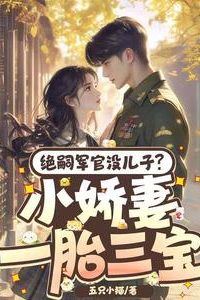
The Childless Officer Has No Son His Delicate Young Wife Gives Birth to Triplets in One Pregnancy
Novel Info

Summary

... Read More

【Soft, Delicate “White Rabbit” Green Tea Girl × Domineering, Fatherly Military Officer】
1970s Era + 11-Year Age Gap + Height Difference + Childbearing System + Extra-Sweet Romance + Irresistible Mutual Attraction

Lu Jinhuan is the youngest daughter in her family. Innocent, adorable, gentle, and obedient, she is set up by her selfish older sister with her elder brother-in-law a military officer who is believed to be unable to father children. What if her husband can’t have children?

No problem. Lu Jinhuan is bound to a Good Fortune Childbearing System.

Fertility Pills, Baby Girl Pills, Beauty Pills, Dragon-and-Phoenix (Twins) Pills, Intelligence Pills, Multiple Birth Pills… it has everything. As long as she wants to, she could give her husband enough children to form a soccer team.

Five years later, her husband says to her with a helpless smile,

“Sweetheart, how about I get a vasectomy? Let’s not have any more children. We already have enough really, more than enough.”

Novel Items

More
Item
One of the two conditions Lu Jinhuan set before agreeing to marry He Congnan. She demanded five hundred yuan as her dowry, which Lu Zhao agreed to, saying it was only right.
Item
The personal belongings of Lu Jinhuan's deceased biological mother, who died from severe hemorrhaging during childbirth. Lu Jinhuan demanded their return as her second condition for agreeing to the marriage, and Lu Zhao agreed.
Event
The government policy during this era (March 1976) that sent young people, especially those who had finished high school, to rural areas for farm work. Lu Jinhuan, having been out of school for two months, faced this prospect. The only ways to avoid it were finding a job or getting married. Jobs were scarce as every position was already occupied.
Latest Release
DateGroupRelease
2026-08-11shanghai fantasy c1

Community Reviews

Rating(0 / 5.0, 6votes)
5 stars
0(0%)
4 stars
0(0%)
3 stars
0(0%)
2 stars
0(0%)
1 stars
0(0%)

Popular reviews

... Read More
I need to talk about Lu Jinyun because this girl is fascinating in the worst possible way and I literally cannot stop thinking about her. Let me just lay it out — she's the step-sister, she's five years older, she's married into a prestigious military family, and she's using her younger sister as a pawn to secure her own position. But here's what gets me: the text tells us she's an expert at pretending. She pretends to be sweet to their father, she pretends to care about Jinhuan, she even renamed herself to match Jinhuan's name like they're close sisters. The cruelty of that — adopting the same surname, the same naming pattern, while secretly tormenting the real daughter — that's next-level psychological violence. And yet, I can't help but feel a weird pity for her too. She went to Beijing with a dance troupe, married into a powerful family, and immediately the pressure started. The He family values descendants above all else, and she damaged her health trying to give them one. She's terrified of being replaced, of her husband being forced to divorce her. So she brings in her sister — someone beautiful, fertile, and apparently compliant — to carry the family name. Is it evil? Absolutely. But it's also desperate, and that makes her feel real. Then there's the father-daughter relationship, which is honestly heartbreaking. Lu Zhao raised Jinhuan alone after her mother died, literally begging neighbors for breast milk for her as a baby. But thirteen years after Aunt Li had a son, his attitude shifted. The text doesn't spell it out but it's painfully clear — the son is his heir, Jinhuan is expendable. And Jinhuan knows this too. When she says "Dad, I understand," it's not naive acceptance. It's the resignation of someone who has spent eighteen years understanding exactly where she stands in this family.
... Read More
Okay so let me just say this: the plot setup in these first four chapters is absolutely razor-sharp. The author doesn't waste a single line. We're dropped into March 1976 Suzhou and within the first page, we already know the stakes — Lu Jinhuan is being maneuvered into a marriage that's essentially a political transaction disguised as family duty. And the best part? She KNOWS it. She knows her father wants to use her for connections in Beijing. She knows her step-sister is selfish. She knows the man she's being sold to can't have children. And yet she still agrees — but with conditions. Five hundred yuan dowry and her mother's belongings back. That moment when she lays down those terms? Chills. Absolute chills. It shows she's not some naive girl being swept along — she's calculating, survival-minded, and already three steps ahead even as she walks into what looks like a trap. The subplot about the Cultural Revolution era policies adding pressure (the countryside sent-down program, the fear of ending up like Old Wang's daughter who disappeared) gives the whole thing this ticking clock energy. You can't just say no — the alternatives are literally terrifying. And then there's the He family's desperation for an heir, Lu Jinyun's precarious position after her premature labor, all of it woven together like a noose tightening around Jinhuan's neck. I'm already obsessed with where this is going. What happens when she actually meets He Congnan? Does she find an ally in him, or is he just another piece in his wife's sister's scheme? And that five hundred yuan — is it really just about money, or is it her way of buying insurance for herself?
... Read More
The atmosphere in this book is INSANE and I need to talk about it. The author paints this world so vividly that I could literally smell the damp alleys and feel the chill of that March drizzle. Let me just walk through it with you. We open with Suzhou — narrow alleys, Jiangnan rain, that specific soft grey light that only exists in that region during early spring. It's tranquil, almost dreamlike. But then the camera pans inside a cramped apartment where a family is discussing whether their daughter should be sent to the countryside or married off to a man she's never met. The contrast between the poetic exterior and the suffocating interior is genius. The world outside is beautiful and quiet; the world inside is a cage. And the period details — they're not just set dressing, they're the actual mechanism of the plot. The sent-down youth program (zhiqing), the factory job system where every position is already occupied, the military families holding real power, the bride price economy, the He family's obsession with descendants — all of this isn't background, it's the prison walls. Jinhuan has exactly two exits from her current life: a job that doesn't exist, or a marriage that's really a transaction. The government policy IS the antagonist in these chapters. There's also this one detail that stuck with me — Old Wang's daughter who went out to the toilet at night and disappeared without a trace. The father mentions it almost casually, like it's just another fact of life. But it's horrifying. It's the kind of thing that makes you understand why Jinhuan would rather walk into an arranged marriage than face the unknown of the countryside. The world the author built here is so real it makes your skin crawl.
... Read More
"A fine drizzle hung like silk, wrapping the entire city of Suzhou in a thin veil of mist." I know this is supposed to be atmospheric setup but I literally stopped reading and just stared at that sentence. There's something so tender and fragile about it — silk, mist, gentle rain — and then immediately after, we get this little girl saying "I don't want to go" in those watery doe-like eyes. The contrast just wrecked me. This delicate, beautiful creature is about to be handed off like a package and the world is just... raining softly around her like nothing is happening. But the emotional core of these chapters isn't the romance — it hasn't even started yet — it's the mother-daughter ghost that haunts everything. Jinhuan's biological mother died giving birth to her. Her father had to shamelessly beg other women to let him bring his baby to nurse. He fed her rice soup by hand until she was two. That image of a father, a man in 1976 China, swallowing his pride and going door to door asking strangers for their breastfeeding daughters to feed his own child — I can't get it out of my head. It's the kind of love that's desperate and humble and absolutely devastating. And now that father is using his dead wife's daughter as a bargaining chip. Now that father is smiling kindly while negotiating his daughter's future to a man nine years older who can't give her children. The betrayal isn't loud or dramatic — it's quiet, it's polite, it's wrapped in the language of family duty. That's what makes it hurt so much. Jinhuan's fear at the end — what if she becomes a widow with no children and no standing? — that's not just anxiety about the future, that's the fear of a girl who has never once been fought for the way her mother fought for her.
... Read More
There are so many layers underneath this seemingly straightforward arranged marriage story and I've been turning them over in my head ever since I finished reading. The silk metaphor in the opening line is doing a lot of heavy lifting. Silk is beautiful, expensive, delicate — but it's also something that gets woven, stretched, and ultimately used to wrap things up. Suzhou is famous for its silk industry, and the city itself is described as being wrapped in mist like fabric. Jinhuan is being wrapped up and prepared for delivery, just like a bolt of silk. Her beauty — described in almost textile terms (flawlessly fair skin, soft pink lips, the innocence of a newly blossomed flower) — is the commodity being traded. Then there's the theme of names and identity. Lu Jinyun changed her name, took the Lu surname, matched her sister's name pattern. She's erasing herself to fit into a new family. But Jinhuan's name — Jinhuan (金环) means golden bracelet or golden ring — it's an object, something circular that binds. She's being ringed in, trapped, connected to another family through marriage. Meanwhile her mother is completely nameless in this story. She died giving birth, she's been reduced to "the biological mother," and all Jinhuan can demand as she walks out the door is her mother's belongings. The mother has no name, no voice, no presence — except for the objects she left behind, which become the only tangible connection Jinhuan has to her. The deepest theme here, I think, is the illusion of choice. Jinhuan thinks she's making a decision when she agrees to the marriage and sets her conditions. But she's choosing between a known misery and an unknown catastrophe. The real question the book seems to be asking is: when every door is locked from the outside, does opening the one door that's slightly ajar count as freedom?
... Read More
I have to give major credit to the dialogue in this book because it is SO natural it's almost uncomfortable. These aren't characters delivering monologues — they're people talking over each other, using silence as a weapon, saying one thing and meaning another. Take Li Haili's conversation with Jinhuan. On the surface she's being sweet — smiling, gentle, saying things like "you know how difficult it is to find a job these days." But the narration immediately undercuts her: "the smile never reached her eyes." And then we get the real threat disguised as concern — the story about Old Wang's daughter disappearing. It's manipulation at its finest, wrapped in the language of a caring stepmother. And Jinhuan? She sees right through it. She doesn't cry or beg or resist dramatically. She just... calculates. "Is he disabled or does he have some kind of illness?" — that's not a naive question, that's a woman assessing her options in real time. The father-daughter exchange is even better. Lu Zhao says "Xiao Huan, you're my biological daughter. Would I ever harm you?" And the text doesn't even need to add any narration because the reader and Jinhuan both know the answer to that question. The line is devastating precisely because it's delivered with genuine conviction — he probably believes it himself. He's convinced himself that using his daughter isn't harm, it's strategy. And Jinhuan's conditions at the end — "First, I want five hundred yuan... Second, I want my mother's belongings returned to me" — short, direct, no emotional language. She's not asking, she's stating terms. The voice shift from the trembling girl at the beginning to this cold negotiator at the end is one of the most impressive character moments I've read in a long time.
See all reviews

Characters

See all characters

Custom lists

Oops…There is nothing here.