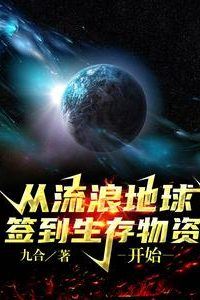
Starting in The Wandering Earth by Signing In for Survival Supplies
Novel Info
  • Author:
  • 九合
  • Status:Ongoing

Summary

... Read More

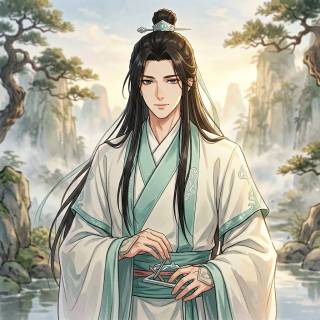
When Chu Xuan is suddenly thrust into The Wandering Earth world, he brings with him a powerful Sign-In System!
[Congratulations, Host, you signed in and received a bag of fragrant rice!]
[…]
[Congratulations, Host, you signed in and received a fat lamb!]
[…]
[Congratulations, Host, you signed in and received a growth-type Dimensional Space!]
[…]
While others are forced to eat earthworms, Chu Xuan’s biggest worry is whether to have hotpot or seafood tonight. Just thinking about it, doesn’t that make seethe with envy?!

Novel Items

More
System
A golden finger system activated when Chu Xuan touches his high-fat rapeseed project. It allows one sign-in per day at Level 1, with a 100% chance for food-type resources and a 1% chance for special-type resources. The first sign-in reward includes a 1 cubic meter portable space. Items obtained are premium, safe, and healthy, unlike synthetic food.
Food
A 5kg bag of long-grain fragrant rice obtained from the first sign-in. It is a luxury item, as many underground city residents have not eaten field-grown rice in over a decade. Chu Xuan stores it in his portable space.
Food
An 18-inch cream cake obtained from the second sign-in. It is a truly luxurious food, rare even compared to non-synthetic meat. Chu Xuan eats a quarter immediately and stores the rest in his portable space, where time is almost still, preserving freshness.
Space
A 1 cubic meter storage dimension granted as the first sign-in reward. It functions as a personal inventory where time is nearly frozen, allowing items like cream cake to stay fresh indefinitely. Chu Xuan uses it to store rice, eggs, and other personal items.
Device
A health-monitoring bracelet worn by the original owner of Chu Xuan's body. It could warn of sudden death, but the original owner found it annoying and temporarily turned it off while working late, leading to his overwork death. Chu Xuan implies he will use it properly.
Plant
Chu Xuan's university research project crop, grown in incubators at N3 Experimental Base. It can be pressed for oil, used to extract vitamins, and serves as a raw material for synthetic meat. Eating it raw would ruin yield data, so he only touches it to activate the Sign-In System.
Latest Release
DateGroupRelease
2026-08-11shanghai fantasy c200
2026-08-11shanghai fantasy c199
2026-08-11shanghai fantasy c198
2026-08-11shanghai fantasy c197
2026-08-11shanghai fantasy c196
2026-08-11shanghai fantasy c195
2026-08-11shanghai fantasy c194
2026-08-11shanghai fantasy c193
2026-08-11shanghai fantasy c192
2026-08-11shanghai fantasy c191
2026-08-11shanghai fantasy c190
2026-08-11shanghai fantasy c189

Community Reviews

Rating(0 / 5.0, 24votes)
5 stars
0(0%)
4 stars
0(0%)
3 stars
0(0%)
2 stars
0(0%)
1 stars
0(0%)

Popular reviews

... Read More
There's a line in here that hit me harder than I expected: 'What was happiness? It was right here before him.' And what is 'here'? One cup of milk, 500 milliliters. Two slices of bread dipped in cream. A few slices of bacon. That's it. That's the definition of joy in this world. I keep coming back to the apple scene. Han Zi'ang biting into it with a 'crisp crunch' and saying 'Mm! Delicious... after so many years, he tasted this flavor again.' The ellipsis does so much work there. It's not just nostalgia—it's grief for a world that no longer exists. He's tasting something his childhood remembered, and the memory is both beautiful and painful. Han Duoduo eating the century egg like a hamster is adorable, yes, but it's also heartbreaking. She's a 'full-on little foodie' who thinks anything edible is tasty. That's either innocence or adaptation—I'm not sure which is sadder. The text says it's 'a brand-new stimulation for her taste buds,' which implies her palate has never experienced anything this complex. She's never had century egg before. She's never had real fruit. She's never had freedom. The New Year's Eve setting amplifies everything. Everyone else is eating synthetic nutrient paste while Chu Xuan has bacon and cream. The contrast isn't meant to make us resent him—it's meant to make us feel how far he's come and how much further he has to go. 'Life was looking more and more hopeful.' That's not arrogance. That's relief. That's someone who was drowning and just found solid ground. And Han Duoduo's shyness when he looks at her—there's a tenderness there that isn't romantic but isn't purely platonic either. It's the warmth of found family, of people who chose each other. The text doesn't label it. It just shows her wondering 'Could it be...' and him thinking about jackpots. The gap between them is where the emotion lives.
... Read More
There's a scene in here where Chu Xuan and his classmates take this massive K32 vehicle elevator up to the surface and I have to just stop and appreciate how the author builds this moment. Let me paint it for you: they're in an underground city, they've been down there for months, and suddenly they're boarding this four-meter-tall steel beast that's basically a vehicle transport elevator. The description hits you with details like 'One press, vehicle sync! Two presses, local broadcast!' and these little instructional moments that make the world feel lived-in and functional. But the real worldbuilding gold is in the protective suit explanation. The author takes time to explain that suits themselves are easy to get—Brother Yi from the movie was brazenly handing out flyers for them—but the life-support packs with thermal control, pressure regulation, oxygen supply, communications, and batteries are strictly controlled. This is such a smart way to show us how the underground city operates without dumping exposition. The control mechanism is elegant: let people have the suits but control the systems that make them actually useful. It tells us everything about this society's priorities and power structures in a few paragraphs. And then the elevator ride itself—fifteen minutes of ascent, the beep announcing they've reached the surface, the doors opening—and the chapter cuts off right there. I literally had to stop and stare at my screen. The atmosphere of that moment, the anticipation of seeing the surface for the first time, the way the entire world shifts from underground confinement to... whatever's up there. It's cinematic in the best possible way. The author understands that worldbuilding isn't just about describing places, it's about making the reader feel the weight of a world that's been kept hidden.
... Read More
Food is the central symbol in this text, and it operates on at least three levels. First, food is survival—obviously. But second, food is status. The apples Chu Xuan brings back aren't just calories; they're proof that his parents' connections still matter, that he has access to networks his neighbors don't. When Han Zi'ang and Liu Qi realize 'since Chu Xuan got them, there was nothing to worry about,' they're not just relieved about fruit. They're acknowledging the hierarchy. Third, food is memory. Liu Qi eating apples 'after so many years' is tasting his childhood. The century egg is 'a brand-new stimulation' for Han Duoduo's palate—she's experiencing something her generation has never known. Every bite is an encounter with a world that existed before the Cataclysm, and that encounter is both joyful and mournful. The lychees work the same way. Three lychees shared between two advisors, with Chu Xuan eating one himself. The text says 'everyone tacitly understood' the source. This is the theology of scarcity—everyone knows where the good things come from, everyone knows the system, and no one talks about it. The unspoken agreement is the social contract. The enhancement solutions are symbols of transformation, but not the clean kind. Level 1 requires six vials. Level 2 requires reaching the limit of Level 1. There's a progression, but it's constrained, rationed, controlled. The system gives power but also limits it—six vials max, ten minutes of paralysis, distance restrictions on retrieval. Power here is always conditional. The Firestone as hydrogen bomb is the ultimate symbol of the text's central tension: protection and destruction are the same thing. The engines save humanity but require constant threat. The underground cities shelter three billion but exclude three billion. Chu Xuan's luck buff saves him but depends on feeding others. Nothing in this world is free, and the text never lets us forget that. The New Year's setting adds another layer. Holidays are supposed to be about abundance, community, hope. Here, the Neighborhood Committee distributes dumplings and the university gives earthworm biscuits. The celebration is real but rationed. Hope exists but is measured in cubic meters of storage space.
... Read More
There's this one line that keeps echoing in my head: "Congratulations, host; you have influenced the fates of a large number of humans and received a feedback of civilization fortune." Civilization fortune. Not personal luck. Not destiny points. The fortune of an entire species. That's the scale this story is operating on, and it changes everything about how you read Chu Xuan's actions. He's not just a student doing a paper. He's a variable in the survival equation of humanity. The paper itself is a symbol of something bigger—humanity's relationship with its own ignorance. Chu Xuan's whole argument is basically: we've known Jupiter for over 100 years and we still don't understand everything about it. The sun is aging faster than expected. We don't know why. And yet we're planning to fly Earth past Jupiter at high speed? The caution he advocates isn't just scientific rigor—it's a philosophical stance about humility in the face of cosmic uncertainty. And the United Government's response is telling. They don't dismiss him. They don't say "who asked a botany student." They listen. The fact that this becomes the No. 9 Level 1 emergency plan—right alongside eight others that presumably address existential threats—shows that the story takes its own stakes seriously. The Jupiter Crisis isn't a backdrop. It's the main event. The rapeseed growing twice as fast is also symbolic, I think. Life persisting. Green shoots in an underground world that's supposed to be dead. Chu Xuan's botany work isn't just a side quest—it's the same instinct that drove him to write that paper: finding ways for life to continue against impossible odds. The neighbor's halo being diminished is the darker side of this theme. Chu Xuan's rise comes at someone else's expense. The story doesn't shy away from that. "His paper had changed too many things." Every victory has a cost. Every fate rewritten displaces another. And the ending of these chapters—the trajectory adjusted, the engines prepared, the rapeseed growing—feels like a moment of fragile hope. Not triumph, not yet. Just... preparation. The story is saying: we're ready, as ready as we can be. And that's enough for now.
... Read More
I need to talk about the Liu Qi arc because this chapter absolutely delivered on something I didn't fully expect. Chu Xuan confronting Liu Qi about wanting to run away to the surface—it's such a sharp character moment. Liu Qi is this military-obsessed maintenance engineer who's been building up to this rebellious phase, and Chu Xuan just... sees right through him. The way the narrative handles this is genuinely impressive. Chu Xuan doesn't lecture him or give him some profound speech about responsibility. He asks one question: 'Can you bear to never see Duoduo again for the rest of your life?' And that's it. That's the entire argument. Liu Qi is immediately shut down because the emotional truth of it hits him harder than any physical confrontation could. Then Chu Xuan just picks him up and throws him in under a second. 'Physical Correction' is such a perfect phrase for what's happening here—it's Chu Xuan establishing dominance not just physically but emotionally, showing Liu Qi that he's not ready to be out there on his own. And Liu Qi's reaction is so human. He's furious, he demands a rematch, he gets demolished again, and then he's just left lying there questioning his entire existence. But here's what I love: Chu Xuan isn't being cruel. He's being a friend in the only way he knows how. The dynamic between these two has been building for months and this scene crystallizes it perfectly. Liu Qi looks up to Chu Xuan but resents him, and Chu Xuan knows exactly how to handle him. The arm-wrestling scene earlier was setup for this—the reader already knew Chu Xuan was way stronger, so when Liu Qi challenges him again after the conversation, it's almost comedic. But the emotional core is real. Liu Qi isn't going to run away, and neither is Chu Xuan going to let him. Their bond is cemented here in a way that feels earned.
... Read More
Let me just be honest with you: I started reading this at like 11 PM and I was supposed to go to bed at 11:30. It is now 2:47 AM and I am writing this review instead of sleeping. The author has some serious pacing tricks up their sleeve. The structure of these chapters is deceptively simple. Chapter by chapter, we get: daily life → system reward → character interaction → worldbuilding → goal-setting. But the genius is in HOW the author varies the rhythm within each chapter. Take the breakfast scene: it starts with Chu Xuan cooking synthetic rice (mundane), Xue Ming reacting to the smell (light), then Han Duoduo showing up with earthworms (warm), then the revelation about real rice (surprise), then Han Duoduo finishing the meal and burping (humor). That's five beats in one scene, and each one shifts the emotional tone. The sign-in sequence is where the pacing really shines. 'Ding! Twelve o'clock sharp!'—the system announcement creates a ritualistic beat, like a slot machine pulling you in. Then the rewards come: century eggs (expected), genetic enhancement (surprise). The 1% extra chance trigger is a small detail but it creates this tiny spike of tension. Will he get it? He does. Relief. Then the enhancement process itself—ten minutes of described transformation that feels like ten seconds because the prose is so tight. But I will say: the section where Chu Xuan lies in bed thinking about his future plans is where the pacing dips slightly. The internal monologue about military, scientific research, and government as career paths is interesting but it slows the momentum. It's necessary for character development, but I found myself skimming slightly. The author recovers quickly though by having him immediately return to studying, which re-energizes the chapter. The chapter endings are also well-crafted. Each one ends on a note that propels you forward: Han Duoduo leaving satisfied, Chu Xuan deciding on his four-point plan, the genetic enhancement completing, the early-warning paper being written. No cliffhangers, but strong forward momentum. That's the kind of pacing that makes you say 'just one more chapter' at 3 AM.
See all reviews

Characters

See all characters

Custom lists

Oops…There is nothing here.