Summary

... Read More

Historical Romance • Transmigration • 1970s Era • Countryside Life • Double Rebirth/Transmigration • Space Ability • Sweet Romance

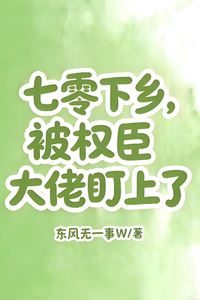
Born into a wealthy modern family, Pei Nian transmigrated into the 1970s as a baby—but lost all memories of her previous life for eighteen years.

Everything changes when her scheming father signs her up to be sent to the countryside. Furious, she returns home to confront him, only to be pushed by her younger stepbrother and hit her head. The accident restores every memory of her past life.

Armed with the knowledge of two lifetimes, Pei Nian wastes no time striking back. She swiftly dismantles the schemes of her greedy father, vicious stepmother, and their entire family before packing her bags and heading to the countryside on her own terms.

With a mystical spirit-spring space, a second hidden storage space, and a vast fortune at her disposal, Pei Nian believes she’s simply changing locations for a peaceful, carefree life.

She has no idea that the moment she arrives, she’ll meet the one man destined to change everything.

Novel Items

More
Arcane Treasure
A premium Hetian jade bracelet and one of the Chen family's true heirlooms. Contains a hidden spiritual spring space that can be activated by blood. The original Chen Shuang never wore it finding it old-fashioned. Chen Shuang puts it on and activates it with her blood using a jade hairpin, gaining the ability to store items in the space.
Materials
A document drawn up under the village chief's witness, declaring that from then on whether Ye Wuyou lived or died had nothing to do with Old Lady Wang's family. Old Lady Wang insisted on this to avoid having to return the money if the girl died.
Document
Chen Wanyue's savings passbook which she offered to Song Ruannin to help with her sister's medical treatment.
Container
A locked old wooden box hidden in the deepest corner of Pei Nian's wardrobe. It contained all her belongings left by her grandfather: 215 yuan and 70 cents in cash, a savings passbook with 5,000 yuan, various ration coupons, a handwritten notebook, and her mother's white jade bracelet. It was opened with a tiny key concealed on her person.
Materials
Coupons An Ruoyan needed for purchases but did not have, likely taken by Shi Meijiao for shopping. She bought some at the black market.
Document
A handwritten notebook kept in Pei Nian's locked old wooden box alongside her cash and the white jade bracelet, left behind by her grandfather.
Latest Release
DateGroupRelease
2026-08-11shanghai fantasy c3
2026-08-11shanghai fantasy c2
2026-08-11shanghai fantasy c1

Community Reviews

Rating(0 / 5.0, 13votes)
5 stars
0(0%)
4 stars
0(0%)
3 stars
0(0%)
2 stars
0(0%)
1 stars
0(0%)

Popular reviews

... Read More
I need to talk about how the author uses the train journey as a structural device and honestly it's brilliant. You've got two days and one night crammed into chapters that move at different speeds, and the pacing never feels rushed or dragged out. Let me break down why this works. The first section is pure exposition disguised as drama. Zhou Jin vs. Gao Juan on the train is the hook—it's colorful, it's public, it's immediate conflict that pulls you in. But underneath all that is Pei Nian's internal realization that she's in a novel. That's the real plot engine, and the author smartly buries it inside the gossip so you absorb it naturally. Then comes the lunch scene. This is where the pacing does something interesting—it slows down from the high-energy confrontation to a quieter, more domestic moment. Pei Nian eating her meat buns, the old lady with the crying child, the moralizing cadre. This scene serves multiple purposes: it establishes Pei Nian's character, it gives Zhou Jin another chance to destroy Gao Juan, and it introduces the theme of scarcity that will definitely matter later. The Gao Juan collar incident is the climax of the train arc, and it lands perfectly because it's physical comedy mixed with genuine power. The carriage goes silent. Mission accomplished. And then—cut to arrival at the commune. No epilogue, no wrapping up, just straight into the next act. What I appreciate most is that the author never lets the train sequence become a waiting room. Every scene advances character, plot, or theme. Even Pei Nian farming in her space isn't just filler—it's world-building that establishes her unique advantage and hints at how she'll survive in the countryside. The pacing is tight, the transitions are smooth, and I finished these chapters in one sitting because the author knows exactly when to speed up and when to let a moment breathe.
... Read More
There's a scene in here that I keep coming back to, and it's not the dramatic one with Gu Zheng or the funny one with Shen An dangling in the air. It's the moment Pei Nian follows the women into the west room and sees the kang. "Six women sleeping side by side on one kang. No curtains. No privacy whatsoever. This wasn't sleeping. It was practically setting up a market stall." Market stall. She compared a sleeping arrangement to a MARKET STALL. And it's funny, yes, but it's also devastatingly accurate for what this world is. The veteran educated youths already have kang cabinets set up—three of them, occupied, neat and tidy—while the newcomers get salvaged straw mats. This is a hierarchy that existed before any of them arrived, and it's carved into the physical space. The author builds this world through objects and details the way a filmmaker builds a set. The faded army-green jacket on Wang Fugen. The tractor as a rare luxury in a landscape of mule carts and ox carts. The charcoal pencil and old notebook Carpenter Zhao uses. The two cents Li Xiao charges for directions when a single work point is only worth five cents in a prosperous brigade. These aren't decorative details—they're the economics of survival written into the furniture. And the village itself. The livestock sheds. The firewood stacks. The grain-drying yard. The well beside the vegetable garden. The brigade office separate from the educated youth quarters. Pei Nian memorizes all of it as they walk, and I realize she's mapping this place the way a soldier maps terrain. She's not just arriving—she's surveying. The most vivid image for me though is the courtyard scene at the brigade office. Wang Fugen's booming voice echoing, the thumbprints on grain ration sheets, the flatbed handcarts sitting unused in the yard like sleeping animals waiting to be harnessed. You can hear the tractor engine still running in your ears. You can smell the cracked corn and coarse wheat flour. This world doesn't feel researched—it feels lived in, and that's a rare thing.
... Read More
I need to talk about how the author builds this world, because the atmosphere is IMMERSIVE. The opening line sets the tone perfectly: "As evening approached, the aroma of dinner drifted through the Machinery Factory residential compound. Only the Zhao family's living room remained eerily silent, the atmosphere so tense it could freeze a person solid." You can FEEL the contrast between the normal world outside and the toxic environment inside. The author doesn't need fancy descriptions—the simple detail of dinner aromas drifting from other homes tells us everything about this close-knit, working-class community where everyone knows everyone's business. The living room itself becomes a character. We get these specific details: the table where Zhao Jianguo slams his palm, the high-backed chair Pei Nian sits in like a queen holding court, the cabinet where she finds pen and paper, the wardrobe with the locked wooden box. These aren't random props—they're carefully placed set pieces that ground the scene in reality. When Pei Nian kicks the solid wooden chair and it shatters into splinters, I could hear that CRASH in my head. The physicality of the space matters. The 1970s Chinese setting is handled with subtle authenticity. We get ration coupons (cloth, grain, meat, industrial), the countryside placement policy, factory work assignments, household registration transfers—all woven naturally into the conflict without info-dumping. The author trusts readers to understand the stakes without explaining every system. When Pei Nian demands "cloth coupons, grain coupons, meat coupons, and industrial coupons," it shows she understands exactly what's valuable in this era. The visual imagery during the confrontation is cinematic. Pei Nian standing in the center of the room, the three of them lined up on the floor "in a strange way... they looked almost harmonious"—that's a darkly funny image that stays with you. The blood dripping from Wang Cuihua's nose, Zhao Xiaojun's tears and snot, Zhao Jianguo's trembling hands as he writes the agreement. These are gritty, visceral details that make the scene feel real, not polished or romanticized. The ending scene in Pei Nian's room is where the worldbuilding gets supernatural. The locked wooden box, the tiny key concealed on her person, the 5,000 yuan savings passbook, the white jade bracelet—each object tells a story about her grandfather's careful preparation. And then the bracelet absorbing her blood and transforming into light? That's a gorgeous visual that shifts the entire genre. The mundane realism of the 1970s compound suddenly opens into something magical. The author creates a world that feels lived-in and specific, then layers supernatural elements on top without breaking the atmosphere. That's skilled worldbuilding.
... Read More
I need to talk about Gu Zheng because my heart cannot handle this man and apparently neither can the author, who keeps putting him in situations where he has to look at Pei Nian in ways that are NOT platonic. Let me just start with this moment and unpack it because it's everything: "As Pei Nian studied him, his gaze also landed on her. A faint ripple flashed through his eyes—so subtle that it vanished before anyone could catch it." A FAINT RIPPLE. In his EYES. While standing on a noisy tractor full of strangers. The author had to go and write that like it was nothing, like it wasn't the most charged sentence in the entire chapter. Something registered. He saw her and something registered. And then he pretended it didn't happen. And then—this is the part that got me—Pei Nian takes half a step back. Her instincts are SCREAMING at her. She identifies him as a big shot, someone not to provoke, and she creates distance. And what does Gu Zheng do? He steps back too. He mirrors her wariness. He doesn't push. He doesn't insist. He just says "You're welcome" gently and lets her breathe. That is such a specific kind of restraint. That's not the behavior of someone who's used to getting what he wants. That's the behavior of someone who recognizes danger and chooses not to trigger it. Who is she to him that he's willing to hold himself back like that? Then the seating arrangement. Gao Juan tries to sit near Gu Zheng, and he literally moves his luggage to block her, then moves his entire body to sit next to Pei Nian, then summons Shen An as a buffer. He is building a wall. Around PEI NIAN. From EVERYONE ELSE. And he does it without saying a single word to her. Meanwhile Shen An is over here being genuinely sweet—leaning in to ask Pei Nian a question, getting dangling in midair, giving a thumbs-up from the floor saying "I'm impressed." This boy has no trauma, he just wants to be friends. He's the emotional support human and I love him for it. But Gu Zheng... the way he looked at her. The way he positioned himself. The way he hasn't spoken more than three sentences to her and yet has already rearranged the entire social geometry of the trailer around her presence. I'm not okay.
... Read More
Can we just appreciate for a second how well each character's voice is distinct? Because I read a lot of books where every character sounds like the author in a different register, and this book does NOT have that problem. Pei Nian's internal voice is the standout. It's sharp, slightly sarcastic, constantly calculating. When she thinks about Gao Juan switching targets to Gu Zheng, she writes: "So the villainess has switched targets? As expected of the big shot. The moment he appeared, he'd stolen another male lead's admirer." That's not narration—that's commentary. She's watching her own story like it's a drama and she's the only one who knows the script. And then she almost says out loud "I'm only the third strongest in the world" and catches herself. The humor in that self-interruption is perfect. It's the laugh of someone who lives two lives at once. Shen An's dialogue is bright and open. "Heroine Pei! Mercy!" after being dangled in midair. "I'm impressed." Lying on the floor. This boy speaks in exclamations and he's wonderful. He's the emotional thermometer of the group—warm, reactive, genuinely delighted by everything. Gu Zheng speaks in fragments. "I'll carry it." "Don't worry. We'll make sure you get everything you need today. You should get some proper rest." Three sentences in the entire chapter and they do so much work. The politeness is real but so is the authority. He doesn't ask if she needs help—he takes the grain and tells her to rest. That's not dialogue, that's character. Li Xiao is hilarious. "Comrade Pei, I'll take you there. Two cents for showing you the way." The sheer audacity. The complete lack of self-awareness. And then her reaction when Pei Nian gives Zhang Aihua candy worth more than two cents: "She gave an annoyed snort and walked away." She doesn't argue. She doesn't negotiate. She just exits like a cat whose food bowl was filled with the wrong brand. Perfect. Zhang Aihua's voice is the most grounded in the chapter. Practical, direct, slightly weary. She answers Pei Nian's question about where to buy kang mats without any of the performative hostility that defines the other veteran educated youths. And when Pei Nian gives her candy, her response is genuine: "It wasn't worth candy. You could've found out by asking around." Finally, someone who isn't performing greed or authority. She's just tired and real. The narrative voice itself is also doing something interesting—it's close third person, but it tilts toward Pei Nian's perspective so sharply that we rarely get outside her head. When we do, it's usually to observe her. Gu Zheng's faint ripple. Pei Nian's instinctive step back. These are details she notices, not omniscient narration. The camera stays with her, which means every dialogue exchange is filtered through her assessment of the other person. That's a deliberate stylistic choice and it makes every conversation feel like a negotiation.
... Read More
The pacing in this opening is absolutely relentless, and I mean that as the highest compliment. Chapter 1 starts IN MEDIA RES. No slow buildup, no chapter of daily routine before the conflict. We open with Pei Nian already standing in the living room, already asking "Who did it?" The author drops us into the tension immediately and never lets go. The chapter structure is tight: confrontation → physical altercation → transmigration awakening → immediate physical retaliation → severance agreement demand. That's a lot of story beats in one chapter, but it never feels rushed because each moment earns its space. What I love is how the author controls the rhythm through sentence structure. During the confrontation, the dialogue is sharp and quick—short exchanges, interruptions, cut-offs. "Policy?" Pei Nian cut him off with a sneer. This creates a staccato rhythm that matches the tension. But when Pei Nian gets hit and her memories return, the prose slows down: "Towering skyscrapers. Red and green stock charts flashing across computer screens. The screech of brakes." These fragmented sentences mimic the flood of memories, then gradually return to normal rhythm as she "slowly opened her eyes" and "remembered everything." Chapter 2 shifts gears perfectly. The physical violence is over, so now we get the legal/financial confrontation. This is where the pacing breathes a bit—we get the back-and-forth of Zhao Jianguo hesitating, Wang Cuihua protesting, Pei Nian applying pressure. The author uses the severance agreement as a structural device: each paragraph reveals another layer of Pei Nian's demands. First the agreement itself, then the compensation, then the coupons, then the assignment papers. It's like peeling an onion, and each layer makes the reader want more. The chapter endings are masterfully crafted. Chapter 1 ends with Pei Nian's mind clearing and her resolution: "every debt would be collected, one by one." That's a promise that propels us forward. Chapter 2 ends with her retreating to her room and discovering the locked box—natural transition from public confrontation to private discovery. Chapter 3 ends with the bracelet transforming, which is the ultimate cliffhanger. The transition between chapters feels seamless because each one ends on a note of escalation. We're never resting—we're always moving toward the next revelation. The author understands that web novel pacing requires constant momentum, and delivers exactly that. Three chapters, three major developments, zero filler. This is how you hook a reader.
See all reviews

Characters

See all characters

Custom lists

Oops…There is nothing here.