Summary

... Read More

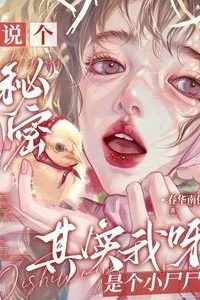
After dying of starvation in the apocalypse, Wen Chi is reborn three days after the disaster first began. Determined to avoid her tragic fate, she plans to stockpile supplies and survive this time.

However, she soon discovers something shocking—she has become a half-zombie.

Although her appearance and habits remain human, her eyes have changed color, and zombies recognize her as one of their own. This strange condition gives her a huge survival advantage, allowing her to move more safely through the zombie-infested world.

Taking advantage of this, Wen Chi decides to live a low-effort survival life, quietly hoarding food and supplies while planning to spend the apocalypse peacefully.

But her plans change when she encounters Jiang Jiming, the powerful and dangerous villain from her previous life.

Terrified of his unstable and ruthless nature, Wen Chi tries to avoid him, but his overwhelming strength makes escape impossible. At first, she believes he only keeps her around for amusement, treating her like a strange little toy.

Yet as they spend more time together, Wen Chi realizes that Jiang Jiming’s interest in her runs far deeper than she thought. Cold and indifferent to everyone else, he becomes obsessively protective and possessive toward her, having fallen for her at first sight.

As the apocalypse worsens, Wen Chi gradually grows stronger and more independent. Together with Jiang Jiming and their allies, they not only struggle to survive but eventually begin fighting to change the future of humanity and protect what remains of the world.

Novel Items

More
Item
A key card used to operate the hotel elevator. Wen Chi grabs it from the front desk to access her floor in the hotel.
Weapon
A dagger stored in Ye Wuyou's space. She drew it with full intention to stab Ling Yu when she felt herself weakening and lost control during their fight, but collapsed from exhaustion before she could use it.
Arcane Treasures
Jiang Jiming's ability that bursts from his palm, capable of knocking down large numbers of zombies instantly. It is described as a powerful Ability User power.
Cultivation Methods
Wen Chi's claimed ability that prevents zombies from attacking her. She tells Jiang Jiming this is why the zombies don't attack her, though the real reason is that she is also a half-finished zombie.
Materials
Items found beside Wen Chi's bathtub in the hotel. After her previous life of starvation, she indulges in these treats and plans to eat every kind of delicious food in the world.
Item
A bathrobe provided by the hotel that Wen Chi changes into after bathing, as she could not stand wearing her previous clothes anymore due to her love of cleanliness.
Latest Release
DateGroupRelease
2026-08-11shanghai fantasy c42
2026-08-11shanghai fantasy c41
2026-08-11shanghai fantasy c40
2026-08-11shanghai fantasy c39
2026-08-11shanghai fantasy c38
2026-08-11shanghai fantasy c37
2026-08-11shanghai fantasy c36
2026-08-11shanghai fantasy c35
2026-08-11shanghai fantasy c34
2026-08-11shanghai fantasy c33
2026-08-11shanghai fantasy c32
2026-08-11shanghai fantasy c31

Community Reviews

Rating(0 / 5.0, 19votes)
5 stars
0(0%)
4 stars
0(0%)
3 stars
0(0%)
2 stars
0(0%)
1 stars
0(0%)

Popular reviews

... Read More
The stakes in this novel just went from 'survive the apocalypse' to 'survive the person who's keeping you alive.' That's a terrifying escalation. Wen Chi wakes up and realizes two things simultaneously: Jiang Jiming has been drugging her, and his gentleness was an act. She saw him kill. She saw the real him. And instead of confronting him—which would be suicide—she makes a plan. 'I had to leave this place.' The internal conflict here is brutal because she's not wrong to be afraid, but she's also grateful. He cooks for her. He protects her. He literally gave her his dagger. The external conflict is equally tense: those guys outside wanted her territory, they lied about the girls, and now they're being fed to zombies with their tendons cut. But the real suspense isn't 'will she escape?' It's 'will he let her?' Because Jiang Jiming is already suspicious—he notices she pulled away, he notices she's afraid, and he's blaming the intruders for resetting their progress. The chapter ends with her pretending everything's fine while planning her exit, and him watching her like a hawk. That gap between what they're both thinking and what they're saying? That's where the tension lives. And it's suffocating in the best way.
... Read More
I need to talk about the sensory worldbuilding because the author is quietly doing something really special here and most people will miss it. The Crystal Core scene. Wen Chi bites into a Level Five zombie's crystal core and it tastes like strawberry cake. Not metaphorically—her teeth actually register it as soft and chewy, like real cake. And Jiang Jiming immediately checks her mouth like a paranoid parent, finding perfectly intact teeth with a few unusually sharp ones. This is how the author establishes that Wen Chi is not normal without once saying she is not normal. The worldbuilding is in the details, not in exposition dumps. Then there is the villa. The Bright Light Squad arrives at the same villa from the previous night, and suddenly this place that was just a temporary shelter becomes a contested space. The confrontation at the entrance, Jiang Yanming accusing Jiang Jiming of being a third party while standing in broad daylight—that visual of everyone frozen at the villa entrance with the apocalypse outside and this domestic drama happening inside? That is cinematic. I could see the framing. The warm light from inside the villa against the grey dead world outside. And the kitchen scene at the end where Wen Chi appears behind Chi Ye and says Because I'm a Zombie~! with that tilde. The author uses tone and punctuation as worldbuilding tools. That tilde is doing heavy lifting. It tells us everything about Wen Chi's personality—she is playful, she is terrified, she is trying to make a joke out of the most dangerous secret she carries. The world feels alive because the author trusts us to piece it together. We learn about abilities through Crystal Cores. We learn about the hierarchy through Chi Ye's shock at his lost tooth. We learn about Jiang Jiming's power through the way everyone scatters when he gets serious. No infodumps. Just lived-in details.
... Read More
I need to talk about Jiang Jiming because this character is absolutely unhinged in the best way possible. Let me just say this: there is something profoundly hilarious and touching about a man who is apparently the leader of some kind of organization, has people calling him "leader" and "brother," and yet he is literally putting a pink rabbit hair tie on his wrist and staring at it like it's the most precious object in the world. Chi Ye's line about it being "immoral" had me dying. Not because it actually is immoral — well, sneaking into someone's bed while they sleep is a whole different conversation — but because the narrator immediately undercuts it with "none of them were particularly moral people to begin with." That's such a sharp character observation. But here's what really got me: the contrast. Jiang Jiming is this terrifying figure. His hands are bleeding because he couldn't finish the food Wen Chi cooked for him, and he's standing at a window watching them leave. He's capable of violence, of command, of leading armed groups. And yet the moment Wen Chi calls him "Guai Guai" and treats him like a pet, he's completely disarmed. Not romantically disarmed — existentially disarmed. Then there's Xu Qiaofeng, who is apparently Wen Chi's childhood engagement match. The text says they were engaged as children but it was dropped after her parents died. He came looking for her across the entire apocalypse. That's either deeply romantic or deeply obsessive depending on how you read it, and I think the author is deliberately leaving that ambiguity. The dynamic between Wen Chi and Jiang Yi is also worth noting. She pats his hand, he drives, they banter about novels. It's found family energy and it's so much warmer than anything else in this story.
... Read More
Let me start with the pink hair tie. A rabbit decoration. Pink. Clashing sharply with Jiang Jiming's black outfit. This object has traveled from Wen Chi's head to his wrist, and in doing so it has become the most loaded symbol in the entire novel. It represents everything that the apocalypse has tried to strip away: cuteness, softness, domesticity, the ordinary desires of a young woman. And Jiang Jiming, this terrifying leader figure, treats it with more reverence than he treats any weapon or strategic asset. He "carefully touched it, looking like a lovesick fool." The symbol does so much work here — it shows that in a world reduced to survival, the things we value most are often the smallest, most seemingly trivial objects. Then there's the food. The poisoned bowl that Jiang Jiming finishes anyway. Food in apocalypse fiction is always about power, control, survival. But here it becomes something else — it becomes intimacy. It becomes the closest thing to a normal human exchange two people can have when the world has ended. He drinks the poison because it was cooked for him. That's not just devotion, that's a complete rejection of the apocalypse's logic. The supermarket itself is symbolic too. A place of abundance, of choice, of normal human routine — now reduced to scavenging, danger, and hidden doors behind shelves. Wen Chi finding Xu Qiaofeng behind that hidden door feels almost mythological. The childhood friend, the wounded hero, the secret passage — this is archetypal storytelling dressed in zombie apocalypse clothing. And the zombies clearing the path for Wen Chi like she's some kind of queen procession? That's not just cool imagery. It's a commentary on what power really means in this new world. The strongest Ability User isn't the one with lightning or ice — it's the one who can make the dead walk for her.
... Read More
Let me start with the obvious: this is an apocalypse story. People die. Zombies exist. The system explicitly tells Wen Chi 'you're going to die anyway.' That's not a throwaway line—that's the foundational stake of the entire narrative. Every breakfast, every training session, every moment of intimacy is happening under the shadow of potential death. But the author is smart about how they present the stakes. They don't lead with gore or trauma. They lead with a girl who's too lazy to go home and a man who picks locks to watch her sleep. The danger is always there, simmering beneath the surface, and that's what makes it effective. When Jiang Jiming says 'Only when she had enough strength could she survive in this apocalypse,' it's not just motivation—it's a reminder that the world outside these walls is lethal. The internal conflict is where this story really shines. Wen Chi is torn between two versions of herself: the lazy, self-aware girl who knows she's playing a game, and the girl who's actually starting to enjoy the training, the growth, the challenge. The system even acknowledges this tension: 'Host, you don't need to try so hard!' And Wen Chi's response—'If I don't try, will his affection rise?'—is both a joke and a genuine question. What if the game becomes real? What if the manipulation becomes genuine feeling? That's the real stakes here. Jiang Jiming's conflict is equally compelling. He's a powerful leader in a dangerous world, but he's also completely vulnerable when it comes to Wen Chi. 'Veins tightened in his hands as he gripped the yellow bedsheet'—this is a man who could command armies but can't control his own impulses. The stakes for him are emotional survival, not just physical. And then there's the comedic conflict—Chi Ye getting punished for accidentally walking in on them. Is this really a conflict? No. But it's the kind of low-stakes tension that makes the high-stakes moments hit harder. When the story can make you laugh at a man being threatened with a kitchen knife, you know it has confidence. It knows the real danger is always waiting just outside the frame. The suspense is maintained not through constant action but through emotional tension. Will Wen Chi's feelings become real? Will Jiang Jiming find out the truth? Will the system's final mission actually send her home? These are the questions that keep me turning pages.
... Read More
I need to just sit with this for a moment. The milk scene. Wen Chi drinks it, gets sleepy, falls asleep on the sofa—and it turns out Jiang Jiming put something in it. He's been doing this repeatedly. She even notices: 'there was something in the cup.' And what does he do when she wakes up? He acts concerned, wipes her hand, tells her to rest. The gaslighting is on another level. But then there's this moment that actually made my heart ache—when he's standing over her sleeping form, about to kiss her, and the intruders show up. He stops. He carries her to bed like she's made of glass. He sheds his killer persona the second she opens her eyes and asks 'what is it? Are you hungry?' The duality is exhausting to read about because you can feel Wen Chi's confusion. She's attracted to the kindness but terrified of the violence, and she doesn't know which one is real. Meanwhile Jiang Jiming is just... genuinely confused too? Like, he wants to protect her but also wants to lock her away. When he sees her angry at the liars, his thought is 'even when Wenwen is angry, she's still so cute. He wanted to kiss her!' Bro. You just slaughtered eight people. Sit down.
See all reviews

Characters

See all characters

Custom lists

Oops…There is nothing here.